Best Camera for Zoom: A 2026 Buyer's Guide for Conference Rooms and Hybrid Teams
This comprehensive 2026 buyer's guide explores the essential factors for choosing a Zoom conference room camera—including 4K clarity, 360° field of view, AI speaker tracking, and expandable audio—while showcasing how all-in-one solutions simplify hybrid team collaboration.
Zoom Camera
Conference Room Video
Video Conferencing Hardware
Updated: Aug 19, 2026 · 8 minutes read
Global Business, Brought Near.
No Installer, No Hassle, Just Works.
Zoom fatigue isn't just about too many meetings — it's often about bad video. Grainy footage, tinny audio, and a camera that only shows the person closest to the laptop are still the norm in a lot of conference rooms. If you're shopping for the best camera for Zoom in 2026, whether for a boardroom, a huddle space, or a home office, the good news is that the technology has matured fast. Cameras now handle 4K video, AI speaker tracking, and multi-directional audio in a single plug-and-play device.
This guide breaks down exactly what to look for in a conference room camera for Zoom, compares the main types of devices on the market, and shows how one all-in-one option — the Nearity 360 Alien — stacks up for teams that want reliable, professional-grade video without hiring an AV installer.
Key Takeaways
High-quality video directly influences perceived competence and engagement, addressing the 72% of employees who struggle with visibility in hybrid setups.
True 4K Ultra HD resolution is superior to cropped fisheye lenses, preserving sharp facial details even after Zoom's data compression.
For spaces seating more than 4 people, a 360° panoramic or multi-lens camera is a smarter investment than a traditional fixed-angle webcam.
Audio quality remains critical; look for devices with multiple omnidirectional microphones, AI noise suppression, and full-duplex capabilities.
All-in-one systems like the Nearity 360 Alien streamline deployment for IT teams by eliminating complex multi-device AV installation and cabling.
Scalability through expansion microphones is crucial for keeping audio clear and balanced as meeting rooms increase in size.
Why the Best Camera for Zoom Matters More Than You Think
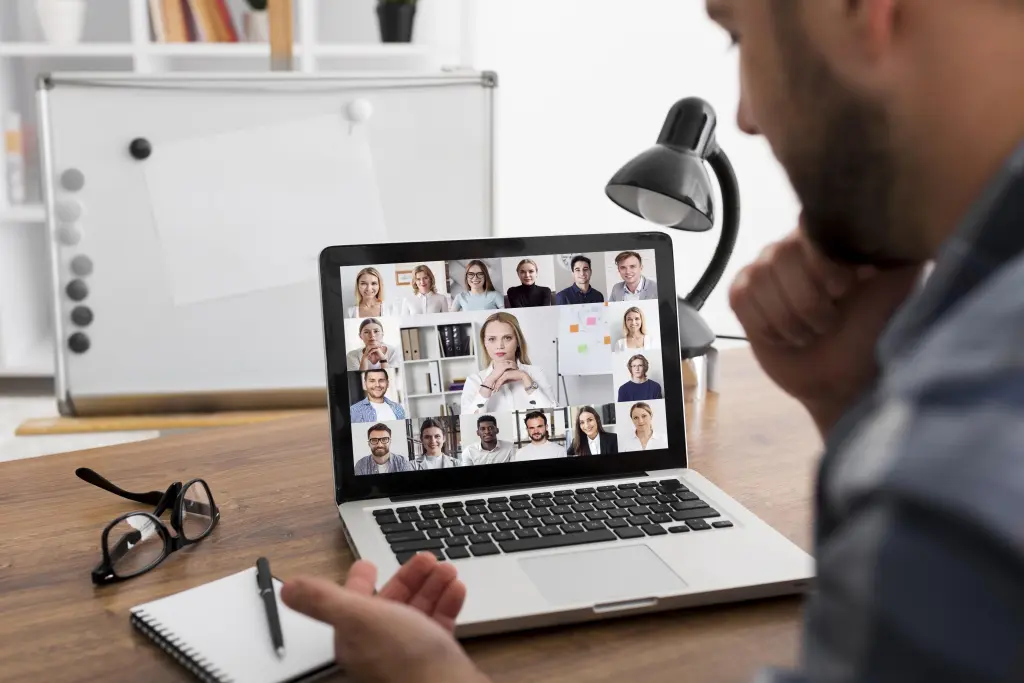
Video quality shapes how people perceive competence, engagement, and even trustworthiness in a meeting. Owl Labs' State of Hybrid Work report found that 72% of employees struggle to see everyone's faces on video calls and miss visual cues as a result — a gap that's largely a hardware problem, not a behavioral one. That's not a small preference — clear video is close to a baseline expectation now.
For IT managers and office administrators, there's also a practical angle: cameras that crash, disconnect mid-call, or require constant driver updates generate support tickets. Choosing the right hardware upfront saves hours of troubleshooting later.
What to Look for in a Conference Room Camera for Zoom
Video Resolution and Clarity
"HD" isn't the bar anymore. True 4K Ultra HD delivers sharper facial detail and holds up better when Zoom compresses your video stream for bandwidth. Watch out for cameras that market "4K" but actually crop a single fisheye lens down to a lower effective resolution — you'll lose detail at the edges of the frame, which matters in a room with more than four or five people.
Field of View (FOV) and Room Coverage
Field of view determines how many people the camera can capture without someone getting cut off. A narrow 78–90° lens works fine for a one-person home office, but a conference room needs much wider coverage:
78°–120° webcams: Best for individual desks or small 2–3 person huddle spaces.
360° or panoramic cameras: Better for round tables, larger groups, or rooms where people sit on multiple sides.
If your room seats more than four people around a table, a 360° conference camera for Zoom is generally a smarter investment than a fixed-angle webcam.
Audio Performance
Video gets the attention, but audio is usually the bigger factor in meeting frustration. Look for:
Multiple omnidirectional microphones (4–8 mics is common for conference-grade devices)
A stated pickup range in meters or feet
AI noise suppression and echo/resonance cancellation
Full-duplex speakers, so people can talk over each other naturally instead of audio cutting out
Rooms with HVAC noise, hard floors, or glass walls need stronger noise cancellation than a quiet home office.
AI Framing and Speaker Tracking
Modern conference cameras use AI to automatically zoom in on whoever is speaking, switch between a panoramic view and a close-up, or lock onto a presenter. This matters most for round-table discussions where a fixed wide shot makes it hard for remote participants to know who's talking.
Compatibility and Installation
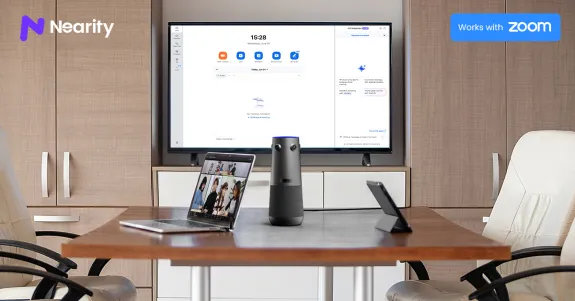
A best camera for zoom meetings should work as a true plug-and-play USB device recognized by Zoom (and ideally Teams, Google Meet, and Webex) without proprietary software. For IT teams managing multiple rooms, cross-platform support across Windows, macOS, ChromeOS, and Linux avoids compatibility headaches down the line.
Scalability for Different Room Sizes
Your camera needs should match your room. A rough guide:
Room Type
Size
Group Size
Camera Type
Huddle room
50–160 sq ft
2–6 people
Compact webcam or small 360° camera
Small/medium room
150–300 sq ft
6–12 people
360° camera, possibly with expansion mic
Large conference room
300–600 sq ft
12–20 people
360° camera with dual expansion mics
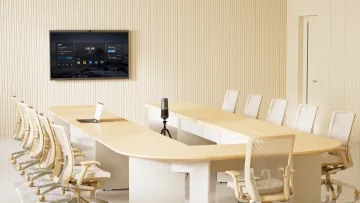
Boardroom / U-shaped
400–800+ sq ft
15–25+ people
PTZ or multi-camera system
Buying a camera that can scale with expansion microphones is often more cost-effective than replacing hardware as your team grows.
Types of Conference Cameras for Zoom Compared
Basic webcams (78°–120° FOV, fixed lens): Affordable and simple, ideal for single users or two-person calls. They struggle in group settings because the field of view can't capture a full table.
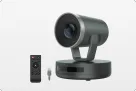
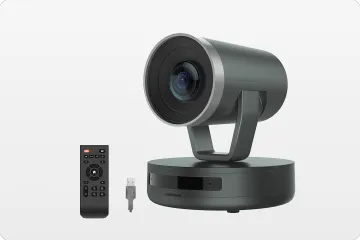
PTZ (pan-tilt-zoom) cameras: Offer manual or remote-controlled zoom and repositioning, useful for large rooms with a dedicated presenter, but usually need more setup and sometimes a separate speakerphone.
360° all-in-one conference cameras: Combine a wide- or full-panoramic lens with built-in microphones and speakers in a single device. These have become the go-to choice for most modern meeting rooms because they eliminate the need to buy and cable together a separate camera, mic, and speaker.
Fisheye 360° cameras (a subset of the above): Use a single ultra-wide lens that captures the whole room but crops and stretches the image, which can blur faces toward the edges of the frame — something to check for specifically when comparing 360° options.
Nearity 360 Alien: An Example Conference Camera for Zoom
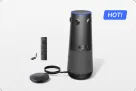
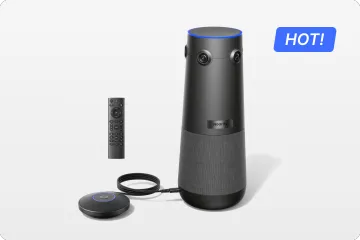
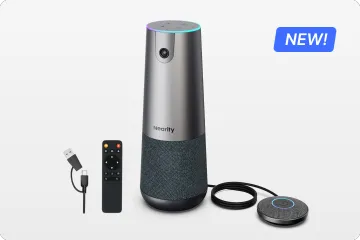
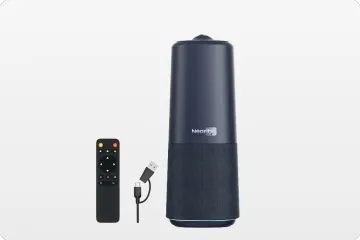
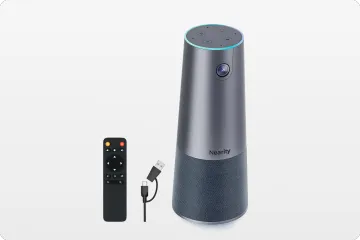
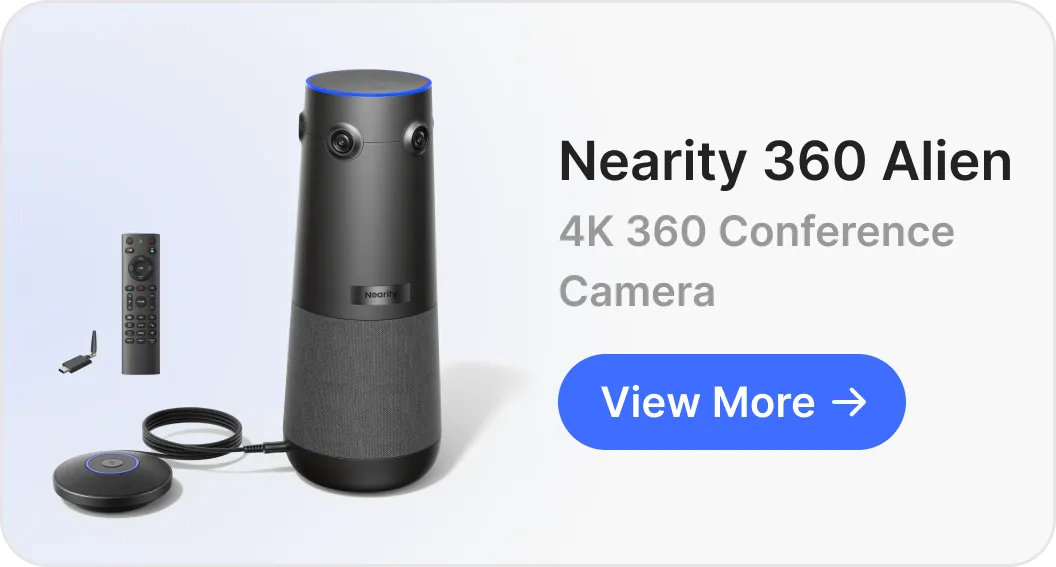
One example of an all-in-one device built around this checklist is the Nearity 360 Alien. Rather than a single cropped fisheye lens, it uses a four-camera array to produce a true 4K 360° view, paired with a 6-mic array (extendable to 16m/52ft with expansion mics) and three AI framing modes for roundtable, presentation, and wide-view scenarios. It connects via USB or wireless dongle with no drivers needed, works across Zoom, Teams, Google Meet, and Webex, and is rated for rooms from roughly 100 to 600 sq ft (4–20 people).
It's a useful reference point for what "true 4K, multi-lens, expandable audio" looks like in practice — worth comparing against other 360° options if your current setup suffers from blurry edges or thin audio coverage.
How to Choose the Best Camera for Zoom Meetings by Room Size
Solo remote workers or 1:1 calls: A standard 4K webcam with a 90°–120° FOV is usually enough.
Small huddle rooms (2–6 people): A compact all-in-one camera with built-in mic and speaker keeps cabling simple.
Standard conference rooms (6–12 people): A 360° camera with true multi-lens 4K and at least one expansion mic option covers most round-table setups.
Large rooms or boardrooms (12–20+ people): Look for a 360° camera that explicitly supports multiple expansion microphones, or a PTZ system, to keep audio even across a long table.
Training rooms and classrooms: Prioritize a dedicated presentation-tracking mode so remote viewers can follow a moving instructor.
Frequently Asked Questions
What's the best camera for Zoom meetings in a small business?
For most small businesses with a single conference room seating 6–12 people, a 360° all-in-one camera with built-in microphones — such as the Nearity 360 Alien — covers the room without needing a separate speakerphone or installation.
Do I need a 4K camera for Zoom, or is 1080p enough?
Zoom will compress video regardless of source resolution, but starting with 4K preserves more facial detail after compression, especially for participants seated farther from the camera. For rooms with more than four or five people, 4K is worth the investment.
Can one camera cover a large conference room?
Yes, if it supports expansion microphones and has a wide enough field of view (ideally 360°). Without expansion audio, even a high-resolution camera can leave far-end participants sounding faint.
Is a webcam or a dedicated conference camera better for Zoom?
Webcams are fine for individuals or two-person desks. Any room with a shared table benefits from a dedicated conference camera with a wider FOV and multiple microphones.
Final Thoughts
The best camera for Zoom depends on your room size, group size, and how much audio coverage you need — but the underlying checklist is consistent: true high-resolution video, wide or 360° coverage, multi-mic audio with noise cancellation, AI framing, and plug-and-play compatibility across platforms. All-in-one devices like the Nearity 360 Alien are built around exactly that checklist, offering a way for IT teams and office administrators to equip a conference room in minutes rather than orchestrating a multi-device AV install. Whatever you choose, matching the camera's coverage and audio range to your actual room size is the single biggest factor in whether your Zoom meetings feel professional or frustrating.