The Complete 2026 Guide to Full Duplex Speakerphones: Unlocking Natural Virtual Meetings
This comprehensive guide explores how modern full duplex speakerphones utilize AI-powered acoustic echo cancellation to enable simultaneous, two-way conversations that mimic the flow of in-person meetings.
Full Duplex
Virtual Meetings
Hybrid Work
Updated: Aug 19, 2026 · 8 minutes read
Global Business, Brought Near.
No Installer, No Hassle, Just Works.
In the modern business landscape, effective communication is the lifeblood of productivity. As hybrid work models and global collaboration solidify their permanence in 2026, the tolerance for poor virtual meeting audio has vanished. We have all experienced the frustration of speaking up in a conference call, only to have our words clipped, dropped, or swallowed by the limitations of basic audio equipment.
The culprit behind these disjointed conversations is often outdated half-duplex technology. To achieve the seamless, overlapping dialogue that mimics in-person interactions, organizations must invest in a full duplex speakerphone.
This comprehensive guide will explain the underlying technology of full-duplex communication, highlight the critical role of acoustic echo cancellation, and provide actionable advice on selecting the right equipment for your enterprise spaces.
Key Takeaways
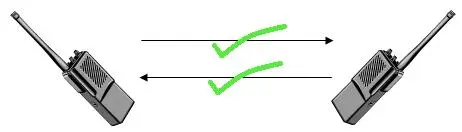
Full Duplex vs. Half Duplex: Unlike traditional "walkie-talkie" style audio, full duplex allows participants to speak and hear at the same time without clipping.
AEC is Essential: Acoustic Echo Cancellation is the "brain" of the device, preventing remote voices from looping back into the microphone.
The AI Shift: 2026 standards have moved to AI-driven noise suppression, which can distinguish human speech from reflective glass or HVAC hums.
Hardware Over Software: Dedicated speakerphones offload DSP processing from the PC, ensuring stable audio regardless of computer performance.
Scalability Matters: For large boardrooms, look for daisy-chainable units (like the Nearity A20S or Poly Sync 60) to expand microphone pickup range.
Understanding Full Duplex vs. Half Duplex Technology
To appreciate the value of a high-quality speakerphone, one must first understand how audio data is transmitted during a live call. The distinction between half-duplex and full-duplex fundamentally alters the rhythm and natural flow of a meeting.
The Limitations of Half Duplex
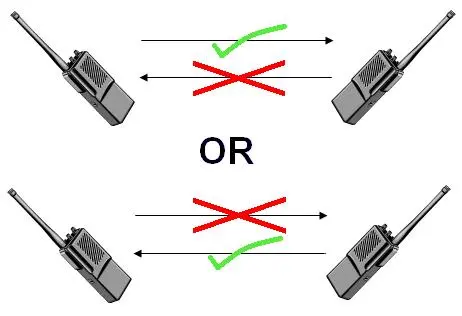
Half-duplex audio acts much like a traditional walkie-talkie. Audio signals can travel in both directions, but only one direction at a time. When someone in a conference room speaks, the device's microphone engages and the speaker temporarily mutes incoming audio.
If a remote participant tries to interject or agree, their audio is cut off or severely clipped. This creates a rigid, turn-based conversation style that suppresses brainstorming, discourages natural interjections, and ultimately leads to meeting fatigue.
The Full Duplex Advantage
A full duplex speakerphone eliminates this bottleneck. It allows audio signals to be transmitted and received simultaneously. Both local and remote participants can speak at the same exact moment without any clipping, muting, or audio degradation.
The result is a conversation that feels genuinely natural. Participants can laugh, offer quick affirmations, or politely interrupt to clarify a point, just as they would if they were sitting across the same physical boardroom table. For dynamic team collaborations and high-stakes client negotiations, this seamless two-way communication is strictly non-negotiable.
The Critical Role of Acoustic Echo Cancellation (AEC)
While full-duplex transmission sounds simple in theory, it is incredibly complex to execute flawlessly in a physical room. The primary challenge is the acoustic loop.
When a full-duplex system receives incoming audio, it projects that voice through its loudspeaker. Simultaneously, its microphones remain active to capture the local participants. Without intelligent processing, the microphone will pick up the remote participant's voice coming from the loudspeaker and transmit it right back to them. This creates a highly distracting and continuous echo.
This is precisely why you cannot have effective full-duplex communication without an advanced echo cancelling speakerphone.
How AEC Works
Acoustic Echo Cancellation (AEC) is an algorithm driven by Digital Signal Processing (DSP). The DSP continuously monitors the incoming audio signal from the remote caller. It then creates an acoustic model of that specific audio profile and aggressively filters it out of the microphone's input stream before it can be transmitted back.
In 2026, the industry standard has shifted from basic algorithmic AEC to AI-driven echo cancellation. Modern devices use deep learning models to distinguish human speech from loudspeaker playback and background noise with near-zero latency. This ensures that even in rooms with reflective surfaces—like glass walls or hard tables—the echo is neutralized instantly, preserving the integrity of the full-duplex experience.
Why IT Managers Prioritize Dedicated Speakerphones
For IT departments, managing unified communications (UC) across dozens of conference rooms and hundreds of home office remote workers is a massive logistical challenge. Relying on laptop microphones or cheap peripherals often leads to an influx of support tickets regarding poor audio quality.
Investing in enterprise-grade audio hardware offers several distinct advantages for technology managers:
Reduced Cognitive Load: Poor audio requires the brain to work harder to decipher words, leading to "Zoom fatigue." High-definition audio processing reduces this cognitive strain, keeping teams sharper during long sessions.
Offloaded Processing: Software-based echo cancellation built into platforms like Microsoft Teams or Zoom is helpful, but it consumes significant PC CPU resources. A dedicated speakerphone handles all DSP and AEC internally, ensuring stable performance regardless of the host computer's specifications.
Standardized Experiences: Deploying consistent hardware across huddle rooms and large boardrooms ensures that employees have a predictable, frustration-free experience every time they initiate a call.
Buyer’s Guide: How to Choose the Best Full Duplex Speakerphone
Navigating the market for conferencing equipment requires a clear understanding of your specific spatial and operational needs. When evaluating options to find the best full duplex speakerphone for your organization, consider the following technical criteria:
Microphone Array and Pickup Range
Look for devices equipped with multi-microphone arrays (typically 4 to 8 microphones). These arrays enable beamforming technology, which essentially creates a directed "beam" of audio capture focused precisely on the person speaking while rejecting noise from other directions. Ensure the stated pickup radius matches the dimensions of your conference table.
Scalability and Daisy-Chaining
A speakerphone might work perfectly in a huddle room but fail miserably in a 20-person boardroom. The most versatile devices support "daisy-chaining"—the ability to connect multiple speakerphone units together. This allows IT to scale the audio solution seamlessly. If your company moves to a larger office, you simply link another unit rather than replacing the entire system.
AI-Powered Noise Suppression
Beyond simple echo cancellation, modern speakerphones must handle transient and background noises. Look for AI deep-learning algorithms capable of filtering out typing sounds, rustling papers, HVAC hums, and even sirens from outside windows, ensuring only crystal-clear human voices are transmitted.
Connectivity and Integration
The ideal device should be truly "plug-and-play." Look for versatile connectivity options, including USB-C, USB-A, and Bluetooth for mobile device integration. Furthermore, ensure the hardware is universally compatible with major UC platforms such as Zoom, Microsoft Teams, Webex, and Google Meet.
Full-Duplex Certification
Do not rely on marketing buzzwords alone. Look for devices that explicitly state they utilize full-duplex technology with built-in DSP for simultaneous two-way audio.
Product Spotlight: Top 3 Full Duplex Speakerphones for 2026
For business professionals and IT buyers conducting a commercial investigation into premium audio hardware, evaluating the top market leaders is crucial. Here are three of the best full duplex speakerphones representing the pinnacle of modern conferencing technology, engineered to ensure that both sides of a conversation flow with zero interruption, clipping, or delay.
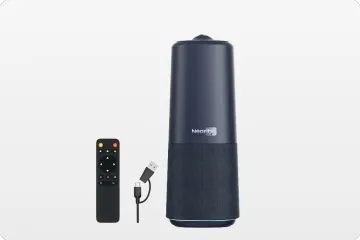
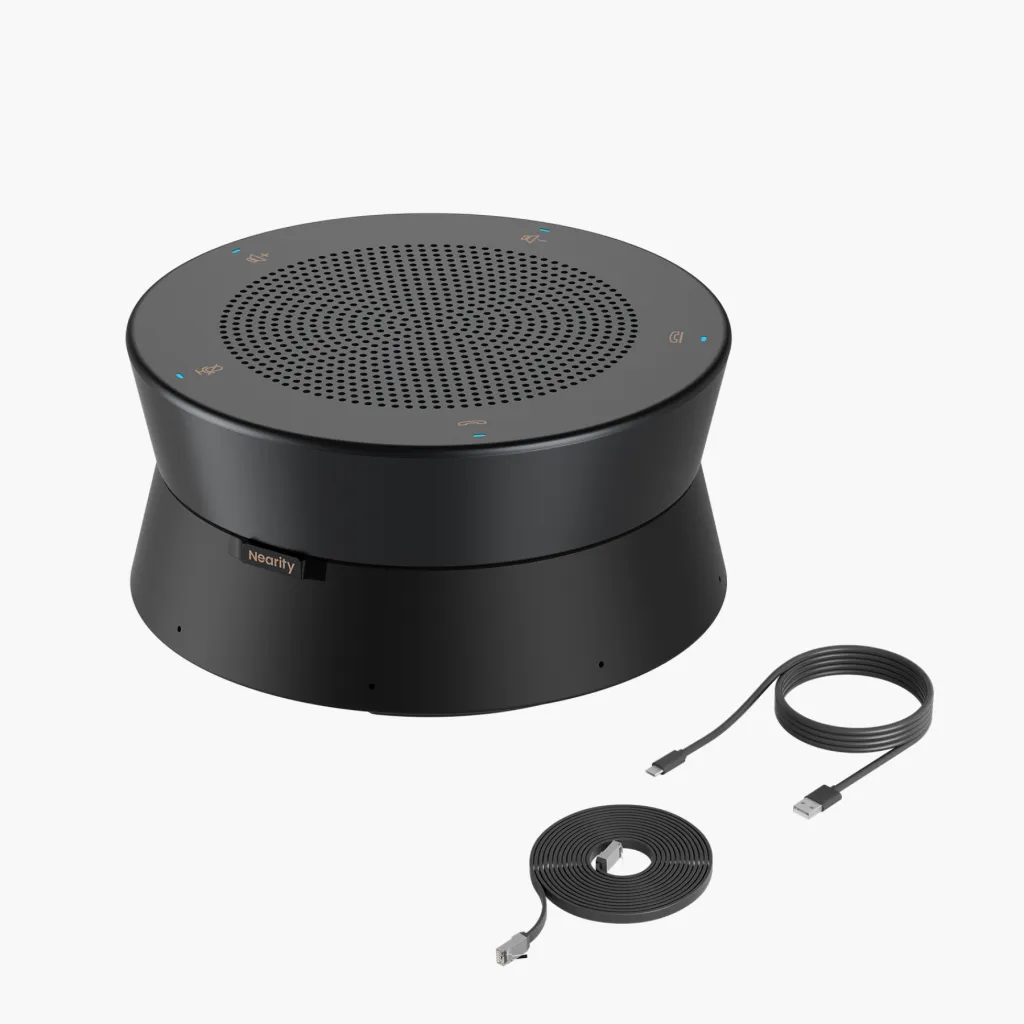
Nearity A20S
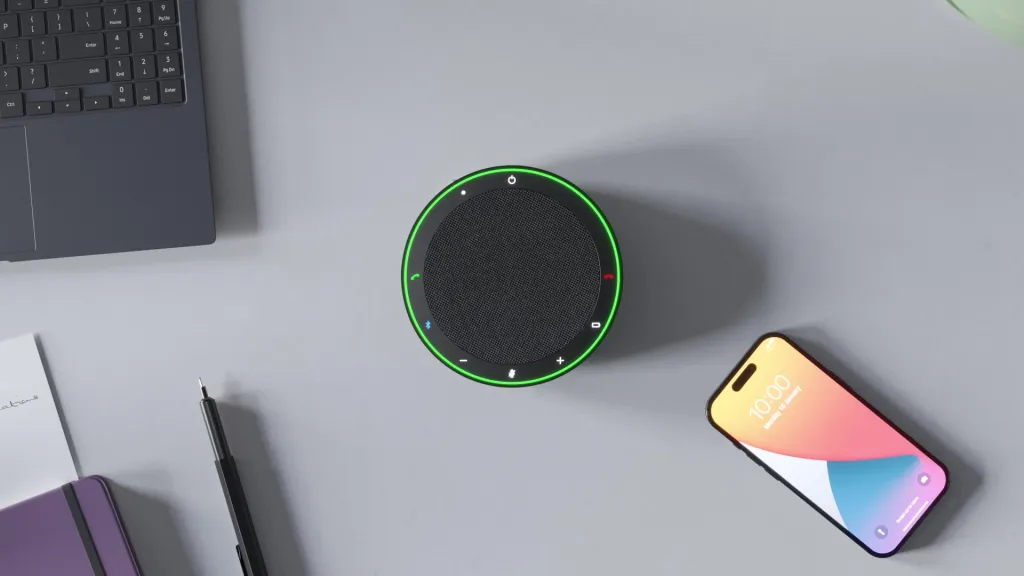
Designed specifically to address the complex acoustic challenges of contemporary meeting spaces, the Nearity A20S perfectly encapsulates what organizations should look for in enterprise-grade audio.
Advanced AI Noise Suppression & AEC: The A20S features proprietary deep-learning audio processing. Its industry-leading acoustic echo cancellation ensures that even during rapid, overlapping conversations, remote participants never hear their own voices looping back. It intelligently strips away background room noise while preserving the natural timbre of the speaker's voice.
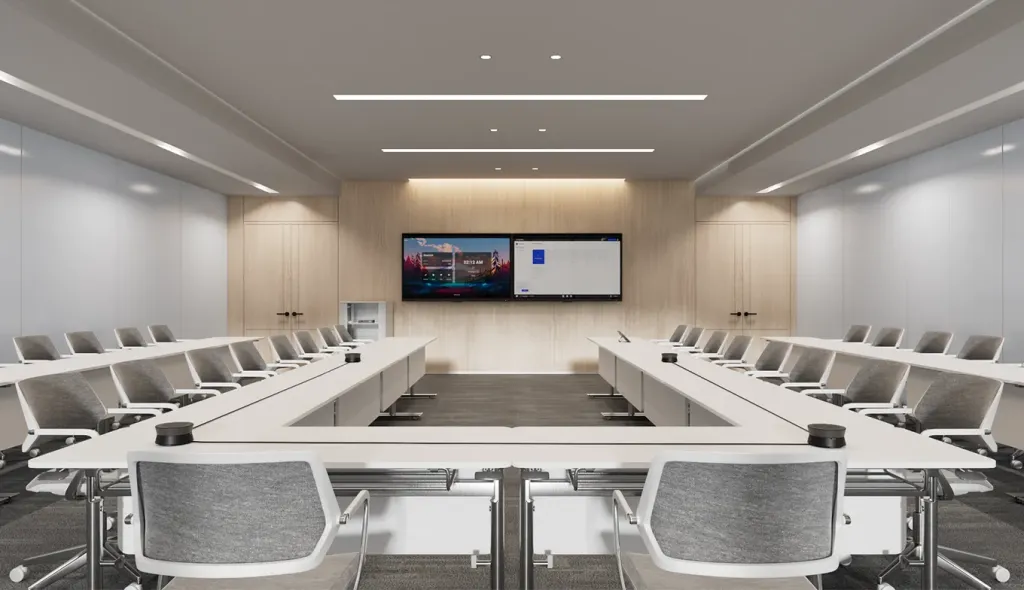
Unmatched Scalability: One of the most compelling features for IT managers is its impressive daisy-chain capability. While a single A20S provides robust coverage for a standard room, you can daisy-chain up to six units together. This extraordinary scalability allows the A20S to provide flawless, full-duplex audio in everything from a small huddle space to a massive U-shaped executive boardroom.
Eight-Element Microphone Array: Equipped with an omnidirectional 8-element microphone array, the A20S utilizes precise beamforming to capture voices accurately from anywhere in the room. This ensures that soft-spoken individuals at the far end of the table are heard just as clearly as the person sitting directly next to the device.
Jabra Speak2 75
Jabra has long been a heavyweight in the enterprise audio space, and the Speak2 75 is their flagship offering tailored specifically for hybrid work environments and professional conference rooms.
Advanced Full Duplex Audio: The Speak2 75 is meticulously engineered with advanced full-duplex technology, allowing natural, flowing conversations without the dreaded "walkie-talkie" clipping effect that plagues lesser devices.
Voice Level Normalization: It features an intuitive algorithm that automatically equalizes all voices. This means people who speak softly are boosted, while loud talkers are softened, ensuring everyone is heard at a comfortable volume on the other end.
Super-Wideband Audio: Utilizing a custom-designed 65mm speaker, the device provides a much wider frequency range than standard speakerphones, delivering rich, powerful audio that sounds incredibly lifelike.
Poly Sync 60
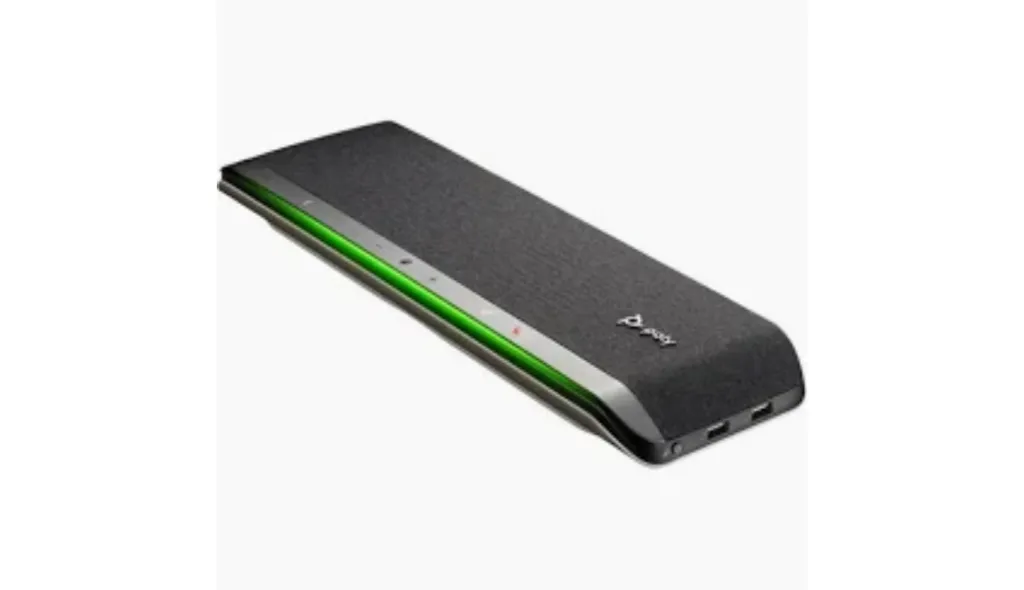
Designed for larger conference rooms, the Poly Sync 60 brings robust, distraction-free audio to high-stakes meetings and executive spaces.
Smart Multi-Microphone Array: It features a steerable six-microphone array that focuses specifically on human voices while actively blocking out background noise and room echo, ensuring pristine audio quality.
Daisy-Chain Capability: Similar to the Nearity A20S, the Poly Sync 60 allows two units to be wirelessly paired or wired together to expand microphone pickup and speaker reach for much wider boardrooms.
Seamless Integration: It boasts a highly intuitive interface and is universally compatible with all major unified communications platforms, making deployment exceptionally easy for enterprise IT teams.
By integrating a sophisticated echo cancelling speakerphone from any of these industry leaders, organizations can immediately upgrade their acoustic environment, fostering more collaborative and efficient virtual meetings.
Best Practices for Optimizing Conference Room Audio
Even the highest-quality hardware benefits from a favorable physical environment. To maximize the performance of your full duplex speakerphones, implement these best practices:
Strategic Device Placement: Place the speakerphone in the center of the table, ensuring there is a clear, unobstructed line of sight to all participants. Do not bury the device behind laptops, coffee mugs, or tall centerpieces.
Manage Room Acoustics: Hard surfaces reflect sound waves, causing reverberation. If a room sounds "echoey" when you clap your hands, consider adding soft furnishings. Acoustic wall panels, carpets, and window drapes can significantly reduce audio bounce, making it easier for the device's DSP to do its job.
Optimize Network Stability: Full-duplex audio transmits more data than half-duplex. Ensure your conference rooms are equipped with stable, high-bandwidth ethernet connections to prevent packet loss, which can manifest as robotic or jittery audio.
Frequently Asked Questions (FAQs)
What is the difference between full duplex and simultaneous talk?
In the context of conferencing, they are essentially the same. Full duplex refers to the hardware and software capability that allows two-way audio to be transmitted and received at the same time. This is what enables "simultaneous talk" without either side being muted or clipped.
Can software like Zoom replace a full duplex speakerphone?
While Zoom and Teams have built-in echo cancellation, they are limited by the physical hardware of your laptop or microphone. A dedicated full-duplex device has its own DSP (Digital Signal Processor) that is far more efficient at removing echo and noise before the audio even reaches the software.
How many speakerphones do I need for a large room?
For rooms larger than 15 feet, a single unit may struggle to capture voices at the far end. This is where scalability is key. Units like the Nearity A20S can be daisy-chained (linked together) to extend the microphone pickup range across the entire length of a large boardroom table.
Does Bluetooth support full duplex audio?
Yes, modern Bluetooth standards (especially in 2026) support high-quality full-duplex communication. However, for the most stable and highest-fidelity connection in a professional setting, a wired USB-C connection is still generally recommended.
Conclusion
The shift toward remote and hybrid work is a permanent fixture of the modern global economy. As a result, the quality of your virtual meetings directly correlates with the efficiency and professionalism of your business. Clunky, turn-based conversations marred by dropouts and feedback are no longer acceptable.
Upgrading to a dedicated, high-performance full duplex speakerphone is one of the most impactful investments an IT department can make. By prioritizing advanced acoustic echo cancellation, AI noise suppression, and scalable architecture—as seen in premier devices from Nearity, Jabra, and Poly—you empower your teams to communicate naturally, collaborate effortlessly, and drive business forward without missing a single syllable.