USB vs Bluetooth Speakerphones: Which One Should You Choose in 2026
This comprehensive guide compares four leading speakerphones to help professionals choose between the scalable, rock-solid reliability of USB connections and the travel-friendly flexibility of Bluetooth technology.
Conference Speakerphone
Hybrid Work
Office Technology
Updated: Aug 19, 2026 · 8 minutes read
Global Business, Brought Near.
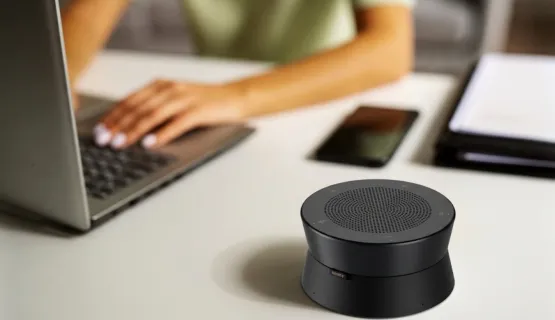
No Installer, No Hassle, Just Works.
In the modern landscape of hybrid work, crystal-clear communication is no longer a luxury—it is a baseline requirement. Whether you are leading a crucial client pitch or brainstorming with a remote team, poor audio can instantly derail productivity.
When upgrading your meeting audio, the most foundational decision you will face is choosing between a usb conference speakerphone and a wireless bluetooth speakerphone. Both technologies have evolved dramatically, but they serve different primary purposes.
Should you prioritize the rock-solid reliability of a wired connection, or the travel-friendly flexibility of wireless Bluetooth? To help you make an informed purchase decision, we are comparing four top-tier devices.
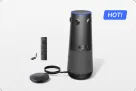
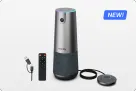
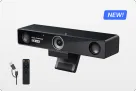
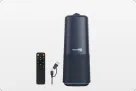
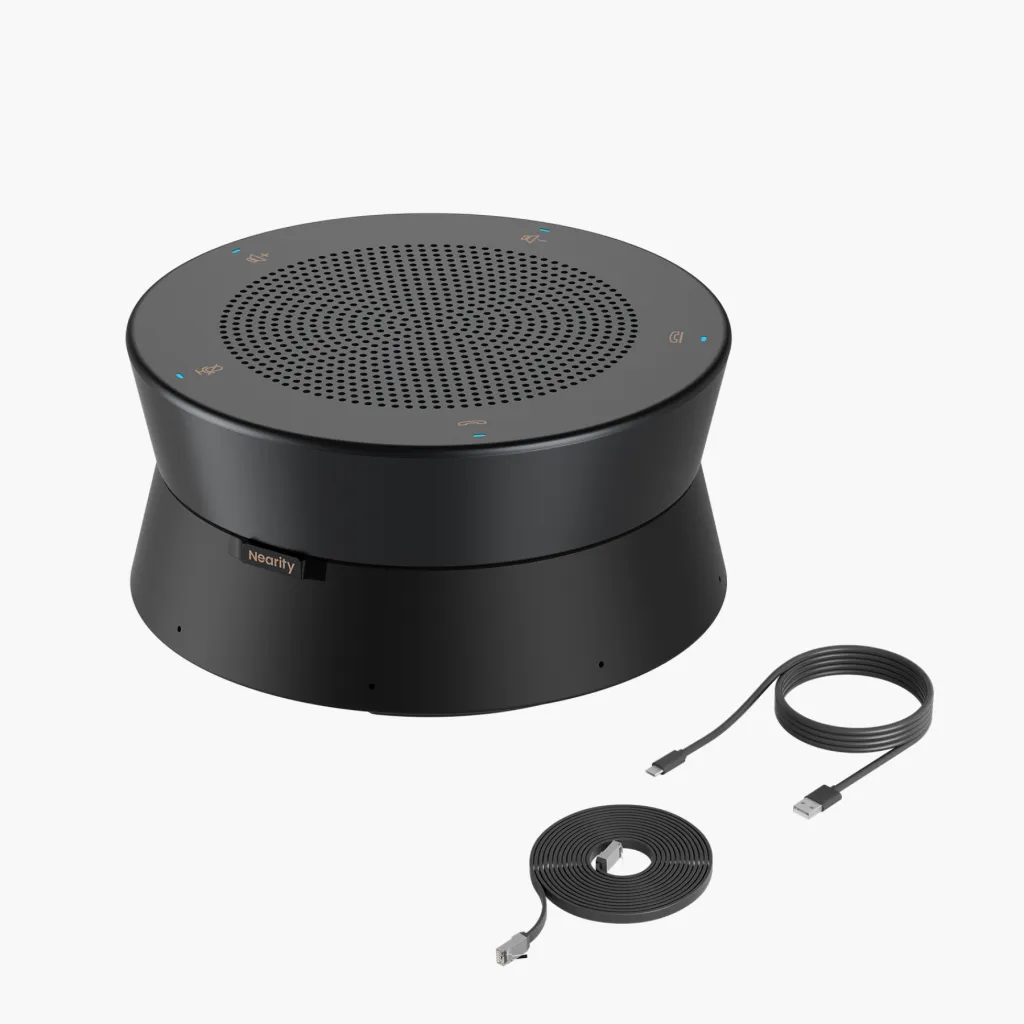
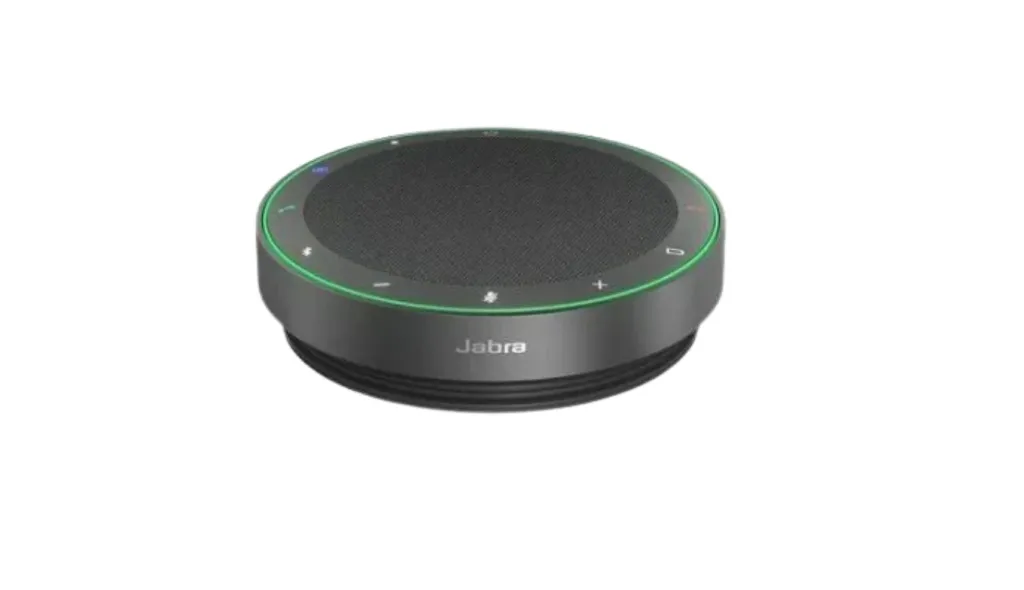
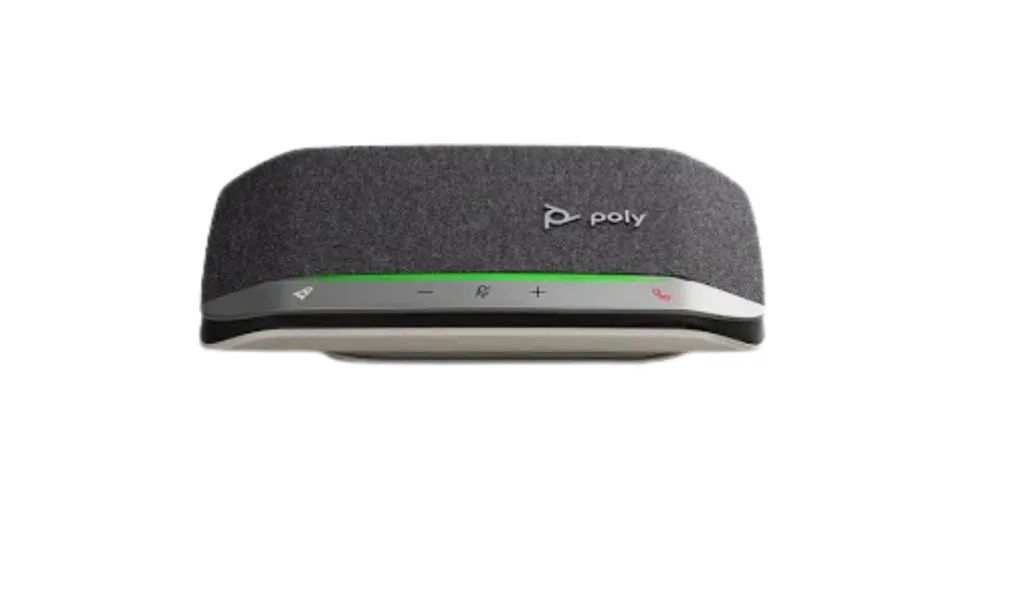
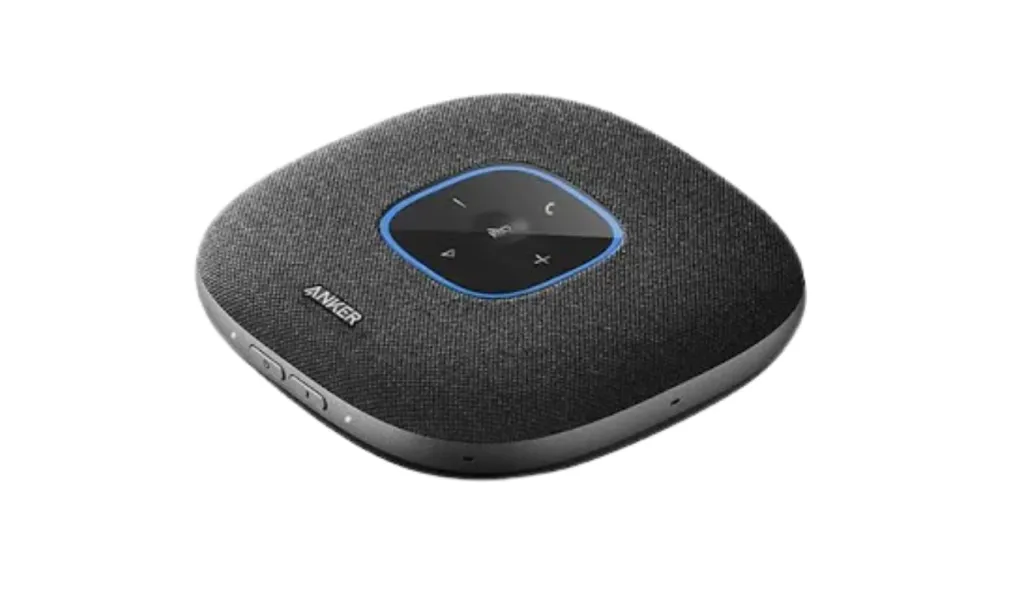
We will look at the Nearity A20S, the Jabra Speak2 75, the Poly Sync 20, and the AnkerWork PowerConf. This guide breaks down the features, trade-offs, and ideal use cases for each, so you can confidently choose the right tool for your team.
Key Takeaways
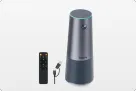
Nearity A20S is the clear winner for large conference rooms due to its unique ability to daisy-chain up to six units.
USB connections eliminate pairing issues and battery anxiety, making them ideal for dedicated office setups.
Bluetooth models like the Jabra Speak2 75 and Poly Sync 20 offer superior portability and battery life for "road warriors."
AI Noise Cancellation (found in the Nearity A20S) is essential for filtering out background noise in glass-walled or open-plan offices.
Voice Pickup Range varies significantly, from 7 feet in personal devices to over 16 feet in professional-grade USB models.
The Quick Summary: USB vs. Bluetooth Speakerphone Head-to-Head
If you are short on time, here is a quick look at how these standout models compare across crucial meeting metrics.
Feature / Model
Nearity A20S (USB)
Jabra Speak2 75 (Hybrid)
Poly Sync 20 (Bluetooth)
AnkerWork PowerConf (Bluetooth)
Primary Connection
USB-C / PoE
Bluetooth 5.2 / USB
Bluetooth 5.1 / USB
Bluetooth 5.0 / USB
Microphone Array
8 Omnidirectional MEMS
4 Beamforming Mics
3 Steerable Mics
6 Mic Array
Voice Pickup Range
Up to 16.5 ft (5m)
Up to 8.2 ft (2.5m)
Up to 7 ft (2m)
Up to 16.4 ft (5m)
Daisy Chain Capability
Yes (Up to 6 units via PoE)
No
No
No
Battery Life
N/A (Powered via USB/PoE)
Up to 32 Hours
Up to 20 Hours
Up to 24 Hours
Best For
Huddle to Large Conference Rooms
Executive Travel / Hybrid
Solo Remote Workers
Budget-Conscious Hybrid
Decision Factor 1: Connection Stability and Scalability
The most significant difference between a usb conference speakerphone and a Bluetooth model is how they handle data transmission and room scalability.
The Case for USB (Stability & Scalability): If you have ever started a meeting only to hear, "Wait, my Bluetooth is connected to my phone, not my laptop," you understand the inherent friction of wireless devices. USB connections eliminate pairing anxiety.
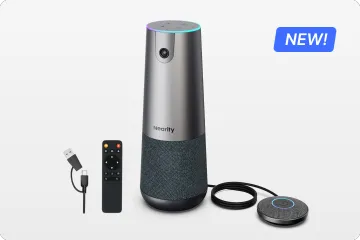
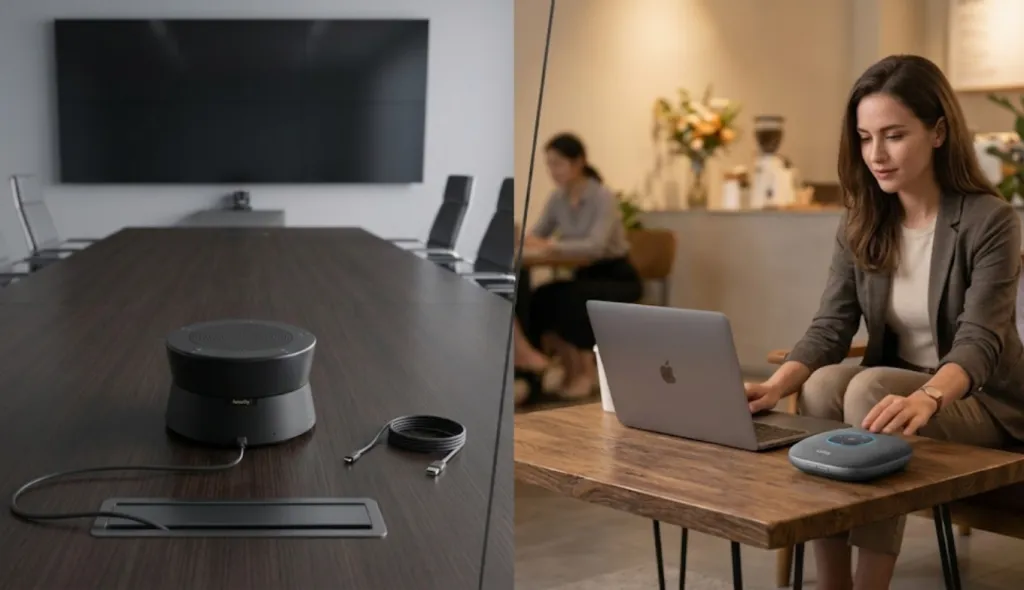
The Nearity A20S is a pure plug-and-play powerhouse. Because it operates via a hardwired connection, there is zero risk of wireless interference, latency drops, or mid-meeting disconnects.
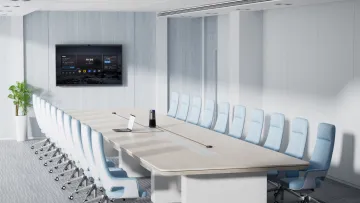
Furthermore, USB/PoE architecture allows for massive scalability. The Nearity A20S allows you to daisy-chain up to six units together via standard Ethernet (PoE) cables.
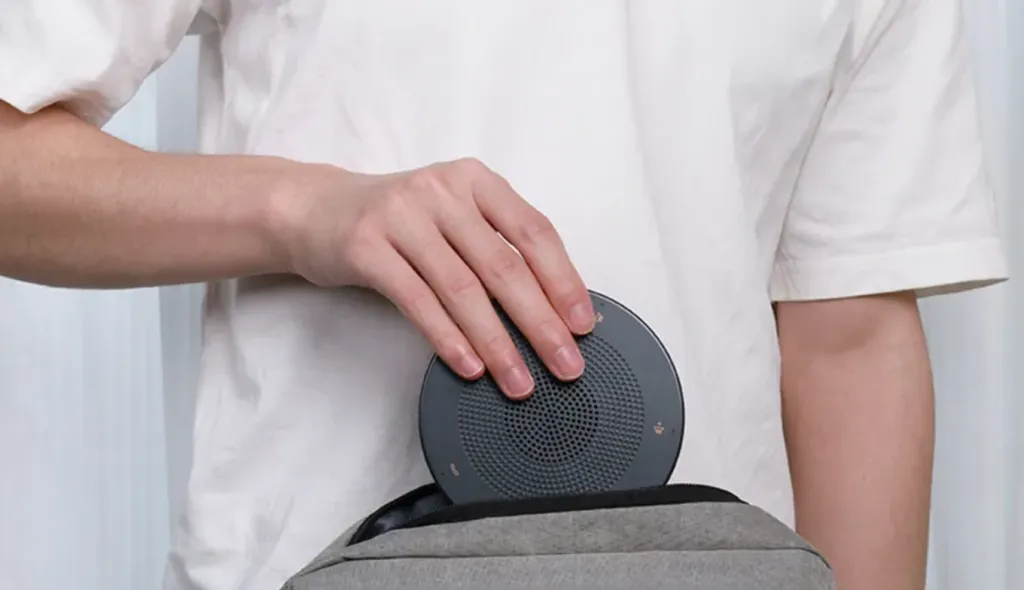
The Case for Bluetooth (Flexibility): A bluetooth speakerphone like the Jabra Speak2 75 or Poly Sync 20 prioritizes mobility. You can easily pass the speaker around a table or connect it instantly to a smartphone for an impromptu call in an airport lounge.
The AnkerWork PowerConf also offers easy Bluetooth pairing. However, none of these Bluetooth options support physical daisy-chaining to expand room coverage. They are inherently limited to the immediate radius of the single device.
The Verdict: If you are outfitting a dedicated meeting space, a growing office, or simply hate troubleshooting wireless pairing, a hardwired USB device like the Nearity A20S is the vastly superior choice. For individual road warriors, Bluetooth offers necessary flexibility.
Decision Factor 2: Audio Quality and Voice Pickup Range
When you are investing in meeting hardware, audio capture is the ultimate test. It doesn't matter how portable a device is if the person at the far end of the table sounds like they are underwater.
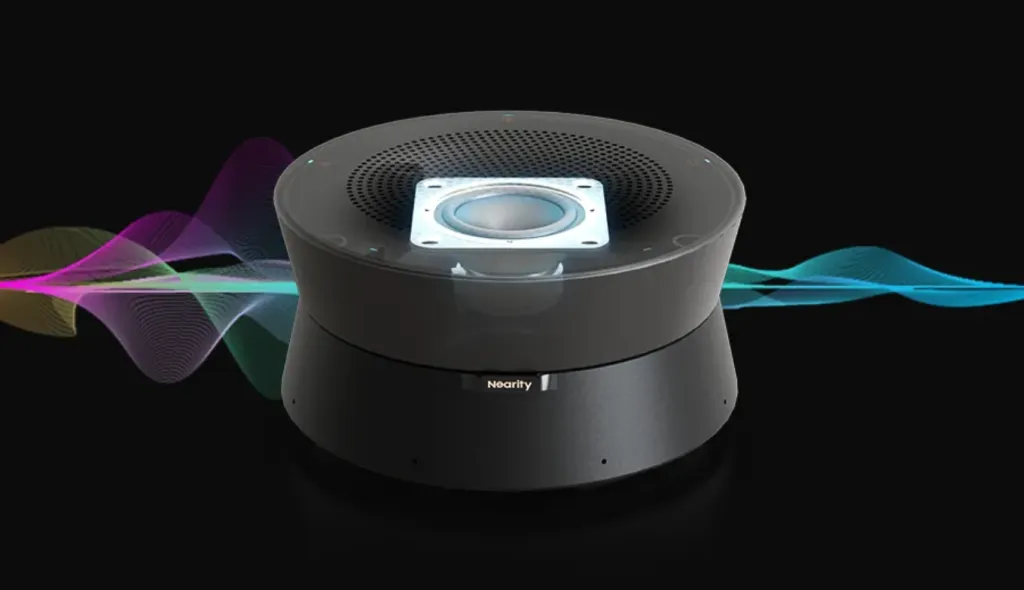
Microphone Density and Range: The Nearity A20S leads this category by a wide margin. It boasts an impressive 8 omnidirectional MEMS microphones with a massive 16.5-foot (5m) pickup range per unit.
Because of its Automatic Gain Control (AGC), a soft-spoken team member sitting 15 feet away is easily heard. They will sound just as loud and clear to remote participants as the person sitting right next to the device.
In contrast, the portable Bluetooth models feature fewer microphones suited for smaller radii. The Jabra Speak2 75 utilizes 4 beamforming mics with an 8.2-foot range, making it excellent for personal desks or small 4-person tables.
The Poly Sync 20 uses a 3-mic steerable array (7-foot range), and the AnkerWork PowerConf utilizes 6 mics. While the PowerConf claims a wide range, its lack of advanced spatial scaling means audio can sometimes degrade at the edges of its pickup zone.
Full-Duplex Capabilities: All four devices support full-duplex audio, allowing multiple people to speak simultaneously without clipping each other's words. However, a dedicated usb speakerphone typically processes full-duplex audio with lower latency than a standard bluetooth speakerphone with mic.
This technological advantage ensures that rapid-fire brainstorming sessions feel completely natural and in-person.
Decision Factor 3: AI Noise Cancellation and DSP
Modern offices—especially those with glass walls or open floor plans—are incredibly noisy. The intelligence of your speakerphone's internal processor is what separates a good meeting from an exhausting one.
Advanced AI Processing: The Nearity A20S utilizes highly advanced AI 2.0 noise, echo, and reverberation cancellation algorithms. It is specifically designed to eliminate the challenging acoustic echo found in glass conference rooms.
Additionally, it excels at filtering out over 300 common background noises like keyboard typing or HVAC humming.
Smart Normalization: The Jabra Speak2 75 counters with its proprietary Voice Level Normalization, which is incredibly effective at equalizing loud and quiet voices in real-time. It also features an intuitive color-coded LED ring that shows users exactly how well their voice is being picked up.
The Poly Sync 20 and AnkerWork PowerConf both feature solid Digital Signal Processing (DSP) to reduce echo. However, they generally rely on more traditional noise reduction techniques compared to the heavy AI processing found in the Nearity and Jabra models.
The Verdict: For acoustically challenging rooms (like glass-walled spaces or busy open offices), the AI 2.0 tech inside the Nearity A20S provides the most robust defense against audio distractions.
Decision Factor 4: Portability, Power, and Battery Life
This is the one category where Bluetooth models inherently shine. They are specifically designed to operate away from a power outlet.
The Battery Champions: If you need a bluetooth speakerphone with mic for constant travel, battery life is your primary concern. The Jabra Speak2 75 offers a staggering 32 hours of talk time.
The AnkerWork PowerConf provides 24 hours via its massive 6,700mAh battery, and the Poly Sync 20 offers up to 20 hours. Notably, both the Poly and Anker models feature a USB-A port that allows them to act as power banks.
This lets you charge your smartphone in a pinch—a brilliant feature for traveling professionals.
The Power of "Always On": Conversely, the Nearity A20S has no internal battery. It is powered entirely by its USB-C or PoE connection.
While this means you cannot use it wirelessly at a coffee shop, it also means you will never walk into a conference room to find a dead piece of equipment. For shared office spaces, an "always-on" USB device eliminates the catastrophic failure point of uncharged batteries.
Which One Should You Choose?
Your final decision should be dictated by your environment and how your team actually works. Here is how the products align with specific use cases:
1. The Ultimate Conference Room & Scalability Solution
Winner:Nearity A20S If you are outfitting dedicated meeting spaces, huddle rooms, or large boardrooms, the Nearity A20S is the undisputed choice. As a dedicated usb conference speakerphone, it removes battery anxiety and Bluetooth pairing issues.
With its 8-mic array, AI 2.0 noise cancellation, and the unique ability to daisy-chain up to six units together, it stands out. It is a professional-grade investment that grows alongside your business needs.
2. The Premium Executive Hybrid Choice
Winner:Jabra Speak2 75 If you are a high-level executive who splits time between a home office, corporate headquarters, and business travel, the Jabra Speak2 75 offers the best of both worlds.
It provides incredible super-wideband audio, a massive 32-hour battery life, and seamless Bluetooth flexibility. This is all wrapped in a highly durable, premium aluminum and fabric design.
3. The Solo Remote Worker & Traveler
Winner:Poly Sync 20 For the individual remote worker, the Poly Sync 20 is an excellent bluetooth speakerphone. It is highly portable and features IP64 dust and water resistance.
Additionally, its ability to charge your phone makes it a versatile companion in your laptop bag.
4. The Budget-Conscious Flex Option
Winner:AnkerWork PowerConf If you need a reliable bluetooth speakerphone with mic for a home office but want to keep costs down, the PowerConf is a workhorse.
It doesn't have the premium audio fidelity of Jabra or the scalable power of Nearity. However, its 24-hour battery and 6-mic array deliver great value for the price.
Conclusion
Choosing between a USB and Bluetooth speakerphone comes down to prioritizing either stability and scale or portability and wireless freedom. For individual users constantly on the move, Bluetooth models from Jabra, Poly, and Anker provide fantastic flexibility.
However, for teams, IT departments, and professionals who demand guaranteed connection reliability, superior voice pickup, and zero battery management, a dedicated usb conference speakerphone is the superior path.
In that arena, the Nearity A20S stands out as a future-proof, scalable audio solution. It ensures every voice in the room is heard with absolute clarity.
Frequently Asked Questions (FAQ)
1. Does a USB conference speakerphone offer better audio quality than a Bluetooth speakerphone?
Generally, yes. A wired USB connection can transmit data with zero latency and higher bandwidth, often resulting in crisper, more reliable audio. Furthermore, premium USB models like the Nearity A20S dedicate their power to advanced AI noise-cancellation and larger microphone arrays rather than managing wireless connectivity.
2. Can I use a Bluetooth speakerphone with mic for a large 15-person conference room?
It is not recommended. Most Bluetooth speakerphones are designed for personal use or small huddle spaces (up to 4-6 people) with a pickup range of roughly 6 to 8 feet. For larger rooms, you should use a scalable USB solution that supports daisy-chaining multiple units together to cover the entire space evenly.
3. Do I need to install software to use these speakerphones?
No, all the devices compared in this article (Nearity A20S, Jabra Speak2 75, Poly Sync 20, AnkerWork PowerConf) feature plug-and-play functionality. They are universally compatible with major platforms like Zoom, Microsoft Teams, and Google Meet right out of the box, though optional companion apps are available for firmware updates and minor audio tweaking.
4. What is daisy-chaining in speakerphones?
Daisy-chaining is the ability to link multiple speakerphones together in a sequence to act as a single, unified audio system. This allows you to expand microphone pickup and speaker coverage across very large or long conference tables. Among the models compared, only the Nearity A20S supports this feature (linking up to 6 units).