The Rise of Distributed Offices in Modern Business
As work becomes increasingly digitalized and information-driven, the cost of communication has dropped dramatically. Establishing offices in multiple locations is no longer something reserved only for large enterprises. For many small and mid-sized businesses, distributed offices have become a practical and cost-effective way to expand service coverage, improve operational efficiency, and stay closer to customers and regional markets.
This operational model is especially common in industries such as logistics, transportation, and cold chain services, where businesses naturally operate across multiple cities, warehouses, and regional hubs. Unlike traditional corporate environments centered around a single headquarters, these industries often rely on highly distributed teams working from operational sites designed primarily for coordination, dispatching, and local management.
According to McKinsey & Company, organizations are increasingly adopting more flexible and decentralized operating structures as digital collaboration tools reduce geographical barriers. Similarly, Gartner notes that distributed and hybrid work models continue to reshape how companies manage operations, communication, and employee collaboration.
However, distributed office structures also introduce new operational challenges:
Management Complexity One major issue is management complexity. Because each location needs to function independently, companies often need to duplicate administrative roles, communication responsibilities, and operational resources across multiple offices. This creates flatter organizational structures and increases the coordination burden on managers.
Inconsistency in Communication Another challenge is inconsistency in communication and decision-making. Different offices may develop separate workflows, priorities, and habits over time, making alignment more difficult across the organization. Without strong communication systems, even small misunderstandings can slow down operations and reduce efficiency.
Cultural Fragmentation The biggest long-term challenge is perhaps cultural fragmentation. When offices operate largely independently, employees can begin to feel disconnected from the broader organization. Teams focus primarily on local tasks and day-to-day operations, reducing cross-office collaboration and weakening company culture, engagement, and shared motivation.
A Cold Chain Logistics Company’s Communication Challenge
A cold chain logistics company based in Texas attempted to solve this issue by holding company-wide cross-office meetings every two weeks. The goal was simple: strengthen communication, improve alignment between locations, and create a stronger sense of team connection across the organization.
In practice, however, the meetings became a major frustration for employees:
Complecated Environments Most of the company’s offices were designed primarily as operational facilities combining parking areas, loading zones, and small office spaces rather than formal corporate environments. They did not have dedicated conference rooms or professional AV systems. Although each office only needed to accommodate relatively small meeting groups of around five to twelve people, the meeting experience remained highly inefficient.
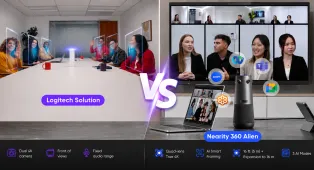
Limited and Unclear View In many cases, employees had to crowd tightly together around a single laptop camera in order to be seen and heard clearly. Other offices attempted to solve the issue by having each employee sit at their own computer while only one person remained unmuted as the active speaker. Whenever someone else needed to respond, microphones and speakers had to be switched manually.
Low Quality Sound This created constant interruptions, delayed natural conversation flow, and made quick back-and-forth discussion almost impossible. Audio feedback, lag, and unstable connections further reduced meeting quality. Combined with poor laptop camera quality and weak audio pickup, the meetings often became long, exhausting, and disengaging experiences. Several employees reportedly described the biweekly meetings — originally intended to improve engagement and team culture — as one of the most frustrating parts of their work routine.
The company also explored traditional AV integration solutions, but quickly encountered new limitations. Their office environments were not well suited for installing complex full-room conferencing systems, and the cost of deploying enterprise-grade AV infrastructure across multiple locations was far beyond what the company considered practical.
What they needed was something between a full-scale AV ecosystem and a basic laptop meeting setup: a solution simple enough for small operational offices, but powerful enough to deliver professional hybrid communication. That was when Nearhub entered the company’s consideration.
Nearhub’s Solution for Connection: Nearity 360 Alien
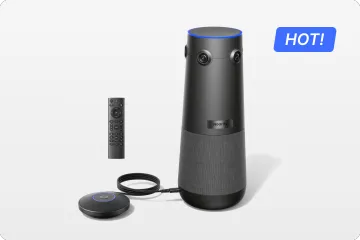
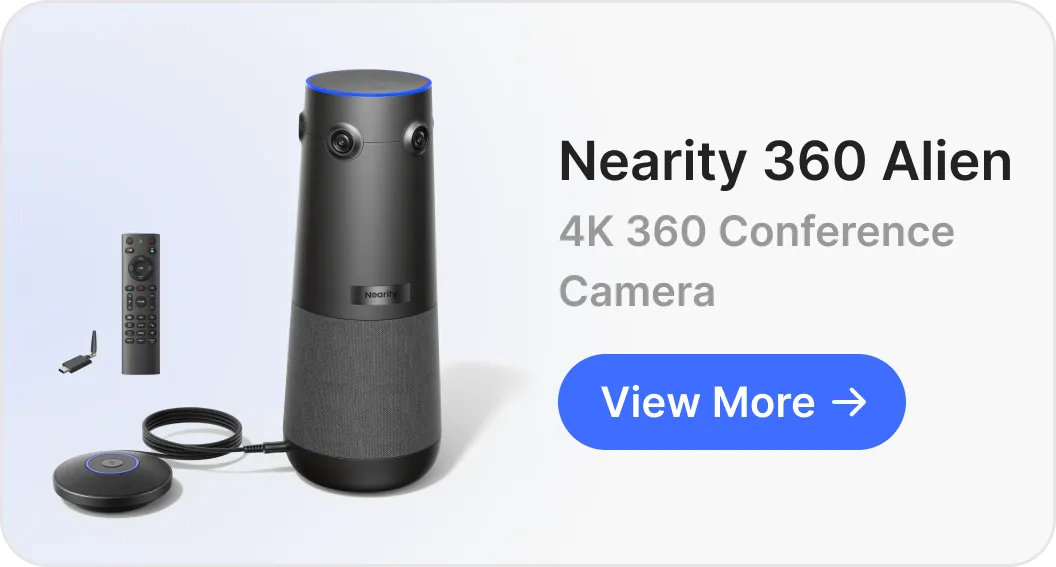
After learning more about the company’s operational structure and communication challenges, the Nearhub team recommended the Nearity 360 Alien as a scalable hybrid meeting solution for its distributed offices.
The company initially deployed four units across four different office locations for testing. During subsequent cross-office meetings, the improvement in audio and video quality from those offices immediately stood out compared to the others. As a result, the company eventually decided to equip every office with a 360 Alien system.
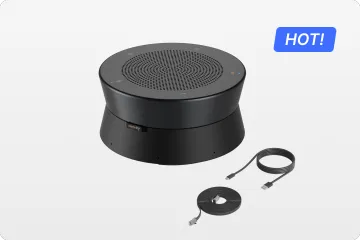
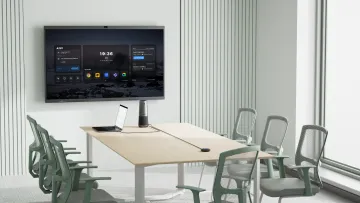
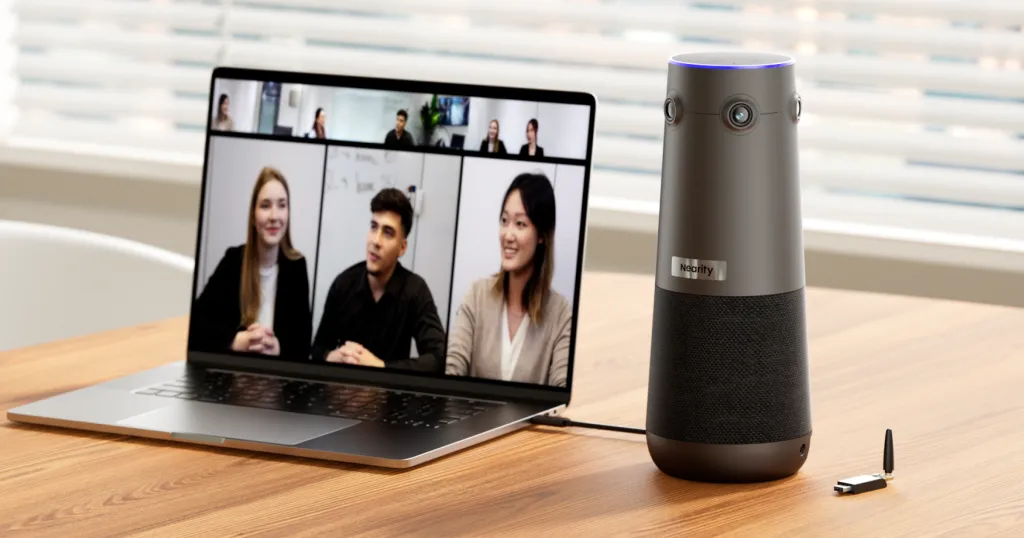
All-in-One & Plug-and-Play Solution One of the biggest advantages was the device’s all-in-one, plug-and-play design. Combined with expansion microphones and multiple mounting options, the 360 Alien could easily adapt to meeting rooms of different sizes, layouts, and participant counts across various office locations. Instead of creating a separate AV solution for every office, the company only needed a single standardized setup at each site to solve both audio and video challenges. Compared to traditional conference room systems, the deployment cost was significantly lower while still delivering a dramatic improvement in meeting quality and communication efficiency.
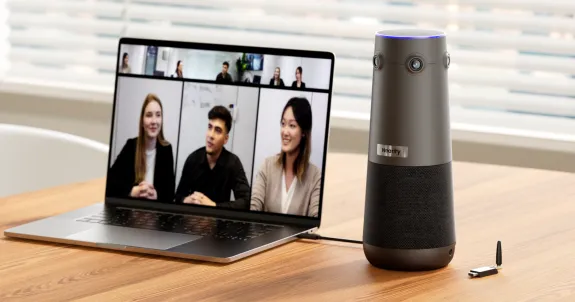
More Natural and Engaging Experience The 4K multi-camera system and AI-powered active speaker tracking significantly improved meeting engagement. Every participant in the room could now be clearly seen, and speaker tracking made conversations feel much more natural during discussions. Previously, employees often heard voices without knowing who was speaking. With the 360 Alien, the camera automatically focused on active speakers, creating a more intuitive and immersive communication experience across offices.
Clearer and Faster Communication Audio quality also improved dramatically. Equipped with a six-element omnidirectional microphone array, ProperClean™ 2.0 AI noise reduction, and AGC (Automatic Gain Control) technology, the system delivered clearer and more stable voice pickup throughout meetings. As a result, conversations became far more fluid and responsive. Quick back-and-forth discussions, spontaneous replies, and collaborative problem-solving could now happen naturally, much closer to the experience of face-to-face communication.
Rebuilding Team Connection Across Offices
Beyond technical improvements, the company found that the meeting experience itself changed significantly.
Meetings were no longer viewed as long, exhausting obligations. Instead, they gradually became what the company had originally intended them to be: a way to reconnect teams across different offices.
Employees could now clearly present updates, discuss operational issues with other branches, and participate in conversations without frustration or technical interruptions. Even casual moments — such as jokes, laughter, and spontaneous reactions — could now be shared naturally between teams in different cities, helping rebuild a stronger sense of connection and company culture across the organization.
As a company built around connecting supply chains, warehouses, and deliveries across regions, they understood that strong internal connection mattered just as much. With the Nearity 360 Alien, their offices were transformed from isolated operational sites into connected teams collaborating through a more seamless hybrid communication experience.
FAQs
Why did the cold chain logistics company choose the Nearity 360 Alien?
The company needed a solution that was simpler and more affordable than a full AV system, but significantly more capable than basic laptop-based meetings for distributed office collaboration.
How did the 360 Alien improve communication between offices?
Its 4K multi-camera system, AI-powered speaker tracking, and advanced noise reduction created clearer, more natural conversations that allowed teams across different locations to communicate more efficiently.
Is the Nearity 360 Alien suitable for small operational offices?
Yes. Its all-in-one plug-and-play design makes it ideal for operational environments without dedicated conference rooms or complex AV infrastructure.
Can the system adapt to different meeting room sizes?
Yes. With expansion microphone support and flexible mounting options, the 360 Alien can adapt to meeting spaces of different sizes, layouts, and participant counts.