Teams vs Zoom: Which Video Conferencing Platform Is Better in 2026?
A comprehensive comparison of Microsoft Teams vs Zoom for 2026, covering video quality, pricing, AI features, security, education use cases, and business scenarios.
microsoft teams vs zoom
video conferencing comparison
Updated: Aug 19, 2026 · 7 minutes read
Global Business, Brought Near.
No Installer, No Hassle, Just Works.
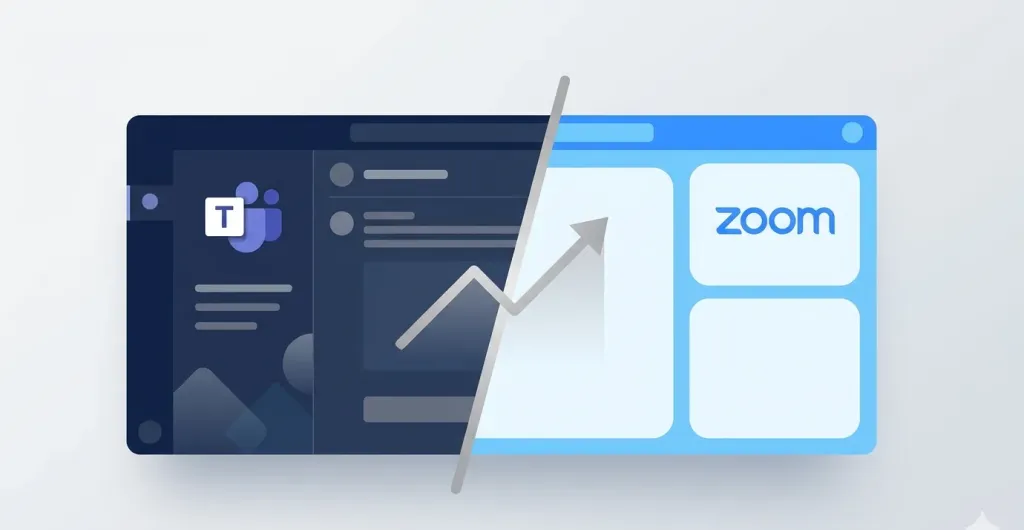
Choosing the right video conferencing platform in 2026 is a strategic investment that shapes how your organization communicates. The teams vs zoom debate has evolved far beyond video call quality into a complex comparison of AI capabilities, integration ecosystems, security frameworks, and specialized features for education and enterprise workflows.
Microsoft Teams and Zoom have both matured significantly. Zoom now offers Team Chat, Whiteboard, Docs, and Calendar, positioning it as a comprehensive workplace platform. Teams has strengthened its video engine while deepening connections to Microsoft 365. This guide examines every dimension of the microsoft teams vs zoom comparison to help you make an informed choice.
Executive Summary: Teams vs Zoom at a Glance
Feature Category
Microsoft Teams
Zoom
Best For
Internal collaboration in Microsoft 365 ecosystems
Zoom launched in 2011 as a video-first platform. Every architectural decision prioritized stream quality and ease of joining. This DNA made Zoom the default during the remote work revolution. By 2026, Zoom will have evolved into the Zoom Workplace platform while maintaining video meetings as its gravitational center. Zoom holds approximately 55.91% of the global video conferencing market.
Microsoft Teams launched in 2017 as a collaboration hub where chat, files, meetings, and apps converge. Its deepest strength is native Microsoft 365 integration—SharePoint for files, Outlook for scheduling, Word and Excel for real-time collaboration. Teams accounts for approximately 32.3% of the market.
By 2026, convergence is the defining trend. Zoom has built chat and document features to compete with Teams. Teams has enhanced video quality and external guest access to challenge Zoom. The zoom vs teams choice now depends more on ecosystem fit than capability gaps.
Zoom vs Teams: Video, Audio, and Meeting Features
Both platforms support 1080p HD at 30fps, but Zoom maintains an edge in consistency. Its video-first architecture maintains smoother video when network conditions deteriorate. Teams delivers excellent quality under good conditions but can vary when bandwidth fluctuates due to its multi-feature architecture.
For audio, Zoom offers more granular controls including multiple noise reduction levels, spatial audio, and personalized audio isolation. Teams has improved with AI-driven voice isolation. For typical meetings, both exceed expectations; differences matter mainly in specialized scenarios like musical performances or noisy environments.
Meeting Duration: Teams' free plan offers 60-minute meetings versus Zoom's 40 minutes. On paid plans, both offer 30-hour maximums. Participant Capacity: Both support 100 on free plans and up to 1,000 on enterprise tiers. Screen Sharing: Teams excels with PowerPoint Live and Excel Live for real-time document collaboration. Zoom offers richer annotation tools and multi-participant screen sharing. Breakout Rooms: Teams supports up to 50 rooms; Zoom supports up to 1,000 with participant self-selection.
AI Face-Off: Zoom AI Companion vs Microsoft Copilot
Zoom AI Companion is included free with all paid plans, offering meeting summaries, real-time transcription, smart recordings, AI-composed messages, and meeting catch-up for late joiners. Microsoft Copilot provides broader intelligence across email, documents, spreadsheets, and meetings but requires a separate license at approximately $30 per user per month.
For a 100-person organization, Zoom's AI costs $0 beyond the base subscription, while Copilot adds $3,000 monthly. Organizations must evaluate whether Copilot's cross-application intelligence justifies this premium.
Teams vs Zoom: Chat, Collaboration, and Whiteboard Tools
Teams offers sophisticated chat through teams and channels with threaded replies, persistent meeting chats, and deep search across conversations and files. Zoom Team Chat has developed significantly but remains more meeting-centric. For organizations where messaging drives daily workflows, Teams provides tangible productivity advantages.
Teams delivers transformative document collaboration through Word, Excel, and PowerPoint co-authoring during meetings, plus 1 TB storage per user. Zoom offers Zoom Docs and Whiteboard, but most Zoom-centric teams still rely on external tools like Google Workspace for serious document work.
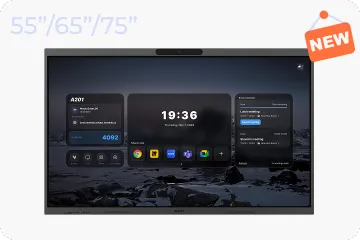
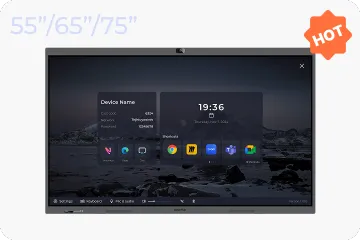
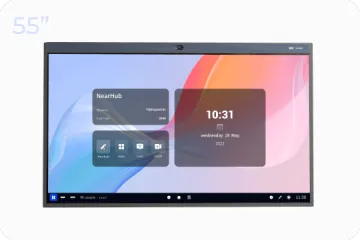
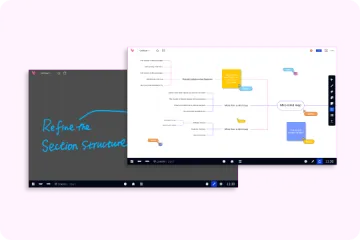
Both platforms offer digital whiteboards. Smart Whiteboard provides rich templates and Loop integration, and emphasizes simplicity and meeting integration. For hybrid environments, dedicated interactive hardware like 4K touch displays significantly enhances visual collaboration, allowing in-room participants to annotate naturally while remote attendees see every stroke clearly through screen sharing.
External vs Internal Meetings in Teams and Zoom
Zoom's greatest strength is frictionless external participation—click a link and join, no account or installation needed. This makes it ideal for sales, recruiting, consulting, and guest lectures. Teams is optimized for internal collaboration. While external access has improved, it retains more friction than Zoom. Many organizations adopt both: Teams for internal work, Zoom for external meetings. Learn more with our guide to scheduling Zoom meetings.
Teams vs Zoom: Security, Compliance, and Pricing
Teams leverages Microsoft's enterprise security with Entra ID integration, two-factor authentication, DLP, eDiscovery, and compliance with HIPAA, GDPR, ISO/IEC 27001, and FedRAMP. Zoom offers AES-256 encryption, end-to-end encryption, waiting rooms, and compliance with HIPAA, GDPR, SOC 2, and FERPA. Both exceed requirements for most organizations; Teams holds an advantage for the most security-sensitive environments.
Pricing Comparison
Plan
Microsoft Teams
Zoom
Entry Paid
$4.50/user/month
$14.16/license/month
Mid-Tier
$7.00/user/month (Business Basic)
$18.33/license/month (Business)
Premium
$14.00/user/month (Business Standard)
Custom (Enterprise)
AI Features
+$30/user/month (Copilot)
Included (AI Companion)
Storage
1 TB/user (Business)
10 GB-5 TB (varies by plan)
Teams offers better value when you already use Microsoft 365, want integrated productivity tools, and prefer all-in-one administration. Zoom offers better value when AI features are essential, your primary need is video conferencing excellence, and simpler pricing appeals. Check out our tutorial on how to send a Zoom invite for external meeting workflows.
Teams vs Zoom: Integrations and User Experience
Teams offers 2,500+ integrations with deep Microsoft 365 connectivity. Zoom offers 3,000+ integrations with broad third-party support, including a powerful Zapier integration for automated workflows. The choice depends on your existing tool stack: Teams for Microsoft-centric environments, Zoom for diverse ecosystems.
User Interface Comparison
Zoom prioritizes minimalism with a famously clean interface. Most users understand essential controls within minutes. Teams presents a feature-rich interface that can feel overwhelming initially but rewards investment with powerful integrated workflows. Zoom accelerates adoption; Teams rewards power users.
Microsoft Teams vs Zoom for Education
Microsoft Teams for Education offers Class teams with OneNote Class Notebook integration, assignment workflows, attendance tracking, Reading Progress, and Reflect check-ins. Microsoft 365 Education is free for students and educators. School Data Sync automates class creation from student information systems.
Zoom for Education provides reliable video with polling, focus mode, and frictionless guest access for parent-teacher conferences. Its video consistency is valuable where students join from homes with varying internet quality.
For K-12 schools, Teams' integrated assignment workflows typically provide better value. For higher education, many universities use both—Teams for course management, Zoom for large lectures and public events. Pairing either platform with interactive smart whiteboards helps teachers write naturally on large displays while remote students see every pen stroke clearly.
Teams vs Zoom for Business: Use Cases and Recommendations
Small businesses on Microsoft 365 find Teams included at a remarkable value. Those on Google Workspace may prefer Zoom's standalone value and included AI. Large enterprises benefit from Teams' unified administration and security, though most maintain some Zoom presence for external meetings. Sales teams prefer Zoom for frictionless client calls. Remote teams find Teams' persistent channels create shared space; Zoom supports this through reliable video and asynchronous capabilities.
Decision Framework
Inventory your ecosystem: Microsoft 365 users should lean on Teams; diverse tool users should lean on Zoom.
Evaluate AI needs: Budget-conscious organizations get more AI value from Zoom.
Model total cost: Include licensing, AI, storage, phone, and training over three years.
Consider your users: Zoom's gentler curve helps mixed technical populations; Teams rewards power users.
Recommendations by Organization Type
Organization Type
Recommendation
Key Reason
K-12 Schools
Microsoft Teams
Free Microsoft 365 Education, assignment workflows
Higher Education
Teams + Zoom hybrid
Teams for courses, Zoom for large lectures
Small Business (Microsoft 365)
Teams
Bundled value, integrated productivity tools
Small Business (Google/Diverse)
Zoom
Better standalone value, included AI Companion
Large Enterprise
Teams primary + Zoom supplement
Enterprise security, unified administration
Sales/Client-Facing
Zoom
Frictionless external meetings, CRM integration
Healthcare
Teams with Teams Phone
HIPAA compliance, clinical workflow integration
Nonprofit
Teams
50-75% nonprofit discounts on licensing
Microsoft Teams vs Zoom: FAQs
Which is better for beginners: Teams or Zoom?
Zoom has a gentler learning curve with a simpler interface. Teams has more features to discover but delivers greater long-term productivity for invested users.
Can you use both Microsoft Teams and Zoom together?
Yes. Many organizations use Teams for internal collaboration and Zoom for external meetings. The Zoom for Teams app enables scheduling Zoom meetings from within Teams. For Google Calendar users, see our guide to adding Zoom to Google Calendar.
Which platform has better video quality?
Both support 1080p HD. Zoom delivers more consistent quality across diverse network conditions due to its video-first architecture.
Which is cheaper?
Teams starts at $4.50/user/month versus Zoom's $14.16. However, Zoom includes AI Companion free while Teams' Copilot costs an additional $30/user/month.
Which is better for large webinars?
Zoom has a more mature webinar platform with dedicated features. Teams Town Halls offer strong integration for post-event engagement. For public events, Zoom generally wins.
Is either platform reliable offline?
Neither supports video conferencing offline. Teams allows reading cached messages without connectivity. Both defer to productivity suites for offline document work.
What about accessibility?
Both offer robust accessibility including live captions, keyboard shortcuts, and screen reader support. Both meet WCAG 2.1 AA standards.
Final Verdict: Should You Choose Teams or Zoom?
The Teams vs. Zoom decision depends on alignment with your workflows and technology investments. Microsoft Teams excels as a Microsoft-centric collaboration hub with deep productivity integration and enterprise security. Zoom excels as a video-first platform with frictionless external access, consistent quality, and AI features included at no extra cost.
Many organizations adopt both in a complementary configuration—Teams for internal collaboration, Zoom for external meetings. In the zoom vs microsoft teams evaluation, success ultimately depends on how well your chosen tools align with how your people actually work. For organizations enhancing hybrid meeting experiences, the NearHub Max Interactive Smart Whiteboard offers a platform-agnostic 4K touch display that works seamlessly with both Teams and Zoom, elevating visual collaboration in any meeting space.