Morning Meeting Questions for Kids by Age: 80+ Question of the Day Ideas for Every Grade
Age-appropriate morning meeting questions and daily questions for students from preschool through high school, organized by developmental stage.
classroom community
student engagement
SEL activities
Updated: Aug 20, 2026 · 7 minutes read
Global Business, Brought Near.
No Installer, No Hassle, Just Works.
Morning meeting questions only work when they match a child's cognitive and social stage. This guide provides 80+ age-appropriate questions for preschool through high school, plus practical strategies for presenting them so every student participates.
Key Takeaways
Preschool and kindergarten students need concrete, visual questions about immediate experiences, not abstract hypotheticals.
Middle schoolers respond best to questions about identity, social dynamics, and personal agency—not surface-level icebreakers.
High schoolers need questions that challenge assumptions and connect to real-world decision-making, not generic preference polls.
The format you use to present questions matters as much as the questions themselves; digital displays improve visibility and inclusion in large classrooms.
The most common mistake teachers make with morning meeting questions is treating all students as if they think the same way. A question that sparks a lively debate among eighth graders will leave kindergarteners staring blankly. A question that delights a five-year-old will make a sixteen-year-old roll their eyes. The best morning meeting questions for kids are not the most creative ones—they are the ones that match the child's developmental stage.
This guide provides over 80 age-appropriate morning meeting questions and daily questions for students, organized by grade band from preschool through high school. Each section explains why these questions work for that age group, not just what to ask. Whether you are building a new morning routine or refreshing a stale one, you will find questions that genuinely engage students at every level.
For even more sharing inspiration, see our complete collection of 120 marvelous morning meeting sharing ideas covering greetings, activities, and creative prompts for all ages.
Why Age-Appropriate Questions Matter More Than Clever Questions
Morning meeting questions serve a developmental purpose, not just a social one. Preschoolers are in the preoperational stage—they think concretely about the here and now. Ask a five-year-old "What would you do with a million dollars?" and you will get answers about buying ice cream or toys because they cannot conceptualize abstract wealth. Ask a sixteen-year-old "What is your favorite color?" and you have wasted an opportunity to build critical thinking.
The underlying principle is cognitive load matching. When a question is too complex for a student's developmental stage, the brain devotes all its energy to understanding the question rather than formulating a meaningful answer. When a question is too simple, the brain disengages entirely. Effective morning meeting questions sit in the "productive challenge zone"—hard enough to require thought, simple enough to answer in under a minute.
This principle has a practical implication many teachers overlook: the same question format can work across ages if you adjust the abstraction level. "What made you smile this week?" works for all ages because it asks for a concrete memory. "What is the most important quality in a leader?" only works for students who can handle abstract character judgment—typically middle school and above.
Morning Meeting Questions for Preschool and Kindergarten (Ages 4–6)
Young children need questions grounded in sensory experience, immediate memory, and concrete objects. Avoid hypotheticals, abstract concepts, and questions requiring perspective-taking. The best questions for this age group produce one-sentence answers and often spark a show-and-tell impulse.
The Developmental Logic
At ages four to six, children are building vocabulary rapidly but reasoning from personal experience only. They do not yet understand that other people have different thoughts or preferences. Questions should therefore focus on their own direct experience, not comparisons or predictions about others.
20 Questions for Preschool and Kindergarten
What is something you saw today that was the color red?
What did you eat for breakfast this morning?
Show us your favorite face: happy, silly, surprised, or sleepy.
What animal sound can you make the best?
What is your favorite thing to do on the playground?
Did you see anything interesting on your way to school today?
What is your favorite thing to build with blocks?
What is something that feels soft?
If you could bring one toy to school today, what would it be?
What is your favorite song we sing at school?
What is something that smells good?
Do you like rainy days or sunny days better?
What is your favorite thing to draw?
What is something you are really good at?
What is your favorite storybook character?
What do you like to do with your family on weekends?
What is your favorite fruit or vegetable?
If you could be any animal for one day, which one?
What is something that makes you laugh?
What are you looking forward to doing today?
Presentation Tip for Young Learners
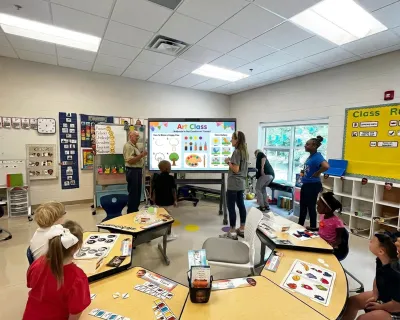
Pair each question with a visual. Display a photo of a red object when asking about colors, or show animal pictures when asking about animal sounds. A large interactive display allows you to drag and drop images as visual anchors, which dramatically improves comprehension and participation for English language learners and students with speech delays.
Morning Meeting Questions for Elementary Students (Grades 3–5, Ages 7–10)
Elementary students have entered the concrete operational stage. They can classify, compare, and understand simple cause-and-effect relationships. They are also developing a sense of fairness and beginning to notice social dynamics. Questions can now include light hypotheticals, preferences with reasoning, and simple moral dilemmas.
The Developmental Logic
Seven- to ten-year-olds are learning to explain why they think something, not just what they think. Questions that ask for a reason—"What is your favorite season and why?"—build the mental habit of justification. This is also the age where peer comparison begins, so questions should avoid creating social hierarchies ("Who is the best at…") and instead focus on personal experience.
20 Questions for Elementary Students
What is one thing you are looking forward to this week?
If you could have any superpower for one school day, what would it be?
What is your favorite thing about your best friend?
What is one thing you are proud of from last week?
If you could invent something to make school easier, what would it do?
What is your favorite book you have read this year?
What is something kind you did for someone recently?
If you could visit any place in the world for a day, where would you go?
What is one thing you want to get better at this year?
What is your favorite thing to do with your family?
If you were the teacher for one day, what rule would you make?
What is something that always makes you feel better when you are sad?
What is your favorite subject in school and why?
If you could only eat one food for a whole week, what would you choose?
What is one thing you are grateful for today?
What is the hardest thing you have ever learned to do?
If your pet could talk, what do you think it would say?
What is something new you learned recently?
What makes a good friend?
What would your perfect Saturday look like?
Presentation Tip for Elementary Classrooms
At this age, students begin noticing who speaks often and who does not. To prevent the same voices from dominating, use a "write then share" format. Display the question on a large screen, give students 30 seconds to write or draw their answer on individual whiteboards or in journals, then call on volunteers. This pre-writing step gives shy students time to formulate their thoughts and reduces anxiety about speaking.
Beyond writing answers, you can also spark participation through interactive learning games to keep students engaged. Games work particularly well on the days when students arrive with low energy and need a warm-up before diving into discussion questions.
Morning Meeting Questions for Middle Schoolers (Grades 6–8, Ages 11–13)
Middle school is the most challenging age for morning meeting questions. Students are acutely aware of social judgment, developing abstract reasoning, and questioning authority. Questions that feel childish or forced trigger immediate disengagement. The key is respecting their growing sophistication while keeping the activity low-stakes.
The Developmental Logic
Early adolescence brings metacognition—the ability to think about thinking. Middle schoolers can now reflect on their own emotions, values, and social identity. They are also highly sensitive to social comparison. Questions should therefore avoid putting students on the spot with overly personal prompts while still encouraging genuine self-expression.
The most effective approach at this age is opinion-based questions with no right answer. "Would you rather…" questions work well because they frame preference as choice rather than judgment. Questions about identity and values resonate because this is the age where students are actively constructing their self-concept.
20 Questions for Middle Schoolers
What is one thing adults do not understand about being your age?
Would you rather be famous for something embarrassing or completely unknown?
What is one skill you have that most people at school do not know about?
If you could change one school rule, which one and why?
What is something you used to believe that you now think differently about?
What makes someone a good leader?
If you could design an app to solve a real problem, what would it do?
What is the hardest part about being a middle schooler?
Would you rather have the ability to read minds or be invisible?
What is one small change you could make today that would have a big impact?
What does success mean to you?
If you could ask your future self one question, what would it be?
What is something that genuinely scares you?
What is the best advice you have ever received?
If you were in charge of the school for a day, what is the first thing you would change?
What is one thing you are passionate about that your classmates might not guess?
Do you think social media helps or hurts friendships? Why?
What is one goal you have for this school year?
If you could live anywhere in the world as a teenager, where would you choose?
What makes you feel truly understood?
Presentation Tip for Middle School Classrooms
Middle schoolers are highly attuned to fairness. Use a randomization tool—displayed on a classroom screen—to select who answers each day. This removes the perception of teacher favoritism and reduces the social pressure of volunteering. Alternatively, use digital polling where students submit answers anonymously via a shared board, then discuss the aggregate results as a class. This approach gives every student a voice without forcing individual public vulnerability.
Morning Meeting Questions for High Schoolers (Grades 9–12, Ages 14–18)
High school students have developed formal operational reasoning. They can think abstractly, consider multiple perspectives, and engage with complex ethical and philosophical questions. Morning meeting questions at this level should treat students as emerging adults capable of nuanced thought—not as children who need entertainment.
The Developmental Logic
By high school, students are constructing their worldview. They are thinking about career paths, social issues, and their role in society. Questions that connect classroom community to real-world issues feel relevant. Questions that are purely recreational feel like a waste of time. The best high school morning meeting questions often blur the line between community-building and critical thinking practice.
20 Questions for High Schoolers
What is one issue in the world today that you genuinely want to help solve?
If you could interview any living person, who would it be and what would you ask?
What is something you have changed your mind about in the past year?
What does it mean to live a good life?
If you could give one piece of advice to every freshman, what would it be?
What is a belief you hold that most of your peers disagree with?
What is one thing school teaches well, and what is one thing it does not teach enough?
If you had to choose a career today with no possibility of changing, what would you pick?
What is the most important quality you look for in a friend?
What is one habit you are trying to build or break?
Do you think people are mostly good, mostly bad, or neither? Why?
What is a risk you are glad you took?
If you could change one thing about how society works, what would it be?
What is something you are genuinely curious about right now?
What is the difference between being happy and being fulfilled?
What role does technology play in your social life—is it mostly positive or negative?
If you could master any skill instantly, which would you choose?
What is one thing you wish adults would ask you about more often?
What does integrity mean to you, and when is it hardest to maintain?
What are you most looking forward to in the next five years?
Presentation Tip for High School Classrooms
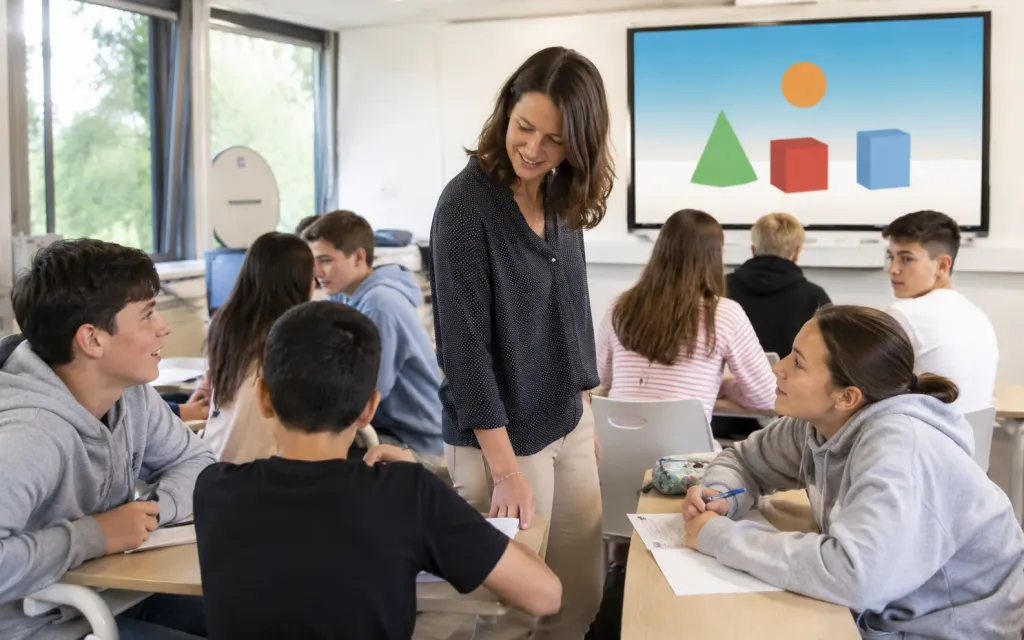
High schoolers often resist traditional "morning meeting" framing because it feels juvenile. Reframe the activity as a "daily opening question" or "think-pair-share prompt." Display the question on a large screen as students enter the room, and let them discuss in small groups before any whole-class sharing. This respects their social dynamics—many high schoolers are more comfortable sharing with two peers than with twenty—and produces more thoughtful responses.
How to Present Morning Meeting Questions So Every Student Engages
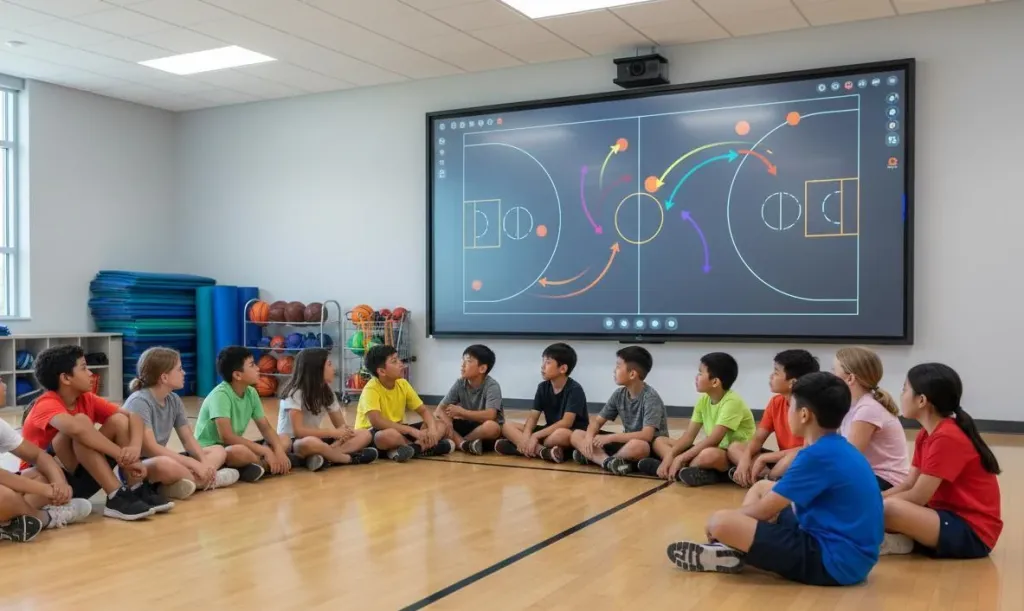
The questions you choose matter, but how you present them matters just as much. A great question displayed on a crumpled piece of paper at the front of the room will fail. A mediocre question displayed clearly on a large interactive screen, with space for students to write or draw responses, will succeed.
The Visibility Problem
In a typical classroom, students in the back row cannot read a question written on a standard whiteboard. Students with vision challenges struggle even more. When students cannot see the question clearly, they disengage before the activity begins. A large 4K display solves this by rendering text large enough for every seat in the room.
The Participation Problem
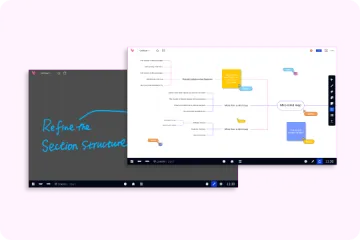
Not every student wants to speak aloud. Some are shy. Some are processing language more slowly. Some simply prefer writing to speaking. An interactive display allows multiple participation channels: students can write responses directly on the screen, drag digital stickers to vote, or submit answers via a connected device. This creates multiple on-ramps to participation instead of a single verbal gate.
A Practical Classroom Scenario
Ms. Patel teaches a mixed fourth-fifth grade class of 28 students. She used to write the morning question on a small whiteboard by her desk. Three students near the front dominated the discussion. Seven students in the back rarely contributed because they could not see the question clearly and felt disconnected from the conversation.
She switched to displaying questions on a large interactive board at the front of the room. Now every student can read the question from their seat. She uses the split-screen feature to show the question on one side and a timer on the other, giving students two minutes to write their answers in journals before sharing. Shy students now contribute by writing directly on the board during group activities. Participation increased from roughly 40% of the class to over 80% within two weeks.
If you are evaluating whether an interactive display fits your teaching style, our guide on how smart boards work in the classroom breaks down the practical benefits, common challenges, and what to look for when choosing a model for your school.
Why an Interactive Board Changes the Dynamic
A dedicated interactive display does three things a regular whiteboard cannot:
It scales visibility. Text, images, and videos render at 4K resolution, readable from every angle in the room.
It enables multi-student interaction. Multiple students can write, draw, or move objects on the screen simultaneously, turning a one-to-many presentation into a collaborative activity.
It preserves the routine. Teachers can save question sets, revisit favorites, and build a searchable question bank over time—no more rewriting the same questions week after week.
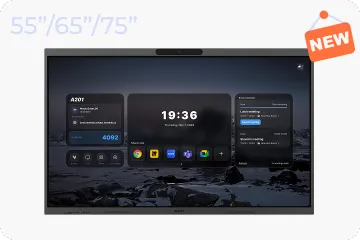
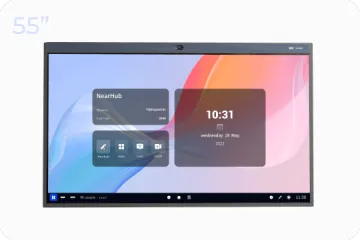
For classrooms and meeting rooms that need a display built for collaborative learning, the Nearhub Board Max runs full Windows 11 Pro, supports every major educational app, and allows wireless casting from any student or teacher device. Its 40-point multi-touch surface lets multiple students interact at once, and the built-in 8-microphone array with AI noise reduction ensures every voice is heard clearly during hybrid or remote morning meetings.
The Trade-off: Open-Ended vs. Structured Questions
Not all morning meeting questions are created equal, and the format you choose creates different classroom dynamics. Understanding this trade-off helps you match question type to your goal.
Question Type
Best For
Risk
Example
Open-ended
Building deep connection; encouraging storytelling
Can derail the schedule if answers run long; shy students may freeze
Can feel trivial if overused; does not build deep empathy
"Would you rather fly or be invisible?"
This or That
Very fast check-in; building group consensus
Minimal depth; students learn little about each other
"Pizza or tacos?"
Reflective
Developing metacognition; SEL goals
Requires longer thinking time; not ideal for energetic mornings
"What is one thing you changed your mind about?"
Current Event
Connecting classroom to world; critical thinking
Can become divisive; requires teacher facilitation skill
"What is one issue you want to help solve?"
The non-intuitive insight: The most engaging morning meetings typically use a mix of question types across the week, not the same format every day. A "This or That" Tuesday creates a low-energy entry point. A reflective Thursday builds depth. A "Would You Rather" Friday ends the week with levity. Varying the format prevents routine fatigue and serves different social-emotional needs on different days.
Frequently Asked Questions
How do morning meeting questions differ by age group?
Preschoolers and kindergarteners need concrete, sensory questions about immediate experiences. Elementary students can handle light hypotheticals and preference questions with simple reasoning. Middle schoolers respond best to identity and social dynamics prompts that respect their growing sophistication. High schoolers need questions that challenge assumptions and connect to real-world issues. The key is matching cognitive development stage to question complexity—a mismatch in either direction produces disengagement.
How many morning meeting questions should I prepare per week?
Prepare one fresh question per school day. Repeating questions within the same week reduces engagement because students begin predicting the pattern. Many teachers build a rotating bank of 30 to 40 age-appropriate questions and cycle through them monthly, adding seasonal or current-event questions as needed. After a full cycle, students rarely remember questions from two months prior, so the bank can be reused with minimal repetition fatigue.
What is the best way to display morning meeting questions in a large classroom?
Use a large digital display visible from every seat. An interactive whiteboard allows you to display the question in large text, embed images for younger students, and let students write or draw responses directly on screen. This improves visibility for students in the back row and creates an inclusive space for shy students who prefer writing over speaking. For teachers who rotate between classrooms, a portable interactive board on a wheeled stand makes the routine transportable.
Should morning meeting questions be mandatory or voluntary?
Use a graduated approach: make participation mandatory in formats that feel safe, like group responses, digital polling, or writing on a shared board. Make individual verbal sharing voluntary, especially for personal questions. The goal is 100% participation through multiple channels, not 100% verbal sharing from every student. A student who writes an answer on the board has participated fully, even if they never speak aloud.
How long should a morning meeting question activity last?
For preschool and elementary, 5 to 8 minutes including the question and brief shares. For middle and high school, 8 to 12 minutes allows for deeper discussion. If a question sparks genuine engagement, it is worth extending to 15 minutes occasionally. Consistency matters more than duration—students benefit more from a daily 7-minute routine than an occasional 20-minute session. The routine signals safety and predictability, which is itself a social-emotional benefit.
Start Building Your Age-Appropriate Question Bank Today
Morning meeting questions are not icebreakers. They are a daily opportunity to build cognitive skills, social connection, and emotional awareness—one question at a time. The key is matching the question to the child's mind, not the other way around.
Start with one question from each age band in this guide. Test them for a week. Notice which questions produce silence, which produce one-word answers, and which produce genuine conversation. Within two weeks, you will know your students' developmental sweet spot—and you will have built a question bank that actually works.
For a broader collection of morning meeting activities, greetings, and sharing prompts, explore our 120 marvelous morning meeting sharing ideas. If you are looking for a display solution that makes every question visible and every student heard, learn more about the Nearhub Board Max—an interactive whiteboard built for classrooms that need collaborative learning at scale.