How to Run a PTA Meeting That People Actually Show Up For (2026 Organizer's Guide)
PTA meeting attendance can be dramatically improved by removing logistical friction, implementing structured agendas, treating remote participants as equals, and ensuring transparent follow-ups.
PTA Meeting
Hybrid Meetings
School Engagement
Updated: Aug 19, 2026 · 7 minutes read
Global Business, Brought Near.
No Installer, No Hassle, Just Works.
You spent two weeks preparing. You sent the calendar invite, printed the agenda, arranged the chairs. Then 11 people showed up — three of whom were on their phones — and the one topic that actually needed a vote got deferred to next month because quorum was questionable.
If that sounds familiar, this guide is for you.
Running a PTA well is a skill, and it's learnable. The difference between a meeting that drains people and one they actually look forward to comes down to a few repeatable habits: a tighter agenda, cleaner communication, and the right setup for parents who can't make it in person. Here's how to build all three.
Key Takeaways
Eliminate Logistical Friction: Address common barriers by providing childcare (e.g., partnering with school honor societies), offering food, and respecting parents' time with hard stops.
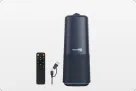
Optimize for Hybrid Formats: Avoid treating remote parents as passive viewers; utilize 360° cameras with AI tracking (like the Nearity 360 Alien) and dedicated chat moderators to keep them included.
Strict Time-Boxing: Assign specific durations to each agenda item and utilize a visible physical or digital timer to prevent meetings from meandering past 75 minutes.
Actionable Pre- & Post-Communication: Send structured, single-screen meeting memos 48 hours prior to the event, and distribute a clear action-tracker recap within 24 hours.
Proactive Facilitation: Manage dominant voices with speaker lists and engage introverted or quiet attendees through quick "pair-share" discussions.
Why Attendance Drops — and What Actually Fixes It
Parent involvement is one of the strongest predictors of student success — that's well-documented by the National PTA. Yet most associations struggle to fill a room. The reason is rarely lack of caring. It's friction.
The most common friction points are:
Meetings that run long with no visible outcome. Parents leave wondering why they came.
No childcare or parking. Logistical barriers quietly filter out entire groups of families.
Remote attendance that feels second-class. Dialing into a laptop sitting on a folding table in a cafeteria is a discouraging experience.
Decisions that happen off-meeting. If the important stuff gets decided in a side thread, regular attendees feel the meeting is performative.
Fix these, and attendance follows. The rest of this guide is the how.
Before the Meeting: The Only Prep Checklist You Need
The meeting's quality is determined in the 48 hours before it, not during it.
One week out:
Confirm the room (and test the hybrid tech if you're using it)
Draft the agenda with time allocations for each item
Identify any decisions that require a vote, and prepare the background materials
48 hours out:
Send the meeting memo (see Section 3) with agenda attached
Share any financial reports or proposals that require pre-reading — never read documents aloud in the meeting itself
Confirm childcare arrangements if you're providing them
Day of:
Arrive 20 minutes early to set up seating and test the connection for remote attendees
Assign a timekeeper (rotate this role)
Set a physical or digital timer visible to the room
The agenda format that works:
Item
Owner
Time
Call to order + welcome
Chair
2 min
Approve previous minutes
Secretary
3 min
Treasurer's report
Treasurer
5 min
Officer updates
Each officer
2 min each
Main agenda item(s)
Owner
15–20 min
New business / open floor
All
10 min
Action item review + next meeting
Chair
5 min
Adjourn
Chair
—
One primary goal per meeting. If you walk in without a clear answer to "what does this meeting need to accomplish?", the meeting will meander. Pick one main item and protect it.
Writing a Meeting Memo That Gets Read
Most PTA meeting announcements look like forwarded emails — inconsistent formatting, buried logistics, no clear ask. If a parent has to hunt for the Zoom link, you've already lost them.
A good memo does three things: tells parents why this meeting matters to them specifically, tells them what to read before they arrive, and makes it trivially easy to join. Keep it to one screen — if it needs scrolling, it's too long.
Two habits that make a real difference:
Use the same template every time. Consistency means parents know exactly what to look for and stop ignoring the emails. And send a short SMS reminder an hour before — a single text meaningfully improves last-minute turnout.
Setting Up for Hybrid: Making Remote Parents Feel Present
Hybrid meetings fail in one specific way: in-person attendees talk to each other while remote participants watch a static wide shot and miss half the audio. The remote experience feels like watching a stream of a meeting you weren't invited to.
The fix has two parts: audio and framing.
Audio first. A single laptop mic in a cafeteria or library will not capture the parent three rows back. Either use a dedicated speakerphone/mic in the center of the room, or seat the in-person group close enough that one good microphone covers everyone.
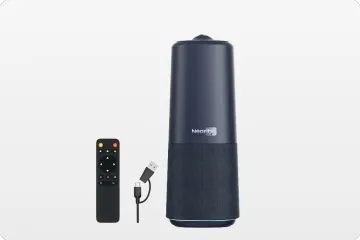
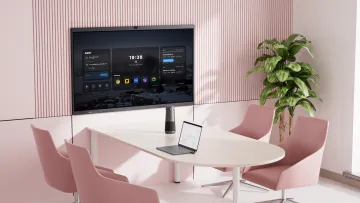
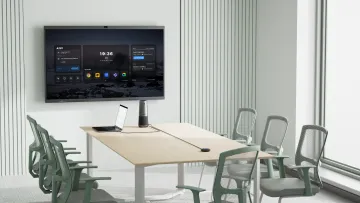
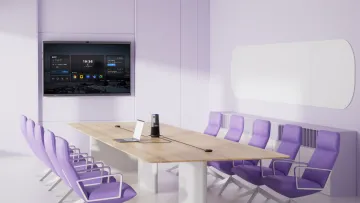
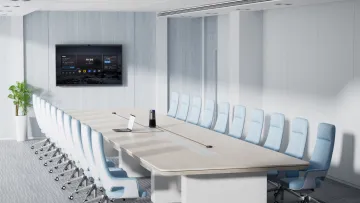
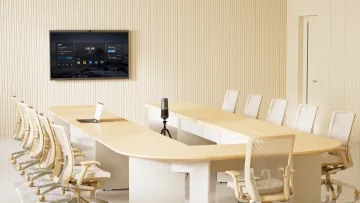
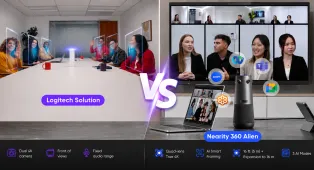
Camera coverage. For rooms larger than a small conference room — a school library, a cafeteria corner, a gymnasium stage area — a standard fixed-angle webcam misses most of the room. A 360° all-in-one camera handles this well: it captures every seat and typically includes a microphone array, so you get both problems solved in one device. The Nearity 360 Alien is worth looking at for this use case — true 4K capture, AI speaker tracking, and built-in audio. One unit placed in the center of the room is sufficient for most school meeting spaces.
Facilitation adjustments for hybrid:
Explicitly call on remote attendees by name during discussion — they won't jump in naturally the way in-person attendees do
Designate one person to monitor the chat for remote questions
Announce votes clearly and give remote participants time to respond before tallying
If you're recording, say so at the start and send the link in the recap
Running the Room: Facilitation That Keeps Things Moving
Good facilitation is mostly about being willing to interrupt politely.
Start and end on time, always. This is the single highest-leverage habit. Starting late rewards people who arrive late and punishes people who were on time. After a few meetings, everyone adjusts to your actual start time.
The time-box. Assign a number of minutes to each agenda item before the meeting. When time is up, the Chair calls it: either move to vote, extend by 5 minutes with the room's agreement, or table it to a sub-committee. Do not let discussion continue indefinitely.
The participant types you'll encounter — and what to do:
The same three people dominate every discussion. Use a speaker's list: hands raised, names added to a queue. This physically limits the floor to one person at a time and creates space for quieter voices.
One person is telling a long personal story. Redirect warmly and specifically: "That context is helpful — to make sure we stay on track, can we land on a recommendation for the agenda item?"
Nobody is talking. Try a brief pair-share: "Take 60 seconds and tell the person next to you what you think about this." Introverts often contribute more after a small-group warm-up. Follow with: "Did anyone hear something worth sharing with the room?"
A debate is going in circles. Summarize both sides out loud, then call it: "We've heard two clear positions. Let's either vote now, assign a sub-committee to bring a formal proposal next month, or table it. Which does the room prefer?"
The 75-minute rule. If a meeting regularly exceeds 75 minutes, the agenda is too full. Split recurring heavy topics into their own working sessions outside the main meeting, and report back with a recommendation rather than deliberating in front of the full group.
The Follow-Up: Turning Decisions Into Action
The meeting recap is not optional. It's the moment where a decision either becomes real or quietly disappears.
Send the recap within 24 hours, while the meeting is fresh. Every action item needs an owner and a deadline — not "someone will look into this," but "Maria will contact the vendor by June 15."
Keep a running action-item tracker (a shared Google Sheet works fine) so nothing falls through the cracks between meetings. Review open items at the start of each session before moving to new business.
Boosting Attendance and Broadening Participation
A PTA that only hears from the same ten parents is making decisions with incomplete information. Widening participation is part of the job.
Remove the practical barriers first:
Childcare: Partner with a school club (Honor Society, Key Club) to supervise younger kids in an adjacent room during the meeting. This alone meaningfully expands who can attend.
Food: A modest spread signals that the meeting is worth showing up for and gives people a reason to arrive a few minutes early.
Language access: If your school community includes significant non-English-speaking populations, prepare key materials in translation. For live meetings, tools like Google Meet's live captioning or a bilingual volunteer can help.
Marketing that actually works:
A calendar invite sent once isn't enough. A brief social post on the school's parent Facebook group or Instagram story one or two days before — showing what will be discussed — gets more traction than a formal announcement. Specific beats vague: "We're voting on the Science Fair budget Thursday at 7pm" outperforms "PTA meeting this week."
The "bring a contact" ask is also underrated: if every regular attendee brings one new parent, attendance compounds quickly.
Capture first-timers well. Have a short printed or digital welcome note for anyone who's attending for the first time. Explain how decisions get made, how to get involved, and who to contact. People stay if the first experience feels organized and welcoming.
Handling the Hard Moments
Q: The same small group makes all the decisions, and others feel shut out. Implement term limits for committee chairs. Actively recruit "shadows" for every leadership role — people who attend to learn the role before stepping into it. This builds a pipeline and distributes ownership.
Q: Turnout is low and energy is flat. Open every meeting with a 2-minute win. A teacher sharing how a PTA-funded resource changed their classroom. A photo of kids using new equipment. A parent who coordinated an event reporting back. The "why" needs to be visible every time.
Q: A topic turns political or heated. The Chair's job is to redirect, not referee the substance: "Our focus here is student outcomes. How does this decision affect what happens in the classroom?" If tensions stay high, close that item and return to it next month with a proposed structure for the discussion.
Q: Technical difficulties mid-meeting. Designate a tech point person before every meeting — ideally a parent who handles this as their contribution rather than one of the officers. Their job is to monitor the remote feed, chat, and audio, and flag issues before they derail the room.
What Your PTA Meeting Documents Should Cover
Meeting memo (sent before the meeting):
Time, location, and remote join link
The main agenda item in one or two sentences — what's being discussed and why it matters
Any materials attendees should read in advance
How to RSVP
Meeting recap (sent within 24 hours after):
Decisions made — stated clearly, not buried in prose
Action items: who is responsible, and by when
Next meeting date and main topic
FAQs
1. Is a 360° camera actually necessary for a PTA meeting, or is a laptop enough?
For small groups in a quiet room, a laptop works. But most PTA meetings happen in larger spaces — a school library, cafeteria, or multi-purpose room — where a single webcam only captures one end of the table and picks up echo. A 360° camera like the Nearity 360 Alien covers the whole room from a single central placement, so remote parents can see and hear whoever is speaking, regardless of where they're sitting.
2. What makes the Nearity 360 Alien suitable for school meeting spaces specifically?
School rooms tend to be acoustically challenging — hard floors, high ceilings, irregular shapes. The 360 Alien has a built-in microphone array designed to handle these conditions, plus AI speaker tracking that automatically focuses on whoever is talking. That means you don't need a separate mic setup or someone manually adjusting the camera mid-meeting.
3. How easy is it to set up for a non-technical PTA organizer?
It's a single USB-C connection — plug it into the laptop running Zoom or Google Meet, place it in the center of the table or room, and it works. No drivers, no separate software. Most organizers get it running in under two minutes.
4. Can the 360 Alien record the meeting for parents who couldn't attend?
Yes — because it connects directly to your video conferencing platform, recording works through whatever tool you're already using (Zoom, Google Meet, Teams). The recording captures the full 360° view, so absent parents get the complete picture, not just a fixed-angle shot of the front of the room.
5. What room size is the 360 Alien designed for?
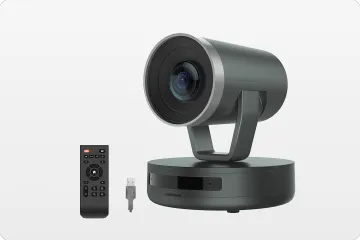
It handles rooms up to around 6 meters in diameter comfortably — which covers most school library or classroom setups used for PTA meetings. For very large spaces like a gymnasium or auditorium, you'd want to consider a PTZ camera instead.
Conclusion
A well-run PTA meeting is one where parents leave knowing exactly what was decided, who's doing what next, and when they'll reconvene. That's achievable with a standard agenda, a clean memo, a brief recap, and a setup that includes remote attendees as full participants.
None of this requires a major overhaul. Pick one section of this guide and implement it at your next meeting. The habits compound quickly, and so does the trust of the people who show up.