Interactive Whiteboard Games for All Ages: A Complete Guide to Multi-Generational Fun
Discover proven interactive whiteboard games that bring families, classrooms, and teams together.
interactive whiteboard
whiteboard games
Updated: Aug 19, 2026 · 5 minutes read
Global Business, Brought Near.
No Installer, No Hassle, Just Works.
Finding one activity that excites everyone—kids, adults, and seniors alike—is hard. The search for interactive whiteboard games for all ages too often ends in compromise: someone settles, someone sits out.
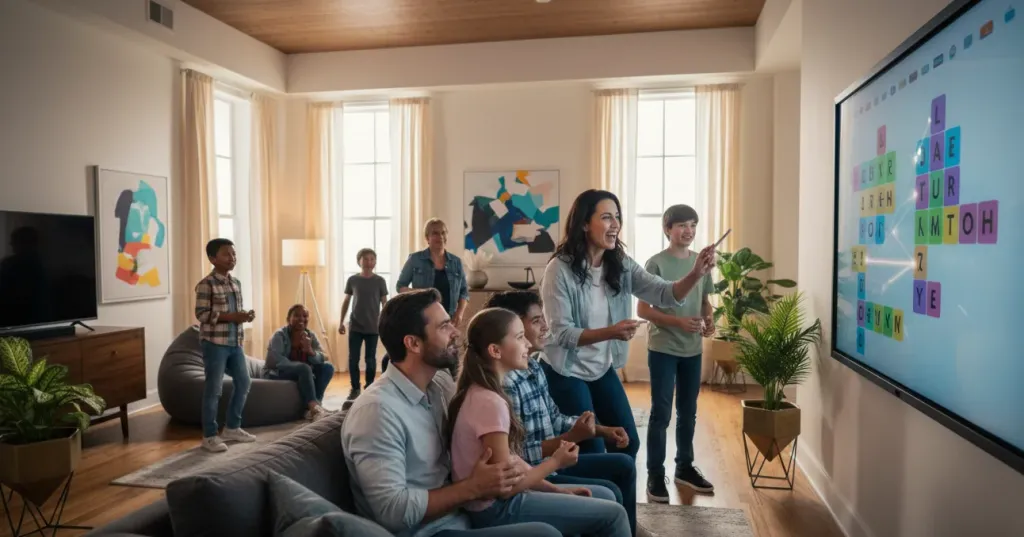
This guide fixes that. Whether you are planning a family game night, an inclusive classroom activity, or a team-building event, the right interactive whiteboard games for all ages can transform any group into a connected, laughing team.
Key Takeaways
Interactive whiteboard games bridge generational gaps by tapping into enduring skills like drawing, guessing, and memory.
They remove physical and logistical hurdles—no small pieces, complicated rules, or cramped spaces.
Offer diverse activity types from Pictionary to trivia, keeping everyone engaged.
Foster social connection and cognitive exercise, making them ideal for family, classroom, or workplace.
The core principle: inclusion through shared creativity and laughter, not competition.
Why Most Group Activities Fail to Bridge the Generation Gap
Traditional entertainment splits groups apart. Board games force everyone around a small surface. Card games frustrate children and older adults with fine motor demands. Video games favor fast reflexes, leaving grandparents on the sidelines.
The result is fragmented entertainment—kids on tablets, adults at a table, seniors feeling left out. The activity meant to connect people reinforces separation instead.
The core issue is mismatch. A six-year-old and a seventy-six-year-old have different capabilities, but both need social engagement, creative expression, and the joy of play. The solution is an activity designed for inclusion from the start.
What Makes Interactive Whiteboard Games Universally Appealing
Whiteboard games remove the barriers that exclude people. A large interactive display sits at the center of the room, visible to everyone. Touch and stylus input replaces small cards and dice. Rules are enforced automatically.
More importantly, the best whiteboard games for kids, adults, and seniors tap into skills that never fade. Drawing, guessing, remembering, and collaborating stay strong across a lifetime. A grandparent’s vocabulary shines in word games. A child’s imagination fuels creativity. An adult’s strategy guides the team. Everyone contributes.
Proven Whiteboard Games That Work for Every Age Group
The following games adapt naturally to different ages and require minimal setup.
Pictionary and Drawing Challenges
Drawing games are the ultimate equalizer. One player draws while everyone guesses. Children communicate through pictures before reading. Seniors often surprise with artistic skill. Adults enjoy the humor of bad drawings.
Forwhiteboard games for kids, keep prompts simple—animals, foods, objects. For whiteboard games for adults, use abstract concepts or movie titles. With seniors, choose nostalgic subjects that spark conversation. The win is the laughter each drawing triggers.
Hangman and Word Puzzles
Classic word games translate perfectly to a large interactive display. In Hangman, one player draws blank spaces for a secret word and the group guesses letters together. This works beautifully as whiteboard games for seniors because it reinforces vocabulary and memory without demanding fast reflexes.
Keep it fresh with team play or themed rounds—movies, geography, food. In mixed-age groups, let younger players suggest letters while older players handle strategy.
Memory and Matching Games
Memory challenges work especially well as whiteboard games for elderly participants. Display a grid of face-down cards on the screen. Players take turns flipping two cards to find matching pairs. Large, bright icons are easy to see, and the pace is up to the group.
Children build concentration. Seniors maintain cognitive flexibility. Everyone benefits from the conversation between turns. Research shows that combining mental exercise with social engagement keeps the mind sharp at any age.
Collaborative Storytelling
This game has no winners or losers, making it ideal for mixed groups. One person starts a story with a single sentence; the next adds another on the whiteboard. By the end, the group has created something unique and often hilarious.
It works everywhere—family gatherings, classrooms, senior centers, and corporate icebreakers. The game encourages creativity, active listening, and building on others’ ideas.
Trivia and Quiz Competitions
Trivia adapts to any audience. For family nights, mix pop culture, history, and personal memories. For whiteboard games for adults in corporate settings, use industry knowledge or office humor. For seniors, include questions about decades they lived through.
Divide the room into teams that deliberately mix ages. Teams combining a grandparent's historical knowledge with a teenager's pop culture awareness have the edge. The intergenerational collaboration becomes the point.
How to Structure an Inclusive Game Night
Planning matters more than equipment. Follow these principles:
Start with low-stakes games. Open with collaborative storytelling or a simple drawing game to build comfort before introducing competition.
Mix game types. Alternate active and relaxed games—follow fast-paced trivia with a slower memory challenge. This keeps energy high without exhausting anyone.
Rotate facilitators. Let a different person choose each game. Children especially love explaining the rules.
Keep score optional. Competition excites some groups and stresses others. The goal is connection, not crowning a champion.
Making Game Night Work in Any Setting
These principles extend beyond the living room. Educators use interactive whiteboard games for all ages to build inclusive classrooms. Corporate trainers use them for team-building. Senior living coordinators use them to keep residents mentally engaged.
In every setting, people arrive as individuals and leave as a group that laughed together. That transformation is what makes whiteboard games worth organizing.
FAQ
1. What are the best whiteboard games for mixed-age groups?
The best whiteboard games for mixed-age groups include Pictionary-style drawing games, collaborative storytelling, memory matching, trivia challenges, and Hangman. These activities work because they rely on universal skills—drawing, guessing, and collaborating—rather than specialized knowledge or physical ability, making them equally accessible to children, adults, and seniors.
2. Can seniors and elderly family members participate in interactive whiteboard games?
Absolutely. Interactive whiteboard games are especially well-suited for seniors and elderly participants because they feature large, bright displays that are easier to see than traditional board games, require no small pieces that can be difficult to handle, and encourage gentle cognitive engagement. Games like memory matching, picture-based trivia, and collaborative drawing help maintain mental sharpness while providing meaningful social interaction.
3. How do I set up an interactive whiteboard game night for my family?
Start by choosing a central display that everyone can comfortably see and reach. Select 3-4 games that offer variety—one drawing game, one word game, and one collaborative activity. Explain the rules clearly before starting, keep score loosely (or not at all), and rotate who gets to choose the next game. The key is keeping the atmosphere relaxed and inclusive so every generation feels excited to participate.
4. What makes interactive whiteboard games better than traditional board games?
Interactive whiteboard games eliminate the common friction points of traditional game nights: no missing pieces, no complicated setup, no arguments over rules, and no need for everyone to huddle around a small board. A large digital display lets the entire group participate simultaneously, adapts to different skill levels, and offers virtually unlimited game options without buying new physical games.
The Right Display Makes All the Difference
A great game night needs more than good ideas—it needs the right centerpiece. The display should be large enough for everyone to see clearly, responsive enough for natural interaction, and versatile enough to handle everything from quick drawing games to extended trivia tournaments. Setup should be effortless so you spend your time playing, not troubleshooting.
Game nights should not require compromise. With the right interactive whiteboard and the games in this guide, your next gathering will be one everyone remembers—and wants to repeat.