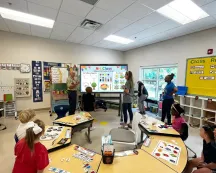
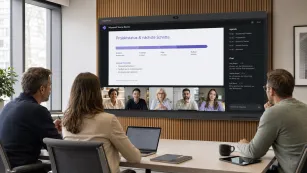
Digital transformation is no longer optional for schools. From hybrid learning and interactive teaching to AI-powered lesson planning, today’s campuses are expected to deliver smarter, more connected learning experiences. Yet many school principals face the same frustrating reality: expensive classroom technology often goes underused.
Teachers may resist adopting new systems because the software feels complicated, training takes too long, or daily operation disrupts classroom flow. In many schools, advanced devices become little more than oversized projectors after a few months.
That’s why simplicity has become one of the most important factors in successful campus digitalization.
Schools that prioritize easy-to-use technology tools for the classroom are seeing higher teacher adoption, smoother classroom collaboration, and better long-term ROI. Platforms like NearHub are designed around this philosophy — minimizing complexity while maximizing usability.

Why Interactive Teaching Fails When Technology Feels Complicated
Many schools invest heavily in digital classroom equipment expecting immediate transformation. However, complex interfaces and difficult onboarding can create the opposite effect.
Common challenges include:
- Teachers struggling to start meetings or share screens
- Complicated login procedures delaying class time
- Multiple disconnected systems creating workflow confusion
- High training costs for faculty and IT teams
- Low usage rates after deployment
For principals, this creates a major concern: how can schools justify technology investments if teachers avoid using the devices?
Successful interactive teaching depends on technology that feels intuitive from day one. Teachers should focus on engaging students — not troubleshooting systems.
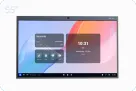
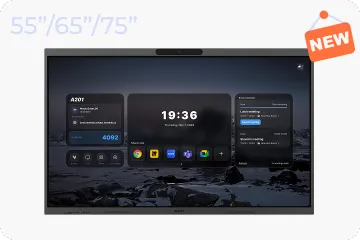
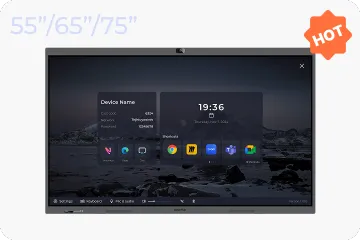
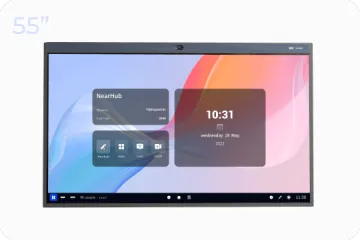
NearHub addresses this challenge through a streamlined user experience built specifically for education environments. Features like one-click meeting access and an ultra-simple UI reduce the learning curve significantly, allowing educators to adapt quickly without extensive training.
Schools looking for scalable digital classroom solutions often prioritize usability when evaluating the best whiteboards for classroom.

One of the biggest predictors of digital campus success is teacher adoption.
Even the most advanced tech tools for the classroom will fail if educators feel overwhelmed using them. Teachers already manage lesson planning, grading, classroom management, and communication with parents. Adding complicated technology into their workflow can create resistance instead of innovation.
That’s why modern classroom technology should deliver:
Minimal Learning Curve
Teachers should be able to operate devices confidently within minutes, not weeks.
Fast Classroom Startup
One-click access to lessons, conferencing, and content sharing saves valuable instructional time.
Consistent User Experience
A unified ecosystem prevents confusion between apps, devices, and operating systems.
Easy Collaboration
Interactive whiteboards and wireless sharing should work seamlessly for both students and educators.
NearHub’s smartboard solution focuses heavily on these principles, helping schools reduce technical friction while improving classroom efficiency.

Interactive Teaching Creates More Engaged Classrooms
Today’s students expect dynamic learning experiences. Static lectures and passive instruction are becoming less effective compared to collaborative, visual, and technology-driven teaching methods.
Interactive teaching encourages students to:
- Participate actively in lessons
- Collaborate in real time
- Visualize complex concepts
- Engage with multimedia learning materials
- Retain information more effectively
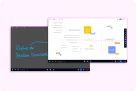
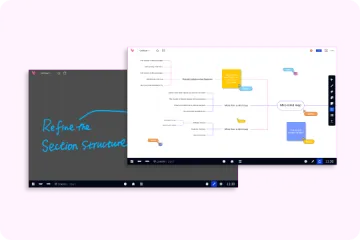
Interactive smartboards make this possible through touch-based collaboration, annotation tools, screen sharing, and integrated educational software.
For principals planning future-ready campuses, the goal is not simply purchasing more devices — it’s creating technology ecosystems that teachers actually enjoy using.
Understanding which technology helps create an intelligent classroom environment is an important step toward building sustainable digital learning strategies.
Science Simulations Help Bring Complex Concepts to Life
One of the most exciting applications of classroom technology is the rise of science simulations and digital experimentation tools.
Traditional science instruction can sometimes struggle to demonstrate abstract or dangerous concepts effectively. Simulation-based learning helps students interact with scientific ideas in immersive ways.
Examples include:
- Virtual chemistry labs
- Physics motion simulations
- Biology anatomy visualization
- Environmental science modeling
- Astronomy exploration platforms
Science simulations allow schools to provide richer educational experiences without requiring expensive physical lab setups for every scenario.
Combined with interactive displays, simulation education becomes significantly more engaging and accessible.
Students can manipulate variables, visualize outcomes instantly, and collaborate directly on classroom screens.

Why Simulation Education Supports Future-Ready Learning
Simulation education is becoming increasingly important in modern K-12 classrooms because it supports both STEM learning and critical thinking development.
Benefits include:
Safer Learning Environments
Students can explore experiments virtually without physical risk.
Better Concept Retention
Interactive visual learning improves comprehension and memory.
Increased Student Participation
Gamified simulations encourage active involvement.
Accessibility and Inclusion
Digital simulations can support diverse learning styles and abilities.
When paired with simple, intuitive classroom technology, simulation education becomes easier for teachers to integrate into everyday instruction.
Schools can also increase student engagement by incorporating free educational games for students into digital lesson plans.
Choosing the Right Interactive Teaching Technology for Schools
For school leaders evaluating digital campus solutions, simplicity should be treated as a strategic priority — not just a convenience feature.
When comparing classroom technology platforms, principals should ask:
- How quickly can teachers learn the system?
- Does the interface reduce classroom disruption?
- Can non-technical staff operate it independently?
- Is the platform scalable for future campus needs?
- Will teachers actually use the features consistently?
The most effective interactive teaching environments are built around accessibility and ease of use.
A lower learning curve often leads to:
- Faster campus-wide adoption
- Reduced IT support requirements
- Better teacher satisfaction
- Higher technology utilization rates
- Stronger long-term ROI

FAQs About Digital Campus Technology
Why do many school digitalization projects fail?
Many projects fail because the technology is too complex for daily classroom use. Teachers may avoid systems that require extensive training or complicated workflows.
What makes interactive teaching more effective?
Interactive teaching improves student engagement through collaboration, multimedia content, real-time participation, and visual learning experiences.
How do science simulations benefit students?
Science simulations help students visualize complex concepts, safely conduct experiments, and improve critical thinking through interactive learning.
Why is simplicity important in classroom technology?
Simple systems increase teacher adoption, reduce training time, minimize classroom disruptions, and improve overall technology utilization.
What should principals prioritize when selecting classroom technology?
Principals should prioritize usability, scalability, compatibility, collaboration features, and long-term teacher adoption.
Conclusion: Simplicity Is the Foundation of Digital Campus Success
As schools continue investing in digital transformation, the focus must shift from “more features” to “better usability.”
Technology only creates value when teachers and students actively use it. Complex systems may look impressive during demonstrations, but intuitive platforms are what drive lasting educational impact.
Interactive teaching, science simulations, and simulation education all depend on technology that removes friction instead of adding it.
For future-proof schools, simplicity is no longer a secondary consideration — it’s the key to successful digital campus transformation.