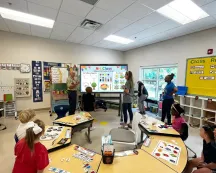
Impacts of Educational Nonprofits
Nonprofit educational programs focusing on literacy and numeracy have helped millions of children worldwide. A lot of nonprofits have already made efforts to fulfill their mission - delivering the right to receive education for everyone. A lot of organizations make efforts in
closing the educational gaps for underserved and marginalized communities to get access to education. By setting up schools, learning centers, and scholarship programs, they ensure that children who might otherwise be left behind have a chance to learn and grow. Promoting
gender equality is also one of the targets. For example,
Room to Read helps children in historically low-income communities develop literacy skills and a habit of reading, and supports girls as they build skills to succeed in school and negotiate key life decisions. To date,
it has benefited more than 39 million children and has worked in more than 192,000 communities and 24 countries.
Realizing the critical role of teachers, these organizations provide crucial support to teachers through
professional development programs, ongoing mentorship and teaching resources. Some charity organizations give out financial support. Like,
the Bill & Melinda Gates Foundation has invested millions in teacher effectiveness programs, aiming to improve teaching quality and student outcomes.
Teach For America offers training programs for its corps members, preparing them to make an immediate impact in the classroom and continually supporting them throughout their teaching assignments. Of course,
resources and needed technology are indispensable in any teaching scenario as you can't make something out of nothing. A number of dedicated nonprofits provide schools with access to necessary resources such as textbooks, learning aids, and technology enhances the learning environment.
Constraints on Educational Nonprofit Operation
Educational nonprofits play a critical role in shaping the future by ensuring that every child has access to education, regardless of their background or circumstances. This is particularly true of schools serving predominantly low-income and minority students. They help to level the playing field and build a stronger, more equitable societies. However, they are facing several challenges, finding it hard to manage their work and extend benefits far and wide.
Securing consistent funding is a perennial issue for nonprofits. Reliance on donations, grants, and fundraising can lead to financial instability. During the pandemic, many nonprofits were able to maintain their revenue as they received the large influx of government funding in the form of tax credits or loan programs. Now, the public health emergency has ended, and these forms of government founding are coming to a close. Another funding-related issue is the uncertain financial environment and investment income. As the global economy slows down it becomes harder to predict future funding.
A Solution: To reduce reliance on any single source of funding, diversify income streams. This includes a mix of donations, grants, corporate sponsorships, and earned income from social enterprises or fee-for-service models. Utilize online platforms and digital tools for fundraising campaigns. Crowdfunding, social media campaigns, and virtual events can reach a broader audience and engage younger donors. Establish reserve funds to provide a financial cushion during economic downturns. These funds can be used to cover unexpected expenses and maintain operations during periods of low revenue.
Recruiting, training, and retaining staff can be difficult, particularly in maintaining engagement and ensuring alignment with organizational goals. The problem is highlighted by intense competition with private sector companies that often lure talents by paying higher salaries. Usually, nonprofit work is physically and emotionally taxing and many exhausted staff have decided on another path. Other nonprofits had to shut down due to strained operation that also led talents to reconsider nonprofit work.
A Solution: Implement structured volunteer programs with clear roles, ongoing training, and recognition systems. Utilize volunteer management software to streamline processes. A robust volunteer management system is expected to provide comprehensive training and recognition programs to retain volunteers and ensure they are effectively utilized.
Keeping up with technological advancements and managing data securely can be daunting, particularly for smaller nonprofits. During the pandemic it was difficult to keep board members engaged due to quarantine and transportation limitation. It is time-and energy-consuming for workers and volunteers based in different states or countries to have face-to-face meetings. To shift to remote work exposed vulnerability in internal controls, increasing the risk of cyberattacks. As more software applications move to the cloud, nonprofits need to pay more attention to system improvements and cybersecurity.
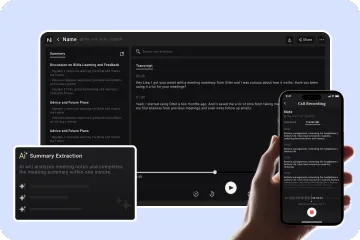
A Solution: To tackle this issue, nonprofits can develop a long-term technology plan that outlines goals, timelines, and resources needed for modernization. For example, create a roadmap that includes milestones for transitioning to cloud services, enhancing cybersecurity, and adopting new data analytics tools. It is useful to use collaborative tools and remote conference equipment, like an interactive whiteboard with built-in conference software to keep board members and workers engaged even during remote operations.
Conclusion
Educational nonprofits play a critical role in shaping the future by ensuring every child has access to education, regardless of background. They support educators with resources and ongoing training, provide essential learning materials, and use technology to connect and engage students. Despite constraints, education-oriented nonprofits can thrive by diversifying funding sources, investing in technology and cybersecurity, and engaging volunteers effectively. By implementing these solutions, nonprofits can continue to drive change and pave the way for children's brighter future.
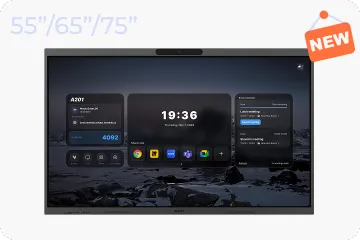
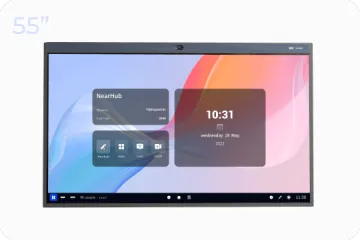
NearHub is an all-in-one solution for meeting rooms and classrooms. NearHub possesses an
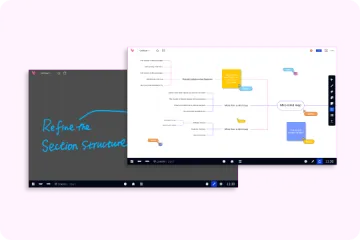
interactive digital Board with
cutting-edge whiteboard software. By combining your favorite programs with mess-free writing canvas and video conferencing, you can improve your interaction and productivity in the online meeting room or classroom. Besides, NearHub also provides
MagicPad S13 to improve digital learning and creativity.