AI World Cup 2026: How Artificial Intelligence Is Reshaping Football Strategy — and Why Visual Collaboration Is the Missing Link
Discover how FIFA AI Pro is delivering 2,000+ metrics to all 48 teams at the AI World Cup 2026, and why interactive smart whiteboards are essential for turning football data into winning tactics.
World Cup 2026
AI analysis
Updated: Aug 19, 2026 · 6 minutes read
Global Business, Brought Near.
No Installer, No Hassle, Just Works.
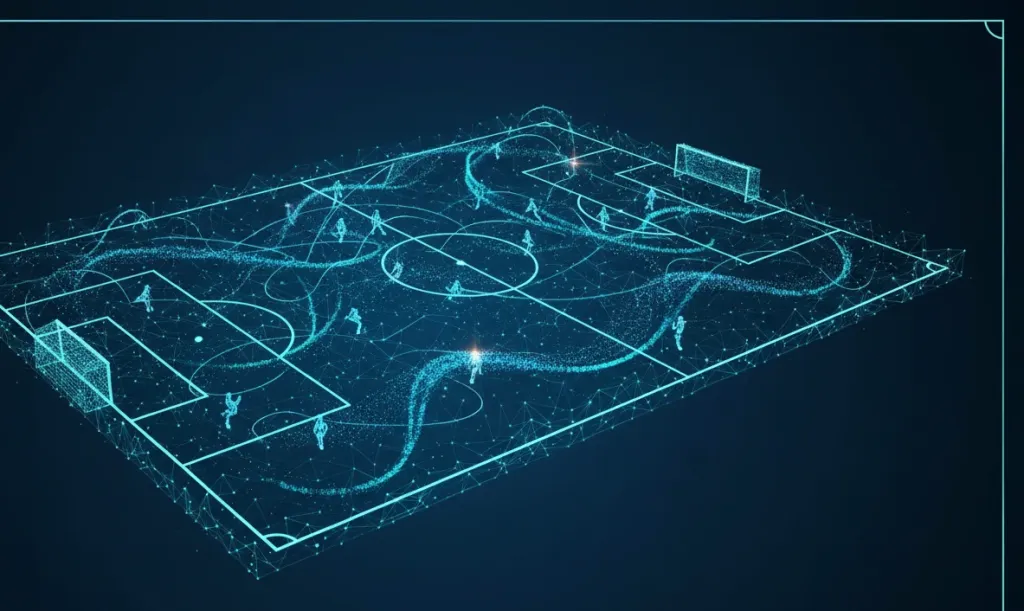
When FIFA expanded the World Cup to 48 teams for 2026, it faced an unprecedented challenge: how to ensure a debutant nation could compete on the same analytical footing as a perennial powerhouse. The answer is FIFA AI Pro, a generative AI platform developed with Lenovo that has turned the AI World Cup 2026 into the most data-rich football tournament in history. All 48 squads now draw from over 2,000 football-specific metrics and millions of data points per match. But here is the question that matters: once you have 172 million data points, what do you actually do with them?
Key Takeaways
The 2026 World Cup is the first "AI World Cup" — all 48 teams have equal access to FIFA AI Pro, delivering 2,000+ metrics and 172 million data points per match.
Data alone doesn't win games. The real competitive advantage lies in turning AI-generated insights into collective tactical decisions.
Interactive smart whiteboards bridge the gap between AI analysis and team action, creating a shared visual environment where coaches annotate, discuss, and refine tactics in real time.
The future belongs not to the team with the most data, but to the team with the best process for turning data into decisions.
The New Playbook: What the AI World Cup 2026 Delivers to Coaching Staff
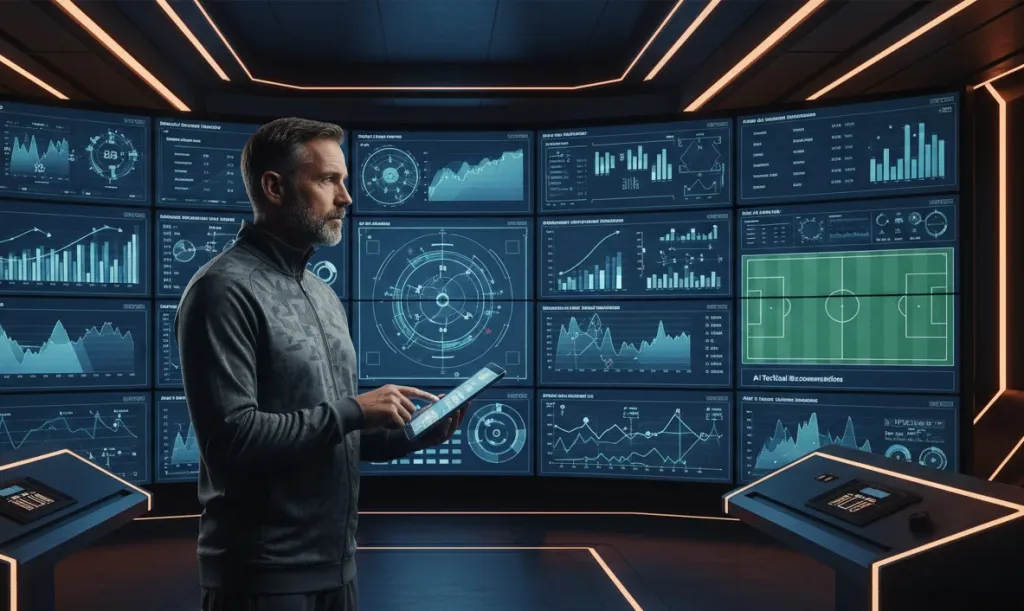
FIFA AI Pro is a post-match analysis engine built for coaching staff. It combines AI agents that understand natural language queries with structured match data processed through FIFA's proprietary Football Language model. Coaches ask plain-language questions about opponent tendencies and receive answers through text reports, video clips, graphs, and 3D visualizations.
Beyond possession and pass completion, the system analyzes defensive passing lane closures, pressing trigger patterns, set-piece routines, and individual workload accumulation. All 48 teams have used the platform, querying in 15 languages. For the first time, a coach from a smaller federation can ask the same questions as a staff backed by a multi-million-dollar data department — and receive answers of identical depth.
The Translation Gap: Why Millions of Data Points Don't Automatically Win Matches
Data does not score goals. Academic research on sports analytics consistently identifies the same bottleneck: the gap between analytical output and tactical application. An AI system can identify that an opponent's right-back positions higher in the final 15 minutes, or that a midfielder's passing accuracy drops after covering extensive distance. But turning those observations into a halftime adjustment requires collective human judgment exercised under pressure. The gap is not analytical. It is communicative.
From Data to Decisions: How Visual Collaboration Tools Bridge the Divide
Closing this gap requires technology that creates structured conversation rather than structured insight. An interactive smart whiteboard functions as the connective tissue between AI-generated intelligence and collective tactical decision-making.
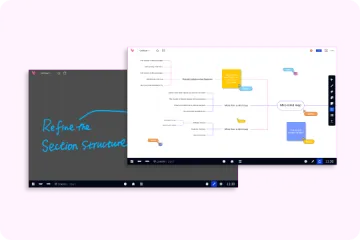
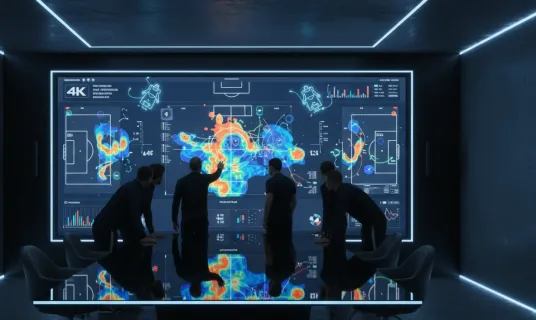
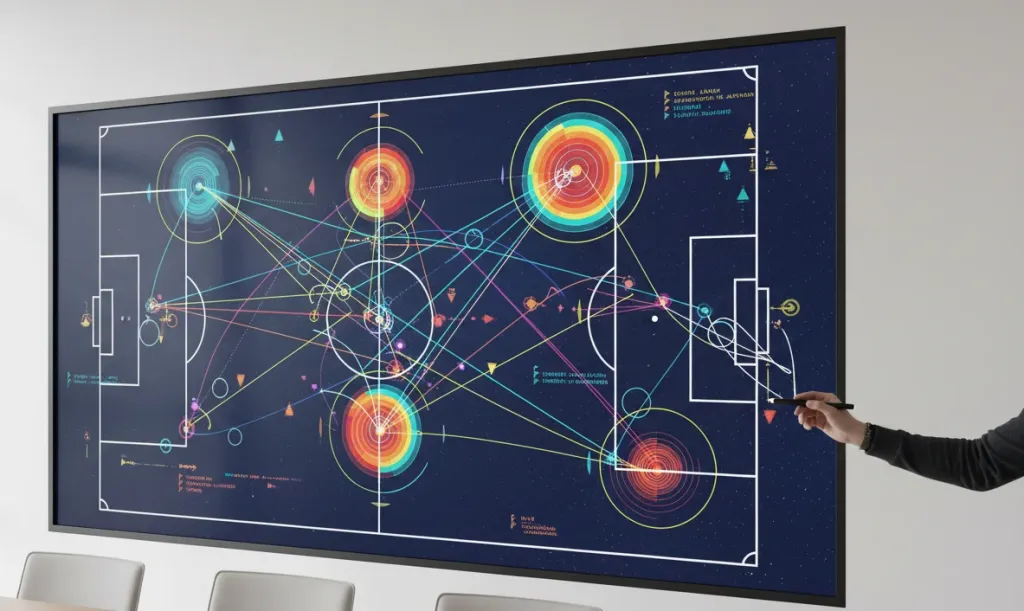
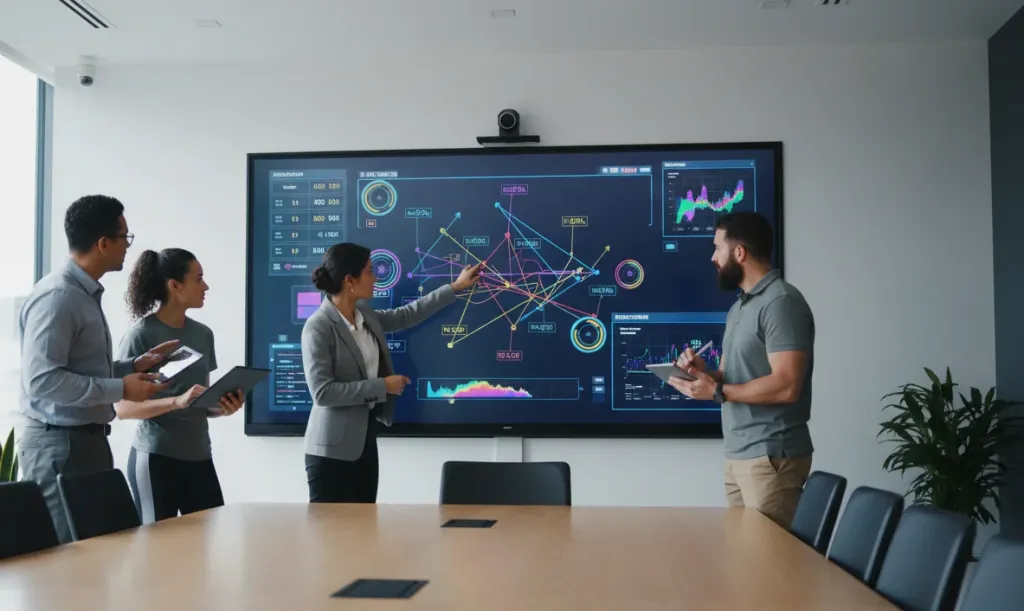
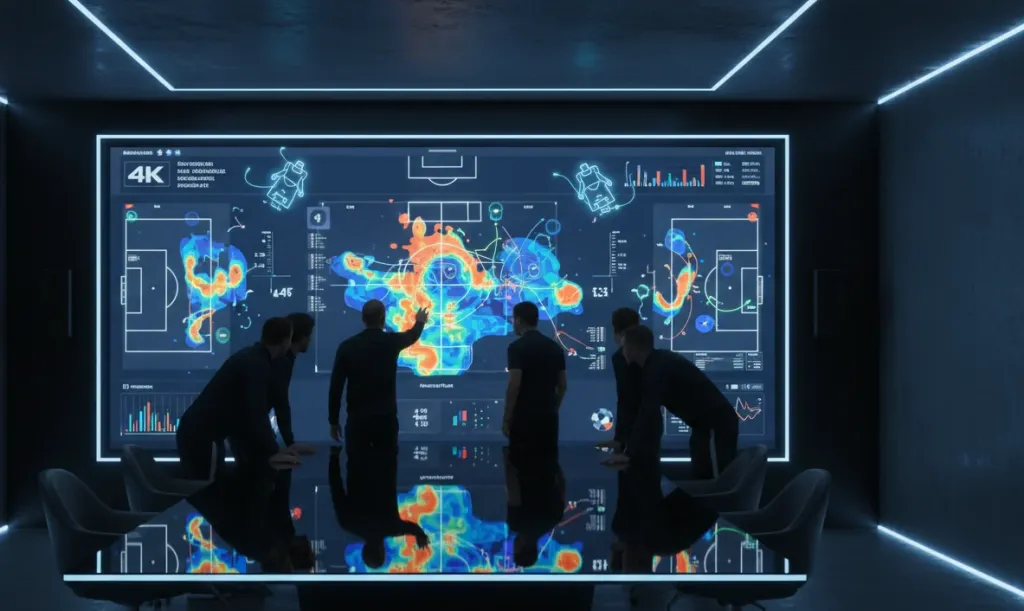
A coaching staff casts their FIFA AI Pro dashboard onto a large-format 4K display. Coaches annotate directly on the live data: circling defensive vulnerabilities, drawing pressing triggers, sketching adjusted formations. Multiple staff contribute simultaneously — the fitness coach marking fatigue thresholds, the set-piece specialist noting routines, the head coach defining the approach.
This is the purpose of a sports strategy whiteboard in the modern era. It transforms analytical consumption into collaborative production. The AI provides the raw material; the interactive display becomes the workshop where that material is shaped into a match plan.
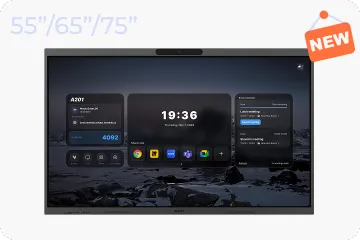
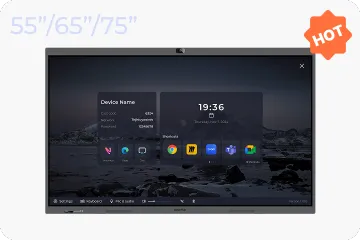
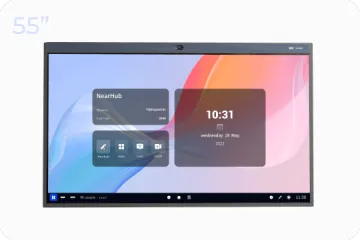
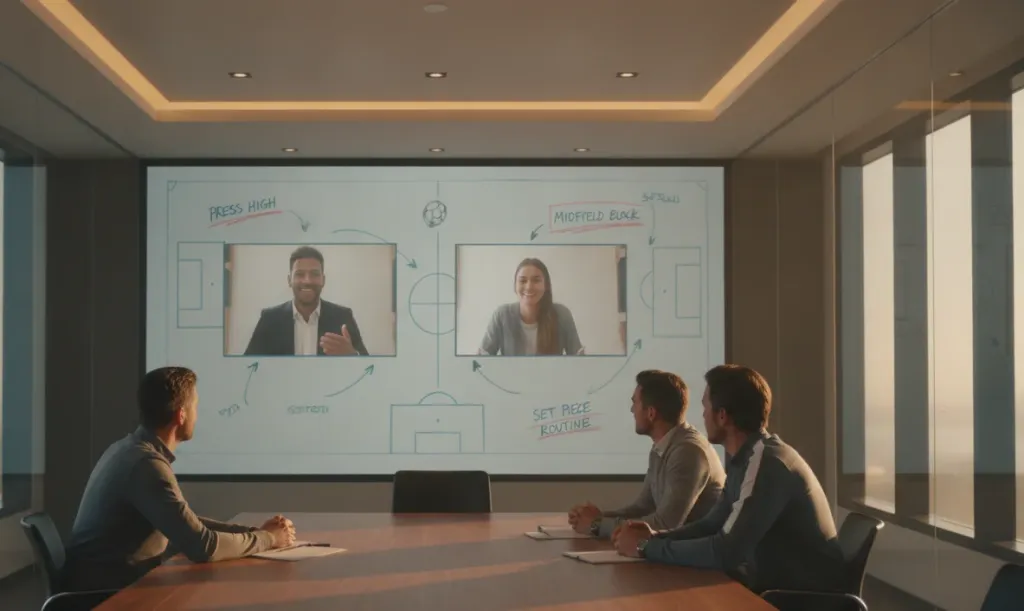
For organizations evaluating this capability, the equipment requirements are straightforward: a large-format 4K display that renders fine tactical diagrams clearly, low-latency touch for fluid annotation, and native video-conferencing integration that lets remote staff participate as equals. Displays like the NearHub Board Max are designed for this exact workflow—offering a 4K canvas with multi-touch support and AI-enhanced audio-visual features that keep distributed teams connected without adding technical friction. The goal is not more technology in the room. The goal is better decisions, faster.
Building the Modern Tactical War Room for Hybrid Teams
The traditional coaching room — projector on a pull-down screen, markers on a whiteboard, printed statistics on a table — cannot accommodate the velocity of AI-generated insight that defines this tournament. Modern preparation demands a war room: a centralized visual hub where data streams converge, annotations persist, and remote participants contribute naturally.
AI-powered collaboration makes this possible. A staff spread across time zones convenes around a shared digital canvas. The interactive display becomes the single source of truth: FIFA AI Pro visualizations on one section, live video on another, hand-drawn adjustments layered on top. When the session ends, the board exports to cloud storage. This is not theoretical — it is how competing federations are preparing for knockout matches right now.
The Human-in-the-Loop: Why the Coach Still Makes the Call
AI is an exceptional assistant and an imperfect manager. Research prototypes demonstrate that artificial intelligence excels at simplifying complex information but still struggles with spatial questions central to football tactics. Which run exploits the gap between defenders in the 78th minute? How does a player's emotional state after a missed chance affect their next decision? These require human context.
FIFA AI Pro reflects this reality: it is designed for pre- and post-match analysis only and cannot be used during live play. The final call always rests with the coaching staff. The technology narrows the decision space and surfaces patterns human observation might miss, but it does not replace the experiential intelligence that separates competent managers from great ones.
Frequently Asked Questions
1. What is FIFA AI Pro and how does it work at the AI World Cup 2026?
FIFA AI Pro is a post-match analysis assistant powered by hybrid and generative AI, developed by FIFA with Lenovo. It processes over 2,000 football-specific metrics per match, allowing coaches to query data in natural language across 15 languages. The platform delivers tactical insights through text, video clips, graphs, and 3D visualizations. All 48 competing teams have equal access.
2. Why do coaching teams need visual collaboration tools to use AI football analytics effectively?
AI generates vast quantities of structured data, but data alone does not produce tactical decisions. Interactive smart whiteboards let coaches annotate directly on AI-generated visualizations, manipulate diagrams in real time, and facilitate collective decision-making. This bridges the gap between raw analytical output and actionable strategy.
3. How many data points does AI collect during each match at the 2026 World Cup?
The analytics infrastructure at the 2026 FIFA World Cup processes approximately 172 million data points per team match. This includes structured event data, continuous player tracking, biometric indicators, and sensor data from the Adidas Trionda connected match ball.
4. Can AI replace football coaches in tactical decision-making?
No. AI is a decision-support tool, not a replacement for human judgment. Football tactics involve context AI cannot fully capture — player psychology, momentum shifts, and emotional intelligence. FIFA AI Pro is designed for pre- and post-match analysis only.
5. What makes the 2026 World Cup different from previous tournaments in terms of AI analytics access?
For the first time, all 48 competing nations receive identical access to FIFA AI Pro. Previously, wealthier federations held significant analytical advantages. The 2026 tournament eliminates this inequality by providing every team with the same match data and AI-powered querying capabilities.
Conclusion
FIFA AI Pro solved the data access problem — 172 million data points per match, available to all 48 nations. But the tournament exposes a second challenge: translating insight into collective action.
Interactive smart whiteboards bridge that gap. By creating a shared visual environment where AI-generated data can be annotated and discussed in real time, they function as the critical last mile in the analytics pipeline. They don't replace AI. They complete it.
The future belongs not to the team with the most data, but to the team with the best process for turning data into decisions. Investing in that process — with the right visual collaboration infrastructure — is the strategic priority that will define competitive advantage long after the final whistle blows.