














In today's customer-centric business environment, contact centers play a critical role in shaping brand perception. While software platforms, CRM systems, and AI tools often dominate discussions about optimization, one essential element is frequently underestimated: the contact center headset.
The right headset does far more than transmit sound. It directly impacts call clarity, agent comfort, productivity metrics, and ultimately, customer satisfaction. In contrast, poor audio quality, uncomfortable designs, or unreliable connectivity can quietly erode performance across an entire team.
This article explores how choosing the right headset for contact center environments can significantly improve both call quality and agent productivity—and what decision-makers should consider when selecting the best solution.
Key Takeaways
- Audio Quality Drives Metrics: Crystal-clear audio directly improves First Call Resolution (FCR) and builds customer trust.
- Comfort is Key: Lightweight, ergonomic headsets prevent "listening fatigue" and physical strain during long shifts.
- Noise Cancellation is Essential: Advanced Environmental Noise Cancellation (ENC) creates a professional "bubble" of silence, even in busy offices.
- Wireless + Dongle = Reliability: Modern wireless headsets with USB dongles (like the NearHub EP320) offer the stability of wired connections with the freedom of mobility.
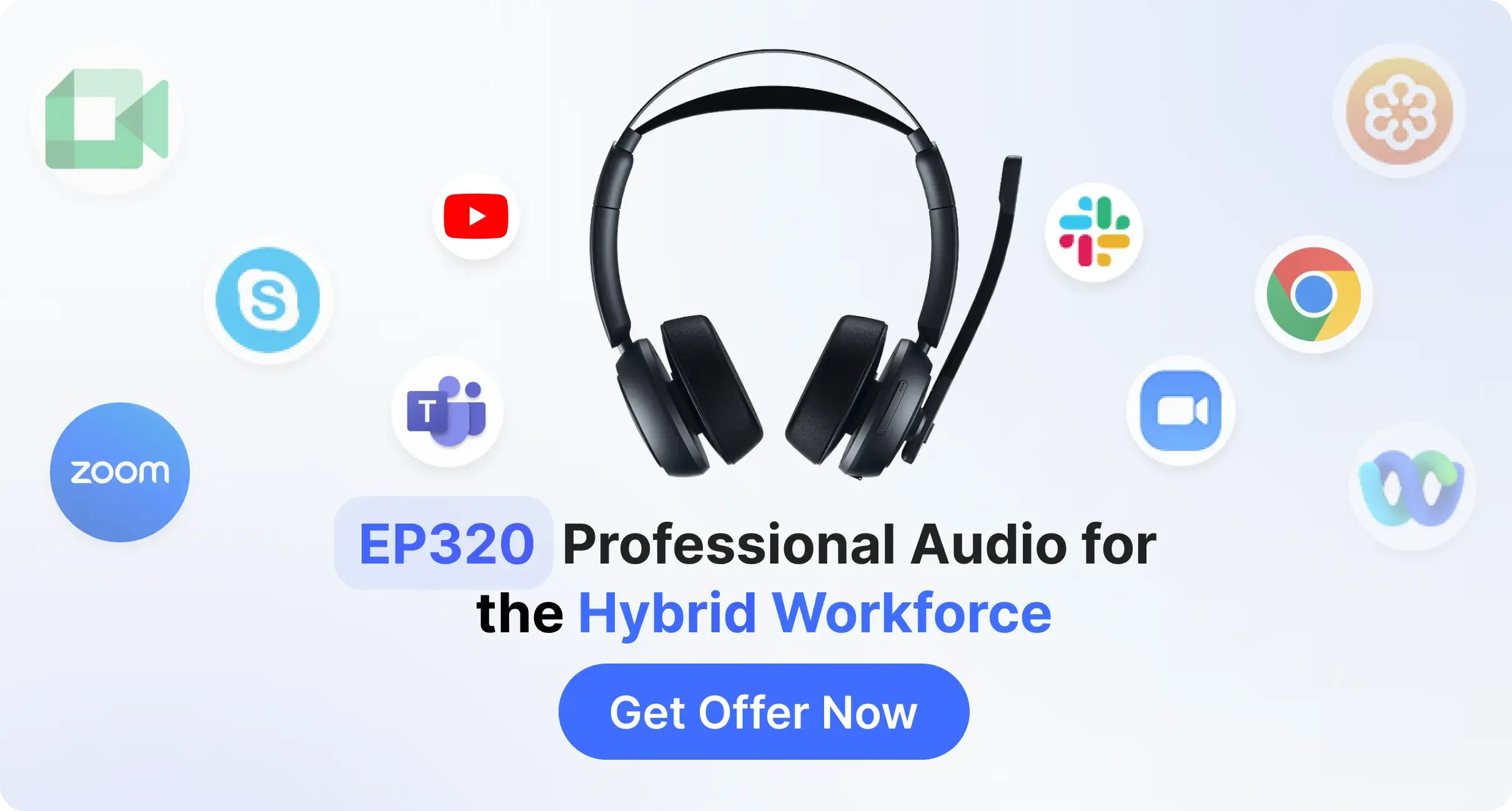
- Software Integration: Professional headsets seamlessly integrate with platforms like Teams and Zoom for instant plug-and-play efficiency.
Why the Right Headset in Contact Center Environments Matters
Imagine a typical contact center floor: hundreds of agents speaking simultaneously, phones ringing, keyboards clacking, and supervisors giving instructions. This is a cacophony of sound that, without the right technology, bleeds directly into client calls.
The impact of using a specialized headset in contact center settings goes far beyond simple audio transmission. It touches every KPI that matters to a support team, from Average Handle Time (AHT) to Net Promoter Score (NPS).
Audio Clarity Equals Customer Trust
When a customer calls support, they are often already frustrated. If they have to repeat themselves because the agent can't hear them, or if they struggle to hear the agent over background noise, frustration turns into anger.
Professional call center headset are engineered to isolate voice frequencies. This ensures that nuances in tone—crucial for empathy—are preserved. High-definition (HD) voice technology allows agents to hear the customer's emotional state clearly, enabling them to de-escalate stressful situations more effectively. When a customer feels heard (literally and figuratively), trust is established.
Improving First Call Resolution (FCR)
First Call Resolution is the gold standard metric for support teams. Miscommunication caused by poor audio quality is a leading cause of repeat calls. If an agent mishears an order number or a technical symptom due to static or background noise, the problem remains unsolved.
By equipping teams with high-quality headsets, you eliminate the "Can you repeat that?" friction. Clear communication streamlines the troubleshooting process, directly boosting FCR rates. When agents can hear clearly, they solve problems faster.
Reducing Agent Fatigue and Burnout
The employee experience (EX) is the flip side of the CX coin. Agents typically wear their headsets for 6 to 8 hours a day. Poorly designed headsets with low-quality audio force agents to strain to listen, leading to "listening fatigue." This cognitive load drains their energy, making them less patient and less effective by the end of their shift.
Furthermore, physical discomfort from heavy or ill-fitting headsets causes tension headaches and ear pain. The right contact center headsets are designed for ergonomic comfort, protecting the health and morale of your workforce. A comfortable agent is a productive agent.
Top Features of the Best Contact Center Headsets for Productivity
Not all headsets are created equal. Consumer-grade headphones designed for music often boost bass and lack the specialized microphone technology required for voice transmission. To truly boost efficiency, you need to look for specific features that define the best contact center headsets on the market today.
Advanced Noise Cancellation (ENC & ANC)
In a shared workspace, silence is a luxury. There are two types of noise cancellation to consider:
- Active Noise Cancellation (ANC): This helps the agent hear better by filtering out ambient noise around them (like the AC humming or colleagues talking).
- Environmental Noise Cancellation (ENC): This helps the customer hear better by filtering out background noise from the agent's microphone.
For a contact center, ENC is non-negotiable. You need a microphone that creates a "bubble" of silence around the agent's voice, ensuring that confidential or distracting background conversations aren't broadcast to the client.
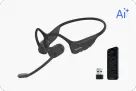
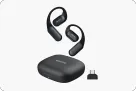
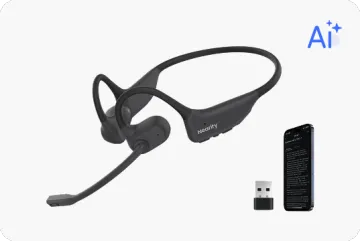
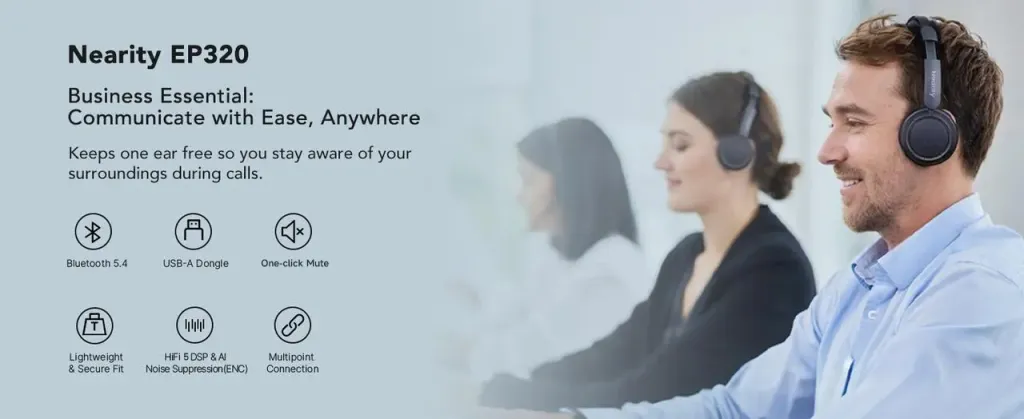
Industry Solution: A prime example of this technology is the NearHub EP320. It utilizes advanced AI-powered Environmental Noise Cancellation to effectively suppress over 96% of background noise. Whether an agent is working in a bustling office or a home environment with barking dogs, the EP320 ensures the customer hears nothing but professional silence and the agent's voice.
Ergonomic Design and Lightweight Build
Weight matters. A headset that feels light for the first 10 minutes can feel like a heavy brick after 4 hours of continuous use. The best contact center headsets prioritize lightweight materials without sacrificing durability.
Key ergonomic features to look for include:
- Rotatable Ear Cups: These allow the headset to sit flat against the chest when not in use and adjust to different head shapes.
- Memory Foam Cushions: These provide a seal for passive noise isolation while remaining breathable to prevent heat buildup on the ears.
- Adjustable Headbands: A "one-size-fits-all" approach rarely works without adjustability.
The NearHub EP320 excels here as well, featuring a streamlined, lightweight design specifically engineered for all-day wear. Its adjustable boom arm allows agents to position the microphone perfectly, reducing the need to hunch or strain to be heard.
Durability and Build Quality
Contact center equipment takes a beating. Headsets are put on and taken off dozens of times a day, cords are tugged, and devices are occasionally dropped. A flimsy plastic headset might save money upfront but will cost more in replacement cycles.
Look for reinforced cords (like Kevlar-coated cables) and flexible microphone booms that can be bent without snapping. Investing in durable hardware like the EP320 ensures a lower Total Cost of Ownership (TCO) over the lifespan of the device.
Hearing Protection
Occupational safety is a serious concern. "Acoustic shock" occurs when a sudden loud noise (like a fax tone or feedback screech) spikes through the line. Professional-grade headsets include built-in acoustic shock protection technologies that instantly clamp down on dangerous decibel levels, protecting your agents' hearing health.
Wired vs. Wireless Contact Center Headsets: Which is Right for You?
One of the most common debates when procuring equipment is choosing between wired and wireless models. Both have distinct advantages depending on your office layout, budget, and workflow.
The Case for Wired Headsets
Wired headsets are the traditional workhorse of the industry.
- Simplicity: Plug-and-play functionality reduces IT support tickets.
- Cost-Effectiveness: Generally, wired models are more affordable than their wireless counterparts, making them ideal for large-scale deployments where budget is a primary constraint.
- No Charging: They are always on and ready to go.
Is it right for you? If your agents work at fixed desks 100% of the time and budget is the tightest constraint, wired is a solid choice.
The Case for Wireless Headsets (USB Dongle & DECT)
Wireless headsets represent freedom and mobility, which is increasingly vital in modern support centers.
- Mobility: Agents can stand up, stretch, or walk to a supervisor's desk to ask a question without putting the customer on hold. This physical movement has been shown to increase energy levels and cognitive alertness.
- Clean Desk Policy: Eliminating cables reduces clutter, creating a more organized workspace.
Addressing the "Stability" Myth: In the past, managers worried about Bluetooth instability or dropouts. However, modern professional wireless headsets solve this by using dedicated USB Dongles.
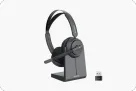
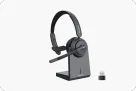
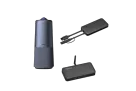
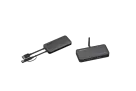
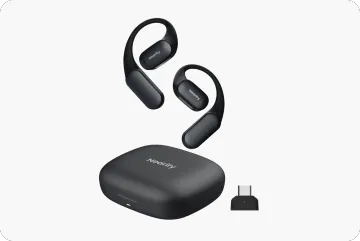
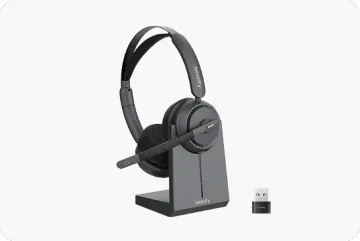
Our Recommendation: The NearHub EP320 is a standout in this category. Unlike standard Bluetooth headsets that rely on a sometimes-unstable PC Bluetooth connection, the EP320 is a wireless USB headset that comes with a dedicated USB dongle. This delivers the true “plug-and-play” reliability of a wired headset while preserving the freedom of wireless movement. By bypassing native Bluetooth limitations, it eliminates the risk of signal drops during critical calls, allowing agents to move freely without compromising call stability or audio quality.
The Verdict
For high-performance teams, Wireless with a USB Dongle is often the superior choice. It offers the best of both worlds: the stability IT managers demand and the freedom agents love.
How Contact Center Headsets Integrate with Modern Software
In the age of Unified Communications (UC), a headset is no longer just a speaker and a microphone; it is an integrated part of the software stack. Modern contact center headsets must play nicely with platforms like Microsoft Teams, Zoom, Salesforce, RingCentral, and various VoIP softphones.
Seamless USB Connectivity (Plug-and-Play)
The shift to softphones has made USB connectivity the standard.
- Instant Pairing: With headsets like the NearHub EP320, the inclusion of a USB dongle means agents don't have to fiddle with Bluetooth settings menus. They simply plug the dongle into the computer, and the headset connects instantly.
- Universal Compatibility: Whether your team uses PCs, Macs, or laptops, a USB-based wireless solution ensures that the headset works immediately across different operating systems without complex driver installations.
On-Device Call Controls
Efficiency is measured in seconds. Having to fumble with a mouse to find the "Mute" button on a screen can take 2-3 seconds—an eternity during a tense conversation.
Professional wireless headsets feature controls directly on the ear cup or boom. These allow agents to:
- Volume Up/Down: Adjust incoming audio instantly.
- Mute: Quickly mute the mic to ask a colleague a question without the customer hearing, preserving professionalism.
- Call Answer/End: Accept calls away from the desk.
These small ergonomic wins accumulate over hundreds of calls a week, significantly smoothing out the agent's workflow and reducing the cognitive load of navigating software interfaces.
Conclusion
In the grand scheme of contact center operations, the headset is often an afterthought—a line item on a budget sheet. However, as we have explored, it is actually a critical driver of performance. The right contact center headset improves audio quality, which leads to happier customers. It enhances comfort, which leads to happier, healthier agents. And it integrates seamlessly with technology, which leads to a more efficient business.
When selecting the best contact center headsets for your team, look for solutions that solve the modern challenges of noise and mobility.
Ready to Upgrade Your Team?
If you are looking for a solution that combines the freedom of wireless, the stability of a USB dongle connection, and professional-grade AI noise cancellation, the NearHub EP320 is engineered to meet these exact needs.
Don't let poor audio quality or restricted movement compromise your customer relationships. Equip your agents with the tools they need to succeed.
Discover the NearHub EP320 Wireless Contact Center Headset Here and hear the difference for yourself.
FAQs
Are wireless headsets reliable enough for high-volume call centers?
Yes, but only if they use the right technology. While standard Bluetooth can sometimes suffer from interference or latency, professional wireless headsets that use a dedicated USB Dongle (like the NearHub EP320) offer the same stability as wired connections. These devices provide a dedicated signal channel, ensuring no dropped calls while giving agents the freedom to move.
Mono (Single Ear) vs. Duo (Dual Ear): Which is better for contact centers?
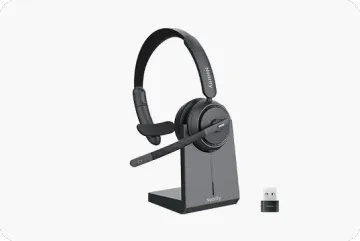
It depends on the environment. Duo headsets cover both ears and are best for loud, open-plan offices where agents need total focus (Immersion). Mono headsets leave one ear open and are better for environments where agents need to collaborate with colleagues or hear their surroundings while on a call. Many brands offer both versions to suit different needs.
Do wireless contact center headsets affect call quality?
High-quality wireless contact center headsets do not compromise call quality. Professional models use stable wireless technology and advanced audio processing to maintain clear voice transmission. When properly selected, wireless headsets can improve agent mobility without sacrificing performance.
What should I consider when choosing contact center headsets for my team?
Key factors include audio quality, comfort, wired vs. wireless needs, software compatibility, durability, and scalability. Choosing the best contact center headsets requires balancing agent comfort, operational requirements, and long-term cost efficiency.



 sales@nearhub.us
