Picture this: It’s 2:00 PM on a Tuesday. Your call floor is buzzing. Phones are ringing, agents are talking, and somewhere in the background, the HVAC system is humming a little too loudly.
In the middle of this organized chaos sits Sarah, one of your top agents. She’s on a critical call with a frustrated customer. But instead of focusing on empathy and problem-solving, Sarah is pressing the earcup of her headset against her head, squinting, trying to filter out the noise of the agent next to her laughing at a joke. The customer, meanwhile, is asking Sarah to repeat herself for the third time because they can hear the laughter too.
The result? The call drags on. The customer leaves unhappy. Sarah feels exhausted.
As a Call Center Manager or IT Buyer, you know this scenario all too well. The hardware you put on your agents' heads isn't just an accessory; it is the single most critical tool for their job. It is the bridge between your brand and your customers.
In this guide, we are going to cut through the noise (pun intended) and help you find the best call center headset in 2026 for your specific needs. We’ll cover everything from noise cancellation technology to comfort, ROI, and why modern innovators like the best noise cancelling headset from NearHub are shaking up the market.
Why Choosing the Best Call Center Headset Is a Business-Critical Decision
Before we dive into specs and features, let's talk business. Why should you invest budget in high-quality call center headsets?
Many organizations view headsets as a commodity—a box to check during onboarding. "Just get something that plugs in and works," is the common directive. But "just working" is a low bar that costs you money in the long run.
Agent Retention and Burnout
Call centers have some of the highest turnover rates in the business world. One of the leading causes of burnout is cognitive load. When an agent has to strain to hear a customer, or shout to be heard over background noise, their brain is working overtime. By the end of an 8-hour shift, that physical and mental fatigue adds up.
High-quality headsets with proper acoustic protection and comfort reduce this fatigue. They tell your agents, "We value your comfort."
Average Handle Time (AHT) and First Call Resolution (FCR)
Clear audio leads to faster comprehension. If an agent has to say "I'm sorry, can you repeat that?" five times a call, your AHT balloons. If the customer can't hear the instructions clearly, FCR drops. The best headset for call center environments is one that makes communication effortless, shaving precious seconds off every interaction.
The Customer Experience (CX) Gap
Your customer might be calling from a quiet living room or a busy street. If they hear your call center's background noise, it screams "unprofessional." Modern noise-canceling technology creates a "cone of silence" around your agent, ensuring the customer feels like they are the only person in the world that matters.
Industry Insight: According to Salesforce's State of Service report, the majority of customers view the experience a company provides as equally important as its products or services. Audio quality is the medium of that experience.

How to Choose the Best Headset for Call Center Environments
When evaluating the best call center headset in 2026, decision-makers need to balance noise cancellation, agent comfort, and total cost of ownership.
Active Noise Cancellation (ANC) vs. Environmental Noise Cancellation (ENC)
It is crucial to distinguish between these two acronyms, as they serve different masters within the call center ecosystem.
- Active Noise Cancellation (ANC) is for the agent. It uses microphones to listen to ambient noise around the agent and generates anti-noise to cancel it out in the earcup. This helps the agent focus and reduces fatigue.
- Environmental Noise Cancellation (ENC) is for the customer. It uses microphone arrays to filter out background noise from the agent's voice transmission. This ensures the customer hears only the agent, not the neighbor's chatter.
In a high-performance call center, you need a headset that delivers both.
Microphone Quality: The "AI" Era
This is arguably more important than what the agent hears. The microphone must reject background noise so the customer doesn't hear it.
- Old Tech: Simple directional boom mics.
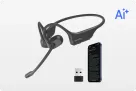
- New Tech: AI-powered Environmental Noise Cancellation (ENC). This technology learns the frequency of human speech and filters out everything else—keyboard clacking, dog barking (for remote agents), and neighbor chatter.
Comfort and Ergonomics
If a headset hurts after an hour, it’s useless. Look for:
- Weight: Ideally under 150g for mono, under 200g for stereo.
- Materials: Memory foam ear cushions with breathable leatherette.
- Clamping Force: Enough to stay on, loose enough to prevent headaches.
Durability
Call center gear gets abused. Headsets are thrown on desks, cables are run over by chairs, and boom arms are adjusted 50 times a day. You need reinforced headbands and rotatable boom arms that won't snap.
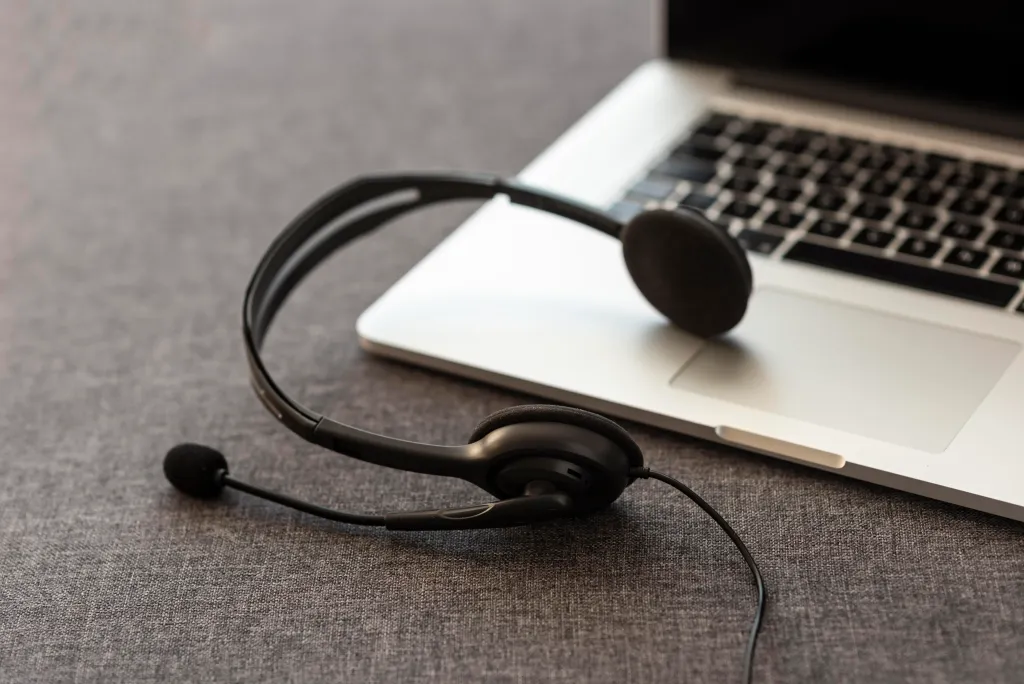
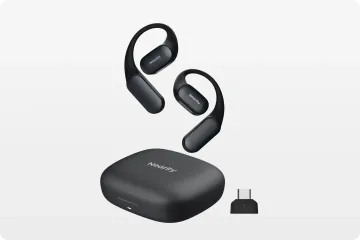
The Best Noise Cancelling Headset for Call Centers in 2026: NearHub EP320
We’ve talked about the "ideal" headset. Now, let’s talk about a reality that meets those ideals without breaking the bank.
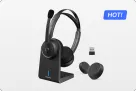
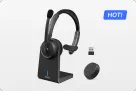
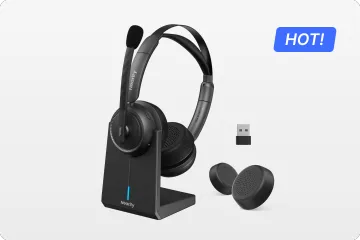
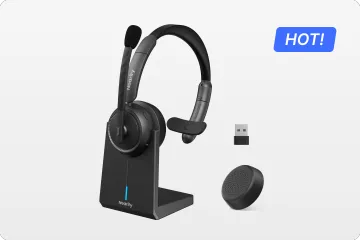
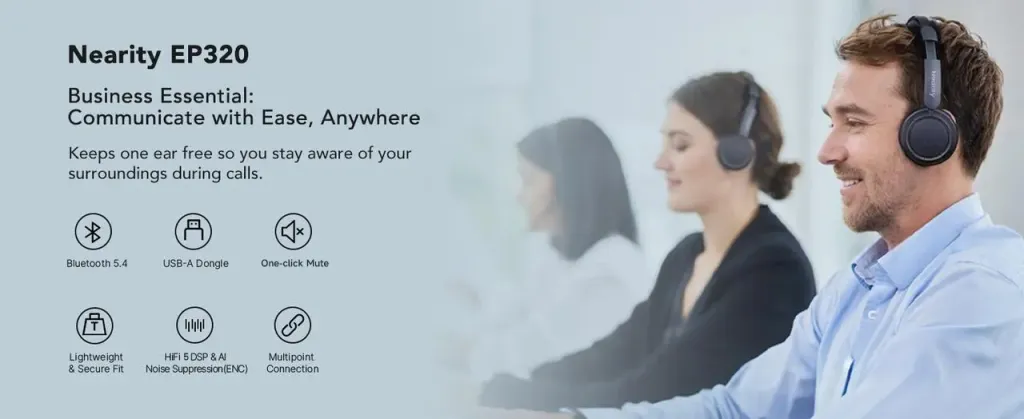
In a market dominated by legacy giants, the best noise cancelling headphone for work we recommend is the NearHub EP320.
Why does this specific model stand out for call centers?
Dual-Microphone AI Noise Cancellation
The EP320 doesn't just block noise; it intelligently erases it. It utilizes a dual-microphone array combined with advanced ENC algorithms. One mic picks up your voice; the other picks up the ambient chaos (the chatter, the HVAC, the keyboard clicks). The chipset subtracts the background noise in real-time. The result is crystal clear transmission where the customer hears only the agent.
All-Day Comfort Engineering
NearHub designed the EP320 specifically for the 8-hour shift. It features a lightweight, adjustable headband and premium soft ear cushions that dissipate heat. It minimizes the "ear fatigue" that leads to agents taking unauthorized breaks just to rest their ears.
The "Focus" Factor
By providing superior audio isolation, the EP320 allows agents to enter a state of flow. When they aren't straining to hear, they are more relaxed, more persuasive, and more efficient. It is a direct upgrade to your team's productivity infrastructure.
For IT buyers, the plug-and-play compatibility with major softphones (Zoom, Teams, Skype) makes deployment a headache-free experience.
For more options on noise cancellation in professional environments, see our guide to the best headset for work.
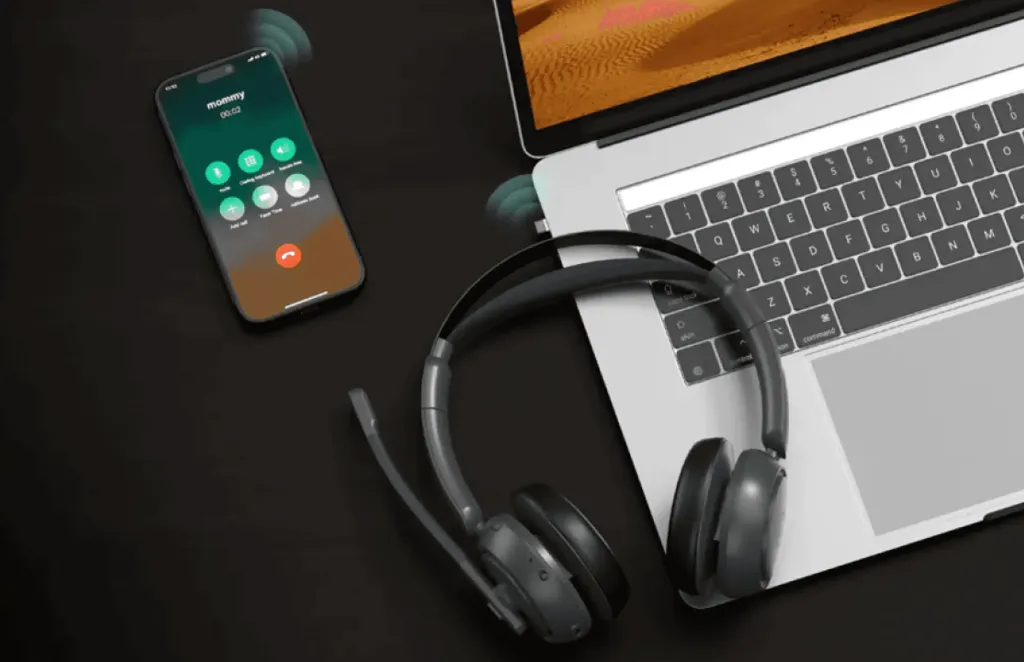
Best Call Center Headsets Compared: NearHub vs Poly vs Jabra
When looking for the best call center headsets, you will inevitably run into the "Big Three": Jabra, Poly (formerly Plantronics), and Logitech. How do they stack up against a challenger like NearHub?
The Legacy Brands (Poly & Jabra)
These brands have defined the landscape of call center headsets for decades. They offer incredible build quality and enterprise-grade management software (like Poly Lens). However, this comes at a premium price point. You are paying for the logo and the legacy support systems.
The Modern Contender (NearHub)
NearHub bridges the gap between premium performance and budget reality for modern call center headsets. While a top-tier Poly headset might cost $200+, NearHub offers 95% of that performance for a fraction of the cost, often with superior noise-cancellation algorithms derived from newer AI tech that legacy hardware hasn't updated yet.
Identifying the best office headset often comes down to this direct comparison: do you pay for the legacy brand name, or do you invest in the specialized noise-canceling performance that modern teams actually need?
Your call center is the voice of your company. Every time an agent picks up the phone, they are your brand ambassador. Don't let their message get lost in the static.
Choosing the best headset for call center operations isn't an expense; it's an investment in Customer Satisfaction (CSAT) scores and employee retention.
If you are looking for that perfect intersection of innovative noise-canceling technology, all-day comfort, and a price point that makes the CFO smile, the solution is clear.
Upgrade your team today with the best noise cancelling headset from NearHub. Give your agents the quiet they deserve and your customers the clarity they demand.
FAQ
- How often should call center headsets be replaced?
With heavy daily use (6-8 hours a day), the lifespan of a headset is typically 2 to 3 years. Ear cushions should be replaced every 6 months for hygiene and to maintain acoustic seal.
- Are gaming headsets okay for call center use?
Generally, no. While they are comfortable, gaming headsets often have "bass-heavy" audio profiles meant for explosions, not voice clarity. They also often lack the specific noise-canceling microphone frequencies needed for professional calls.
- Why do my agents hear an echo?
Echo is usually caused by "sidetone" settings being too high, or the microphone volume being set too loud, causing the voice to loop back. High-quality USB headsets with DSP (Digital Signal Processing) usually eliminate this automatically.
- Is Bluetooth reliable enough for a busy call center?
In a high-density office (hundreds of agents), Bluetooth can suffer from interference if too many devices are on the same 2.4GHz band. For high-density floors, DECT or Wired USB is safer. For remote work, Bluetooth is excellent.