Video Conferencing Technology for Businesses: How to Choose the Right Tools
This article explains the essential components of modern video conferencing technology and provides a strategic framework for businesses to choose and implement the right tools.
video conferencing technology
conference camera
Updated: Aug 19, 2026 · 12 minutes read
Global Business, Brought Near.
No Installer, No Hassle, Just Works.
As hybrid work becomes the global standard, businesses must master video conferencing technology to remain competitive. This guide serves as an essential manual for decision-makers, covering everything from basic definitions and industry examples to hardware evaluation and future trends like AI-driven spatial audio. Learn how to optimize your office setup with expert tips from NearHub and ensure your virtual presence is as impactful as your physical one.
Key Takeaways
Synergy is Key: Professional virtual communication requires a seamless integration of high-definition hardware and intuitive software.
Assessment Matters: Always evaluate room size, network bandwidth, and scalability before investing in new conferencing systems.
Simplify with All-in-One: Using an all-in-one microphone and camera solution reduces technical friction and cable clutter in meeting rooms.
Leverage AI: Prioritize features like AI noise reduction and auto-framing to improve engagement and reduce "Zoom fatigue."
Plan the Rollout: Successful implementation depends on site audits and staff training to ensure high adoption rates.
Have you ever been in the middle of a high-stakes client pitch, only for your screen to freeze at the exact moment you were about to reveal the ROI? Or perhaps you’ve spent the first ten minutes of every board meeting asking, "Can everyone hear me now?" These are the modern-day frustrations that plague businesses relying on outdated infrastructure.
In this article, we will explore the essential role of video conferencing technology in the modern workplace, helping you navigate the complex landscape of hardware, software, and strategy to ensure your team stays connected, regardless of geography.
What is Video Conferencing Technology and Why Does Your Business Need It?
Before we dive into the technical specifications, it is crucial to establish a baseline. What is video conferencing? At its core, it is the combination of hardware and software that allows two or more people in different locations to communicate via simultaneous video and audio transmissions.
In today's global economy, this isn't just a "nice-to-have" feature; it is the backbone of the hybrid work model. According to recent studies by Gartner, over 80% of workers expect a hybrid or remote work environment to continue indefinitely. Without robust video conferencing technology, your business risks silos, miscommunication, and a significant drop in employee engagement.
Why Your Business Must Invest Now:
Reduced Travel Costs: Eliminate the need for expensive cross-country flights for simple check-ins.
Enhanced Collaboration: Visual cues and screen sharing allow for more nuanced discussions than a standard phone call.
Global Talent Access: Hire the best minds from anywhere in the world without worrying about relocation logistics.
Faster Decision Making: Real-time face-to-face interactions speed up approval processes.
Key Components of Modern Video Conferencing Technology
Building an effective setup requires more than just a laptop and a webcam. To achieve professional-grade results, you need a synergy between several technical layers.
The Hardware Layer
High-quality audio and video are non-negotiable. If participants can’t see your facial expressions or hear the clarity in your voice, the "human" element of the meeting is lost.
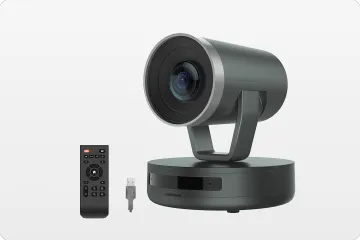
High-Definition Cameras: Look for 4K resolution and wide-angle lenses for conference rooms.
Noise-Canceling Microphones: Essential for filtering out background hums and keyboard clicks.
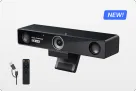
All-in-One Solutions: Many businesses are moving toward an all in one microphone and camera to simplify setup and reduce cable clutter.
The Software Layer
The software serves as the interface for your team. Whether you choose Zoom, Microsoft Teams, or Google Meet, the software must be intuitive.
Security Protocols: End-to-end encryption is a must for protecting proprietary data.
Integration Capabilities: Your software should play nicely with Slack, Trello, or your CRM.
User Interface (UI): If it’s too hard to join a meeting, people won't use it.
Real-World Conferencing Example: Industry Applications
To understand the versatility of this tech, let’s look at a few conferencing example scenarios across different sectors.
Industry
Primary Use Case
Key Required Feature
Healthcare
Telehealth consultations and surgical collaboration.
HIPAA compliance & high-res detail.
Education
Hybrid classrooms and global guest lectures.
Interactive whiteboards & polling tools.
Legal
Remote depositions and client discovery.
Secure recording & transcriptions.
Tech/SaaS
Agile stand-ups and pair programming.
Low-latency screen sharing.
Case Study: Remote Engineering Teams
Consider a global engineering firm. They use video conferencing technology to perform virtual site inspections. By using a 360-degree camera, engineers in London can inspect a construction site in New York in real-time, identifying structural issues without ever boarding a plane. This is a prime conferencing example of how technology directly impacts the bottom line.
How to Evaluate Video Conferencing Technology for Your Specific Business Needs
Choosing the right tool isn't about buying the most expensive gear; it’s about finding the "Goldilocks" fit for your team size and office layout.
Assessment Checklist:
Room Size: Are you outfitting a "huddle room" for 3 people or a boardroom for 30?
Network Bandwidth: Does your office internet support 4K streaming for multiple simultaneous sessions?
Ease of Use: Can a non-technical manager start a meeting in under 30 seconds?
At NearHub, we specialize in bridge-building between these needs. We believe that technology should be invisible—it should just work, allowing you to focus on your ideas rather than the "Join" button.
Step-by-Step Guide: How to Implement Video Conferencing Systems for Success
Proper implementation is the difference between a successful meeting and a technical disaster. Follow these steps to ensure a professional rollout.
Step 1: Conduct a Site Audit
Check the acoustics and lighting of your meeting spaces. Sound-dampening panels and soft, front-facing lighting can make a $500 setup look like a $5,000 one.
Step 2: Select Your Core Infrastructure
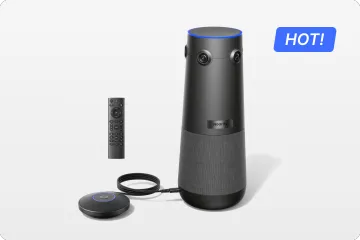
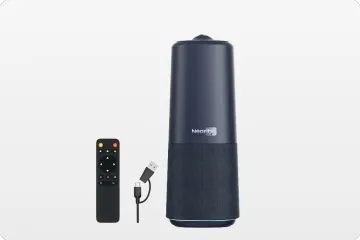
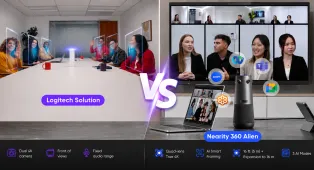
Choose reliable video conferencing systems that offer a plug-and-play experience. Devices like the Nearity 360 Alien are designed to eliminate the common "dead zones" in audio pickup.
Step 3: Train Your Staff
Don't assume everyone knows how to share their screen or mute their mic.
Create a 1-page "Cheat Sheet" for every room.
Host a 15-minute "Office Hours" session to demo the new tech.
Establish a "Meeting Etiquette" guide (e.g., cameras on for external clients).
Top Features to Look for in an All-in-One Microphone and Camera Solution
The market is flooded with peripherals, but for most businesses, an all in one microphone and camera is the most cost-effective and efficient choice.
Essential Features:
360-Degree Coverage: Ensures every person in the room is seen and heard, regardless of where they sit.
AI Noise Reduction: High-end video conferencing technology now uses AI to identify human voices and filter out background noise like air conditioners.
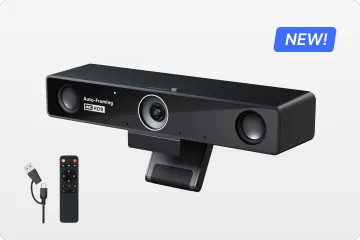
Auto-Framing: The camera should automatically zoom in on the person currently speaking.
Plug-and-Play USB Connectivity: No complex drivers or IT tickets required.
By integrating these features into your workflow through NearHub, you ensure that your virtual presence is as commanding as your physical one.
Future Trends in Video Conferencing Technology: AI and Beyond
The landscape of video conferencing technology is shifting toward "Immersion." We are moving past the "talking heads" era into something much more interactive.
What's Coming Next:
Virtual Reality (VR) Meeting Rooms: Imagine sitting at a virtual table with colleagues' avatars, feeling a sense of physical presence.
Real-time Translation: AI that translates your speech into the listener's language with minimal lag.
Advanced Analytics: Software that tells you who spoke the most and tracks team sentiment during the call.
Spatial Audio: Sound that feels like it’s coming from the specific direction where the speaker is sitting on your screen.
As these trends evolve, staying ahead of the curve with hardware that can support these updates is vital for long-term ROI.
FAQ: Common Questions About Video Conferencing Technology
Q1: How much bandwidth do I really need for HD video conferencing?
For a smooth 1080p experience, you generally need 2-3 Mbps of dedicated upload and download speed per user. For 4K, aim for at least 15-20 Mbps.
Q2: What is the best way to avoid "Zoom Fatigue"?
Limit meetings to 45 minutes, encourage "camera-off" breaks, and ensure you are using high-quality audio. Poor audio quality forces the brain to work harder to decode speech, which is a primary cause of fatigue.
Q3: Can I use my laptop's built-in mic for professional meetings?
While possible for a quick internal sync, it is not recommended for client-facing calls. Built-in mics often pick up fan noise and lack the depth of a dedicated all in one microphone and camera.
Q4: Is video conferencing technology secure for sensitive legal or financial data?
Yes, provided you use enterprise-grade software that offers AES 256-bit encryption and Multi-Factor Authentication (MFA).
Conclusion: Elevating Your Business Connectivity
Investing in the right video conferencing technology is more than just a hardware purchase; it is a commitment to your company's culture and operational efficiency. By choosing tools that prioritize ease of use, audio-visual clarity, and seamless integration, you empower your team to collaborate without barriers.
We have seen how a single conferencing example—like a remote surgical consultation or a global engineering sync—can change the trajectory of an entire industry. Whether you are a small startup or a Fortune 500 company, the goal remains the same: clear, uninterrupted communication that fosters innovation.