Best Vibe Coding Headset: Why Noise Cancelling Matters for True Flow
A professional ENC vibe coding headset like the EP320 eliminates background noise at the microphone level, ensuring clean voice input for AI tools and uninterrupted developer flow.
Vibe Coding
AI-Assisted Coding
Deep Work
Updated: Aug 19, 2026 · 10 minutes read
Global Business, Brought Near.
No Installer, No Hassle, Just Works.
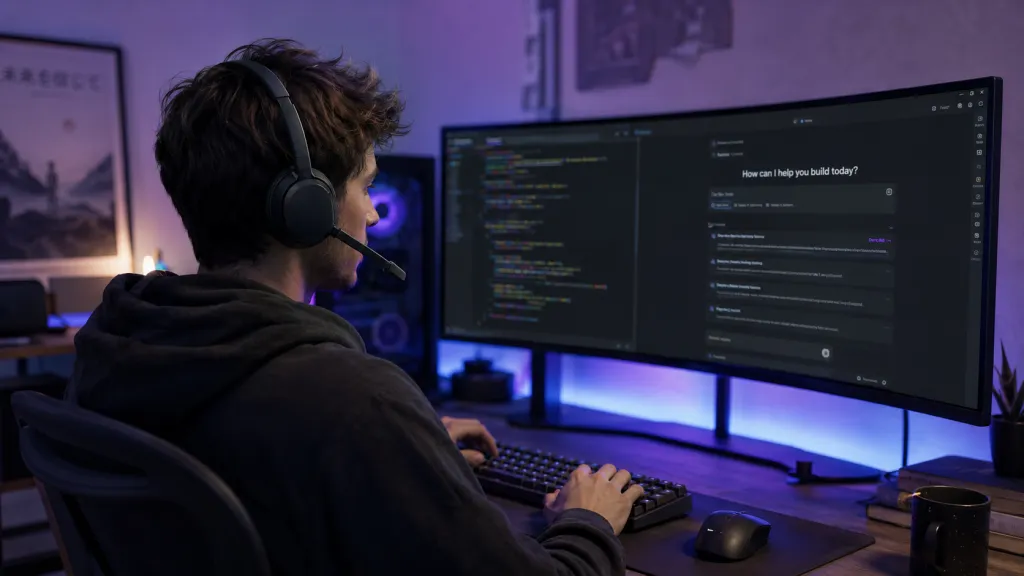
In today's fast-evolving developer landscape, vibe coding has become more than a trend—it has become a workflow philosophy. Instead of focusing solely on syntax or low-level implementation, vibe coding emphasizes a smooth, intuitive, and immersive creative experience. Developers combine natural-language problem solving, AI-assisted ideation, and uninterrupted deep-work sessions to produce better code, faster.
And increasingly, vibe coding is a voice-driven practice. Developers use voice input to prompt AI tools, dictate logic, navigate codebases, and collaborate with teammates in real time—all without breaking their flow. This shift makes one thing clear: the quality of your microphone matters as much as the quality of your screen.
This is precisely where a professional vibe coding headset with ENC (Environmental Noise Cancellation) becomes indispensable. For developers who rely on voice input, background noise isn't just a distraction—it's a direct obstacle to how well your AI tools understand you, how clearly your teammates hear you, and how smoothly your entire workflow runs.
In this article, we explore why clean voice input is essential for achieving true vibe coding flow, and why the Nearity EP320—a professional wireless headset built with AI-powered ENC—has become a key part of the modern developer's toolkit.
Key Takeaways
Vibe coding is increasingly voice-driven, making microphone quality a core productivity factor
Background noise corrupts AI voice input, weakens responses, and breaks the developer flow loop
ENC (Environmental Noise Cancellation) filters noise at the microphone source — not the ear
A purpose-built vibe coding headset with ENC enables clean AI interactions from any environment
The Nearity EP320 features a 4-mic AI-powered ENC system with 45-hour battery and Bluetooth 5.4
Cleaner voice input = better AI output, fewer repeated prompts, and faster iteration cycles
The EP320 is one of the best headsets for vibe coding for voice-driven developers in 2026
What is Vibe Coding and Why Does It Matter?
The Meaning of Vibe Coding
Vibe coding is a modern development approach that blends traditional programming with intuitive, high-level problem solving, often supported by AI tools. Instead of focusing exclusively on syntax, commands, or line-by-line implementation, vibe coding emphasizes flow, creativity, and clarity of intent. Developers articulate ideas, describe desired behaviors, iterate quickly with AI assistance, and shape solutions in a more natural, fluid way.
At its core, vibe coding is about crafting an environment—both mental and physical—that allows developers to think clearly, explore ideas freely, and make progress without friction. This shift represents a larger trend in software development: moving from mechanical coding toward conceptual design and fast experimentation.
Why Vibe Coding Matters
Vibe coding is becoming increasingly important for teams and individual developers for several reasons:
Higher-Level Thinking, Less Cognitive Overload By shifting focus from rote implementation to conceptual reasoning, developers conserve mental energy for architecture, logic, and innovation. AI handles repetitive or low-impact tasks, allowing humans to stay aligned with the bigger picture.
Faster Iteration and Problem Solving When developers can stay in “flow,” they ideate faster, write better prompts, refine solutions more quickly, and maintain momentum throughout a task. Vibe coding maximizes velocity without sacrificing quality.
Enhanced Creativity A smoother, more intuitive workflow encourages experimentation. Developers can test alternative approaches rapidly, explore creative prompts, and revise solutions without breaking rhythm.
Reduced Context Switching Traditional coding often forces frequent shifts between thinking, researching, writing, debugging, and re-checking syntax. Vibe coding minimizes these transitions, keeping developers immersed in a single, continuous mental space.
Better Use of AI Co-Creation In vibe coding, AI becomes a collaborative partner. Maintaining a stable cognitive state enhances the quality of prompts and the clarity of high-level instructions—directly improving the output developers receive from AI models.
Vibe Coding Is Increasingly Voice-Driven
One of the defining shifts in modern vibe coding is the rise of voice input as a primary interface. Rather than typing every prompt manually, developers now speak directly to AI coding assistants, use voice commands to navigate tools, and hold real-time verbal discussions with AI agents to refine logic and architecture. This makes the microphone—not just the keyboard—a core instrument of the vibe coding workflow.
When voice input is unclear, garbled by background noise, or repeatedly misunderstood, the entire AI-assisted loop breaks down. You repeat yourself, lose momentum, and exit the flow state that vibe coding depends on. This is why the quality of your headset's microphone, and specifically its ability to isolate your voice from environmental noise, is no longer optional—it is foundational.
In short: vibe coding is a productivity system—one that relies on mental flow, uninterrupted concentration, and a carefully optimized work environment.
And this is precisely why controlling noise and maintaining a quiet workspace are so essential. Without silence, even the best AI tools cannot help developers achieve the deep focus required for true vibe coding flow.
How Noise Disrupts Voice-Driven Vibe Coding
How Background Noise Breaks the Voice-Driven Vibe Coding Loop
Vibe coding's greatest strength is its iterative rhythm: you speak an idea, the AI responds, you refine, and momentum builds. But this loop depends entirely on one thing—your AI tool hearing you clearly. When background noise pollutes your microphone input, the entire cycle degrades.
What Noise Does to Your Voice Input
When you work in a café, open office, or busy home environment, your microphone captures more than your voice. It picks up:
Keyboard clicks and mouse movements
Air conditioning hum and ventilation noise
Nearby conversations and footsteps
Notification sounds and ambient music
All of this noise is transmitted directly into your AI tool's input stream. The result:
Weaker AI responses. Speech-to-text tools and AI voice interfaces struggle to isolate your intent from surrounding noise, producing inaccurate transcriptions and lower-quality outputs.
Repeated inputs. You say things twice, three times, or switch back to typing—losing the fluid pace that defines vibe coding.
Broken collaboration. Teammates on calls hear your environment instead of your ideas, forcing them to ask you to repeat yourself and fragmenting the shared flow of pair programming or technical discussion.
Mental fatigue. The extra effort of compensating for poor voice clarity—speaking louder, re-prompting AI, clarifying misunderstandings—drains cognitive energy that should be going into creative problem solving.
Why This Is Especially Harmful to Vibe Coding
Traditional coding can absorb some of these friction points because the work is primarily text-based. But vibe coding is built on the assumption that communication between developer and AI is fast, natural, and reliable. Every time noise corrupts a voice input, it introduces a delay, a correction, or a context switch—exactly the kind of interruption that destroys flow.
The more your workflow depends on voice, the more noise becomes a direct bottleneck to your productivity.
The Solution Is Not Silence—It's ENC
Most developers cannot control their environments. Cafés, co-working spaces, shared apartments, and open offices are realities of modern development work. The solution is not to find a perfectly quiet room—it's to use a vibe coding headset with professional ENC that eliminates noise at the microphone source, regardless of where you are working.
Why an ENC Headset Is the Most Important Tool for Voice-Driven Vibe Coding
For developers who use voice input as part of their vibe coding workflow, an ENC (Environmental Noise Cancellation) headset is not a luxury—it is a productivity essential. Here is why.
What ENC Does
ENC operates at the microphone level. It analyzes the audio captured by the headset's microphones, separates your voice from environmental background noise, and transmits only your clean voice signal to the receiving end—whether that's an AI tool, a video call, or a voice-recording interface.
Unlike passive noise isolation (which simply blocks some sound physically), ENC actively processes audio in real time, adapting to changing environments and suppressing noise that passive designs cannot.
How ENC Directly Improves Vibe Coding
Better AI output. When your AI coding assistant receives a clean voice input, it produces more accurate transcriptions, better-understood prompts, and higher-quality code suggestions. Noise-free input is better input.
Fewer repetitions. You say it once, the AI hears it correctly, and the loop continues without interruption. This single improvement can dramatically increase the pace and smoothness of voice-driven vibe coding.
Clearer collaboration. When teammates hear your voice clearly—not your environment—technical discussions stay focused, pair programming sessions flow naturally, and context is preserved across the conversation.
Lower cognitive load. Knowing your voice is being captured cleanly removes a constant low-level stress. You speak naturally, focus on ideas, and trust the tool to handle the rest.
Work from anywhere. With a professional ENC headset, a café, a co-working space, or a noisy home office becomes a viable vibe coding environment. Your location no longer limits your ability to use voice-driven AI workflows effectively.
ENC Is the Difference Between a Headset and a Vibe Coding Headset
Any headset can play audio. But the best headset for vibe coding is one that also ensures your voice output is professional-grade—clean, clear, and reliable in any environment. That is what ENC delivers, and that is why it has become the defining feature of a purpose-built vibe coding headset.
EP320: The Best Headset for Vibe Coding — Built for Flow
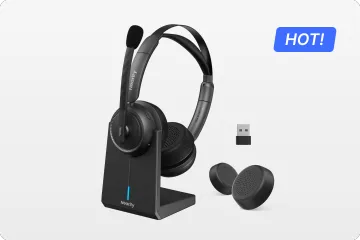
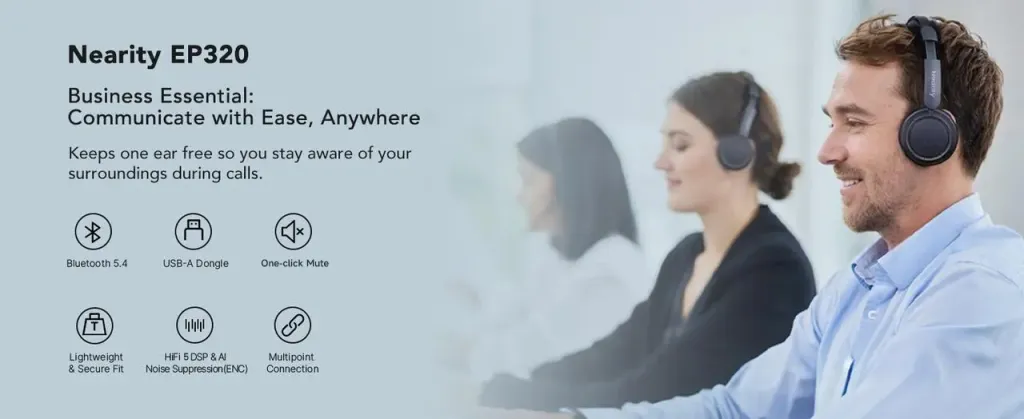
When it comes to supporting voice-driven vibe coding, the Nearity EP320 is purpose-built for the job. Its core feature is an AI-powered 4-mic ENC system driven by a dedicated DSP processor that analyzes and eliminates background noise in real time. Whether you're prompting an AI coding assistant from a busy café or joining a pair programming call from a shared workspace, the EP320 ensures that what your tools and teammates hear is your voice—not your environment.
This makes the EP320 far more than a standard office headset. For developers who rely on voice input as a primary interface for AI-assisted vibe coding, it functions as a direct productivity tool: cleaner input leads to better AI responses, fewer repeated prompts, and a smoother, uninterrupted development loop.
Connectivity Built for Modern Vibe Coding Workflows
The EP320's Bluetooth 5.4 with multi-point connection allows simultaneous pairing with multiple devices—such as a laptop running your AI coding environment and a smartphone for calls—enabling seamless transitions without re-pairing.
For developers who need a reliable usb headset with microphone experience on desktop setups, the included USB dongle provides a stable connection on devices lacking reliable Bluetooth support—expanding its usefulness across hybrid work environments.
As a professional headset with mute button, the EP320 puts intuitive controls at your fingertips—including a dedicated mute button and easy volume adjustment—so you can manage calls and media playback without ever interrupting your focus.
Battery Life That Matches Your Sessions
With up to 45 hours of talk time on a single charge, the EP320 is designed to outlast your longest vibe coding sessions. You focus on the work; the headset handles the rest.
Comfort for All-Day Voice-Driven Work
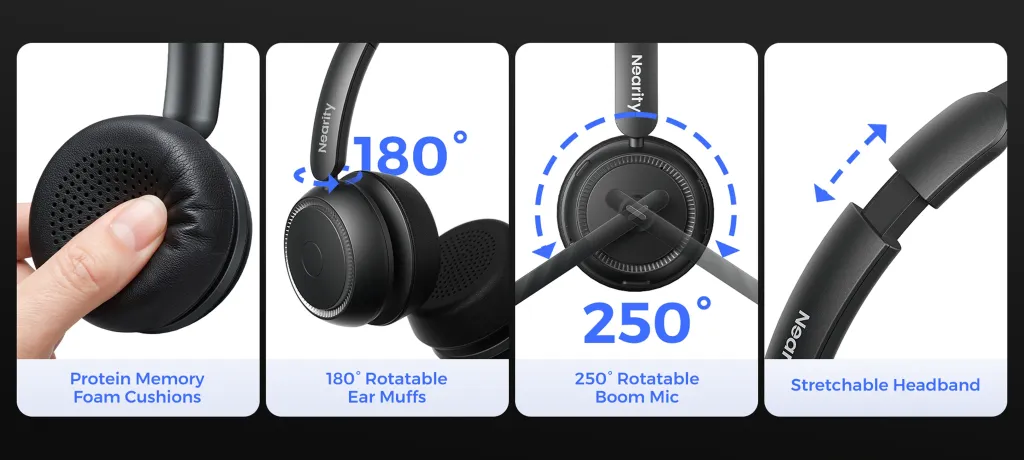
Sustained voice input requires sustained wear. The EP320's plush ear cushions and padded headband are designed for all-day comfort, ensuring that physical fatigue never becomes the reason you stop using voice input or break your flow.
A Complete Vibe Coding Headset
What makes the EP320 the best headset for vibe coding isn't any single feature—it's the combination of professional ENC, reliable connectivity, long battery life, and ergonomic comfort working together. For developers who are serious about voice-driven AI workflows, it provides the clean, stable audio foundation that vibe coding demands.
Conclusion: Choose the Right Vibe Coding Headset to Protect Your Flow
Vibe coding is redefining how developers work—and voice input is at the heart of that transformation. As AI coding tools become more capable and more conversational, the ability to communicate with them clearly, quickly, and from any environment has become a core developer skill. But that skill is only as good as the hardware supporting it.
Background noise is the silent barrier between you and a fluid, voice-driven vibe coding experience. It corrupts AI input, fragments collaboration, and forces you out of the flow state you worked hard to build. The solution is a professional vibe coding headset with ENC—one that eliminates environmental noise at the source and ensures every voice interaction is clean, accurate, and reliable.
The Nearity EP320 delivers exactly that. With its AI-powered 4-mic ENC system, 45-hour battery, Bluetooth 5.4 multi-point connectivity, and all-day ergonomic comfort, it is built for the realities of modern voice-driven development. If you're serious about getting the most from your AI coding workflow, the EP320 is the best headset for vibe coding you can invest in.
FAQs
1. What is the best headset for vibe coding in 2026?
The best headset for vibe coding combines ergonomic comfort, reliable multi-device connectivity, and professional-grade microphone clarity. The Nearity EP320 is a standout choice: its AI-powered ENC (Environmental Noise Cancellation) filters out background noise at the microphone level, so your voice comes through cleanly during AI voice interactions, pair programming calls, and team standups—without breaking your flow. Paired with 45-hour battery life and Bluetooth 5.4 multi-point pairing, it's a purpose-built tool for developers who code with AI and need uninterrupted concentration.
2. What makes a headset a true vibe coding headset?
A true vibe coding headset needs to do more than just play music. It should offer all-day comfort for marathon deep work sessions, stable wireless connectivity for switching between devices, clear microphone quality for AI voice tools and standup calls, and long enough battery life to outlast your longest coding blocks. The EP320 checks all these boxes—making it one of the most purpose-fit vibe coding headsets available for professional developers.
3. When I use the EP320 for vibe coding, will my microphone pick up background noise during calls?
No. The EP320's ENC technology actively filters environmental noise at the microphone source. Whether you're in a coffee shop, a co-working space, or a busy home office, background sounds like keyboard clicks, AC hum, or nearby conversations are suppressed before they reach the other end of the call—keeping your communication clear and your workflow uninterrupted.
4. How do noise cancelling headphones help with vibe coding?
Noise cancelling headphones reduce environmental distractions, lower cognitive load, and allow developers to enter and maintain a flow state. They also support longer work sessions with less mental fatigue and provide stable sound for AI-assisted workflows.
5. Can I use EP320 in shared offices or cafés?
Yes. The EP320 is designed for professional use in any environment. Its ENC microphone ensures that even in a noisy café or open office, your voice is captured clearly during calls and AI-assisted interactions—so the other person or tool hears you, not your surroundings.
6. When I use the EP320 for vibe coding, will I still hear people talking around me?
The EP320's ENC works at the microphone level to filter the noise others hear from your end. For your own listening experience, the over-ear design provides passive sound isolation that reduces ambient noise, helping you stay focused during long vibe coding sessions without being distracted by nearby conversations.
7. Does the EP320 have a microphone, and can others hear me clearly during calls?
Yes, the EP320 has a built-in microphone with Environmental Noise Cancellation (ENC). It filters out background noise so your voice comes through clearly, making calls and online collaboration smooth even in noisy environments.