




























Leading a small group can be intimidating, but it is a rewarding experience. This guide explores how to lead a bible study effectively, shifting from a teaching role to a facilitator mindset. It covers essential preparation using the inductive method, strategies for managing group dynamics, and setting up hybrid environments with the right technology. Learn practical tips to foster community and spiritual growth with confidence.
Key Takeaways
- Adopt a Facilitator Mindset: Focus on guiding the discussion and traffic control rather than acting as a teacher or expert.
- Prepare with the Inductive Method: Use the "Observation, Interpretation, Application" framework to ground discussions in the text.
- Master the "Hook, Book, Look, Took" Structure: Organize meetings efficiently to engage members, study scripture, and apply lessons to life.
- Invest in Hybrid Tech: Use 360-degree conference cameras to ensure remote participants feel fully included in the community.
- Embrace Silence: Allow quiet moments after asking questions to give members time to process and think before answering.
Picture this: You have just agreed to facilitate a small group for your local church or community. At the moment, it felt like the right thing to do. But now, as the date approaches, your palms are getting sweaty, and a million questions are racing through your mind. What if no one talks? What if they ask a question I can't answer? What if the technology fails for our remote members?
If this sounds familiar, take a deep breath. You are not alone. Every great leader started exactly where you are right now—with a willingness to serve and a healthy dose of nervousness.
Leading a small group is one of the most rewarding experiences you can have. It is not about being a theology professor or having perfect answers; it is about facilitating a space where community and growth can happen. Whether you are gathering in a living room, a church hall, or connecting virtually, the principles of effective leadership remain the same.
In this article, we will walk you through every step of the process, from the initial preparation to handling difficult group dynamics and utilizing modern technology for hybrid setups. By the end of this guide, you will have the tools and confidence to lead effectively.
Understanding Your Role: The Facilitator Mindset
Before we get into the logistics, we need to clarify what your role actually is. A common misconception is that the leader must be the "teacher." Unless you are explicitly running a lecture-style class, your role is actually that of a facilitator.
The Difference Between Teaching and Facilitating
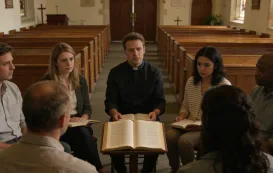
A teacher imparts knowledge; a facilitator guides discovery. When you are learning how to lead a bible study, your goal is to act as a traffic controller for the conversation. You want to ensure the traffic (discussion) keeps moving, no one crashes (conflict), and everyone stays on the road (the topic).
You don’t need to be an expert: You just need to be prepared.
You don’t need to talk the most: In fact, you should probably talk the less than 30% of the time.
You don’t need to fix people: Your job is to point them to the text and to community, not to be their therapist.
The Shepherd’s Heart
At its core, leading a group bible study is a pastoral act. It is about caring for the people in the room. This means paying attention to who is quiet, who seems burdened, and ensuring the environment feels safe.
Observe: Watch body language.
Listen: Listen to understand, not just to respond.
Pray: Pray for your members by name throughout the week.
How to Lead a Bible Study: The Preparation Phase
Great meetings don't happen by accident; they happen by design. The most critical work you will do happens before the first person walks through the door (or logs into the Zoom call).
1. Choose Your Source Material Wisely
Are you studying a specific book of the Bible, doing a topical study (e.g., "Anxiety," "Joy"), or following a curriculum video series? For beginners, following a pre-written study guide or a book of the Bible is often easier than creating a topical study from scratch.
2. Apply the "Best Way to Study the Bible" Yourself First
You cannot lead others where you haven't gone yourself. Before the meeting, spend time with the text. Many experts agree that the best way to study the bible for preparation is the Inductive Bible Study Method.
This method involves three steps:
Observation: What does the text say? (Who, what, where, when?)
Interpretation: What did the text mean to the original audience?
Application: What does this mean for us today?
By using this framework, you ensure that your discussion is rooted in the text rather than just personal opinions.
3. Crafting Open-Ended Questions
The death of any small group is the "Yes/No" question. If you ask, "Did Jesus love the disciples?" everyone will nod, say "Yes," and stare at you.
Instead, craft questions that spark dialogue:
Bad: "Is it important to forgive?"
Good: "Why do you think forgiveness is so difficult for us in modern culture?"
Better: "Looking at verse 12, what does the author suggest is the root cause of our inability to forgive?"
Preparation Checklist
Read the passage in at least three translations (ESV, NIV, NLT).
Identify the main theme.
Write down 5-7 key discussion questions.
Anticipate one "curveball" question someone might ask.
Pray for the Holy Spirit’s guidance.
Creating the Right Environment: Physical and Hybrid
The environment dictates the vibe. If the room is cold, cluttered, or the tech is failing, people will be distracted. In our modern era, we also have to consider the "hybrid" element—where some members are in person and others are remote.
The Physical Setup
If you are meeting in person, comfort is key.
Seating: Arrange chairs in a circle. Avoid rows, which signal a "lecture" format.
Lighting: Soft lighting is better than harsh overhead fluorescents.
Food: Never underestimate the power of snacks. Food relaxes people and builds community before the study even begins.
The Hybrid Challenge
Post-2020, many groups have moved to a hybrid model. This offers flexibility but presents technical challenges.
Nothing kills the "flow" of a spiritual discussion faster than "Can you hear me now?" or audio feedback loops.
To make remote members feel included, you need professional-grade audio and video.
You cannot rely on a single laptop webcam at the end of a table. You need equipment that can capture the whole room.
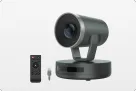
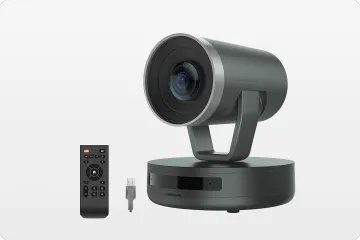
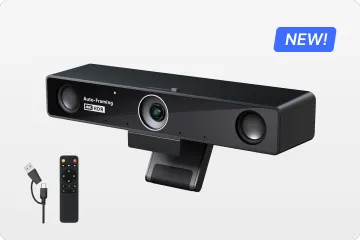
For church meeting rooms or larger living rooms, investing in high-quality conference room cameras changes everything.
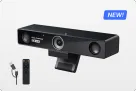
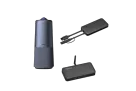
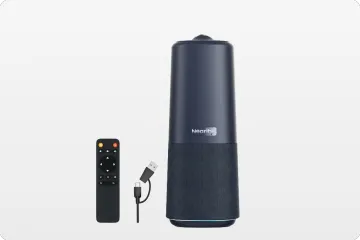
This is where a device like the Nearity 360 Alien becomes a vital ministry tool.
Unlike standard webcams that only capture a narrow angle, the 360 Alien features a 360-degree panoramic view that captures the entire circle. This ensures remote members feel like they are sitting right there in the living room, not just watching a lecture.
Crucially, its AI speaker tracking automatically focuses on whoever is talking. Whether it's the leader explaining a verse or a shy member sharing a personal testimony, the camera finds them. This visual context is essential for reading body language—a huge part of spiritual communication.
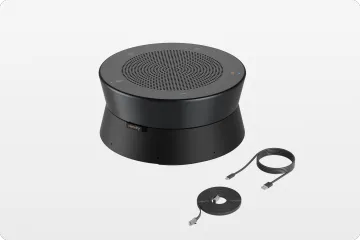
Furthermore, audio is even more critical than video. If remote members can't hear the prayer requests, they can't participate in the community.
The Nearity 360 Alien solves this with an 6-microphone array and noise cancellation, ensuring that even soft-spoken prayers are heard clearly without the distraction of background noise.
Exploring dedicated conference room solutions like this bridges the gap between physical and digital presence.
Brands like NearHub are increasingly relevant in faith spaces, providing the tools necessary to keep communities connected regardless of geography.

How to Lead a Bible Study Discussion Effectively
You have prepared, the room is set, and the people are here. Now, how do you actually facilitate the hour?
The "Hook, Book, Look, Took" Structure
This is a classic structure used by youth pastors and adult small group leaders alike because it works.
Phase | Purpose | Example Activity |
Hook | Grab attention and introduce the topic. | An icebreaker question or a relevant news story. |
Book | Read and study the scripture. | Reading the passage aloud (twice) and defining key terms. |
Look | Interpret the meaning. | Discussing context and theology using your prepared questions. |
Took | Application to life. | "What is one thing you will change this week based on this text?" |
Mastering the Silence
This is one of the hardest parts of learning how to lead a bible study. You ask a question, and there is silence.
The Impulse: Fill the silence immediately because it feels awkward.
The Discipline: Wait. Count to ten in your head.
People need time to process the question. Silence often means people are thinking. If you answer your own question too quickly, you train the group to be passive.
Managing the "Over-talker" and the "Quiet Mouse"
Every group has them.
The Over-talker: Affirm them, but pivot. "That’s a great insight, John. I’d love to hear what Sarah or Mike thinks about that specific point."
The Quiet Mouse: Do not put them on the spot with a hard theological question. Ask them something subjective first. "Jane, does this passage remind you of any personal experiences?"
10 Essential Bible Study Tips for Beginners
If you take nothing else away from this guide, memorize these 10 tips. They are the "cheat codes" for effective leadership.
1. Vulnerability Starts with You
If you want your group to be open and honest, you must go first. You don't need to confess your darkest secrets in the first meeting, but admitting a struggle or a doubt sets a tone of authenticity. People follow the leader's level of openness.
2. Don't Be Afraid to Say "I Don't Know"
You will get asked a question you can't answer. "Where did Cain get his wife?" "Explain the Trinity in simple terms."
Wrong Move: Making up an answer to sound smart.
Right Move: "That is a fantastic question, and honestly, I want to give you a researched answer. Let me look into that this week and we can start with that next time."
3. Start and End on Time
This sounds unspiritual, but it is actually about respect. People have babysitters, work early, or have other commitments. If you consistently run 30 minutes late, people will stop coming. Being a good steward of time is part of being a good leader.
4. Use Icebreakers Strategically
Bible study tips often overlook the icebreaker, dismissing it as "cheesy." However, icebreakers serve a neurological function—they get people comfortably speaking. If someone answers a fun question about their "favorite pizza topping," they are psychologically more primed to answer a deeper question about their faith later.
5. Keep the Main Thing the Main Thing
Tangents happen. Someone mentions a political event, a sports game, or a theological debate irrelevant to the text.
The tactic: The "Parking Lot."
The phrase: "That is a really interesting topic, but I want to make sure we finish this chapter in Romans. Let’s put that in the 'parking lot' and maybe we can discuss it over coffee afterward."
6. Encourage Different Translations
Ask group members to bring different Bible versions (NASB, ESV, CSB, etc.). Having someone read a verse in a different translation can often unlock a new perspective or clarify a confusing phrase. This enriches the group bible study experience significantly.
7. Pray specifically, not generically
Instead of just "doing prayer requests" at the end (which often turns into an organ recital of everyone's sick distant relatives), try different prayer models.
Popcorn Prayer: Short, sentence-long prayers.
ACTS Model: Adoration, Confession, Thanksgiving, Supplication.
Partner Prayer: Break into groups of two to pray for each other.
8. Leverage Technology for Follow-up
The study doesn't end when the meeting ends. Use a group chat (WhatsApp, Slack, GroupMe) to share prayer updates or a mid-week encouragement.
Tip: If you are using NearHub technology or similar tools for your meetings, you can record the session (with permission) for those who missed it, ensuring they stay connected to the content.
9. Focus on Application, Not Just Information
The goal of Bible study is transformation, not just information. Always end with "So what?"
"How does this change how I treat my spouse?"
"How does this affect my work ethic?"
"How does this change my view of God?"
10. Cultivate Feedback
Every few months, ask the group how it's going. "Is the format working? Is the location okay? Do you feel challenged?" Feedback allows you to pivot before people simply stop showing up.
How to Lead a Bible Study That Fosters Long-Term Growth
Sustainability is key. Many groups launch with excitement and fizzle out after six months. To lead for the long haul, you need to think about shared ownership and discipleship.
The Apprentice Model
The best way to prevent burnout is to replace yourself. Identify someone in the group who has leadership potential.
Ask them to lead the icebreaker one week.
Ask them to facilitate one section of the questions the next.
Eventually, ask them to lead the whole night while you support them.
This not only helps you but empowers them to use their gifts.
Rotating Homes and Roles
If you are meeting in person, consider rotating the host home. This prevents one family from bearing the burden of cleaning and hosting every single week. You can also rotate the "snack coordinator" role.
Choosing Curriculum Together
When you finish a book or study, involve the group in choosing the next one.
"Do we want to do a deep dive into the Old Testament?"
"Do we feel the need to study relationships?"
"Should we look for the best way to study the bible regarding prayer?"
When the group chooses the direction, their buy-in increases dramatically.
FAQs
What do I do if no one answers my questions?
First, check your question. Was it a "Yes/No" question? If so, rephrase it. Second, wait out the silence. If it persists, rephrase the question simply: "Let me ask that a different way..." Finally, call on someone you know is comfortable speaking: "Mike, what are your thoughts on this?"
How do I handle a heretical or incorrect statement?
This is tricky. You want to correct error without shaming the person. A good response is, "That’s an interesting perspective. Let’s look at what the rest of the text says about that. Does verse 14 support that idea?" Let the Bible do the correcting, rather than you being the "policeman."
How long should a typical Bible study last?
Most effective small groups last between 60 to 90 minutes.
15 mins: Arrival, snacks, chat.
10 mins: Icebreaker/Opening.
45 mins: Study/Discussion.
20 mins: Prayer and wrap-up.
Respecting the end time is crucial for longevity.
Can I lead a Bible study if I'm not a Bible expert?
Absolutely. In fact, "experts" sometimes make poor facilitators because they talk too much. Your role is to facilitate the group's discovery of the text. If you can read, ask questions, and care about people, you are qualified.
How do I manage a group with very different spiritual maturity levels?
Focus on the text. The Bible is shallow enough for a child to wade in and deep enough for an elephant to swim. Ask questions that allow for simple observation (for beginners) and deep theological application (for veterans). Encourage the veterans to mentor the beginners.
What equipment do I need for a hybrid Bible study?
You need a stable internet connection, a computer, and ideally, a specialized camera and microphone system. Relying on a laptop webcam usually results in remote members feeling like "spectators" rather than participants. We recommend looking into dedicated conference room cameras to create an immersive experience.
Conclusion
Learning how to lead a bible study is a journey, not a destination. You will have nights where the conversation flows effortlessly and lives are changed. You will also have nights where people are tired, the discussion is clunky, and you feel like you failed.
Both are part of the process.
Remember, God uses imperfect people to do His perfect work. By preparing your heart and your mind, creating a welcoming environment, and facilitating with love and patience, you are creating a space for the Holy Spirit to move.
Whether you are meeting in a cozy living room or connecting across the globe using NearHub technology, the goal remains the same: growing together in faith. Use the tips in this guide, trust the process, and step out in confidence. You have got this!
Looking for a reliable way to connect your hybrid Bible study group?
Don't let poor video quality hinder your fellowship. Check out our Nearity 360 Alien here: https://www.nearhub.us/product/true-4k-conference-camera-360-alien and bring your community closer together.





 sales@nearhub.us
