What Does Hybrid Mean for a Job? It’s About Connection, Not Just a Schedule
Hybrid work is defined not by a rigid schedule or location, but by the intentional cultivation of human connection and purposeful collaboration across both physical and digital environments.
hybrid jobs
remote work
presence equity
Updated: Aug 19, 2026 · 10 minutes read
Global Business, Brought Near.
No Installer, No Hassle, Just Works.
This analysis explores the evolving definition of hybrid work, moving beyond the logistical debate of "how many days in the office" toward a philosophy of "connection-first" employment. It posits that the true value of a hybrid model lies in its ability to facilitate intentionality—ensuring that physical office time is dedicated to high-impact collaborative tasks, social bonding, and mentorship, while remote periods are optimized for deep, focused work. By prioritizing the quality of interactions over mere physical presence, organizations can mitigate the risks of "proximity bias" and burnout, ultimately creating a more equitable and resilient corporate culture that adapts to the needs of a diverse workforce.
Key Takeaways
Connection Over Presence: Success in a hybrid model is measured by the strength of professional relationships and the clarity of communication, rather than the number of hours spent at a desk.
Purposeful In-Person Time: The office should serve as a hub for collaborative activities that require high emotional intelligence, such as brainstorming, conflict resolution, and cultural onboarding.
Autonomy and Trust: Empowering employees to choose their work environment based on their daily tasks fosters a culture of trust, which is a significant driver of long-term retention and job satisfaction.
Mitigating Proximity Bias: Organizations must actively ensure that remote participants have equal visibility and influence in decision-making processes to prevent the formation of "in-office" cliques.
Intentional Culture Building: Company culture in a hybrid world is a deliberate set of shared values and communication rituals that bridge the gap between distributed teams.
We have all felt that specific type of Sunday night anxiety—the realization that Monday morning involves a forty-five-minute battle through heavy traffic and a frantic search for a parking spot, only to arrive at a desk and spend eight hours on the exact same video calls you could have taken from your living room. It feels inefficient, outdated, and frankly, like a massive waste of human energy. This "Ghost Town Office" phenomenon is the primary reason why morale is plummeting in 2026. If your current position feels like a chore rather than a tool for growth, it is likely because the search for indeed hybrid jobs has led to a misunderstanding of what flexibility actually requires to be successful.
Welcome to this comprehensive Ultimate Guide for the modern workforce. This isn't just another article about working from home; it is a deep-dive pillar page into the "Missing Link" between remote freedom and office-based execution. In this guide, we will explore why a successful career in 2026 depends on "Intentional Presence" rather than simple day-counts. Whether you are actively searching for indeed hybrid jobs or looking to optimize your current team’s output, this roadmap provides the strategic framework you need to win in the era of flexible work. Within the first 100 words of this guide, it is critical to recognize that a "hybrid" role is no longer just a schedule—it is a commitment to high-bandwidth connection and presence equity.
Defining the 2026 Workforce: What Does Hybrid Mean for a Job?
Before we can optimize for productivity, we must first establish a clear answer to the question: what does hybrid mean for a job in the current market? A decade ago, "hybrid" was a loose term for working from home on Fridays. Today, it has matured into a results-oriented model where the location of work is dictated by the nature of the task, not a rigid calendar mandate.
The Shift from Presence to Purpose
According to a 2026 report by Gallup, employees who understand the specific purpose of their office time are 3x more likely to be engaged than those following a rigid, non-negotiable mandate. This shift requires a move away from "eyes-on-screens" management toward "impact-on-milestones" leadership.
Synchronous Fluidity: The office is reserved for high-bandwidth, face-to-face interaction and strategy sprints.
Deep Work Buffers: Research shows that deep focus tasks, like coding or writing, are often better suited for controlled home environments.
Activity-Based Presence: Choosing the location based on the cognitive load of a task is the hallmark of modern success.
The Rise of indeed hybrid jobs: Why Presence Equity is the New Salary
When candidates browse listings for indeed hybrid jobs, they are no longer just looking for a commute-free Tuesday. They are looking for a culture that values their visual and vocal voice regardless of their GPS coordinates. This is what we call "Presence Equity."
Understanding the Presence Equity Gap
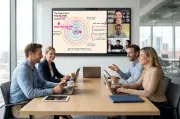
If four people are in a room and three are on a screen, the remote workers often feel like second-class citizens. They miss out on the side-chatter and the non-verbal cues that contain 50% of a meeting's context.
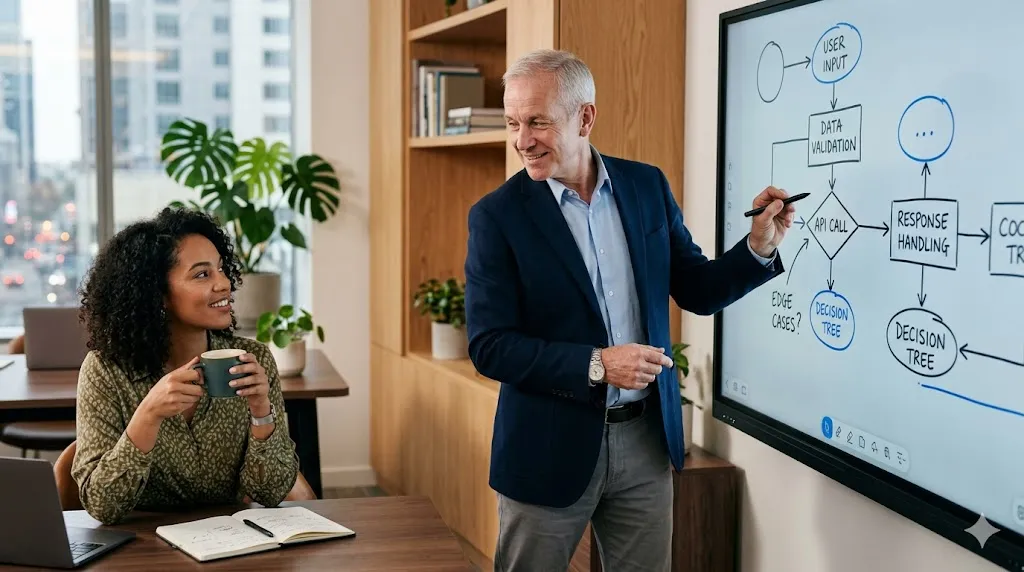
Visual Equity: Can the remote worker see the nuances of a brainstorm on a smart white board?
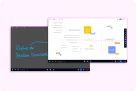
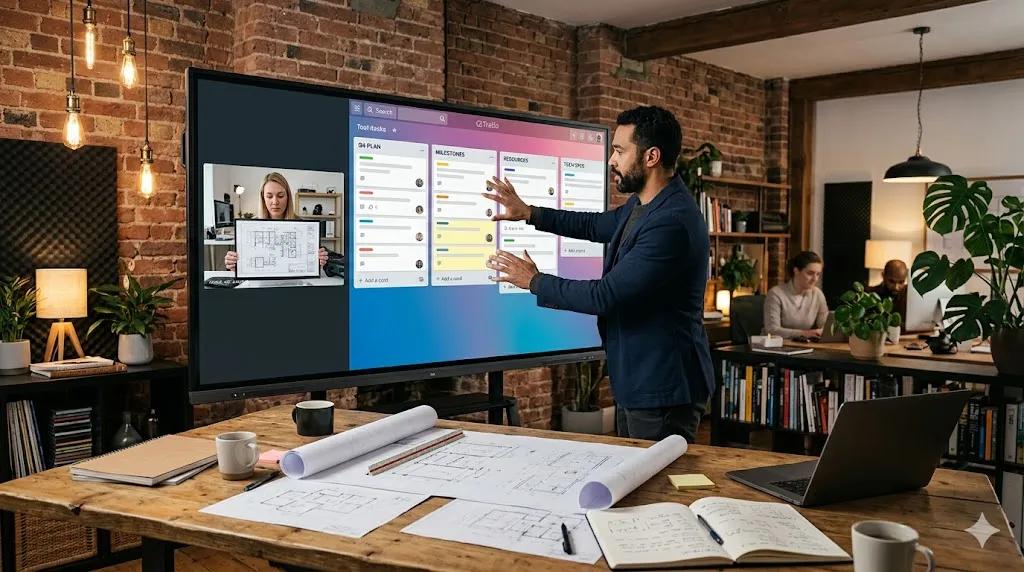
Interactive Weight: Can a remote worker contribute to a digital canvas as easily as someone in the room?
Acoustic Inclusion: Does the technology suppress background noise while amplifying the remote voice?
Organizations that prioritize these technical factors are the ones winning the talent war in the search for indeed hybrid jobs.
Navigating the Search: Finding indeed hybrid jobs that Actually Work
Finding the right role involves more than just filtering for "remote" or "hybrid." To ensure long-term career health, you must look for signs of a "High-Performance Hub" mentality during the interview process.
Red Flags to Watch For
When you are looking for hybrid remote jobs near me, be wary of companies that exhibit "Proximity Bias." This is the tendency for managers to favor the employees they see physically every day.
Meeting Spectators: Do remote workers join meetings only to listen, or are they active participants?
Technical Debt: Is the office equipped with outdated tools like analog whiteboards and tangled HDMI cables?
Attendance Mandates: Does the company measure success by badge-swipes rather than milestones?
Essential Questions for Your Next Interview
If you are evaluating indeed hybrid jobs, ask the following:
How do you ensure remote workers have equal weight in strategy sessions?
What interactive technology do you use to bridge the digital-physical divide?
Is the office designed for deep work or collaborative theaters?
The Setup Tax: Why Technology Infrastructure Defines a High-Performance Hybrid Role
One of the most ignored friction points in the modern workplace is the "Setup Tax"—the 15 minutes fumbled at the start of every meeting trying to find a cable or sync a camera. This technical friction makes employees resent the office and view the commute as a waste of time.
Eliminating Technical Friction
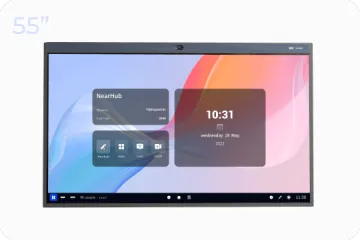
A professional nearhub ecosystem is designed to make the technology invisible. When a team knows how to use a smart board that integrates natively with their room calendar, the meeting starts in under 60 seconds.
One-Touch Entry: Walking into a room and tapping "Join" on the board to launch a global session.
Native Compatibility: Running full desktop versions of Teams, Zoom, and Excel rather than limited mobile versions.
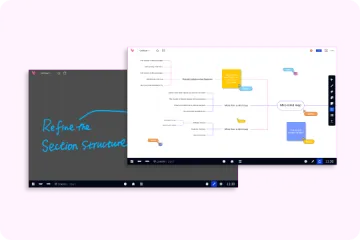
Persistent Canvases: Ensuring that a brainstorm started in New York can be picked up in London without a single detail being lost.
The Role of the NearHub Board Max
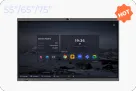
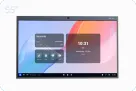
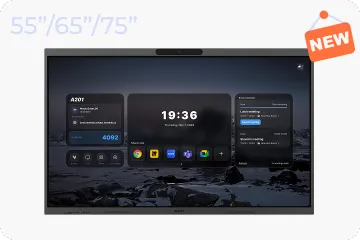
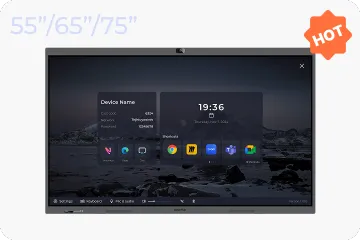
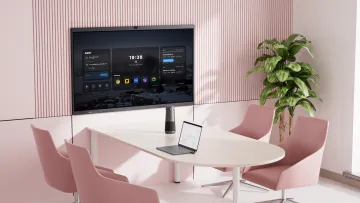
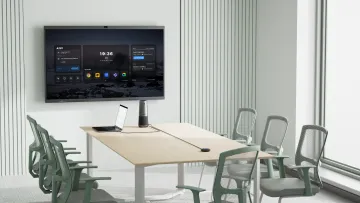
The NearHub Board Max serves as the central nervous system of the modern meeting room. It bridges the gap between the person holding the stylus and the person on the video call, ensuring that distance is a logistical detail, not a barrier to innovation.
Presence Equity: The Secret Ingredient in indeed hybrid jobs
To truly understand what does hybrid job mean, you have to look at how a team handles "The Empty Chair." In a high-performance environment, the empty chair represents the remote team member, and that chair must have the same visual and vocal influence as the physical ones.
AI-Driven Visibility for Peak Performance
Professional hardware utilizes AI to level the playing field. These features are essential for anyone in a high-stakes role within the ecosystem of indeed hybrid jobs.
Speaker Tracking: The camera automatically identifies and zooms in on the active speaker, capturing facial expressions often lost in wide shots.
AI Gallery View: This feature takes individuals in a conference room and places them in separate, equal-sized digital tiles. This makes the office team look just like remote participants, ensuring no one dominates the screen.
Auto-Framing: The system constantly adjusts to include everyone in the room perfectly within the frame, eliminating dead space.
Collaborative Zoning: Redesigning the Office for Intentional Presence
A successful office treats the physical space as a "Magnet," not a "Mandate." This requires a shift in office design toward activity-focused zoning. If a company is hiring for indeed hybrid jobs, their office layout should reflect the three core needs of a distributed team.
The Three Core Zones of Hybrid Design
Focus Zone: Soundproof pods or quiet libraries for the deep work typically done at home.
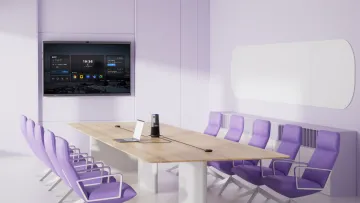
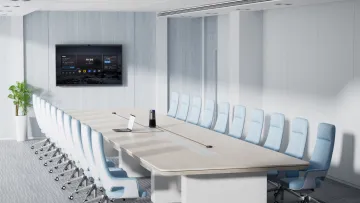
Innovation Theater: Wide-open spaces centered around a nearhub interactive hub for visual mapping and collective sketching.
Social Anchor: Areas designed specifically for unplanned interactions—the water cooler moments that drive serendipitous innovation.
Moving from Desk-Centric to Activity-Based
When you move from a "one-desk-per-person" model to a high-performance hub, you can often reduce total square footage by 30-50%. These savings can then be reinvested into premium technology like the NearHub Board Max, providing a far higher ROI than paying for empty desks.
ROI of Connection: Why Companies are Reinvesting in Phygital Hubs
As a leader, you aren't just looking for tools; you are looking for "Innovation Velocity." Implementing a robust strategy for indeed hybrid jobs pays for itself in reduced turnover and increased speed-to-market.
Reducing the Cost of Turnover
The cost to replace a high-level professional is often 1.5x to 2x their annual salary. In a global talent market, flexibility is a top-three priority. Providing a high-tech, frictionless office is the best way to ensure long-term loyalty and cultural cohesion.
Math of Retention: High-quality tech increases the Office Magnetism factor.
Talent Attraction: Top-tier talent will not stay in an organization that forces them to use outdated, frustrating technology.
Mitigating the Setup Tax
Every minute wasted on technical troubleshooting is a drain on your R\&D budget. By providing a frictionless entry via the smart white board, you reclaim hundreds of lost hours per month across your entire organization.
FAQ Section: Optimizing Your Search for Hybrid Jobs
What does hybrid mean for a job in 2026?
In 2026, a hybrid job is a result-oriented model where work location is determined by the nature of the task. It emphasizes Intentional Presence, using the office for high-bandwidth collaboration and the home for deep execution.
Are indeed hybrid jobs better than fully remote roles?
Neither is inherently better; it depends on your specific career goals. Remote work is often superior for individual output, while hybrid work is better for team strategy, innovation, and long-term mentorship.
How can I find hybrid remote jobs near me?
Use platforms like Indeed or LinkedIn and filter by "Hybrid." However, the most important step is to vet the company's Presence Equity and infrastructure during the interview to ensure they actually support distributed teams.
What is the most important tool for a hybrid position?
The most critical tool is a high-performance interactive hub, such as the NearHub Board Max. It bridges the gap between physical and digital participants, ensuring everyone has an equal visual and vocal voice.
Why is the Setup Tax a problem for hybrid teams?
The Setup Tax refers to the time lost trying to connect devices and launch meetings. For distributed teams, this friction causes frustration and leads to commute regret, where employees feel their time is wasted at the office.
How do I learn how to use a smart board for my new job?
Modern boards from nearhub are designed to be intuitive. Most professionals can master basic navigation and cloud-sharing features in under five minutes, as the interface mimics a standard Windows environment.
Conclusion & CTA
The transition to a hybrid-first world is the most significant shift in corporate culture in over a century. Successfully navigating this change requires more than just a schedule; it requires a radical commitment to providing the right tools and fostering a culture of trust. By defining the office as a specialized destination for collaboration and equipping it with high-performance hardware, you turn your strategy into a competitive advantage.
A high-performance toolkit is built on a foundation of trust, equity, and the right infrastructure. When you eliminate the tiny screen struggle and replace it with professional-grade tools like the NearHub Board Max, you aren't just buying hardware; you are investing in the long-term innovation and health of your team. The goal is simple: to make the work as rewarding as the result. Don't let your office reality lag behind your remote strategy.