Visualizing Wealth: How Wealth Advisors Can Present Portfolio Strategies to High-Net-Worth Clients on a Large Interactive Display
High-net-worth clients expect more than static charts and tablet presentations when discussing their financial future.
what is wealth management
professional finance settlement
Updated: Aug 19, 2026 · 6 minutes read
Global Business, Brought Near.
No Installer, No Hassle, Just Works.
Introduction: Why Traditional Portfolio Presentations No Longer Impress High-Net-Worth Clients
Imagine this scenario.
You're meeting with a high-net-worth client to discuss a multi-million-dollar asset allocation strategy. You pull out an iPad, open a PDF presentation, and start swiping through pie charts and spreadsheets.
The information is accurate, but something feels missing.
The experience lacks impact.
Today's affluent clients expect more than static presentations. They're accustomed to personalized experiences, interactive digital tools, and real-time collaboration in almost every aspect of their lives. When discussing their financial future, they want to see how their wealth can grow—not just hear about it.
For many wealth advisors, one of the biggest challenges is translating complex investment strategies into something clients can instantly understand and trust.
How do you demonstrate the difference between conservative and aggressive investment approaches?
How do you explain generational wealth planning or alternative asset diversification in a way that feels tangible?
This is where large interactive displays are transforming wealth advisory meetings.
Instead of presenting numbers on a small tablet, advisors can leverage infinite canvases, split-screen comparisons, and real-time annotations to turn abstract financial concepts into engaging visual experiences.
The result? Better conversations, stronger trust, and faster decision-making.
What Is Wealth Management and Why Does Visualization Matter More Than Ever?
Wealth management goes far beyond selecting investment products.
At its core, wealth management is a comprehensive financial strategy that integrates investment planning, risk management, retirement planning, tax optimization, estate planning, and wealth transfer strategies.
However, even the best strategy can lose its effectiveness if clients don't fully understand it.
One of the biggest barriers in wealth advisory isn't the complexity of financial products—it's communication.
Clients often struggle to visualize concepts such as:
Long-term compound growth
Risk-adjusted returns
Diversification benefits
Multi-generational wealth transfer
Different market scenarios over time
When advisors rely solely on spreadsheets and slide decks, clients become passive listeners instead of active participants.
Interactive visualization changes that dynamic entirely.
Using a large smartboard, advisors can hand-draw investment pathways, map out life goals, and create customized wealth journeys directly during meetings.
Instead of presenting static data, they build stories around the client's financial future.
Portfolio Presentation: Transforming Complex Asset Allocation into a Clear Visual Story
Portfolio presentations shouldn't feel like financial lectures.
They should feel like collaborative planning sessions.
Traditional portfolio presentations often suffer from information overload. Clients are presented with dozens of charts, percentages, and market terms all at once.
A large interactive display simplifies this process dramatically.
Visualizing Asset Growth with Infinite Canvas Technology
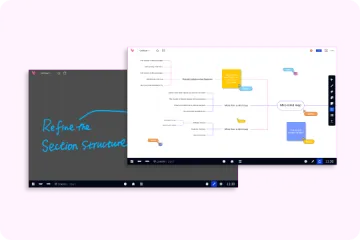
Infinite canvas functionality allows advisors to create expansive financial roadmaps without worrying about space limitations.
Imagine beginning with a client's current assets in the center of the screen.
From there, you can visually expand into multiple branches:
Current Net Worth → Investment Allocation → Expected Growth → Retirement Income → Legacy Planning
As the conversation evolves, the canvas evolves too.
Advisors can draw connections, add notes, circle important milestones, and build a personalized wealth ecosystem in real time.
This approach helps clients understand not only where they are today, but also where their money could potentially take them in the future.
Rather than flipping between multiple applications or documents, everything stays visible in one continuous workflow.
Portfolio Presentation: Using Split-Screen Comparisons to Showcase Different Investment Strategies
One of the most effective ways to improve decision-making is through side-by-side comparisons.
Many high-net-worth clients ask questions such as:
"What if I increase my exposure to international equities?"
"Should I prioritize dividend income or long-term growth?"
"How would alternative investments affect my portfolio?"
Clients can physically walk up to the display, highlight priorities, or adjust variables in real time.
This collaborative experience creates stronger emotional investment in the financial plan itself.
Higher engagement often leads to:
Better retention of financial concepts
Greater confidence in decision-making
Stronger advisor-client relationships
Increased referrals
In many ways, clients become co-creators rather than recipients.
This subtle shift can significantly elevate the client experience.
Client Engagement: Building Trust Through Live Scenario Planning
Wealth management is ultimately about trust.
Clients are entrusting someone with their life's work, future security, and family legacy.
Trust grows when clients can see the logic behind every recommendation.
During meetings, advisors can instantly create multiple scenarios.
For example:
Scenario A: Retire at age 60.
Scenario B: Retire at age 65.
Scenario C: Purchase a second home while maintaining retirement goals.
Each scenario can be mapped visually in real time.
This transparency removes much of the uncertainty that clients often feel.
Rather than receiving generic recommendations, they witness personalized financial engineering happening before their eyes.
Professional Finance Settlement: Creating a More Premium Advisory Experience
High-net-worth clients expect professionalism in every interaction.
A sophisticated meeting environment directly influences perceived value.
Using a large interactive display instantly elevates the presentation experience.
Instead of balancing laptops, tablets, and printed handouts, advisors centralize everything onto one professional workspace.
This includes:
Investment portfolios
Market research
Tax planning documents
Retirement projections
Estate planning diagrams
Many advisory firms are also redesigning their offices around collaborative technology.
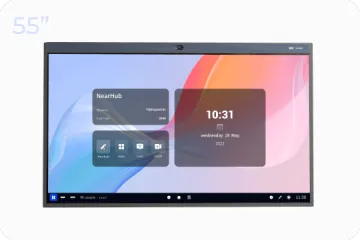
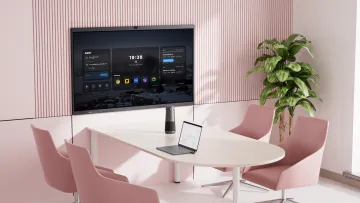
A dedicated smart board for conference room setup creates a more premium atmosphere that reflects the level of service affluent clients expect.
Technology isn't replacing advisors.
It's amplifying their expertise.
Professional Finance Settlement: Why Large Interactive Displays Are Becoming Essential Financial Tools
The financial advisory industry is becoming increasingly competitive.
Clients have more access to information than ever before.
What differentiates human advisors today is their ability to simplify complexity and create meaningful experiences.
Large interactive displays offer several advantages:
Real-Time Annotation
Mark up charts directly during discussions without switching applications.
Wireless Collaboration
Display market reports, investment dashboards, and financial models instantly.
Infinite Workspace
Never run out of room while mapping long-term wealth plans.
Seamless Hybrid Meetings
Collaborate with remote family members, accountants, or attorneys.
The right technology also doesn't have to be expensive.
Some firms exploring digital transformation often start by researching a cheap smart board before upgrading their meeting rooms.
The key is finding a solution that balances affordability with professional presentation capabilities.
Can Interactive Displays Make Financial Meetings More Enjoyable?
Surprisingly, yes.
Financial conversations don't have to feel intimidating.
Gamification techniques can make workshops, educational seminars, and client appreciation events more engaging.
Some firms even adapt concepts inspired by smart board games to create interactive financial literacy activities.
Examples include:
Retirement timeline challenges
Investment diversification simulations
Risk tolerance quizzes
Wealth-building workshops
When clients enjoy learning, they become more engaged investors.
FAQs About Wealth Visualization for Financial Advisors
Can interactive displays replace traditional financial software?
No. Interactive displays complement financial software rather than replace it.
Your existing planning platforms, portfolio management systems, and CRM tools remain essential. Interactive displays simply create a better communication layer between the advisor and client.
Is a large display suitable for one-on-one client meetings?
Absolutely.
In fact, one-on-one meetings often benefit the most because the conversation becomes highly personalized and collaborative.
How do interactive displays improve client trust?
Transparency.
Clients can see recommendations being built in real time instead of receiving pre-packaged answers.
This visibility helps clients understand the rationale behind every decision.
Are these solutions only useful for large wealth management firms?
Not at all.
Independent advisors, boutique private banks, family offices, and large institutions can all benefit from wealth visualization tools.
What features should wealth advisors prioritize?
Look for:
Infinite canvas functionality
Split-screen comparisons
Wireless screen sharing
Real-time annotation
Seamless video conferencing integration
These features directly support client communication and engagement.
Conclusion: The Future of Wealth Advisory Is Visual, Interactive, and Collaborative
The financial world has become increasingly sophisticated, but client expectations have become increasingly simple.
Clients want clarity.
They want personalization.
Most importantly, they want confidence in the decisions they're making.
The days of relying solely on tablets, PDFs, and static charts are fading.
Large interactive displays empower wealth advisors to transform financial strategies into visual stories that clients can understand, participate in, and trust.
When clients can literally see their future taking shape in front of them, financial planning becomes more than a meeting.
It becomes an experience.
And in the world of wealth management, exceptional experiences are often what separate good advisors from unforgettable ones.