In today’s fast-paced corporate environment, starting the day with clear direction and energy is the key difference between top-performing organizations and sluggish teams. Enter the morning huddle—a brief, focused daily alignment session that sets the tone for collaboration, accountability, and productivity.
Whether your team works in the office, fully remotely, or in a hybrid model, running an engaging morning huddle ensures everyone is rowing in the same direction. In this ultimate guide, we explore why morning huddles matter, five dynamic formats to try, 30 categorized discussion topics, hybrid engagement strategies, and a comprehensive comparison of leading whiteboarding tools.
Why Morning Huddles Are Essential for High-Efficiency Collaboration
Many professionals dread unnecessary meetings that drain time and offer little value. However, a well-structured morning huddle (also known as a daily standup) is the exact opposite: it replaces lengthy email chains and scattered Slack messages with 10 to 15 minutes of high-impact synchronization.
Here is why morning huddles are vital for high-efficiency teams:
Eliminating Roadblocks Proactively: Instead of waiting for a weekly review to discover a blocker, team members can flag friction early so colleagues can offer immediate assistance.
Fostering Psychological Safety & Team Morale: A quick daily touchpoint maintains human connection, builds mutual trust, and reinforces team cohesion.
Aligning Daily Priorities with Big-Picture Goals: It prevents staff from getting lost in tactical "busywork" by keeping key business objectives front and center.
Reducing Communication Overhead: Studies show that consistent 15-minute daily huddles can reduce full-length meetings by up to 30%, keeping schedules clear for deep, uninterrupted work.
A common reason huddles become stale is relying on the same monotonous check-in style day after day. Rotating through these five proven huddle formats keeps engagement high:
Focuses purely on operational execution. Each member answers three standard questions:
What did I complete yesterday?
What will I work on today?
Are there any blockers in my way?
Ideal for Monday mornings or post-product launches. The team reflects on recent wins, reviews operational metrics, and identifies what worked well versus what needs tweaking.
Focuses on connecting daily activities to broader strategic key performance indicators (KPIs) or Objectives and Key Results (OKRs). This format ensures every team member understands why their daily tasks matter.
Dedicate 5–10 minutes to a bite-sized learning session where one team member presents a helpful shortcut, industry trend, security best practice, or productivity hack.
Designed for design, product, and marketing teams. Uses visual whiteboards for 10-minute lightning ideation, rapid mind-mapping, or creative problem-solving sessions.
30 High-Quality Morning Huddle Topics Across 4 Core Enterprise Categories
To prevent your daily standups from feeling robotic, integrate these 30 thought-provoking topics categorized by department function:
Management & Leadership Topics
What is the single highest-priority task on your team's radar today?
How are we balancing workload across team members this week to avoid burnout?
Which item on your calendar today could be handled asynchronously instead?
What operational bottleneck recurred this week, and how can we eliminate it?
How can management better support your current sprint milestones?
What core company value did you see demonstrated by a colleague recently?
What delegation or time-management strategy worked best for you this month?
Technical & Engineering Topics
What AI tool, script, or shortcut saved you the most developer time this week?
Which technical debt item should we prioritize resolving during our next cycle?
What is one critical cybersecurity best practice we should refresh across the team?
How are system performance metrics responding to our latest production release?
What was the root cause of our latest CI/CD build failure, and how do we prevent it?
What new framework, tool, or library are you experimenting with?
How can we streamline our code review process without sacrificing quality?
What technical documentation update would save the next developer the most time?
Creative & Design Topics
What recent competitor design, campaign, or user interface caught your attention?
How can we simplify the user journey in our upcoming product feature update?
What visual story or customer testimonial inspired your creative choices this week?
What design system component needs a refresh to improve UI consistency?
How can we transform a complex technical feature into an engaging visual story?
What creative risk or experimental concept should we test in our next release?
What recent customer feedback made you rethink a key visual layout?
Customer-Facing & Sales Topics
What is the most common client objection encountered this week, and how was it handled?
What customer success story or glowing review can we celebrate together today?
What emerging market trend or prospect inquiry are clients bringing up most?
Where in our current sales pipeline are prospects experiencing the most drop-off?
What client-requested feature would deliver immediate measurable ROI?
How can our product or technical team better empower customer support teams?
Which step in our client onboarding workflow causes the highest user friction?
Which key customer metric improved most following our latest service feedback loop?
How Hybrid Teams Can Fully Engage Remote Members
Hybrid work models often leave remote workers feeling disconnected during in-person meetings. Just as technology plays a vital role in driving engagement, implementing proven strategies for managing hybrid teams effectively and overcoming hybrid meeting fatigue helps bridge this gap:
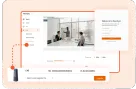
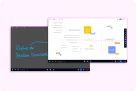
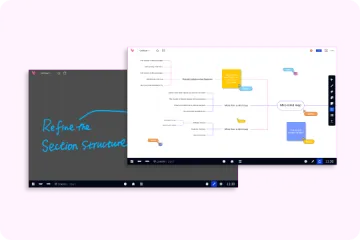
Adopt an Interactive Digital Whiteboard Standard: Replace physical whiteboards with a shared virtual canvas so remote members can collaborate on equal footing.
Maintain a "Video-First, Camera-Level" Culture: Set up physical meeting room displays at eye level so remote colleagues feel as though they are sitting at the table.
Rotate Huddle Facilitators Daily: Empower different team members—both remote and in-office—to lead the standup to keep energy fresh and build leadership skills.
Integrate Asynchronous Huddles for Distributed Time Zones: Use recorded video snippets or interactive board check-ins for team members operating in distant time zones.
Selecting the right collaborative whiteboard software and interactive display hardware is critical for seamless hybrid execution. For a comprehensive overview, explore our detailed breakdown of smart boards vs. traditional whiteboards and best smart boards for business:
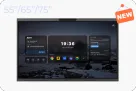
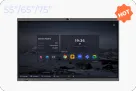
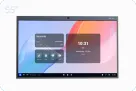
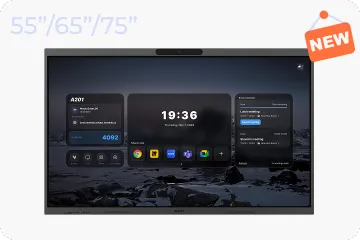
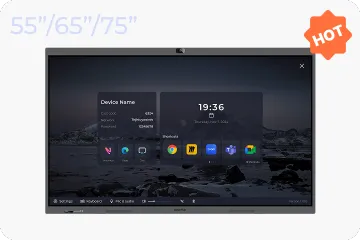
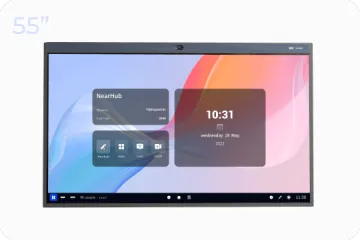
1. NearHub Board (Best for Hybrid Offices)
Hybrid & Remote Parity: Excellent. Engineered specifically to bridge the gap between in-room meeting participants and remote teammates.
Hardware & Software Integration: Native integration with NearHub Smart Displays, offering responsive multi-touch input and instant canvas sync.
Setup & Ease of Use: Instant one-click launch with zero complicated configuration.
Templates: Rich selection of purpose-built morning huddle, agile standup, and retrospective layouts.
Best Fit: Hybrid conference rooms, smart offices, and teams that need equal collaboration equity for in-person and remote staff.
2. Miro (Best for Deep Remote Mapping)
Hybrid & Remote Parity: Excellent for fully remote, web-based collaboration.
Hardware & Software Integration: Limited native hardware integration; relies on third-party web browsers when opened on meeting room boards.
Setup & Ease of Use: Moderate learning curve due to an extensive feature ecosystem.
Templates: Massive community template marketplace for complex mind mapping and workflow design.
Best Fit: Distributed remote design, product, and software engineering teams.
3. Physical Whiteboard (Traditional Analog Choice)
Hybrid & Remote Parity: Poor. Remote participants struggle with camera reflections, glare, and blocked views.
Hardware & Software Integration: N/A (Standard dry-erase marker board).
Setup & Ease of Use: Instant—just pick up a marker and write.
Templates: None; all grids, columns, and sprint boards must be hand-drawn daily.
Best Fit: Small, single-location teams where 100% of attendees are physically present in the same room.
Hybrid & Remote Parity: Moderate. Built directly into standard Microsoft Teams video calls.
Hardware & Software Integration: Works well with Microsoft Surface Hubs, but offers limited optimization on general smart displays.
Setup & Ease of Use: Very easy for organizations already utilizing Microsoft 365 stack.
Templates: Basic built-in sticky note grids and simple brainstorming charts.
Best Fit: Enterprises looking for a straightforward, zero-cost add-on within their existing Microsoft workflow.
Frequently Asked Questions
1. What is the ideal length for a daily morning huddle?
The sweet spot for a daily morning huddle is 10 to 15 minutes. Keeping it brief maintains high energy, prevents discussions from drifting into deep technical rabbit holes, and respects everyone's morning focus time. If a topic requires a longer debate, park it for a follow-up conversation after the huddle.
2. What is the main difference between a morning huddle and a Scrum standup?
While both share the goal of daily alignment, a Scrum standup strictly follows Agile software development frameworks focusing on sprints, tasks, and blockers. A morning huddle is a broader, more flexible format suitable for non-technical teams (marketing, sales, executive leadership) that can include quick learning snippets, goal checks, or creative warm-ups.
3. How do you keep remote team members engaged during hybrid huddles?
To ensure remote attendees don't feel like passive observers, use a digital whiteboard tool like NearHub Board so everyone collaborates on the same screen. Rotate who leads the meeting daily, require video cameras to remain on, and explicitly call on remote members first during rounds.
4. Can morning huddles replace weekly status meetings?
Yes! A well-structured daily huddle often reduces or completely eliminates the need for long, tedious weekly status meetings. Because blockers and progress are shared in real time every day, team leaders stay informed without needing an hour-long weekly briefing.
It is best to keep a core structure for standard workdays (e.g., standard standup format on Tuesday–Thursday) and introduce specialized formats—like retrospective reviews on Mondays or creative warm-ups on Fridays—to prevent meeting fatigue and keep team energy fresh.
Conclusion
A high-performing morning huddle is not about micromanagement—it is about empowering your team with momentum, clarity, and camaraderie. By utilizing dynamic formats, engaging discussion topics, and hybrid-first tools like NearHub Board, you can transform routine standups into the most valuable 15 minutes of your workday.