Professional Wireless Microphone Headset: 4 Key Differences Between Consumer and Pro Models in 2026
This article explains the key differences between a professional wireless microphone headset and consumer models, highlighting superior clarity, comfort, and connectivity.
Call Quality
Professional Headset
Updated: Aug 19, 2026 · 6 minutes read
Global Business, Brought Near.
No Installer, No Hassle, Just Works.
Have you ever been in the middle of a high-stakes presentation or a critical client call, only for your audio to crackle, fade, or capture the sound of a distant leaf blower instead of your voice? It’s a frustrating experience that many professionals face when they rely on consumer-grade gear for professional-grade work. In today's hybrid-first world, your voice is your brand, and the equipment you choose can either amplify your authority or undermine it entirely.
As a comprehensive pillar page, we will explore every facet of the professional wireless microphone headset, diving deep into the technical specifications, ergonomic designs, and connectivity standards that separate the toys from the tools. Whether you are a corporate executive, a remote educator, or a creative professional, understanding these nuances is essential for your digital presence.
Key Takeaways
Professional wireless microphone headsets deliver clearer voice quality than consumer models.
Boom microphones improve signal-to-noise ratio for more professional calls.
Pro headsets offer superior ergonomic design for all-day comfort.
AI-driven noise suppression and beamforming enhance call clarity in noisy environments.
Dedicated connectivity options ensure reliable performance and multi-device integration.
Why Choosing the Right Professional Wireless Microphone Headset Matters
The shift toward remote and hybrid work isn't just a trend; it's the new standard for global commerce. According to a recent report by Global Workplace Analytics, businesses lose billions annually due to technical friction and communication breakdowns. This is where the wireless headset with microphone steps in to bridge the gap between physical distance and digital clarity.
The Professionalism Gap
When you use a standard pair of earbuds meant for commuting, you are using hardware optimized for music playback, not voice transmission. A professional headset microphone wireless system is engineered with the opposite priority. It focuses on the human voice frequency range (typically 300Hz to 3.4kHz for standard telephony, though pro models extend this for high-fidelity) to ensure every syllable is crisp.
Long-Term Health and Productivity
Productivity isn't just about the work you do; it's about the environment you create. Using a headset for work allows you to enter a "flow state" by blocking out environmental stressors. Furthermore, professional models are designed with "all-day wearability" in mind, preventing the "ear fatigue" common with tighter, consumer-focused designs.
Key Benefits of Going Pro:
Enhanced Credibility: Clear audio signals authority and attention to detail.
Reduced Cognitive Load: When you don't have to struggle to hear others, you can focus on the message.
Reliability: Pro gear is built to withstand 8–10 hours of daily use, unlike consumer models that may degrade under heavy duty.
Engineered for Different Uses: The Philosophy of Design
To understand why a professional wireless headset microphone costs more and performs differently than a $50 pair of Bluetooth headphones, we have to look at the engineering philosophy behind them.
Consumer Models: The "Jack of All Trades"
Consumer headsets are designed for the "commuter-lifestyle." They need to look stylish, fit in a pocket, and play bass-heavy music well. Their microphones are often an afterthought—small, omnidirectional pinholes buried in the earcup that pick up everything from your voice to the wind blowing past you.
Professional Models: The "Specialized Tool"
A professional headset with mic is built for the "power user." The design focuses on:
Acoustic Isolation: Keeping the user in their own world.
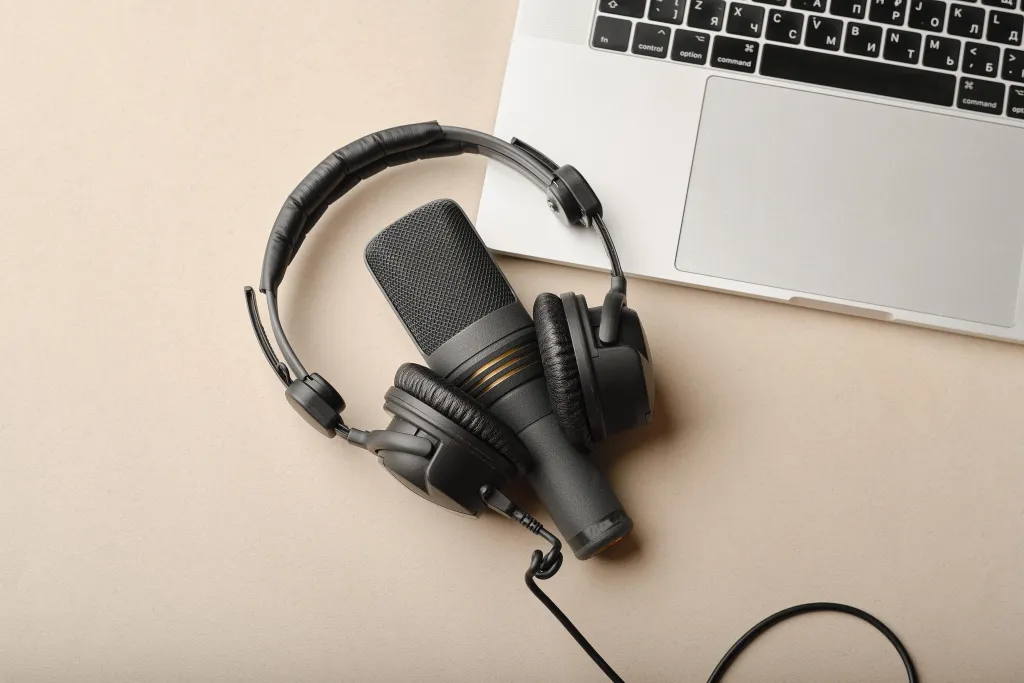
Voice Prioritization: Using boom microphones to get the capsule closer to the sound source.
Durability: Using high-grade polymers and reinforced joints.
Comparison: Consumer vs. Professional Engineering
Feature
Consumer Models
Professional Wireless Microphone Headsets
Microphone Placement
Integrated/Internal
Extended Boom Arm
Primary Frequency Tuning
V-Shaped (Bass & Treble for music)
Mid-range focused (Voice clarity)
Battery Life Logic
4-6 hours (with charging case)
15-40 hours (Continuous talk time)
Software Integration
Consumer App (EQ presets)
UC Integration (Teams, Zoom, Webex)
Weight Distribution
Optimized for aesthetics
Optimized for 8+ hours of wear
The Role of the Boom Mic
In the world of the professional bluetooth headset, the "boom" is king. By physically placing the microphone closer to the mouth, the "Inverse Square Law" of physics works in your favor—your voice is significantly louder than the background noise, requiring less digital "cleaning" which can often make voices sound robotic.
Sound Quality: Beyond Just "Hearing"
When we talk about sound quality in a professional wireless microphone headset, we aren't just talking about how good your Spotify playlist sounds. We are talking about Acoustic Transparency and Listening Fatigue.
Active Noise Cancellation (ANC) vs. Passive Isolation
Professional users often work in unpredictable environments. Whether it's a bustling office or a home with a barking dog, a noise cancelling headphone for work must provide high-level ANC.
Feed-forward ANC: Microphones on the outside of the cup cancel noise before it hits your ear.
Feedback ANC: Microphones inside the cup verify what you are hearing and adjust in real-time.
Hybrid ANC: The gold standard found in models combining both for maximum silence.
High-Fidelity Voice Reproduction
A common issue with consumer headsets is "clipping" or "muffling." Pro models utilize wider frequency response ranges. While the human ear can hear up to 20kHz, most voice calls are compressed. However, a professional headset microphone wireless uses advanced codecs (like aptX Voice or LC3) to ensure that the full character of your voice—the "timber"—is preserved.
Why Mid-Range Clarity Matters
Consonants: Sounds like 'S', 'T', and 'P' live in the higher frequencies. If these are muffled, clarity is lost.
Vowels: The "meat" of the voice lives in the lower-mids. If this is too thin, you sound "tinny."
Ear Fatigue: Poor sound quality forces the brain to "fill in the blanks," leading to exhaustion by 3 PM.
Call Quality: The Heart of the Professional Wireless Microphone Headset
This is the single most important differentiator. In a professional setting, how you sound to others is more important than how they sound to you.
Beamforming Technology
Modern professional wireless headset microphone systems use multiple microphones working in tandem. This is called "Beamforming."
Microphone 1 (Voice): Located at the tip of the boom, focusing on your mouth.
Microphone 2 (Ambient): Located on the earcup, listening to the room.
The Processor: Inverts the phase of Microphone 2 and subtracts it from Microphone 1.
The result? The person on the other end hears you as if you are in a soundproof booth, even if you are standing next to a coffee grinder.
AI-Powered Noise Suppression
By 2026, AI has become the backbone of audio processing. Leading models like the Nearity EP320 utilize deep learning networks trained on millions of noise samples. These algorithms can distinguish between human speech and non-human noise (like a mechanical keyboard or a crying baby) with 99% accuracy.
Side-Tone: The Unsung Hero
Have you ever found yourself shouting during a conference call? That's because you can't hear your own voice. Professional headsets include "Sidetone," which feeds a small amount of your own voice back into your ears, allowing you to regulate your volume naturally.
External Authority Quote:
"The shift to high-definition voice protocols in corporate environments has made the hardware-software handshake critical. A headset is no longer just a peripheral; it is a critical node in the communication stack."
Connectivity: Stability and Integration
A wireless professional headset must stay connected. While consumer Bluetooth is "fine" for a phone, it often fails in high-density office environments with hundreds of competing signals.
Bluetooth vs. DECT vs. USB Dongles
Standard Bluetooth: Great for multi-device pairing but prone to interference and latency.
2.4GHz USB Dongles: Many pro headsets come with a dedicated "pre-paired" dongle. This bypasses the computer's internal Bluetooth stack, providing lower latency and better range.
Multi-Point Connectivity: A must-have for the modern professional. You should be able to answer a call on your phone and then immediately switch to a Zoom meeting on your laptop without touching a single menu.
Range and Mobility
Consumer headsets usually offer a range of about 30 feet. A high-end professional headset with mic can often extend this to 100 feet or more, allowing you to walk to the kitchen to grab a coffee while remaining fully engaged in a presentation.
Strategic Link Placement:
If you are looking for the absolute pinnacle of this technology, the best noise cancelling headset options on the market today leverage these dedicated wireless protocols to ensure 0% packet loss during calls.
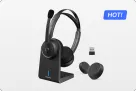
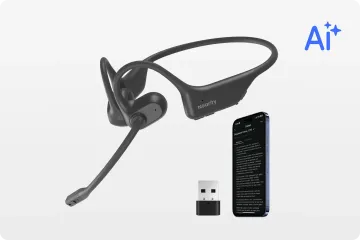
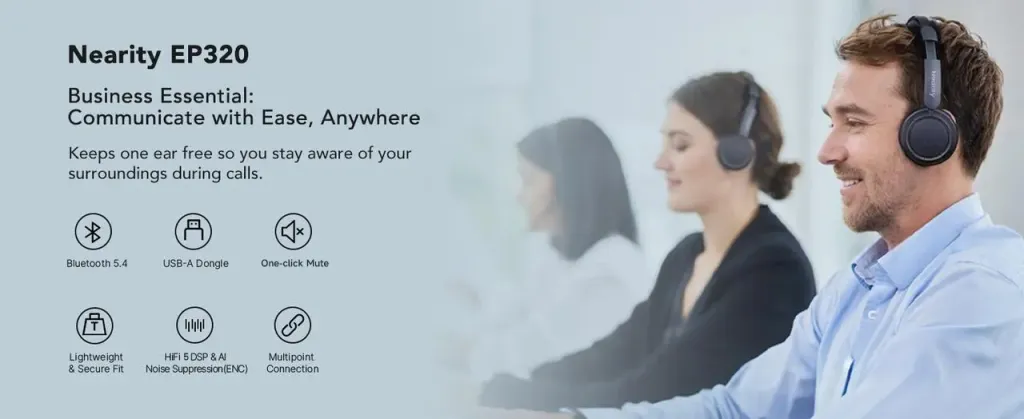
Nearity EP320: A Professional Wireless Microphone Headset That Excels in All 4 Areas
When evaluating the market for the best professional wireless microphone headset, the Nearity EP320 stands out as a benchmark for 2026. It wasn't designed for commuters; it was designed for the rigors of the modern boardroom and the home office.
Why the Nearity EP320 Wins:
Unrivaled Noise Cancellation: Equipped with a 4-microphone array and AI algorithms running on the HiFi5 DSP, the EP320 suppresses up to 99.9% of background noise.
Dual Connectivity: With Bluetooth 5.4 and multi-point functionality, it connects to both PC and smartphone simultaneously. Switch effortlessly between video meetings and incoming calls without interruption, with a stable range of up to 33 feet.
Ergonomic Excellence: Soft protein-leather cushions, padded headband, 250° rotatable boom mic, and 180° rotating ear cups ensure all-day comfort for long workdays and back-to-back meetings.
Battery Life: Enjoy up to 35 hours of talk time or 45 hours of music playback on a single charge. The included charging stand and USB cable make recharging simple, so you can stay productive without worrying about battery life.
The Nearity EP320 embodies the transition from consumer-grade convenience to professional-grade performance. It is a tool for those who take their communication seriously.
Conclusion
In the landscape of 2026, the line between "at work" and "at home" has blurred, but the requirement for professional-grade communication has only intensified. Choosing a professional wireless microphone headset over a standard consumer model is an investment in your productivity, your health, and your professional reputation. By focusing on superior engineering, specialized sound quality, AI-driven call clarity, and rock-solid connectivity, you ensure that your voice is always heard exactly as intended.
As we have explored in this article, hardware like the Nearity EP320 represents the pinnacle of this evolution. Don't let your ideas be muffled by subpar equipment. Upgrade to a professional solution and experience the difference that clarity makes. Your audience—and your ears—will thank you.
FAQs
1: Can I use a gaming headset as a professional wireless microphone headset?
While gaming headsets have good microphones, they are often tuned for "explosions and footsteps" rather than vocal clarity. Furthermore, their "gamer" aesthetic may not be suitable for corporate video calls. A dedicated professional model is more discreet and offers better integration with software like Microsoft Teams.
2: Is a boom microphone really necessary for a professional headset with mic?
Yes. Physics dictates that the closer a microphone is to the sound source, the better the signal-to-noise ratio. Internal microphones in "earbud" styles have to work much harder to isolate your voice, often resulting in an "underwater" sound quality.
3: Does 5G or Wi-Fi interfere with my professional wireless headset microphone?
Higher-end professional models use frequency-hopping technology to avoid interference. Models that use a dedicated 2.4GHz USB dongle are particularly resistant to the signal "noise" found in modern homes and offices.
4: How long should a wireless professional headset last?
A well-built professional model should last 3-5 years of daily use. Look for models with replaceable ear cushions and firmware update support, as these features extend the functional life of the hardware significantly.