Noise Cancelling Wireless Headset with Mic: A Guide to Managing Autism Auditory Sensitivity
Discover how the right noise cancelling wireless headset with mic can help autistic adults and children manage sound sensitivity.
Autism
Sound Sensitivity
Noise Cancelling Headsets
Updated: Aug 20, 2026 · 8 minutes read
Global Business, Brought Near.
No Installer, No Hassle, Just Works.
For some autistic people, everyday sounds that others barely notice can become exhausting, distracting, or even overwhelming. A refrigerator hum, keyboard clicks, conversations, or sudden noises can all contribute to sensory overload. This guide explains why autism-related auditory sensitivity happens, identifies common sound triggers, and explores how the right headset can provide greater control over your auditory environment. From noise reduction and all-day comfort to clear calls and flexible connectivity, discover what to look for in autistic headphones and how a noise-cancelling headset can support everyday work, study, and social situations.
Key Takeaways
Understand what autism-related auditory sensitivity is and why everyday sounds can become overwhelming for autistic people.
Learn how common triggers such as sudden sounds, high-frequency noise, overlapping conversations, and repetitive sounds can contribute to sensory overload.
Discover how noise cancelling headsets can help reduce auditory load, provide greater control over the sound environment, and support clearer communication.
Learn which headset features matter most for sound sensitivity, including comfort, noise reduction, microphone quality, battery life, and flexible connectivity.
Explore practical ways to use a headset as part of a broader sensory management strategy, rather than relying on noise cancellation alone.
For many autistic adults, the hum of a refrigerator is not background noise — it is a presence that fills the room. A colleague's keyboard clicks can feel like someone tapping directly on the eardrum. The overlapping din of a grocery store or open-plan office does not simply fade away; it accumulates, layer by layer, until the nervous system has nowhere left to put it.
This is the reality of autism-related auditory sensitivity. Research suggests that up to 90% of autistic individuals experience some form of atypical sensory reactivity, with auditory hypersensitivity among the most commonly reported. A noise cancelling wireless headset with mic can be a practical tool for navigating these environments, but understanding why sounds feel overwhelming — and what to look for in a headset — is the first step toward relief.
What Is Autism-Related Auditory Sensitivity?
Auditory sensitivity in autism refers to a heightened or atypical reaction to sound, falling under the broader umbrella of sensory processing differences now recognized as a core diagnostic criterion for autism spectrum disorder in the DSM-5. Rather than a hearing problem, it is about how the brain processes and prioritizes incoming sound information.
For a neurotypical brain, the sound of a distant conversation, an air conditioner hum, and keyboard clatter are all registered and then largely filtered out as irrelevant. The autistic brain often does not apply the same filtering mechanism. Every sound arrives at roughly the same priority level, and none automatically fade into the background. The auditory system works at full capacity, processing a stream of information that was never meant to be processed simultaneously.
The experience varies widely. Some autistic people describe it as a sharp, almost painful physical reaction to certain frequencies. Others experience cognitive fatigue from being unable to tune anything out. Still others describe a gradual buildup of tension that, if unaddressed, can lead to meltdowns, shutdowns, or the need to withdraw entirely. Sound sensitivity is not exclusive to autism — it also occurs in ADHD, PTSD, misophonia, and hyperacusis — but within the autistic community, it is pervasive enough to shape daily decisions about where to go and how long to stay.
Why Everyday Sounds Can Feel Overwhelming for Autistic People
The answer lies in sensory gating — the neurological mechanism that filters out repetitive or predictable stimuli. In a neurotypical brain, when you sit in a room with a ticking clock, you eventually stop registering the tick through a process called habituation. For many autistic people, habituation does not occur, or occurs much more slowly. The clock keeps ticking, and each tick demands the same level of attention as the first.
This extends beyond neutral sounds to emotionally weighted ones — a phone ringing, a baby crying, chewing sounds. The brain may interpret these as signals requiring immediate attention, and the inability to deprioritize them creates a state of chronic low-level alertness. Over hours, this becomes exhausting. Over weeks, it can contribute to autistic burnout.
The physical environment compounds the problem. Hard surfaces reflect sound, and many modern workplaces, schools, and public spaces are designed without acoustic consideration. Open-plan offices with glass walls and concrete floors bounce noise around without absorbing it, creating spaces that actively work against the sensory needs of autistic individuals.
Common Triggers of Sound Sensitivity in Everyday Life
Triggers are highly individual, but certain categories appear with striking consistency across the autistic community.
Sudden, unpredictable sounds — a door slamming, a dog barking, a car horn — bypass the brain's ability to prepare and trigger an immediate stress response. For someone with heightened auditory sensitivity, the startle response is not a momentary jolt; it can take minutes or hours to recover from the physiological spike in cortisol and adrenaline.
High-frequency mechanical sounds — the whine of fluorescent lighting, the hum of computer fans, the squeal of train brakes — are often in the range where human hearing is most sensitive and can produce a sensation of pressure or pain.
Overlapping conversations create a different challenge. The cocktail party effect — the ability to focus on one conversation while filtering out others — relies on the same sensory gating mechanisms often impaired in autism. In a restaurant or busy office, multiple conversations merge into an undifferentiated wall of noise.
Repetitive environmental sounds — a dripping faucet, a ticking clock, a neighbor's bass through the wall — are triggers because they resist habituation. Each repetition registers as a new event, and the predictability of the pattern does not reduce its impact.
How Headsets Can Help Manage Auditory Overload
A well-chosen headset with noise cancelling mic addresses auditory sensitivity on multiple fronts. It is not a cure and not a replacement for broader accommodations, but it is one of the most immediately accessible tools for reducing sensory load.
The most direct benefit is volume reduction. By covering the ears and, in active noise cancelling models, generating counter-phase sound waves, a headset lowers the overall intensity of the auditory environment. This turns a hostile soundscape into something closer to a manageable background hum. For someone who experiences sound as physically painful, this reduction alone can be transformative.
The second benefit is control. Sound sensitivity is often exacerbated by the feeling of having no agency over one's auditory environment. A headset puts control back in the wearer's hands — you decide what gets through and at what volume. This alone can reduce the anxiety that accompanies entering an unpredictable space.
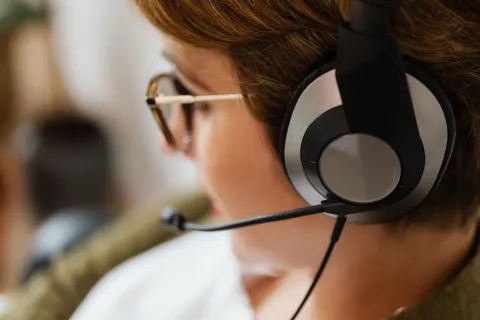
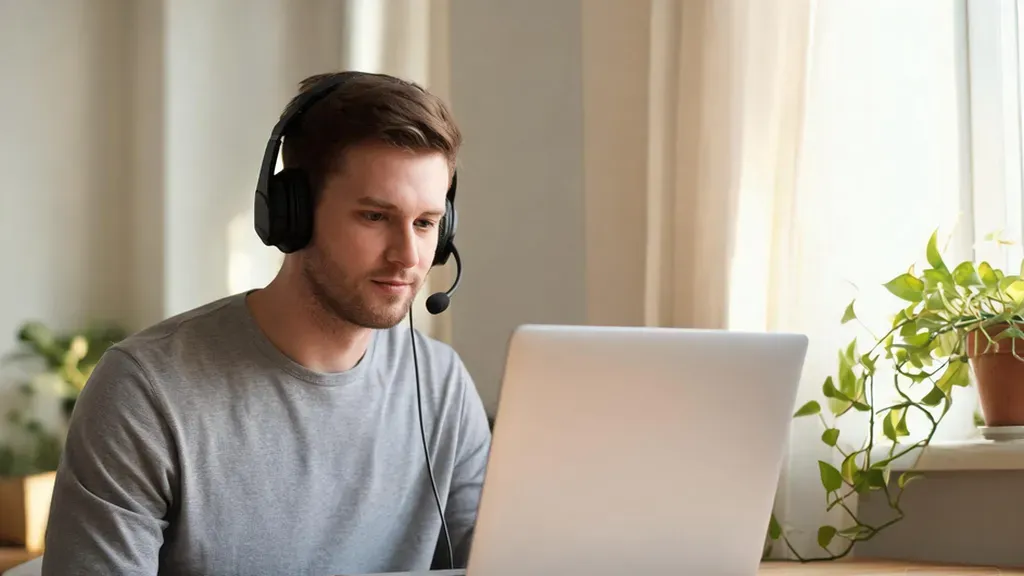
The third benefit is signal clarity. For autistic adults working in professional environments or taking online classes, a noise cancelling headphone with mic for office serves a dual purpose: it reduces incoming noise while using microphone noise cancellation to ensure the wearer's voice comes through clearly on calls. When the person on the other end uses a headset with good mic noise cancellation, their voice is much easier to understand — a meaningful advantage for those who struggle with auditory processing.
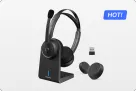
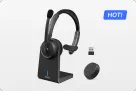
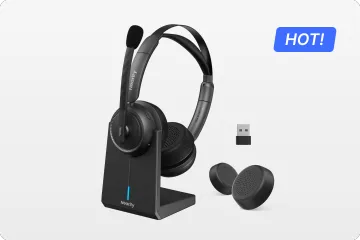
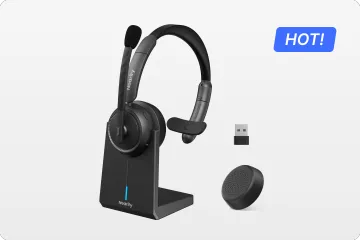
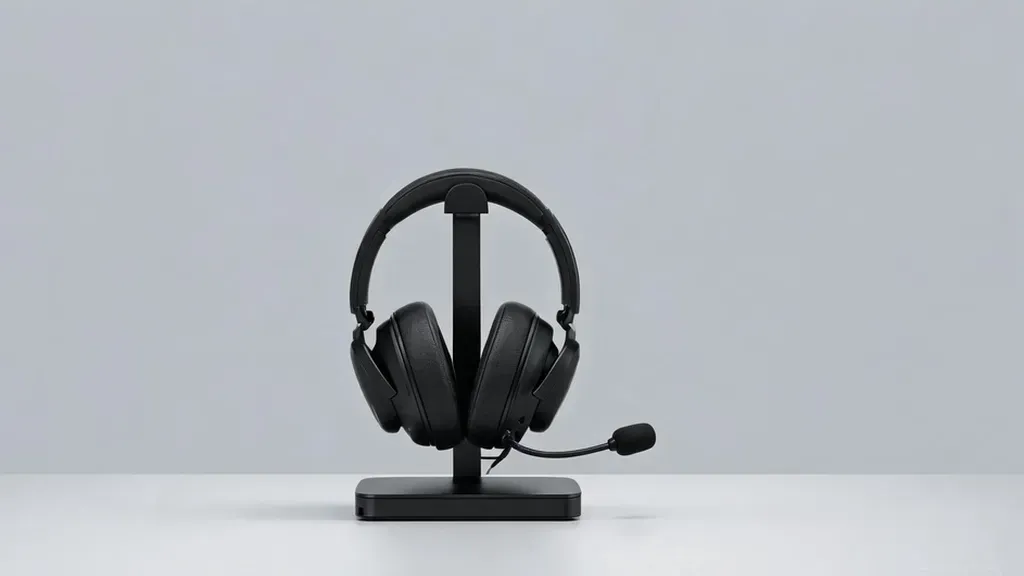
The Nearity EP320 illustrates how these features converge. Its AI-powered ENC noise cancellation, driven by a HiFi5 DSP processor, suppresses up to 99.9% of background noise during calls. For an autistic professional working from home with children in the background, or joining a meeting from a coffee shop, the people on the call hear voice, not chaos. The 35-hour call battery life means the headset can be worn throughout a full workday without needing a recharge.
What to Look for in Headsets for Sound Sensitivity
Not all headsets are equally suited to managing auditory sensitivity. The features that matter most for an autistic user may differ from those prioritized by a general consumer.
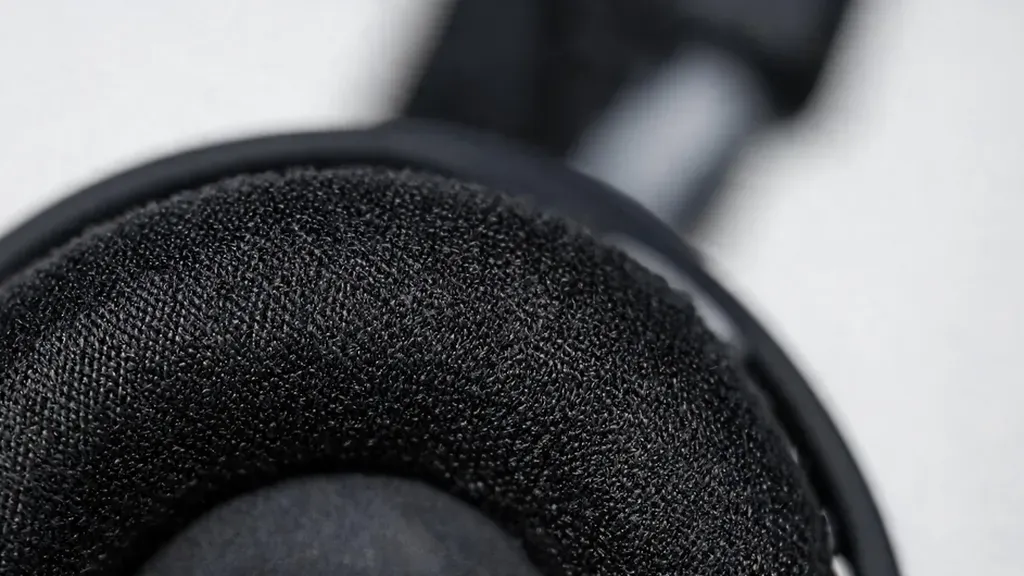
Comfort is non-negotiable. A headset that pinches, presses, or overheats will become unbearable within an hour. For someone with sensory sensitivities, physical discomfort from the headset itself can compound the problem it is meant to solve. Look for memory foam ear cushions with breathable fabric, an adjustable headband with adequate padding, and a clamping force that is secure without being tight. The Nearity EP320 addresses this with pillow-soft ear cushions and a padded leather sling headband, plus 180-degree rotatable ear muffs that accommodate different head shapes.
Noise reduction quality matters more than noise reduction type. Active noise cancellation (ANC) excels with low-frequency, consistent sounds like engine hum. Passive noise isolation — the physical seal from ear cups — handles higher-frequency sounds like voices. The best headsets combine both. For sound sensitivity, total attenuation is what counts.
Microphone quality is essential for calls. A poor microphone forces you to raise your voice or repeat yourself, adding stress. Look for headsets with multiple microphones and dedicated noise cancellation on the mic signal. The EP320 uses four omni-directional microphones with automatic gain control, so you can speak naturally and be heard clearly.
Battery life determines real-world usability. Aim for at least 20 hours of continuous operation. The EP320 delivers 35 hours of talk time and 45 hours of music playback, with a charging stand included for effortless recharging.
Connectivity flexibility matters across contexts. Bluetooth 5.4 with multi-point connection allows simultaneous pairing with two devices. The EP320's included USB dongle provides low-latency connection for computers without Bluetooth, and the USB-C wired option works as a fallback.
A noise cancelling headphone for work that checks these boxes becomes more than a gadget — it becomes a reliable daily tool for managing auditory environments.
Practical Tips for Using Headsets When You Have Sound Sensitivity
Owning the right headset is only half the equation. How you integrate it into your sensory management strategy determines whether it becomes genuinely helpful.
Start with transparency mode before going silent.
Many noise cancelling headsets include an ambient mode that lets outside sound through at reduced volume. This is useful when you need to remain aware of your surroundings — crossing a street, waiting for an announcement. Start here and gradually increase noise cancellation as needed.
Use the headset preemptively, not reactively.
Waiting until you are already overwhelmed before putting on a headset means the nervous system is already heightened. Instead, wear it before entering a known challenging environment — put it on in the car before walking into the grocery store, or start your workday with it already on. This keeps the auditory load from accumulating.
Pair the headset with other sensory strategies.
Combine it with sunglasses for visual sensitivity, comfortable clothing that does not trigger tactile issues, and scheduled quiet breaks throughout the day. The headset reduces auditory load; the other strategies reduce load from other sensory channels, creating a more sustainable daily experience.
Create a sensory profile of your environments.
Note which sounds are most challenging in the places you regularly spend time — your office, commute route, coffee shop, home. This helps you decide when to use passive isolation, when to engage active noise cancellation, and when the environment is manageable enough to go without.
Communicate your needs to people around you.
Wearing a headset in social or professional settings can be misinterpreted as disengagement. A brief explanation — "I use this to manage background noise so I can focus better" — is usually enough to set expectations. Most people are understanding once they know the reason.
FAQs
Can noise cancelling headphones help with autism sound sensitivity?
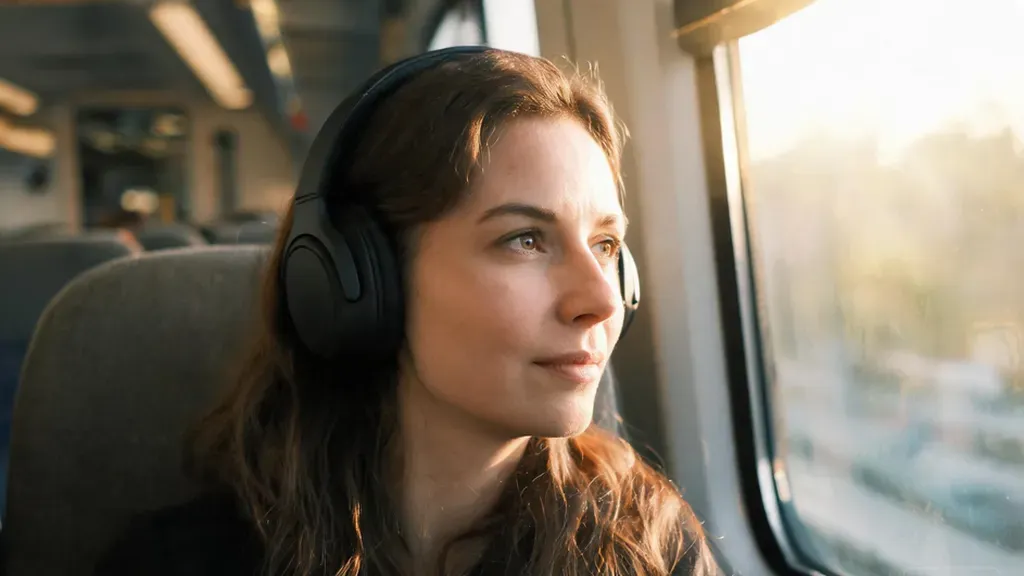
Yes, noise cancelling headphones can help manage autism-related sound sensitivity by reducing the intensity of environmental sounds that trigger sensory overload. They provide a controllable auditory buffer, allowing the wearer to lower ambient noise to a comfortable level without completely blocking out their surroundings. For autistic adults and children, this can make everyday environments like offices, classrooms, and public transit significantly more manageable.
Are there headphones specifically designed for autistic people?
While there are no headphones exclusively designed for autism, many features commonly found in professional-grade headsets align well with the needs of autistic individuals. These include effective noise isolation, comfortable ear cushion materials, adjustable clamping force, and minimal audio processing latency. When choosing autistic headphones, prioritize comfort, sound control, and the ability to wear them for extended periods without discomfort.
How many decibels of noise reduction do I need for sound sensitivity?
There is no universal decibel target, as sound sensitivity thresholds vary widely. What matters more is having adjustable control over your auditory environment. A headset with combined active and passive noise reduction can typically attenuate ambient noise by 20 to 35 dB, often enough to bring overwhelming sounds down to a manageable level. The key is finding a headset that allows you to fine-tune how much of the outside world you let in.
Can I use a noise cancelling headset for work calls if I have sound sensitivity?
Absolutely. Many noise cancelling headsets with a microphone serve dual purposes — they reduce environmental noise for the wearer while also using built-in microphone noise cancellation to ensure your voice comes through clearly on calls. This is especially valuable for autistic professionals and remote workers who need to participate in meetings without being distracted or overwhelmed by background noise.