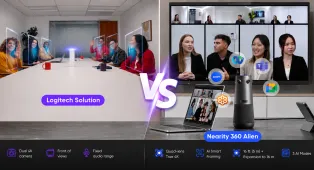
Museum architecture often prioritizes immersive exhibition experiences over functional office design, resulting in spaces with high ceilings, irregular layouts, and strong acoustic reflections. These characteristics can significantly degrade the quality of hybrid communication, especially in meeting rooms not originally designed for conferencing. This case study explores how a private museum in Japan overcame severe echo and spatial audio issues in its narrow, high-ceiling conference room by adopting the Nearity 360 Alien. With AI-powered noise reduction, multi-microphone array technology, and a 4K multi-camera system, the solution enabled clearer conference audio, more flexible room coverage, and a simplified all-in-one deployment for hybrid collaboration.
Museum Architecture: Designing Spaces Around the Exhibition Experience
Museum architecture has always been closely connected to the type of content being exhibited. Unlike traditional office buildings, museums are often designed as immersive spatial experiences where the architecture itself becomes part of the storytelling.
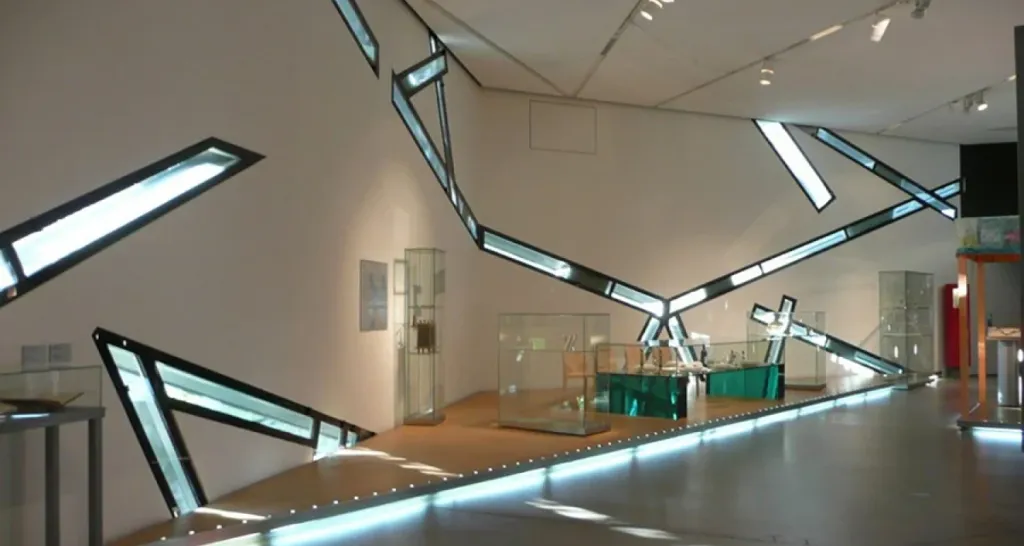
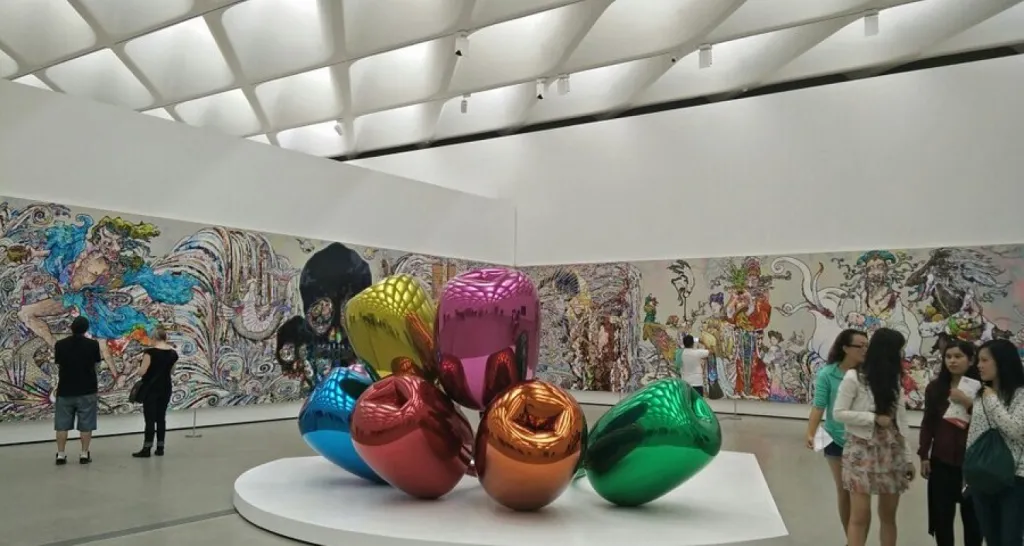
Many of the world’s most iconic museums reflect this philosophy. The Guggenheim Museum Bilbao, designed by Frank Gehry, uses flowing titanium curves and sculptural forms to mirror the museum’s focus on contemporary and experimental art. Similarly, the Jewish Museum Berlin by Daniel Libeskind intentionally incorporates sharp angles, voids, and fragmented circulation paths to evoke themes of loss, memory, and historical disruption. At The Broad, designed by Elizabeth Diller and Ricardo Scofidio of Diller Scofidio + Renfro, the building’s porous “veil-and-vault” structure was intentionally created to balance public openness with highly controlled gallery environments, reflecting the museum’s focus on contemporary art and immersive visitor experience.
A Hybrid Communication Challenge Inside a Museum Environment
Because museums prioritize exhibition experience above all else, their interior spaces are often designed with unusually high ceilings, large open volumes, and unconventional layouts that can accommodate installations, sculptures, immersive media, or large-scale visitor circulation. While these architectural choices enhance the visitor experience, they also create challenges for day-to-day operational spaces such as meeting rooms, offices, and collaborative areas. Administrative workspaces inside museums are frequently adapted from irregular architectural environments rather than purpose-built office layouts, resulting in non-standard room shapes, hard reflective surfaces, and oversized vertical spaces.
These characteristics can create significant difficulties for hybrid communication and video conferencing. High ceilings and open architectural volumes often produce echo and reverberation, while irregular room geometry can interfere with microphone pickup consistency and voice clarity. In spaces originally designed for exhibitions rather than communication, maintaining clear audio during meetings becomes far more challenging than in conventional office environments.
A private museum in Japan approached Nearhub with a challenging meeting environment caused by strong echo and reverberation. As a small but highly curated museum, the organization frequently collaborates with museums, galleries, and private collectors across different regions to discuss exhibition themes, loan arrangements, and curation plans, while also promoting its own collections internationally.
Traditionally, much of this communication happened through emails and phone calls. However, as more museums adopted online meetings for exhibition planning and partnership discussions, the museum also shifted toward hybrid collaboration. That transition quickly exposed a major problem with their meeting space.
The museum’s conference room had an unusually difficult acoustic structure: a ceiling height of nearly 5m combined with a narrow room size of only around 23m². The long and confined layout created severe echo during meetings, negatively affecting both communication quality and the overall meeting experience.
For the museum team, this was more than a technical inconvenience. The institution placed strong importance on how it presented itself to external partners and believed that providing a comfortable meeting experience was a basic form of professional respect and a reflection of how seriously they value partnerships. Poor audio quality therefore directly affected the museum’s professional image during international communication.
The room layout also created another challenge. Because the conference table was long and narrow, the six- to seven-person team often had to huddle together so that everyone could be heard clearly during meetings.
Nearhub’s All-in-One Solution: Nearity 360 Alien
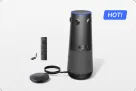
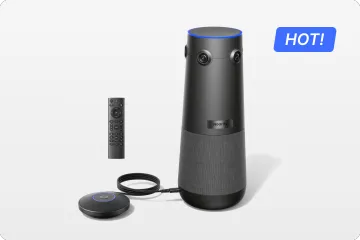
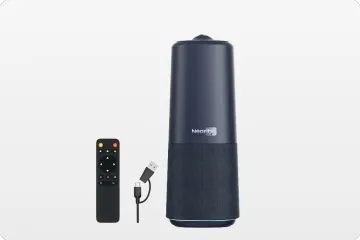
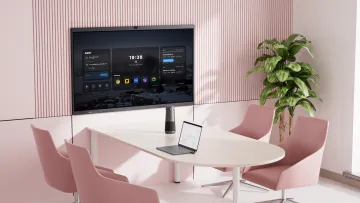
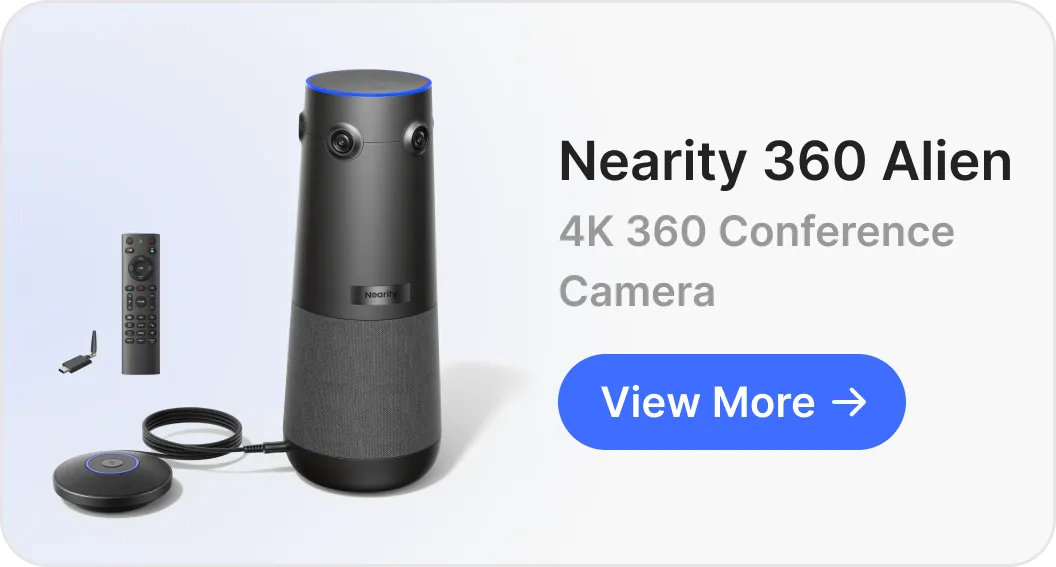
To address these challenges, the Nearhub team recommended the Nearity 360 Alien as a complete hybrid meeting solution.
Improved Audio Quality with AI-Powered Noise Reduction. The device’s enterprise-level audio system significantly improved the museum’s sound presence. Equipped with a six-omnidirectional microphone array, the 360 Alien delivers stable and natural voice pickup while maintaining stable two-way communication. In addition, ProperClean™ 2.0 AI audio filtering technology helps reduce environmental noise, echo, and resonance while preserving clear human voices. After deploying the system, the museum team reported a significant improvement in voice clarity during online meetings.
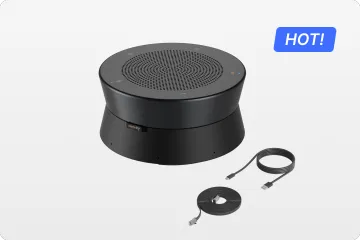
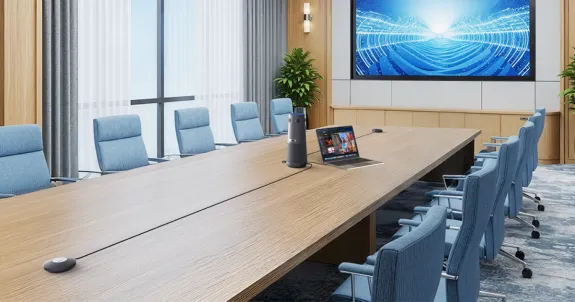
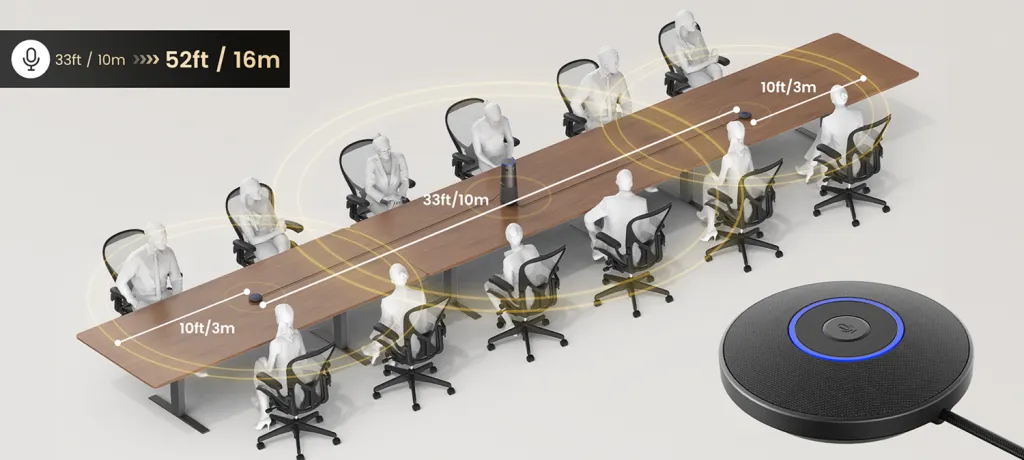
Flexible Audio Coverage for Unconventional Spaces. The system also adapted effectively to the room’s unusual shape. The main unit itself supports 360° voice pickup within a 5-meter radius, while an additional expansion microphone with a 3-meter pickup range extended clear audio coverage across the entire conference table. As a result, team members no longer needed to crowd together in order to participate in meetings.
In addition to the audio, the 360 Alien’s 4K 4-camera array provided full-room coverage combined with intelligent active speaker tracking, allowing participants to sit comfortably throughout the room while still remaining clearly visible during discussions.
Simplified Deployment with an All-in-One Solution. Another major advantage of the 360 Alien was its simplicity. While other enterprise conferencing solutions could potentially achieve similar results, they often required multiple high-end microphones and speakers, separate conference cameras, and complicated integration between devices. These ecosystems not only demanded significantly higher budgets, but also required additional effort to configure compatible hardware and maintain stable performance.
With 360 Alien, the museum was able to solve both its audio and video challenges through a single all-in-one device. By combining professional-grade sound processing, panoramic 4K video, and flexible room adaptability into one system, the solution delivered a simpler, more scalable, and more cost-effective solution to hybrid collaboration.
FAQs
What problem did the museum face in hybrid meetings?
The museum experienced strong echo and reverberation caused by a high ceiling and narrow room layout, which severely affected conference audio clarity.
Why were traditional conferencing systems not effective?
Conventional systems struggled with irregular room acoustics and often required multiple devices, while still failing to eliminate echo and provide consistent voice pickup.
How does the Nearity 360 Alien improve conference audio?
It uses a six-microphone array and AI-powered noise filtering (ProperClean™ 2.0) to reduce echo, noise, and resonance while maintaining clear and natural voice capture.
Does the system support large or irregular meeting spaces?
Yes. It offers 360° audio pickup with expansion microphones and full-room 4K video coverage, making it suitable for narrow or unconventional room layouts.