The "Missing Link" in Your Hybrid Workplace Strategy: Why Your Office Design is Still Failing Remote Teams
This comprehensive 2026 guide outlines the essential hybrid work tools—ranging from interactive Windows-based hardware to AI-driven software—required to transform office infrastructure into a high-performance collaboration hub.
hybrid workplace design
benefits of hybrid working
hybrid team
Updated: Aug 19, 2026 · 10 minutes read
Global Business, Brought Near.
No Installer, No Hassle, Just Works.
As the global workspace enters 2026, the success of distributed teams is no longer defined by attendance mandates but by "Intentional Presence" facilitated by high-performance infrastructure. This guide addresses the systemic "Office/Remote Disconnect" by identifying ten essential hybrid work tools that bridge the digital-physical divide. Central to this ecosystem is the NearHub S Pro Smart Whiteboard, which utilizes a native Windows architecture to eliminate the "Setup Tax" and "Documentation Black Holes." By shifting from a desk-centric to an activity-based model, organizations can utilize these tools to foster synchronous fluidity and asynchronous excellence. Ultimately, the article provides a strategic blueprint for leaders to maximize innovation velocity and talent retention through a synchronized ecosystem of interactive hardware and intelligent software.
Key Takeaways
Transition to Activity-Based Presence: Move away from rigid day counts and allow the nature of the task to dictate the location—prioritize deep focus at home and high-bandwidth collaboration in the office.
Eliminate the "Setup Tax": Prioritize Windows-based interactive hardware like the NearHub S Pro to ensure 100% compatibility with desktop applications, allowing teams to join meetings in under 60 seconds without technical friction.
Foster Presence Equity: Utilize AI-powered cameras with speaker tracking and life-sized video tiles to ensure remote participants have an equal visual and vocal voice during office-centric meetings.
Adopt Digital-First Documentation: Abandon legacy analog whiteboards in favor of cloud-synced digital canvases, ensuring that every brainstorm session becomes a permanent, searchable asset for the entire global team.
Optimize for Cognitive Zoning: Redesign the physical office into specific zones—Focus Zones, Innovation Hubs, and Social Anchors—to provide specialized environments that home offices cannot replicate.
Achieve ROI Through Rightsizing: Reduce total real estate square footage by 30-50% while reinvesting those savings into premium interactive infrastructure to increase the quality and impact of remaining spaces.
Standardize IT Governance: Ensure all hybrid work tools integrate natively with existing Active Directory and enterprise security protocols to protect sensitive data across a distributed network.
We have all experienced that specific Sunday night anxiety—the realization that Monday morning involves a forty-five-minute battle through traffic, a frantic search for a parking spot, and a lukewarm cup of office coffee, only to arrive at a desk and spend eight hours on the exact same video calls you could have taken from your living room. It feels inefficient, outdated, and frankly, like a massive waste of human potential. This "Ghost Town Office" phenomenon is the primary reason why morale is plummeting in 2026. When the physical workspace feels like a hurdle rather than a tool for progress, your approach to supporting a hybrid team has reached its breaking point.
Welcome to this comprehensive Ultimate Guide for modern workforce management. This isn't just a collection of trends; it is a deep-dive analysis into the "Missing Link" between remote freedom and office execution. In this guide, we will explore why a successful hybrid team requires an environment that treats the office as a high-performance laboratory rather than a warehouse for people. We will examine the shift from mandatory attendance to "Intentional Presence" and reveal how the right technology becomes the connective tissue of your organizational culture. Whether you are navigating the complexities of a global enterprise or scaling a high-growth startup, this roadmap provides the strategic framework you need to win in the era of flexible work.
What is a High-Performance Hybrid Team? Defining Excellence for 2026
Before we can discuss architectural shifts or technical debt, we must establish what actually constitutes a high-performing hybrid team in the current market. In the early 2020s, "hybrid" was a chaotic compromise born of necessity. Today, it has evolved into a result-oriented model where the location of work is dictated by the nature of the task, not a rigid calendar mandate.
The Four Pillars of Synchronized Excellence
To move beyond a stagnant "badge-swipe" culture, a high-functioning team must master four specific dimensions:
Synchronous Fluidity: The ability to move from deep-focus remote work to high-bandwidth office collaboration without losing momentum.
Presence Equity: Ensuring that every member of the hybrid team, regardless of their physical location, has an equal "visual and vocal voice."
Asynchronous Excellence: A culture where documentation is so robust that context is never lost across time zones.
Technological Symmetry: Providing tools in the office—like a smart white board—that are significantly superior to an employee’s home setup.
According to a recent report by Gartner, organizations that successfully transition to an "Activity-Based Presence" model see a 25% increase in innovation velocity and a 15% reduction in talent turnover. This proves that success depends on the quality of the interaction, not the location of the laptop.
Why Traditional Hybrid Workplace Design Concepts Fail the Modern Hybrid Team
The primary reason why so many "Return to Office" initiatives are met with resistance is a fundamental mismatch between the physical environment and the digital reality of modern work. Most legacy hybrid workplace design concepts are still rooted in 20th-century ideals that prioritize rows of desks over collective hubs.
The "Noise Pollution" and Cognitive Load
In an era where most work involves either deep concentration or digital meetings, the open-plan floor layout has become a liability. Members of a hybrid team who commute to the office for collaboration often find they lack the acoustic privacy needed to communicate effectively with their remote colleagues. This leads to "Commute Regret"—the feeling that one’s time was wasted by traveling to a location less productive than home.
The "Setup Tax" and Technical Friction
Nothing kills motivation faster than losing fifteen minutes of a strategy sprint because a team is fumbling with a faulty HDMI adapter or a camera that won't sync with the room's software. If the technology in the office is clunky, the office ceases to be a tool. A professional nearhub ecosystem solves this by making the tech invisible, allowing the team to focus on logic rather than troubleshooting cables.
Creating Presence Equity: The Heart of Every Successful Hybrid Team
Technology is no longer just an "accessory" to work; it is the environment in which the work happens. For a hybrid team, high-fidelity visual communication is the absolute key to preventing the "digital isolation" that plagues remote workers.
The Power of the Interactive Whiteboard
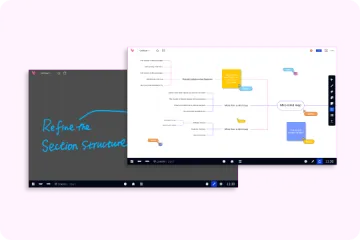
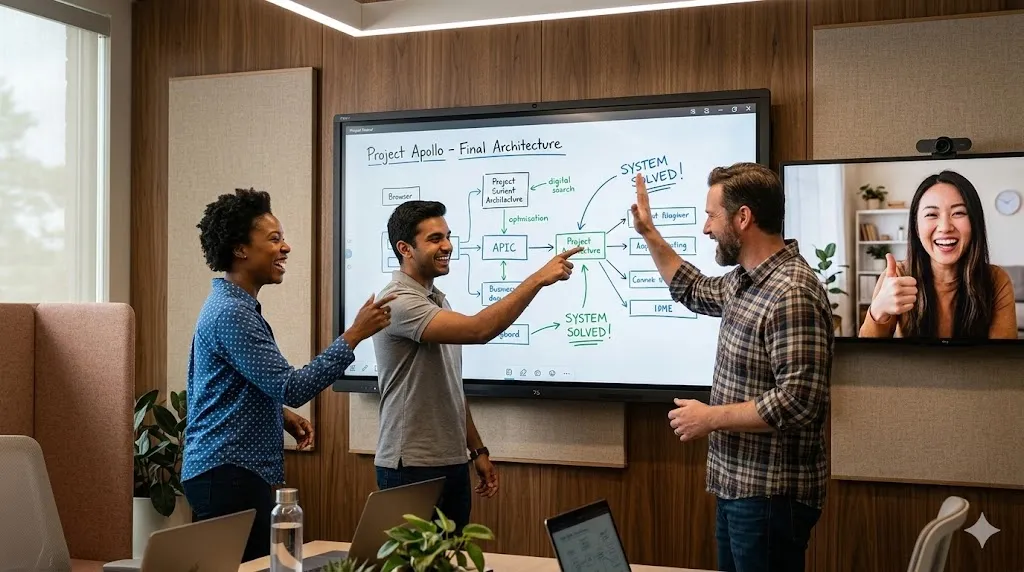
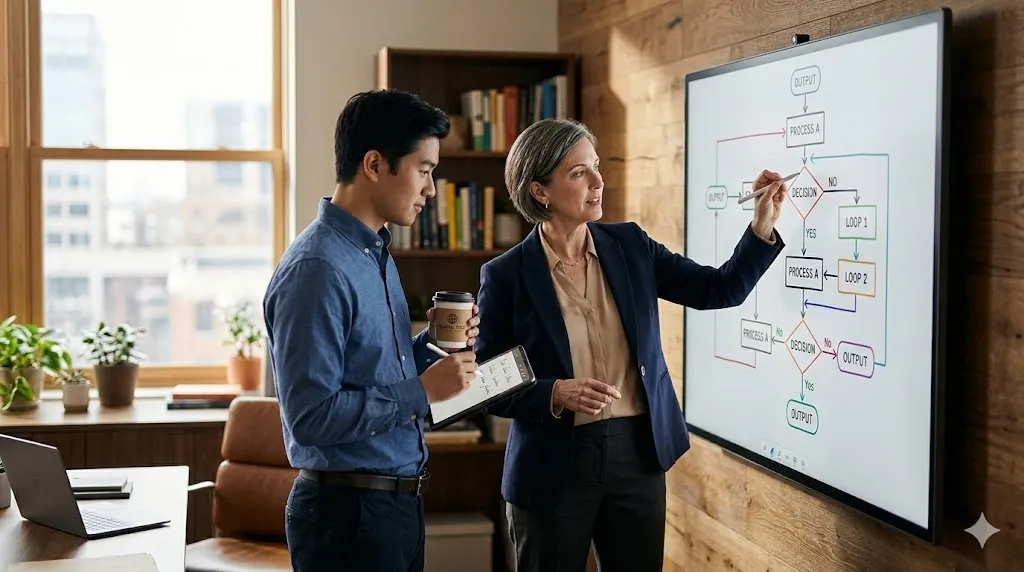
A smart white board is far more than just a screen mounted on a wall. It is a portal into a shared reality. When a team member in New York sketches an architecture, a colleague in London must be able to grab their digital pen and iterate on that same drawing instantly.
AI-Driven Visibility: Speaker Tracking, Auto-Framing, and AI Gallery View
Professional hardware like the NearHub Board Max utilizes advanced AI to ensure no one is ever a "spectator" in their own meeting.
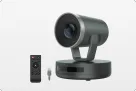
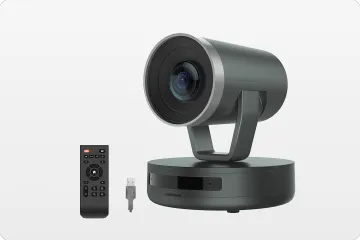
Speaker Tracking: The camera identifies the active speaker in the room and zooms in automatically, capturing facial expressions and non-verbal cues that are often lost in a wide shot.
Auto-Framing: As people enter or leave the room, the camera constantly adjusts the frame to ensure everyone is centered and perfectly visible.
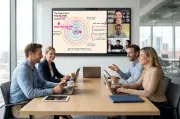
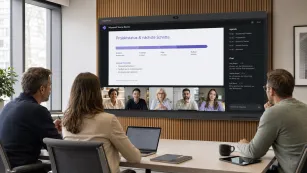
AI Gallery View: This revolutionary feature takes individuals in a physical conference room and places them in separate, equal-sized digital tiles. This makes the office team look just like remote participants on screen, creating a level playing field and true presence equity.
Native Windows Integration for Workflow Persistence
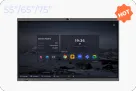
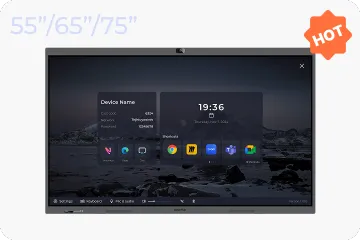
A modern hybrid team lives in complex software ecosystems. Your hardware must support these natively. Because nearhub solutions run on a Windows 11 Pro architecture, you can run full desktop versions of Microsoft Teams, Zoom, or Google Meet directly on the board without the feature limitations of Android-based mobile apps.
The NearHub Board Max: Bridging the Gap in Hybrid Workplace Design
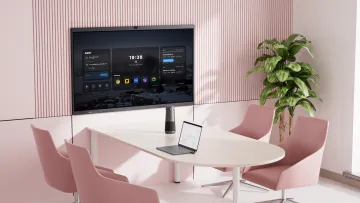
When we talk about the "Missing Link," we are specifically referring to the hardware that bridges the physical-digital divide. The NearHub Board Max is designed to eliminate the friction that holds a hybrid team back.
Eliminating Technical Debt
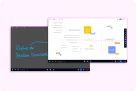
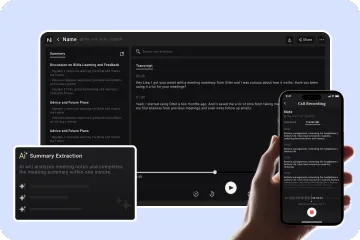
In a traditional office, ideas sketched on a physical board often die there. With the NearHub Board Max, every stroke is captured in 4K and can be exported as a high-quality PDF or synced to the cloud instantly. This ensures a "Single Source of Truth."
Seamless Integration with room calendars
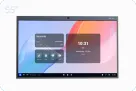
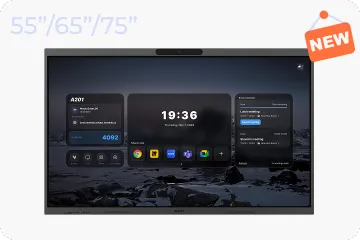
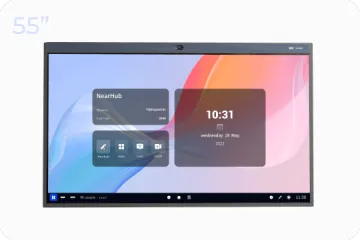
By integrating your room calendar with the NearHub launcher, you walk into a room, see your meeting listed, and tap "Join." In under a minute, the high-definition video, professional-grade microphones, and interactive canvas are live. This level of automation is essential for managing hybrid teams effectively.
Feature
Legacy Office Approach
Master Hybrid Strategy
Metric of Success
Badge Swipes / Hours in Chair
Impact / Deliverables / Milestones
Primary Technology
Standard TVs / Projectors
NearHub Board Max smart white board
Camera Features
Fixed Wide-Angle
Speaker Tracking / AI Gallery View
Office Layout
Assigned Cubicles
Activity-Based Zoning
Documentation
Manual Meeting Minutes
Cloud-Synced nearhub Canvases
Equity Level
Proximity Bias
Presence Equity for All
FAQ Section: Optimizing Your Hybrid Workflow
What is the most important part of hybrid workplace design?
The most critical factor is the separation of "Quiet" focus zones from "Loud" collaborative theaters. Without this distinction, the office becomes a site of constant distraction.
How does AI Gallery View help my remote workers?
AI Gallery View eliminates the "bowling alley" effect where people in a room look like tiny figures in a distance. By giving each person in the room their own digital tile, remote workers can see their colleagues' faces clearly, fostering better emotional connection and collaboration.
What is the ROI of a NearHub Board Max for a hybrid team?
The ROI is calculated through saved time (eliminating the Setup Tax), reduced "re-work" through better visual alignment, and significantly lower real estate costs through activity-based hot-desking.
Conclusion & CTA
The transition into a hybrid-first world is the most significant shift in corporate culture in over a century. To succeed with a hybrid team in 2026, a simple memo is not enough. It requires a radical commitment to high-performance hybrid workplace design and a willingness to invest in the right hybrid workplace solutions.
By focusing on intentional collaboration, removing technological barriers with tools like the NearHub Board Max, and moving toward an outcome-based management style, you build a hybrid workplace strategy that doesn't just "work"—it excels. Make the office a destination that employees want to visit because it allows them to do their absolute best work.