Distributed Teams & Meeting Equity: Leveling the Playing Field (2026)
This article explains how upgrading your collaborative hardware to AI-driven solutions eliminates presence disparity and secures true meeting equity for distributed teams.
Distributed teams
Remote employee engagement
Office productivity
Updated: Aug 19, 2026 · 12 minutes read
Global Business, Brought Near.
No Installer, No Hassle, Just Works.
In this article, we will explore the critical concept of meeting equity and how it directly impacts your bottom line. We will uncover the hidden costs of poor communication tools and reveal how upgrading your hardware can transform your daily operations. From boosting morale to maximizing output, we will show you exactly how to build a future-proof environment for your workforce. Let's dive into the strategies and technologies that are bridging the gap for the modern workforce.
Key Takeaways
Acknowledge the "Presence Gap": Distributed teams suffer from "presence disparity" when remote workers cannot see or hear in-room meetings clearly.
Tech Impacts Morale: Subpar communication tools actively destroy remote employee engagement and fuel the "quiet quitting" trend.
Invest in Productivity: Upgrading from traditional, fixed-angle webcams to 360-degree cameras directly boosts overall office productivity and prevents miscommunication.
Leverage AI for Equity: The Nearity 360 Alien uses AI speaker tracking and smart gallery views to automatically frame participants and keep remote workers engaged.
Prioritize Plug-and-Play: A seamless, platform-agnostic tech stack reduces IT setup time and reclaims hundreds of hours of wasted meeting time annually.
We have all experienced the undeniable frustration of a poorly executed hybrid meeting. You log in from your home office, only to stare at a dark, narrow "bowling alley" view of the corporate conference room. People are talking over each other, someone is writing on a whiteboard you cannot see, and the audio sounds like it is being broadcast from underwater.
If this sounds familiar, your distributed teams are suffering from a severe lack of meeting equity, and it is costing your business more than you realize. In the fast-paced business landscape of 2026, relying on outdated technology to connect your global workforce is a recipe for disaster.
The initial shift to remote work was about survival, but today, it is entirely about optimization, inclusion, and seamless collaboration. When your team is scattered across different zip codes, time zones, or even continents, creating a level playing field is no longer an optional luxury. It is an absolute necessity for survival, growth, and employee retention.
The Evolution and Rise of Distributed Teams
A few years ago, working outside headquarters was a rare perk. Today, distributed teams are the foundation of competitive companies, permanently replacing the traditional 9-to-5, office-bound model.
This shift has completely redefined talent acquisition. By breaking free from the "30-mile commute radius," organizations can now tap into a truly global talent pool. However, this geographical freedom brings a new challenge: ensuring every scattered employee feels connected, valued, and empowered.
With over 60% of knowledge-based companies now operating on a hybrid or fully remote model, flexibility is the permanent reality of 2026. The true test of leadership is maintaining collaboration across these primary workplace models:
Fully Remote: Employees work 100% outside of a traditional corporate office.
Hybrid-First: Staff flexibly split their time between home and the office.
Location-Agnostic: Teams operate asynchronously across multiple global time zones.
Hub and Spoke: A central HQ supported by regional co-working spaces.
Digital Nomads: Employees maintaining full-time roles while traveling continuously.
What Is Meeting Equity for Distributed Teams?
Meeting equity guarantees that every participant has an equal opportunity to contribute, regardless of their physical location. When this principle is ignored, "presence disparity" takes over. In-room employees naturally dominate the conversation, while remote workers are sidelined, missing crucial non-verbal cues and side conversations.
You cannot fix presence disparity with a friendly HR memo. Achieving true equity requires infrastructure that actively pulls remote workers into the room, making them feel like they are sitting right next to their peers.
To audit your current level of meeting equity, look out for these warning signs:
Side Conversations: In-room participants chat offline, excluding remote workers.
Audio Delays: Remote employees are constantly interrupted or talked over.
Illegible Whiteboards: Physical visual aids cannot be seen clearly on video.
Camera Avoidance: Remote staff turn off video out of frustration or disengagement.
After-Meeting Decisions: Choices are finalized after the video call ends, excluding remote staff.
The Hidden Costs: How Poor Tech Kills Remote Employee Engagement
When collaboration tools fail, it takes an immediate toll on remote employee engagement. Imagine trying to pitch a brilliant idea while your audio cuts out, or reading a room when your camera only shows the backs of people's heads.
These micro-frustrations compound daily, making remote workers feel like second-class citizens. This technological alienation directly fuels the "quiet quitting" trend. When participation requires too much effort, employees simply log in, mute themselves, and disengage entirely.
Here is how subpar technology actively destroys team morale:
Imposter Syndrome: Remote workers feel their contributions are less valued than in-office peers.
Siloed Departments: Communication breakdowns lead to fragmented, isolated workgroups.
Loss of Innovation: Spontaneous brainstorming dies when the tech makes speaking difficult.
High Turnover: Frustrated employees eventually leave for companies with better infrastructure.
Bridging the Gap: Why Office Productivity Relies on Video Quality
There is a direct correlation between your audio-visual equipment and office productivity. Wasting five minutes every meeting troubleshooting hardware issues creates a staggering financial drain across your organization.
Beyond wasted time, poor video quality causes costly miscommunications. When you cannot read facial expressions or body language, conversational nuance is lost, leading to misunderstandings and unnecessary rework.
To maximize output, your technology must become invisible. When video is crystal clear and audio is flawless, teams stop fighting the screen and focus 100% of their energy on brainstorming, resolving conflicts, and executing projects with unprecedented efficiency.
The True Cost of Bad Meetings: A Comparison
Feature
Traditional Conference Room Setup
The Equitable Hybrid Meeting Setup
Impact on Office Productivity
Field of View
Fixed 90-120 degree lens at the front of the room.
360-degree panoramic view capturing everyone.
Reduces "blind spots" and keeps everyone actively engaged in the discussion.
Auto-framing actively zooms in on the active speaker.
Remote workers can read body language, speeding up consensus.
Setup Time
5-10 minutes of adjusting wires and settings.
Plug-and-play, one-cable USB connection.
Reclaims hundreds of hours of wasted meeting time annually.
Whiteboard Vis
Glary, unreadable text from a distance.
Dedicated AI optimization for physical whiteboards.
Seamless brainstorming without needing digital transcription afterward.
Introducing the Solution for Distributed Teams: The Nearity 360 Alien
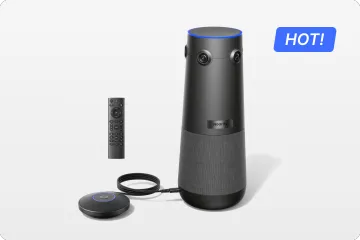
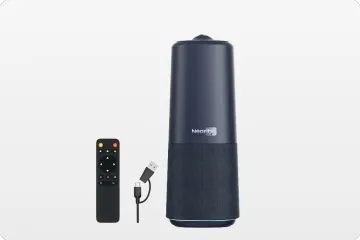
When traditional webcams and standard soundbars fail to deliver, you need a paradigm shift in your hardware strategy. If you want to permanently solve the problem of presence disparity, you must equip your spaces with intelligent technology. This is exactly where the Nearity 360 Alien steps in to completely revolutionize the hybrid meeting experience. It is not just a camera; it is a comprehensive, AI-powered hub designed to bring people closer together.
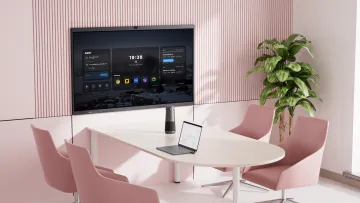
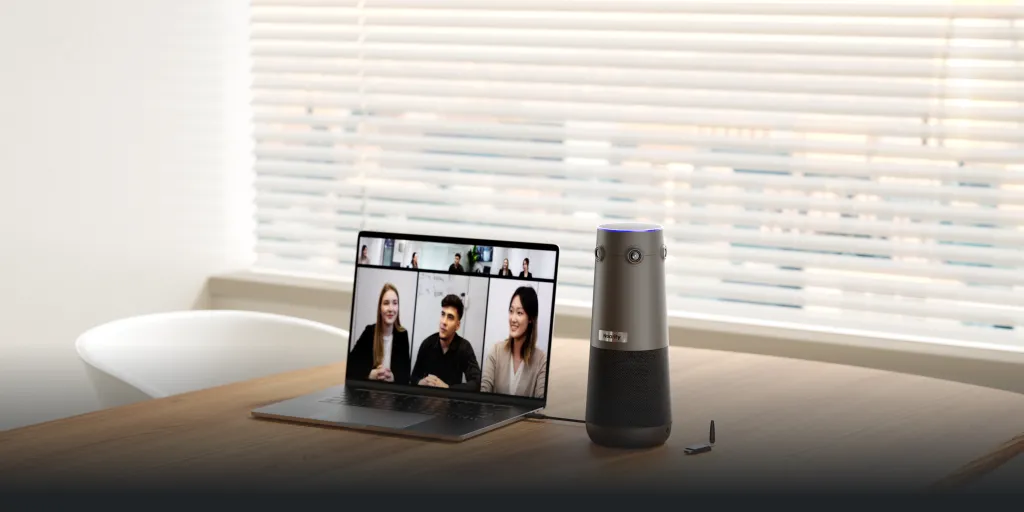
For IT buyers and business leaders searching for the absolute best video conference camera on the market, this device is a game-changer. Unlike conventional devices stuck at the front of the room, the 360 Alien sits directly in the center of the table. This strategic placement completely shifts the dynamic of the conversation. Instead of looking at a screen on a far wall, in-room participants look toward the center, creating natural, face-to-face eye contact with remote peers.
The device boasts a True 4K lens, ensuring that every visual detail is broadcast with stunning, lifelike clarity. But what truly sets it apart is its intelligent, mechanized design and powerful internal software. It is built specifically to address the nuances of modern, location-agnostic collaboration. Let's break down exactly why this device is becoming the gold standard for corporate meeting rooms.
Here are the standout hardware features of the Nearity 360 Alien:
True 4K Resolution: Delivers ultra-high-definition video without grain or pixelation.
360-Degree Panoramic View: Captures every single person sitting around the conference table.
Hidden Pop-Up Mechanism: The camera smoothly retracts into the base when not in use for ultimate privacy.
Multi-Microphone Array: High-fidelity mics pick up whispers from across the room while killing background noise.
Premium Aesthetic: Sleek, modern design that elevates the look of any executive boardroom.
Leveling the Playing Field with the NEARITY 360 ALIEN
Great hardware needs equally powerful software. The Nearity 360 Alien uses advanced AI to act as a virtual director, actively adjusting the feed in real-time to keep your distributed teams highly engaged.
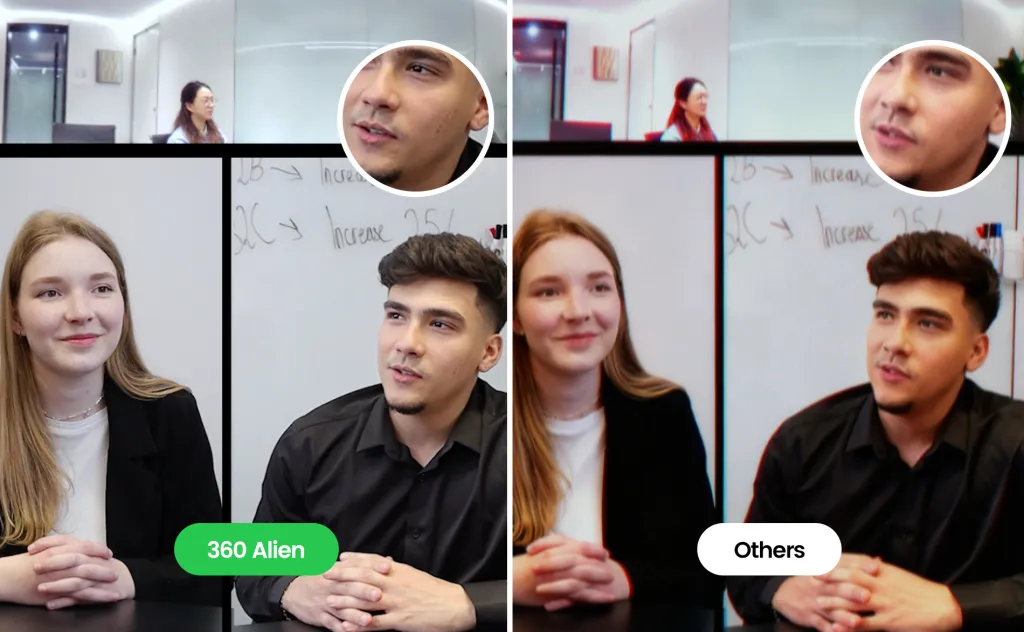
Its standout feature is AI Speaker Tracking. The camera instantly frames active speakers and intelligently splits the screen during back-and-forth dialogue, ensuring remote workers never guess who holds the floor.
Here is how the AI features directly solve hybrid work pain points:
Auto-Framing: Eliminates the "tiny face" problem by zooming in appropriately on participants.
Smart Gallery View: Extracts individual faces from the room and gives them their own dedicated video tile.
Acoustic Fencing: Blocks out the sound of the air conditioner or traffic outside the window.
Contextual Splitting: Smoothly transitions between the active speaker and the panoramic room view.
Platform Agnostic: Works flawlessly out of the box with Zoom, Microsoft Teams, and Google Meet.
Ultimately, this seamless integration of smart software and intuitive hardware is exactly how you achieve true meeting equity in 2026. By eliminating presence disparity, the 360 Alien permanently levels the playing field, ensuring every remote employee feels just as present, valued, and empowered as those sitting in the room.
What are the biggest challenges for distributed teams today?
The most significant challenges revolve around communication breakdowns, maintaining company culture, and ensuring meeting equity. When employees are scattered, it is very easy for remote workers to feel isolated or left out of crucial decision-making processes. Additionally, battling "video fatigue" and managing projects across vastly different time zones require highly intentional leadership and robust technological infrastructure.
How does technology improve remote employee engagement?
Technology acts as the digital connective tissue of your organization. When you use high-quality tools like 360-degree cameras and AI noise-canceling microphones, you remove the friction from daily communication. This allows remote workers to participate in meetings seamlessly, read facial expressions, and feel truly present. When participation is easy and flawless, engagement naturally skyrockets because employees feel their voices are genuinely heard and valued.
Why is my office productivity dropping with a hybrid model?
If your productivity is slipping, it is likely due to outdated hardware causing a "presence disparity." If your team is spending 10 minutes every meeting fixing audio issues, or if remote workers cannot see the whiteboard, collaboration slows to a crawl. Upgrading to smart, AI-driven conference cameras eliminates these technical hurdles, allowing your team to brainstorm faster, make decisions quicker, and execute projects without frustrating delays.
What is the benefit of a 360-degree conference camera?
A standard camera placed at the front of the room creates a "bowling alley" effect, making people at the back look tiny and disconnected. A 360-degree camera, placed directly in the center of the table, captures everyone equally. It allows remote participants to see the entire room dynamically, while in-room participants naturally look toward the center, creating simulated, highly engaging face-to-face eye contact.
Is it difficult to set up AI conference cameras?
Not at all. The best modern conference cameras, like the NEARITY 360 ALIEN, are designed for "plug-and-play" simplicity. They typically require only a single USB cable to connect to a laptop or room PC. There is no need to hire expensive AV integrators or install complex proprietary software; the AI processing is built directly into the hardware itself, working seamlessly with standard platforms like Zoom and Teams.