Call Center Headsets: The Ergonomic Breakdown Nobody Talks About
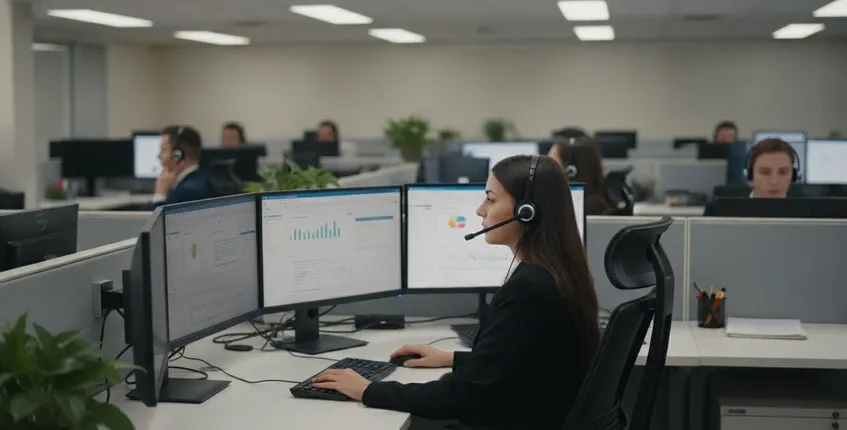
If you've never worked in a call center, there's a physical reality you probably haven't considered: wearing a headset for eight to ten hours a day, five days a week, fifty weeks a year, fundamentally changes the calculus of what "comfortable" means. A headset that feels fine for a two-hour meeting becomes an instrument of slow torture by hour six of shift number four in the same week. The pressure point behind your ear that was a minor annoyance on Monday becomes a genuine source of dread by Wednesday. The heat buildup that made you slightly uncomfortable in the morning has you removing the headset between calls by the afternoon, just to let your ears breathe.
This isn't about luxury or preference. In call center environments—where agent turnover rates routinely exceed 30% annually and the cost of replacing a single trained agent runs into thousands of dollars—headset comfort is a retention factor that directly affects the bottom line. Yet most call center headset purchasing decisions optimize for per-unit cost while ignoring the accumulated cost of discomfort: reduced call quality as agents fatigue, increased break frequency, higher absenteeism, and ultimately, preventable turnover.

This article examines call center headsets through the lens of what actually happens during an agent's workday—the ergonomic reality, the acoustic challenges, and the total cost of ownership factors that separate adequate headsets from ones that genuinely support agent performance over time.
The Trade-Off Matrix: Call Center Headset Priorities
Comfort vs. Durability vs. Cost
Call center headsets face a brutal usage pattern: 40+ hours per week of continuous wear, rapid donning and doffing between shifts, occasional rough handling in fast-paced environments, and exposure to skin oils and sweat that degrade materials over time. This creates a tension between comfort (soft materials, lightweight designs) and durability (robust construction, replaceable parts).
Premium headsets solve this with materials that offer both: protein leather cushions that are soft yet durable, metal-reinforced headbands that maintain adjustment over time, and modular designs that let you replace cushions and cables without replacing the entire headset. Budget headsets typically sacrifice durability—using foam cushions that flatten within months and plastic components that fatigue and crack under repeated stress.
Ergonomic studies have consistently shown that prolonged static postures and poorly designed workplace equipment increase physical discomfort and musculoskeletal fatigue, which can negatively affect employee performance and wellbeing.
The hidden cost: A $60 headset that lasts 8 months and causes comfort complaints costs more than a $120 headset that lasts 2 years and keeps agents comfortable. When you factor in agent satisfaction, call quality consistency, and reduced replacement frequency, the more expensive headset is often the more economical choice.
Wireless vs. Wired for Agent Mobility
Wireless headsets give agents the freedom to stand, stretch, consult with supervisors, and move around their workspace without being tethered to their desk. This mobility reduces the physical strain of sitting in one position for eight hours and enables the collaborative problem-solving that improves first-call resolution rates.
However, wireless introduces two concerns: battery management and connection reliability. A dead headset mid-call creates a poor customer experience. A dropped connection during a critical moment damages both customer trust and agent confidence. The solution is a bluetooth noise cancelling headset with mic that combines a wireless USB dongle with sufficient battery life to cover a full shift, along with a charging protocol that ensures headsets are always ready at the start of each workday.
Decision framework: If your agents primarily handle short, transactional calls (under 5 minutes) and rarely need to leave their desks, wired USB headsets offer simplicity and zero battery concerns. If your agents handle complex calls requiring research, consultation, or extended duration, wireless headsets with dongle connectivity provide the mobility that improves both agent wellbeing and call outcomes.
Noise Cancellation vs. Situational Awareness
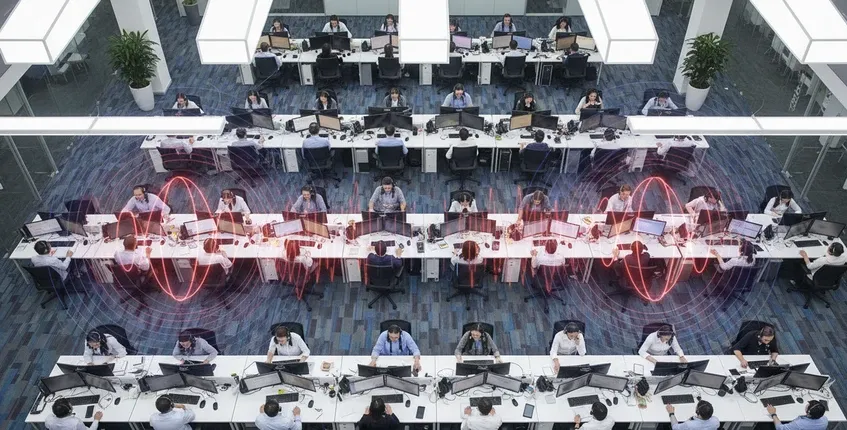
Call centers are acoustically challenging environments. Dozens of simultaneous conversations create a background noise level that can exceed 70 decibels—louder than a vacuum cleaner. Without effective microphone noise cancellation, every caller hears fragments of other agents' conversations, creating a profoundly unprofessional experience.
However, agents also need to hear supervisors, emergency announcements, and colleagues asking for assistance. Single-ear headsets preserve situational awareness but sacrifice noise isolation. Dual-ear headsets with advanced ENC provide superior noise cancellation but isolate the agent from their environment.
Decision framework: For outbound sales centers where call quality is paramount and agents primarily interact with customers, dual-ear headsets with 4-mic ENC deliver the professional audio that drives conversions. For inbound support centers where collaboration and supervisor accessibility matter, single-ear designs or dual-ear designs with transparency modes strike the right balance.
Devil's Advocate: When Expensive Call Center Headsets Aren't Worth It
Despite the arguments above, there are legitimate scenarios where premium call center headsets don't deliver proportional value.
1.Small teams with low call volume: If your team handles 10–20 calls per day rather than 80–100, the ergonomic advantages of premium headsets matter less. Agents aren't wearing them long enough for comfort differences to compound. In this case, mid-range headsets with adequate microphone quality may be sufficient.
2.Environments with extreme turnover: If your call center experiences turnover so rapid that agents rarely stay beyond three months, investing in premium headsets for each agent may not pay back before they leave. However, consider whether poor equipment contributes to the turnover—it's a vicious cycle worth examining.
3.Highly controlled quiet environments: Some call centers use acoustic design, sound masking, or booth-based layouts that dramatically reduce ambient noise. In these environments, the noise cancellation advantages of premium headsets matter less, and basic headsets with good microphones may perform adequately.
4.Budget constraints during scaling: If you're rapidly scaling a call center and every dollar matters, starting with adequate headsets and upgrading as revenue stabilizes is a defensible strategy. Just track the metrics—call quality scores, agent satisfaction, headset replacement frequency—to know when the upgrade becomes justified.
The True Cost of a "Budget" Headset Decision
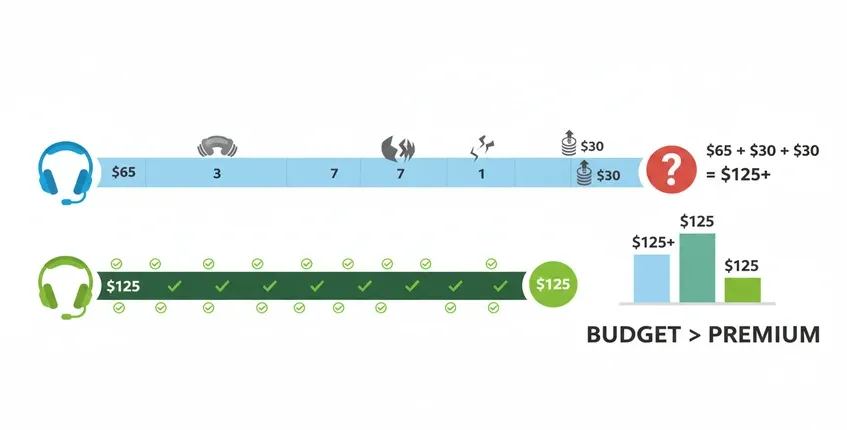
Let's follow a concrete example. A 50-agent call center chooses a $65 headset over a $125 option, saving $3,000 upfront. Here's what happens over the first year:
Month 1–2: Everything seems fine. The headsets work, agents adapt, and the cost savings feel validated.
Month 3: Cushions start flattening. Agents begin complaining about ear discomfort during long calls. First attrition signal: two agents cite "work environment" in exit interviews.
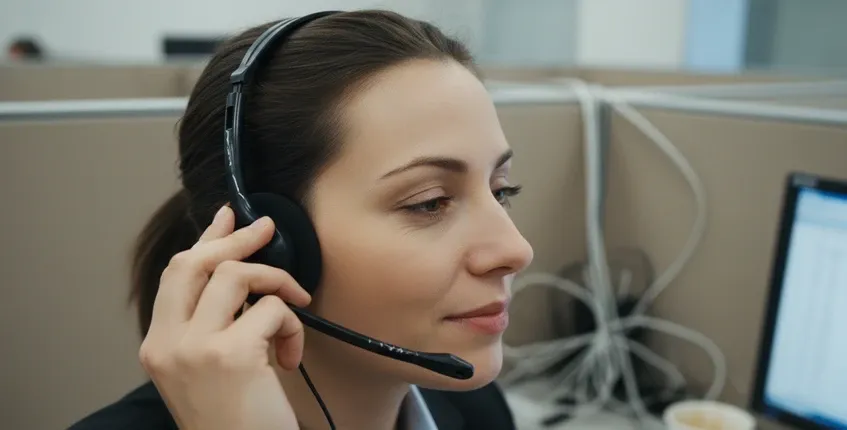
Month 4–5: Headband tension loosens on frequently used headsets. Some agents wrap rubber bands around the headband to maintain fit. Others start removing headsets between calls, increasing handle time.
Month 6: Battery life on the most-used headsets has degraded noticeably. Agents start mid-shift charging, creating logistical headaches. Three more agents leave; replacement cost averages $4,000 each including recruitment and training.
Month 7–8: Plastic components on 20% of headsets show stress cracks. Microphone booms develop wobble. Call quality complaints from customers increase.
Month 9–10: IT spends increasing time on headset-related tickets. The original $3,000 savings have been consumed by replacement headsets ($1,300), increased IT support hours ($800), and the first replacement agent ($4,000).
Month 11–12: Total first-year cost of the "budget" decision: $6,100 in headsets, support, and avoidable turnover—more than double the cost of choosing the premium option initially.
This scenario isn't hypothetical. It's the pattern that plays out in call centers that optimize purchase price over total cost of ownership. The premium headset's superior materials, replaceable components, and ergonomic design aren't luxury features—they're depreciation strategies that spread cost over a longer lifespan while maintaining agent satisfaction.
Essential Features for Call Center Headsets
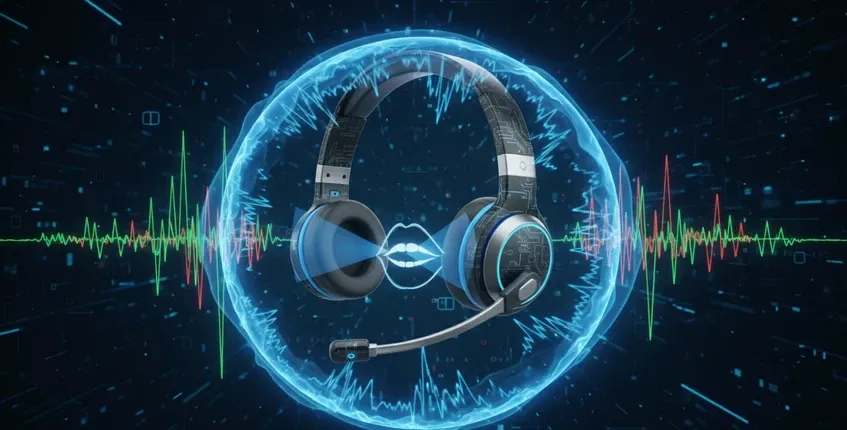
- 4-mic ENC microphone array: A noise cancelling headphone for call center should feature a 4-mic ENC microphone array so callers hear only the agent's voice. Professional-grade noise cancellation improves customer experience while reducing communication errors in busy contact center environments.
- All-day comfort engineering: Memory foam cushions that maintain their shape for months, not weeks. Adjustable headband tension that accommodates different head sizes. Breathable materials that prevent heat buildup during long shifts. The Nearity EP320 uses pillow-soft ear cushions with a stretchable headband specifically designed for extended wear scenarios.
- Mute button accessibility: When agents need to consult with supervisors or handle off-microphone situations, instant muting is essential. A tactile mute button on the microphone boom—where agents' hands naturally rest—provides this without breaking workflow or searching for software controls.
- Battery life exceeding shift length: For wireless headsets, 30+ hours of talk time ensures a full shift with substantial margin. Forgetting to charge overnight shouldn't create a crisis the next morning. A charging stand at each workstation creates a visual docking habit that eliminates dead-headset scenarios.
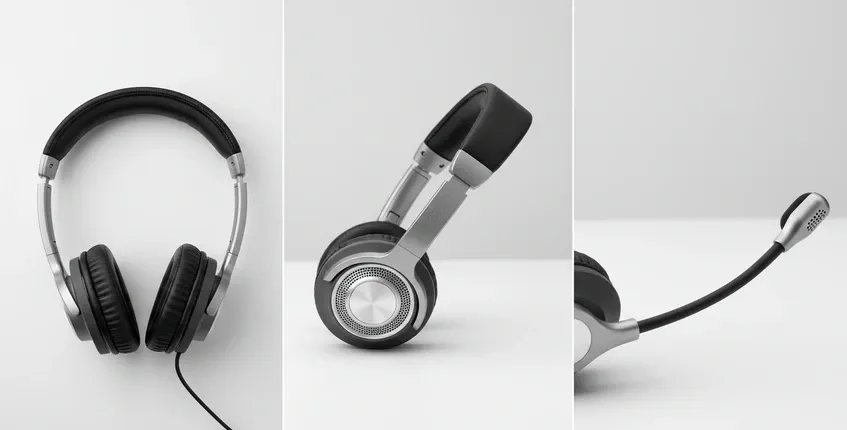
- Replaceable cushions and parts: Headsets in call centers wear out predictably—cushions compress, cables fray, microphone foams degrade. Modular designs that allow individual component replacement extend headset lifespan and reduce total cost of ownership.
Where the Nearity EP320 Fits for Call Centers
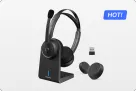
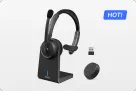
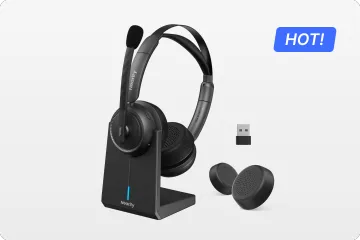
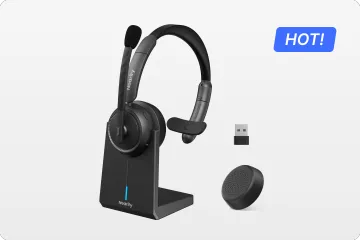
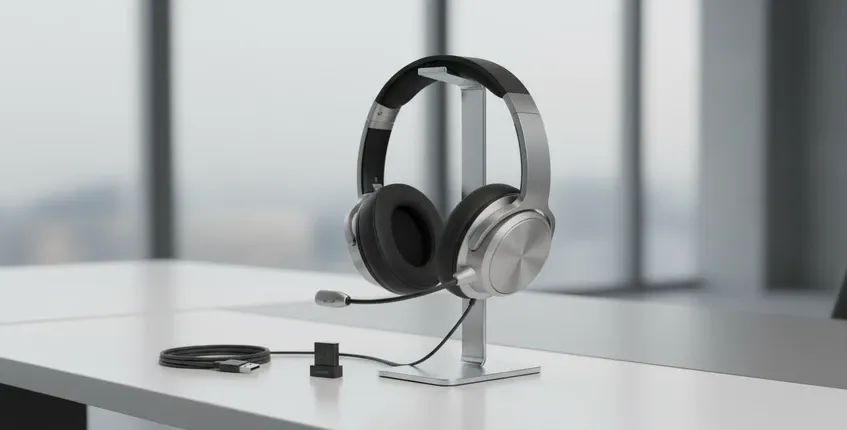
For organizations looking for the best noise cancelling headset for daily customer communication, the Nearity EP320 addresses call center requirements through its 4-mic AI ENC system that isolates agent voice from the ambient noise of open-plan environments. The over-ear design with memory foam cushions and a stretchable headband accommodates the extended wear that call center work demands.
The $127.50 price point sits in the practical performance tier—delivering the microphone quality and comfort that call center work demands without the premium enterprise pricing that individual component replacement and fleet management software add. For call centers prioritizing call quality and agent comfort within a reasonable per-unit budget, this positioning offers professional-grade features at a sustainable cost point.
FAQs
How often should call center headset cushions be replaced?
In high-usage environments (40+ hours per week), cushions should be replaced every 6–12 months depending on material quality. Premium memory foam cushions may last 12 months before compression affects both comfort and noise isolation. Budget foam cushions typically need replacement every 3–6 months. Establishing a scheduled replacement program prevents the gradual degradation that agents learn to tolerate until it becomes a complaint. Some headsets, including the Nearity EP320, offer replaceable cushion designs that make this maintenance simple and cost-effective.
What's the best way to manage headset hygiene in call centers?
Hygiene is critical in shared or hot-desk environments. Best practices: provide individual headsets assigned to specific agents rather than shared pools; use wipeable cushion surfaces that can be sanitized daily; establish end-of-shift cleaning protocols with disinfectant wipes; replace cushions between agent assignments; and consider headsets with antimicrobial cushion treatments. For individual-agent headsets, monthly deep cleaning of cushions and microphone foam extends lifespan and prevents odor buildup.
How do I calculate the true ROI of a call center headset investment?
Track these metrics before and after headset upgrades: average call handle time (comfortable agents work more efficiently), customer satisfaction scores (call quality affects perception), agent satisfaction surveys (equipment quality affects retention), absenteeism rates (discomfort contributes to sick days), headset replacement frequency (durability affects lifetime cost), and IT support tickets related to audio issues. Compare the total cost of ownership (purchase price + replacements + support hours + turnover attributable to equipment) across headset tiers. Most call centers find that mid-premium headsets ($100–150) deliver the optimal ROI compared to budget options ($50–80) or enterprise premium ($200+).
Can call center agents use consumer wireless headphones instead of business headsets?
Consumer headphones typically lack the microphone quality and noise cancellation that call center work demands. Their single or dual-microphone systems cannot effectively isolate agent voice in noisy environments, leading to poor customer experience. Additionally, consumer headphones rarely offer the durability, replaceable parts, or comfort engineering that 8-hour daily wear requires. While they may work adequately for occasional remote workers, they're not suitable for professional call center deployments.
Ready to support your agents with professional-grade audio? Explore the Nearity EP320 with 4-mic AI ENC, all-day comfort design, and 35-hour battery life for call center environments.