Best Noise Cancelling Headsets for Office and Remote Work in 2026
Find the best noise cancelling headphone with mic for office use.
Noise Cancelling Headset
Hybrid Work
Office Headset
Updated: Aug 19, 2026 · 8 minutes read
Global Business, Brought Near.
No Installer, No Hassle, Just Works.
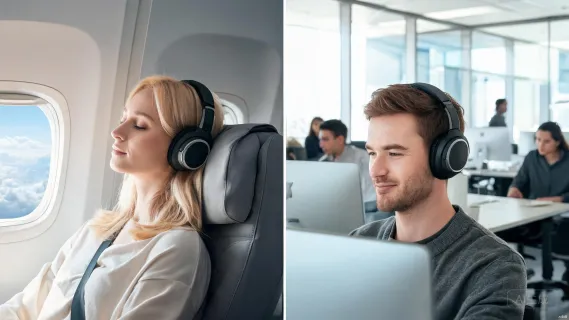
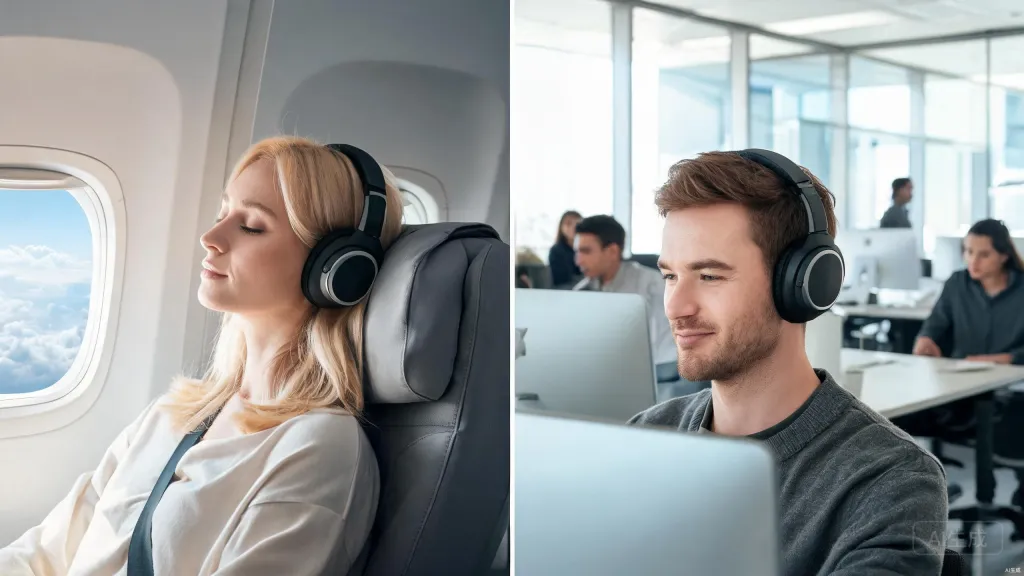
Not every noise cancelling headset is built for the way you work. A headset that blocks airplane engine noise may struggle in an open office, while a powerful ANC model may reduce your awareness of important conversations around you. This guide explains the difference between headphone ANC and microphone noise cancellation, reveals the trade-offs most buying guides overlook, and helps you choose the right professional headset for office calls, remote meetings, and hybrid work in 2026.
Key Takeaways
The best noise cancelling headset for office and remote work depends on the type of noise you need to solve, not simply the strength of ANC.
Active Noise Cancellation (ANC) works best for predictable low-frequency sounds like HVAC systems, traffic, and airplane engines, but is less effective against human conversations and office chatter.
Headphone noise cancellation and microphone noise cancellation solve different problems: one protects your listening experience, while the other improves how others hear you.
For professionals in noisy environments, a headset with a high-quality noise-canceling microphone is often more important than maximum ANC performance.
The right headset choice should balance focus, comfort, social awareness, call quality, and workplace requirements.
The NearHub EP320 provides a business-focused solution with passive isolation, directional microphone noise reduction, and reliable performance across hybrid work environments.
Best Noise Cancelling Headsets for Office and Remote Work in 2026
You have read five "best noise cancelling headset" lists, and you are still not sure which one to buy. That is not your fault. Those lists are comparing decibel reduction numbers without asking what you actually need to cancel. A headset that excels at eliminating airplane engine hum may do almost nothing for the chatter of an open office. A model with a top-tier noise cancelling office headset rating might still deliver terrible call audio because the microphone picks up every keystroke within three meters.
The real question is not "which noise cancelling headphone with mic for office has the best specs?" The real question is "what kind of noise is ruining my work, and where does that noise need to be stopped?" Sometimes the enemy is what you hear. Sometimes it is what your caller hears. Sometimes it is both. The best choice depends on which scenario you are in, and most buying guides never make that distinction clear.
This article breaks down how environmental noise cancelling actually works, exposes the trade-offs that manufacturers rarely discuss, and gives you a framework for matching a noise cancelling work headset to your specific office or home environment.
Why Noise Cancelling Works Better on Airplanes Than on Colleagues
To choose the right noise cancelling headphone for work from home or the office, you need to understand what active noise cancellation (ANC) can and cannot do.
ANC works by listening to the ambient sound around you through external microphones, inverting the waveform, and playing that inverted signal through the headphones. When the original sound wave and the inverted sound wave meet, they cancel each other out. This process is called destructive interference, and it is remarkably effective under specific conditions.
The condition that makes ANC effective is predictability. Low-frequency, continuous sounds like the drone of an air conditioner, the rumble of a train, or the hum of a server room follow a regular pattern. ANC algorithms can anticipate these waves and generate the inverse signal with enough precision to cancel them significantly.
Human voices are a different problem entirely. Speech is mid-frequency, irregular, and directional. A voice changes pitch, volume, and timing constantly. By the time the ANC chip processes the incoming sound and generates the inverse wave, the original voice has already changed. The result is that ANC reduces the overall volume of office chatter but does not eliminate it. You will still hear your colleagues. They will just sound muffled, as if they are speaking through a closed door.
This is the first principle most buyers miss: ANC is a specialist tool for predictable noise, not a general shield against distraction. If your office has loud HVAC systems or you work near a highway, ANC is transformative. If your main distraction is conversational noise, ANC helps less than you might expect, and you may need to combine it with other strategies.
The Hidden Trade-Off: What You Cancel vs. What You Miss
Choosing a noise cancelling office headset is not a simple matter of "more cancellation is better." Every cancellation decision removes something from your awareness, and not all of that removal is helpful.
Dimension
Heavy ANC + Over-Ear Seal
Light ANC + On-Ear Open Design
Non-Intuitive Insight
Focus depth
Excellent for deep work
Moderate; ambient sound leaks in
Heavy ANC can trigger "isolation fatigue" where users feel disconnected and anxious
Social awareness
Poor; you will miss colleagues calling your name
Good; you retain situational awareness
Removing all ambient sound makes some workers hyper-aware of their own voice, causing them to speak unnaturally loudly
Call audio quality (your mic)
Unaffected; mic still picks up room noise
Unaffected; mic still picks up room noise
Buyers often assume headphone ANC fixes microphone noise. It does not. These are separate systems
Safety
You may not hear alarms, announcements, or approaching people
You retain awareness of your surroundings
In some jurisdictions, heavy headphone use in open offices violates safety policies for emergency egress
Comfort over 4+ hours
Seal creates heat and pressure
Lighter and cooler, but less isolation
The weight of ANC circuitry adds 20–40 grams, which becomes noticeable during all-day wear
The non-intuitive dimension here is social awareness versus focus. Most buyers evaluate noise cancelling communication headsets on a single axis: how much noise gets blocked. They do not consider that blocking too much noise can be as harmful as blocking too little. If you work in a collaborative environment where colleagues tap your shoulder for quick decisions, a heavy ANC seal forces you to remove the headset repeatedly, which defeats the purpose of wearing it.
If your situation is a home office with loud external noise and no colleagues nearby, aggressive ANC is the right choice. If your situation is an open office where you need to stay reachable, a lighter ANC setting or a passive noise-isolating design may actually improve your workflow more than a flagship ANC model.
When Noise Cancelling Hurts More Than It Helps
Noise cancelling work headsets are treated as an unqualified upgrade in most buying guides. They are not. There are specific situations where ANC actively degrades your work experience, and honest coverage requires acknowledging them.
Exception case 1: The collaborative open office.
If your job requires frequent ad-hoc conversations, heavy ANC creates a social barrier. Colleagues hesitate to approach you because you visibly cannot hear them. You miss context from nearby discussions that would have informed your work. Over time, the headset becomes a signal that you are unavailable, even when you are not. The hidden cost is relational, not acoustic.
Exception case 2: The self-monitoring problem.
When you cannot hear your own voice naturally, you lose the feedback loop that regulates your speaking volume. This is called the Lombard effect. ANC users often speak louder than necessary on calls, which strains their voice over long meetings and annoys housemates or nearby coworkers. Some high-end headsets offer a "transparency" or "sidetone" feature that pipes your own voice back into your ears, but many buyers do not know to look for this feature until they experience the problem.
Exception case 3: Ear fatigue and pressure sensitivity.
ANC generates an inverse sound wave that creates subtle pressure against your eardrum. Most users do not notice it for the first hour. After three or four hours, some people experience a sensation similar to altitude pressure changes, or mild dizziness. This is not a defect in the headset. It is a physiological reaction to sustained phase cancellation near the ear canal. If you are sensitive to pressure changes or prone to motion sickness, heavy ANC may be uncomfortable for all-day wear.
Exception case 4: Safety and compliance.
Some office buildings and industrial environments require workers to maintain auditory awareness of fire alarms, evacuation announcements, or approaching vehicles. In these settings, a work from home headset that cancels background noise is appropriate because there are no safety alarms to miss. In a corporate office with strict safety protocols, heavy ANC may violate policy.
The practical implication is that the best noise cancelling headphones for working from home are not necessarily the best noise cancelling office headset for an open-plan environment. Context determines value.
A Three-Step Decision Framework for Office and Home Noise Cancellation
Instead of comparing feature lists, evaluate your environment across these three dimensions in order.
Step 1: Identify your noise profile.
Ask yourself: What specific sounds are disrupting my concentration or my calls?
If the answer is low-frequency continuous noise (HVAC, traffic, appliances), prioritize active noise cancellation with strong low-frequency attenuation.
If the answer is mid-frequency intermittent noise (conversations, phone rings, keyboard clatter), prioritize a noise cancelling communication headset with a high-quality boom microphone that isolates your voice from the room.
If the answer is both, you need a dual approach: ANC for your ears and a noise-reducing mic for your caller's ears.
Step 2: Determine your social context.
Ask yourself: Do I need to hear what is happening around me?
If you work alone at home and need total focus, choose over-ear ANC with a tight seal.
If you work in a collaborative office and need to stay reachable, choose on-ear passive isolation or ANC with an ambient-awareness mode.
If you alternate between focus time and collaboration time, choose a headset with adjustable ANC levels or a quick-transparency button.
Step 3: Match your call load to your microphone needs.
Ask yourself: How many hours per day am I on calls, and how quiet is my environment during those calls?
If you are on calls for more than three hours daily in a noisy environment, prioritize microphone noise cancellation over headphone ANC. Your callers will thank you.
If you are on calls for less than an hour daily and your main need is focus music between calls, prioritize headphone ANC.
If you move between a noisy office and a quiet home, prioritize a headset with consistent mic performance in both environments.
Comprehensive judgment:
If your situation is a noisy home office, long call hours, and no safety concerns, choose a noise cancelling headphone with mic for office that offers both ANC and a directional boom microphone.
If your situation is a collaborative open office with moderate noise and frequent interruptions, choose a lighter ANC or passive-isolating headset with excellent mic clarity and an ambient-awareness mode.
If your situation is mixed between home and office, choose a headset with adjustable ANC and a microphone that performs consistently across both quiet and noisy rooms.
Why Microphone Noise Cancelling Matters More Than Headphone ANC
Most buyers shopping for a noise cancelling headphone with mic for office assume that the noise cancellation in the name refers to what they hear. It should also refer to what the other party hears.
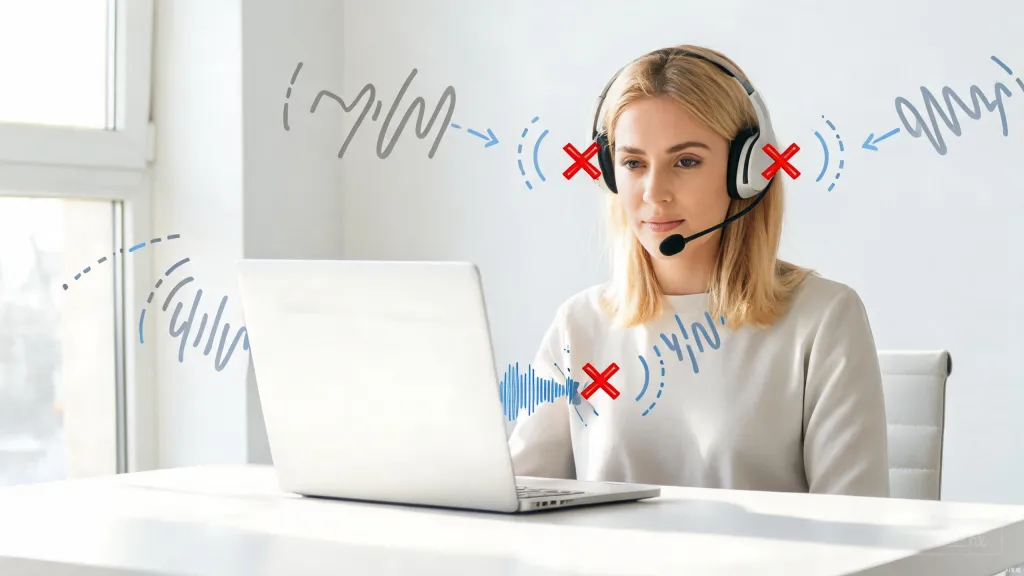
Headphone ANC removes noise from your listening experience. Microphone noise cancellation removes noise from your speaking signal. They are separate systems that solve different problems, and a headset that excels at one may be mediocre at the other.
When you speak in a noisy room, your microphone captures your voice plus the room around you. Without processing, your caller hears the keyboard clicks, the air conditioner, and the hallway conversation along with your words. Microphone noise cancellation uses directional pickup patterns, digital signal processing, or multiple microphone arrays to identify your voice and suppress everything else.
The three-layer why chain behind this matters:
Why does microphone noise cancellation improve your professional image? Because callers subconsciously associate audio clarity with competence. A voice buried in room noise signals low investment in communication tools.
Why is that important? Because remote work has flattened the visual playing field. Everyone is a rectangle on a screen. Audio quality has become the primary differentiator of professionalism in virtual meetings.
Why is that fundamental? Because most professionals invest in how they look on camera but neglect how they sound, even though studies of virtual meeting perception consistently rank audio clarity above video resolution in listener satisfaction. The hidden truth is that a mediocre camera with excellent audio feels more professional than a 4K camera with noisy audio.
Where the NearHub EP320 Fits
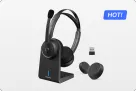
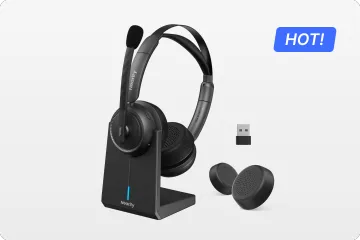
The NearHub EP320 headset is built for professionals who move between quiet focus and noisy collaboration without swapping gear. It combines passive noise isolation through an over-ear memory-foam seal with a directional boom microphone that focuses on your voice and rejects off-axis ambient sound. The result is a noise cancelling communication headset that performs consistently across home offices, open offices, and hybrid schedules.
For workers in unpredictable acoustic environments, the EP320's microphone noise reduction is particularly valuable. It does not rely on software running on your computer, which means the noise cancellation works the same way whether you are connected to a corporate laptop with locked-down settings or a personal machine with default drivers. The physical design of the microphone does the heavy lifting.
The headset also addresses the social-awareness problem. The over-ear design blocks enough sound to help you focus during writing tasks, but it does not create the "silent bubble" effect that makes colleagues reluctant to approach you. When you need full awareness, you can rotate the earcups slightly to loosen the seal without removing the headset entirely.
One honest limitation: if you work exclusively in a silent environment and your only need is music playback during solo work, the EP320's business-oriented microphone and sealing design are more than you need. A lighter consumer headphone would serve you adequately at a lower cost and weight.
FAQs
Does active noise cancellation block voices in an open office?
Active noise cancellation is most effective against low-frequency, consistent sounds like air conditioning hum. It is less effective against unpredictable mid-frequency sounds like human voices. In open offices, ANC reduces the overall volume of chatter but does not eliminate it. A noise cancelling microphone is often more important than headphone ANC for call clarity. If your main goal is to focus while colleagues talk nearby, ANC helps.
Is a noise cancelling work headset worth it for a home office?
A noise cancelling headset is worth it for home offices if you face intermittent environmental noise like leaf blowers, traffic, or household activity. The ANC reduces the baseline rumble, and a noise cancelling microphone ensures your callers do not hear the dishwasher running in the background. The key is matching the headset's capabilities to the actual acoustic problems in your space.
What is the difference between headphone noise cancelling and microphone noise cancelling?
Headphone noise cancelling removes ambient sound so you can hear callers clearly. Microphone noise cancelling removes ambient sound from your microphone signal so callers can hear you clearly. They solve different problems and use different technologies. Headphone ANC uses inverse sound waves. Microphone noise cancellation uses directional pickup, digital signal processing, or beamforming.
Can noise cancelling headsets cause ear fatigue during long calls?
Yes. Active noise cancellation creates subtle pressure inside the ear cup that some users feel as fatigue or dizziness after several hours. This is a physiological reaction to sustained phase cancellation, not a sign of a defective product. Taking short breaks every ninety minutes, lowering ANC intensity if your headset allows adjustment, or switching to passive isolation during low-noise periods can help.