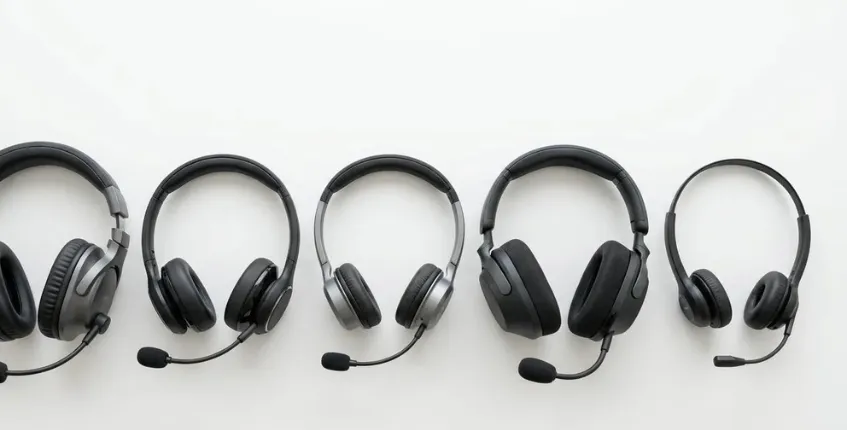
Best Headset for Telehealth: Top Picks for Clear Patient Calls
We compared the best noise cancelling cordless headphones for telehealth.
telehealth
noise cancelling cordless headset
headset for doctors
Updated: Aug 19, 2026 · 8 minutes read
Global Business, Brought Near.
No Installer, No Hassle, Just Works.
Choosing the right telehealth headset can significantly improve communication, patient experience, and clinician comfort. This guide compares the best headphones for telehealth based on microphone quality, noise cancellation, comfort, battery life, platform compatibility, and overall value. We also explain the key differences between ANC and ENC, answer common buying questions, and highlight why the Nearity EP320 stands out as the best value for healthcare professionals.
Key Takeaways
A dedicated telehealth headset provides clearer communication and a better patient experience than standard consumer earbuds.
Prioritize microphone quality, ENC, comfort, battery life, and platform compatibility when choosing a headset.
Boom microphones deliver more consistent voice clarity than built-in microphones, especially in noisy environments.
ANC reduces the noise you hear, while ENC removes background noise from your microphone for clearer patient calls.
The Nearity EP320 offers premium features—including 4-mic AI ENC, Bluetooth + USB connectivity, 35-hour talk time, and Teams/Zoom/Webex certification—at an excellent price, making it one of the best headphones for telehealth.
Why a Dedicated Headset Matters for Telemedicine
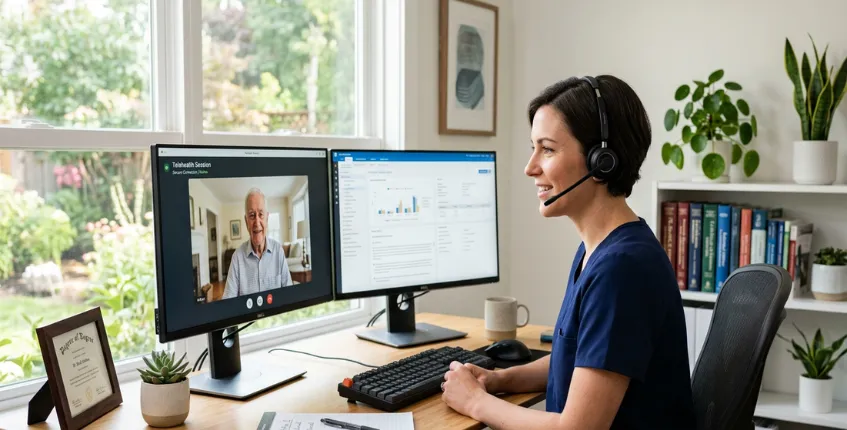
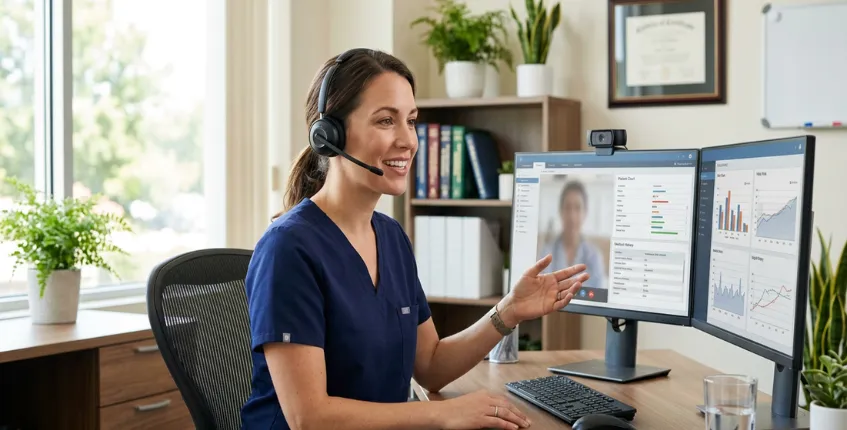
The right audio setup can make or break a telehealth consultation. Whether you are a physician running virtual visits from a home office, a therapist conducting remote sessions, or a home health nurse coordinating care over Zoom, the quality of your headset directly affects both your focus and your patient's trust.
Recent research underscores why this matters. A study published in PubMed, "Disparities in patient experience with video and audio-only virtual care", found that patients in audio-only virtual visits reported significantly lower satisfaction when call quality was poor, with audio clarity being one of the strongest predictors of a positive experience. In other words, your telehealth headset is not just a convenience — it is part of the care you deliver.
This guide covers the best headphones for telehealth we have evaluated in 2026.
How We Chose the Best Telehealth Headsets
Our recommendations are based on hands-on evaluation across six criteria that matter most to healthcare professionals:
Microphone clarity and noise suppression — Can patients hear you clearly over HVAC, household traffic, or clinic background noise? We test in real-world conditions: home offices, shared clinical workstations, and outdoor-adjacent rooms.
Active or environmental noise cancellation — Does the headset block distractions so you can focus on the conversation? We distinguish between ANC (what you hear) and ENC (what your patient hears), since both matter in telehealth.
Comfort for extended sessions — Is the headset wearable for 6-10 hours without pressure fatigue, heat buildup, or ear soreness? Weight distribution, cushion material, and clamping force all factor in.
Platform compatibility — Certified or optimized for Zoom, Teams, Webex, and common EHR-integrated telehealth platforms? We note native integrations that streamline your workflow.
Battery life — Will it last a full day of back-to-back appointments? We look for 20+ hours of talk time as a practical minimum.
Price-to-value — Does the performance justify the cost for a working clinician? We weigh included accessories (charging stands, dongles, cases) against the asking price.
We also prioritized wireless communication headsets that include boom microphones, USB dongles, or dedicated desktop charging stands — features that separate professional tools from consumer headphones. A headset that ships with its own USB dongle typically delivers a more stable, lower-latency connection than generic Bluetooth pairing, which can matter when every second of a 15-minute patient visit counts. In our testing, dongle-based connections also reduced the occasional audio dropouts that can occur with standard Bluetooth in environments with many wireless devices competing for spectrum.
Quick Comparison Table
Headset
Best For
Key Feature
Battery Life
Price Range
Boom Mic
Nearity EP320
Best overall value
4-mic AI ENC, 99.9% noise suppression
35 hrs call / 45 hrs music
$127–$150
Yes
Jabra Evolve2 65 Flex
Teams-centric workflows
Retractable boom mic, 136g
37 hrs
$200–$250
Yes (retractable)
Bose QuietComfort Ultra (2nd Gen)
All-day comfort & ANC
Best-in-class low-freq ANC
30 hrs
$300–$350
No
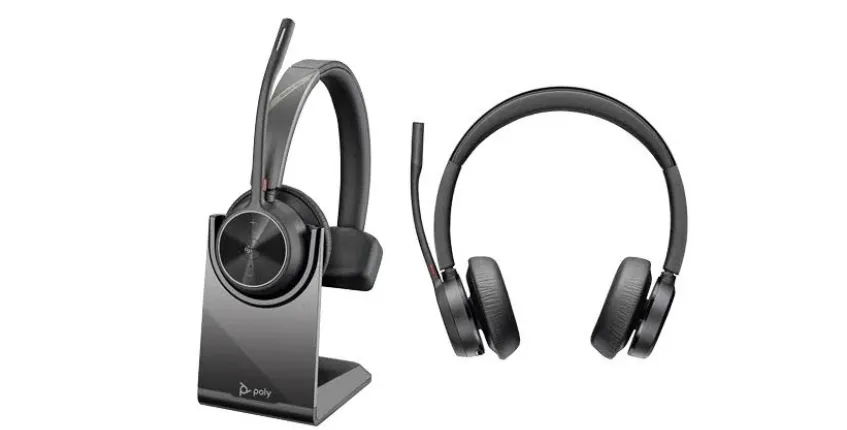
Poly Voyager Focus 2 UC
Noisy shared spaces
Acoustic Fence boom mic tech
~19 hrs talk
$200–$280
Yes
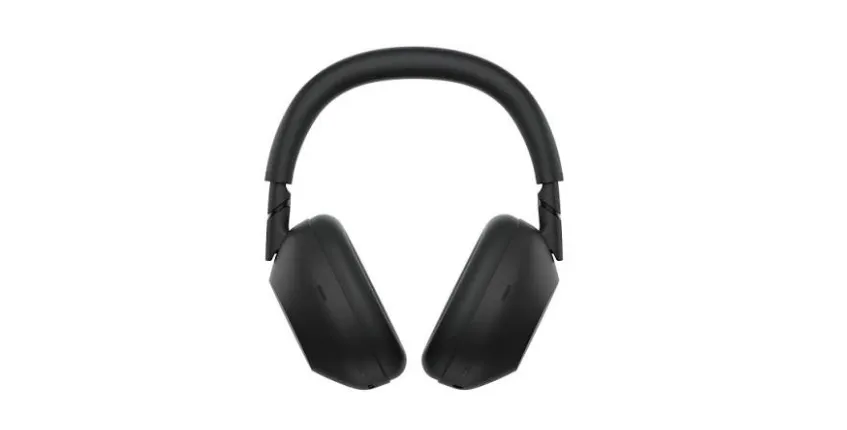
Sony WH-1000XM6
Audio quality enthusiasts
QN3 ANC chip, LDAC hi-res audio
30 hrs
$350–$400
No
Top 5 Noise Cancelling Cordless Headphones for Telehealth
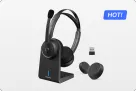
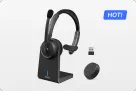
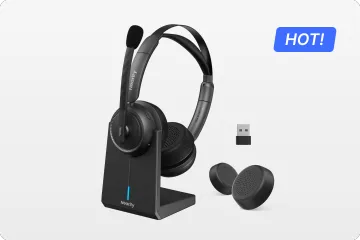
1. Nearity EP320 — Best Overall Value for Telehealth Professionals🌟
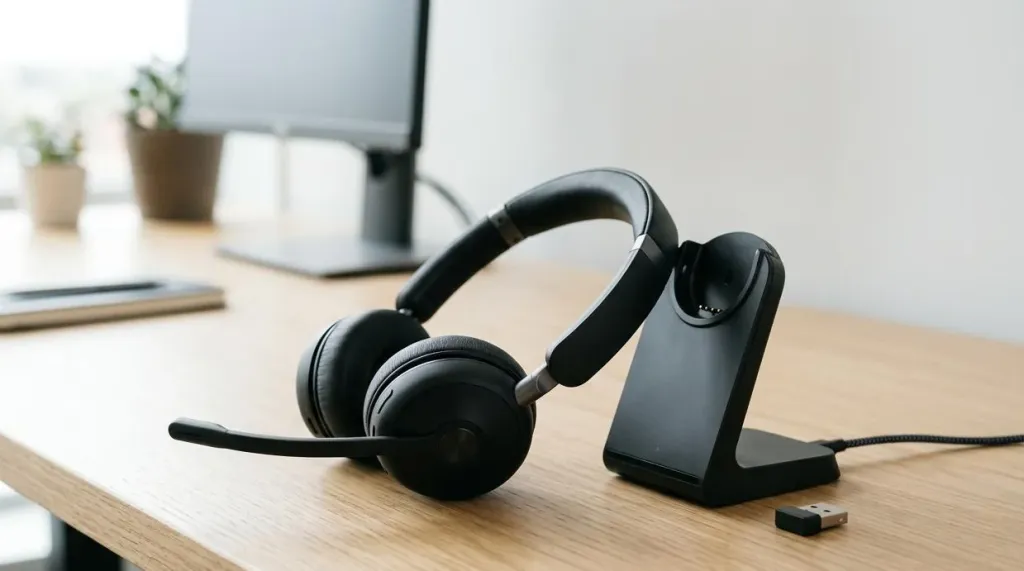
At $127.50 (Sale Price), the Nearity EP320 is one of the best headphones for telehealth, offering many premium features typically found in headsets costing $200+. As a wireless communication headset, it delivers excellent value for healthcare professionals.
Key Features
Crystal-clear calls: 4-microphone array with AI Environmental Noise Cancellation (ENC) removes up to 99.9% of background noise, keeping your voice clear during virtual consultations.
Reliable connectivity: Bluetooth 5.4, USB dongle, and dual-device pairing let you switch seamlessly between your laptop and phone.
Built for long shifts: Up to 35 hours of talk time (45 hours of music playback) plus a convenient desktop charging stand.
All-day comfort: Lightweight design with pillow-soft ear cushions, a 250° rotating boom mic, and 180° swivel earcups for a personalized fit.
Works with your workflow: Certified for Microsoft Teams, Zoom, and Webex.
Best For
Telehealth physicians
Therapists and counselors
Home healthcare providers
Clinicians looking for premium performance at a mid-range price
Trade-Offs
Smaller brand recognition than Jabra or Bose.
Fewer enterprise support options, though call quality and features compete with many $200+ headsets.
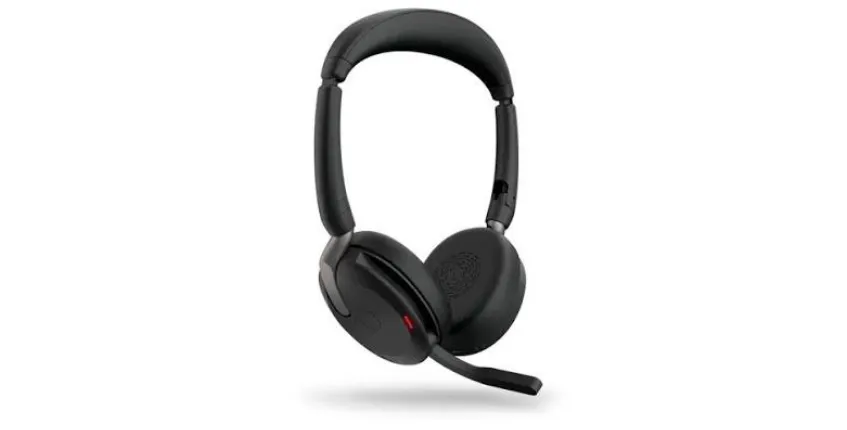
2. Jabra Evolve2 65 Flex — Best for Teams-Centric Workflows
Designed for professionals who spend most of their day in Microsoft Teams, the Jabra Evolve2 65 Flex combines business features with a lightweight, travel-friendly design.
Key Features
Retractable boom mic for clear calls with a cleaner, more portable design.
Ultra-lightweight (136g) for comfortable all-day wear.
Hybrid ANC and Busylight help reduce distractions during consultations.
Up to 37 hours of battery life with Microsoft Teams certification and one-touch meeting controls.
Fold-flat design for easy transport between home and clinic.
Best For
Microsoft Teams users
Hybrid healthcare professionals
Clinicians who prioritize portability
Trade-Offs
On-ear design provides less passive noise isolation than over-ear headsets.
ANC and microphone performance are solid but not the strongest for consistently noisy environments.
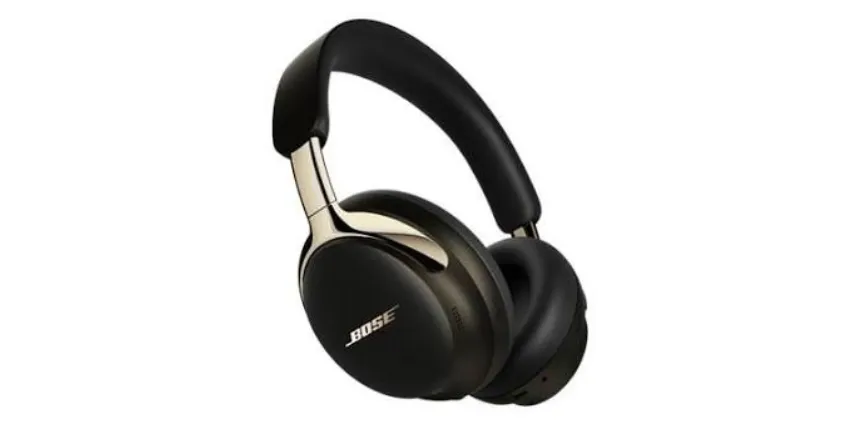
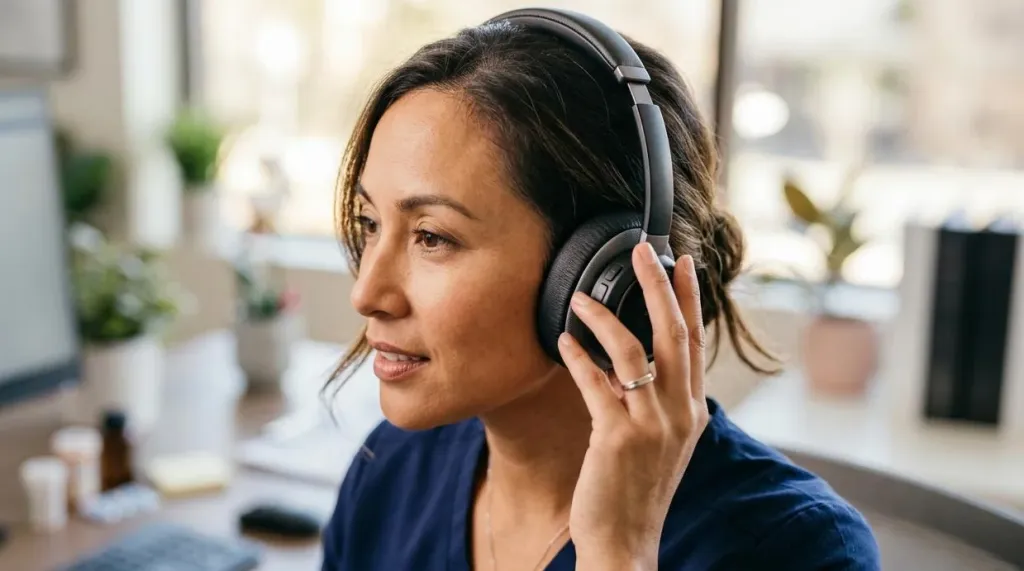
3. Bose QuietComfort Ultra Headphones (2nd Gen) — Best for All-Day Comfort and ANC
For clinicians working in noisy environments, the Bose QuietComfort Ultra delivers industry-leading active noise cancellation and exceptional long-wear comfort.
Key Features
Best-in-class ANC minimizes distractions from HVAC systems, traffic, and household noise.
Plush over-ear cushions provide lasting comfort during long consultation days.
Beamforming microphone array delivers clear voice pickup for virtual appointments.
Up to 30 hours of battery life with USB-C audio support for work and entertainment.
Best For
Providers working in noisy environments
Users who prioritize comfort and ANC
Professionals wanting one headset for both work and personal use
Trade-Offs
No dedicated boom microphone, so voice pickup is less consistent than business headsets in loud settings.
Higher price point (around $300–350) than most telehealth-focused alternatives.
4. Poly Voyager Focus 2 UC — Best for Shared Workspaces
Designed for busy clinics and shared offices, the Poly Voyager Focus 2 UC helps keep conversations clear even in noisy environments.
Key Features
Acoustic Fence boom microphone technology filters out surrounding conversations and workplace noise.
Active Noise Cancellation (ANC) helps you stay focused during virtual consultations.
Bluetooth connectivity with support for PC, Mac, and mobile devices.
Smart sensors automatically answer calls when worn and mute when removed.
Desktop charging stand keeps the headset ready between appointments.
Best For
Shared offices and clinic workstations
Telehealth call centers
Providers working in noisy environments
Trade-Offs
Around 19 hours of talk time, shorter than the Nearity EP320 and Jabra Evolve2 65 Flex.
Functional design with a higher price that mainly pays off if you need Acoustic Fence technology.
5. Sony WH-1000XM6 — Best for Work & Personal Use
The Sony WH-1000XM6 is a premium choice for clinicians who want one headset for both telehealth appointments and everyday listening.
Key Features
Industry-leading ANC powered by Sony's QN3 processor.
Multipoint Bluetooth for seamless switching between laptop and phone.
Comfortable over-ear design for extended wear.
Speak-to-Chat automatically pauses audio when conversations begin.
LDAC Hi-Res Audio delivers exceptional music quality outside of work.
Best For
Clinicians who also value premium music quality
Hybrid work and personal use
Quiet to moderately noisy environments
Trade-Offs
No dedicated boom microphone, so voice pickup is less consistent than business headsets in noisy settings.
Premium price ($350–400) is difficult to justify if your primary need is telehealth.
Why the Nearity EP320 Is Best for Telehealth
Whether you're seeing patients from a home office, a clinic, or a hybrid workspace, the Nearity EP320 is a telehealth headset built to support clear, reliable communication throughout the workday.
Why It Stands Out
Clear patient conversations: A 4-microphone array with AI Environmental Noise Cancellation (ENC) removes up to 99.9% of background noise, making it one of the most reliable noise cancelling cordless headphones for telehealth professionals.
Comfort for long consultation days: Lightweight construction, pillow-soft ear cushions, and an adjustable boom mic help reduce fatigue during back-to-back virtual appointments.
Seamless connectivity: Bluetooth 5.4, a USB dongle, and dual-device pairing allow you to switch effortlessly between your laptop and phone.
Reliable all-day performance: Up to 35 hours of talk time keeps you connected through even the busiest schedules.
Designed for healthcare workflows: Certified for Microsoft Teams, Zoom, and Webex, making it a dependable choice for virtual care.
Exceptional value: At $127.50, it delivers premium features found in many higher-priced wireless communication headsets, making it one of the best headphones for telehealth in its price range.
Best For
Telehealth physicians
Therapists and counselors
Home healthcare providers
Hybrid healthcare professionals
Clinics looking for reliable wireless communication headsets with excellent value
FAQs
What's the difference between ANC and ENC?
ANC (Active Noise Cancellation) reduces the noise you hear, while ENC (Environmental Noise Cancellation) removes background noise from your microphone so patients hear your voice more clearly. The best wireless communication headsets for telehealth combine both technologies to improve communication for everyone on the call.
Can I use consumer earbuds for telehealth?
Yes, but only for occasional virtual appointments. Consumer earbuds often lack a boom microphone, advanced AI noise suppression, and long battery life. If telehealth is part of your daily workflow, a dedicated telehealth headset provides more reliable call quality and all-day comfort.
How important is a boom mic for telehealth?
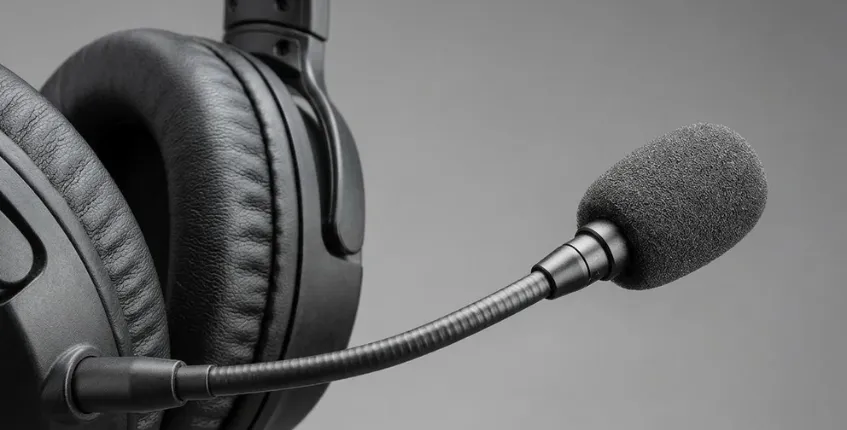
A boom mic places the microphone close to your mouth, improving voice clarity and helping AI noise cancellation filter out background sounds. That's why most best headphones for telehealth use a dedicated boom mic instead of built-in microphones.
Are wireless headsets secure for HIPAA compliance?
Modern noise cancelling cordless headphones use encrypted Bluetooth connections, but no headset is HIPAA compliant on its own. Compliance depends on your telehealth platform, network security, and organizational policies, not just the headset.
How can I reduce background noise during telehealth calls?
Start with a telehealth headset that supports AI noise cancellation. For even better results:
Position the boom mic close to your mouth.
Use the USB dongle for a more stable connection.
Close doors and windows to minimize ambient noise.
Enable background noise suppression in your telehealth platform.