










As the global workspace enters 2026, the legacy model of "attendance-driven" management has become obsolete. This series of guides builds a multi-dimensional playbook for the modern enterprise. At the management level, it introduces the concepts of "Presence Equity" and "Activity-Based Presence," dismantling rigid clock-in cultures. In terms of spatial design, it advocates for transforming the office into a "High-Performance Hub" that attracts employees back through advanced acoustic engineering and biophilic design. Finally, on the technical front, it details a digital-first workflow centered on the NearHub smart board ecosystem, illustrating how room calendar synchronization, 4K visual tracking, and instant cloud archiving eliminate the "Setup Tax" and "Information Black Holes." This is a strategic blueprint designed for leaders seeking to remain competitive in the era of flexible work.
Key Takeaways
- Shift in Management Focus: Successful hybrid teams prioritize output and impact over physical presence, adopting a flexible strategy where the nature of the task—rather than the day of the week—determines the location of work.
- Achieving Presence Equity: Leverage high-fidelity audio and 4K visual technology to ensure remote participants have an equal "visual voice," effectively eliminating proximity bias and digital isolation.
- Eliminating the "Setup Tax": Reduce administrative and technical friction by over 80% through deep integration between interactive hardware and enterprise room calendars, allowing for one-touch meeting starts.
- The Office as a "Collaboration Theater": Redesign office layouts into distinct "Focus Zones" and "Collaboration Theaters" to provide high-value, high-innovation environments that the average home office cannot replicate.
- Digital-First Documentation: Abandon legacy analog whiteboards in favor of interactive canvases that convert brainstorming sessions into instant, cloud-synced digital assets, ensuring a single source of truth for global teams.
- Human-Centric Workplace Design: Combat "fluorescent fatigue" and burnout by integrating circadian lighting and biophilic elements (natural wood, stone, and greenery), enhancing psychological safety and employee focus.
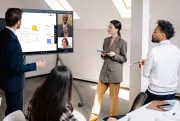
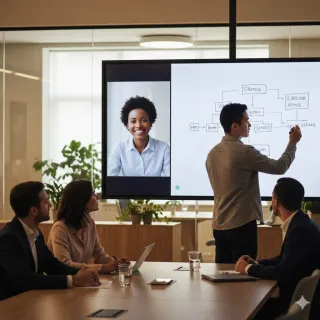
We’ve all felt that specific type of workplace frustration: you’re sitting in a conference room with three other people, trying to brainstorm a new project, while five of your most critical colleagues are staring back at you from a grainy laptop screen on the table. You’re sketching on an analog whiteboard, but they can’t see the markers clearly. They’re trying to chime in, but the audio cuts out every time someone in the room laughs or shifts their chair. By the time the hour is up, half the team feels energized, and the other half feels like second-class citizens. This "presence disparity" is the silent killer of the modern hybrid team.
Welcome to the Ultimate Guide for the 2026 workplace. This is not just a collection of management tips; it is a comprehensive roadmap covering everything from psychological safety to the high-performance hardware required to bridge the digital-physical divide. If you are struggling to maintain cohesion within your hybrid team, you are not alone. As we navigate the complexities of a post-mandatory-office world, the organizations that thrive are those that stop viewing hybrid work as a "perk" and start mastering it as a competitive advantage. In this guide, we will explore the essential hybrid workplace best practices and hybrid workplace solutions that turn fragmented groups into unified, high-output powerhouses.
Defining the Hybrid Team in 2026: Why Intentionality is the New Management Standard
Before we dive into the logistics, we must define what a hybrid team actually looks like in 2026. The days of "three days in, two days out" as a rigid, company-wide rule are fading. Today, the most successful teams operate on a principle of "Activity-Based Presence." This means the location of the work is dictated by the nature of the task, not a calendar mandate.
The Core Characteristics of a High-Performance Hybrid Team
A high-functioning hybrid team in 2026 is defined by four distinct pillars:
- Synchronous Fluidity: The ability to switch between in-person and remote collaboration without losing an ounce of momentum or context.
- Presence Equity: Ensuring that every member, regardless of their physical location, has an equal "visual and vocal voice" in the decision-making process.
- Asynchronous Excellence: A culture where documentation is so robust that a team member in a different time zone can pick up exactly where another left off without needing a 30-minute sync call.
- Outcome-Based Trust: Moving away from "eyes-on-screens" monitoring toward a radical focus on deliverables, impact, and qualitative results.
The "Connection Gap" and How to Close It
According to a recent report by Gartner, employees in a poorly managed hybrid team are 40% more likely to experience "engagement decay" compared to those in fully aligned environments. This gap isn't caused by the physical distance; it's caused by technical and cultural friction. When the technology is hard to use, or the documentation is scattered across five different platforms, the remote-office divide becomes a wall. Closing this gap requires a mix of cultural shift and the implementation of advanced hybrid workplace solutions.
The 5 Biggest Friction Points for Every Hybrid Team and How to Solve Them
Managing a hybrid team is significantly more complex than managing a fully remote or fully in-office one. You are essentially managing two different cultures simultaneously. Here are the five most common friction points and the strategic solutions to fix them.
1. Proximity Bias and the "Front-Row" Effect
It is human nature to favor the people we see physically every day. In a hybrid team, this often leads to the people in the office getting the plum assignments or the quickest feedback simply because they are "top of mind."
- Solution: Implement a "Remote-First" communication rule. If even one person is remote, the entire meeting happens on the digital canvas. This is where a smart white board becomes essential—it serves as the "single source of truth" and shared reality for everyone involved.
2. The Documentation "Black Hole"
In the office, decisions are often made in the hallway or after a meeting has "officially" ended. If these aren't captured, the remote side of the hybrid team loses the "why" behind the "what," leading to confusion and resentment.
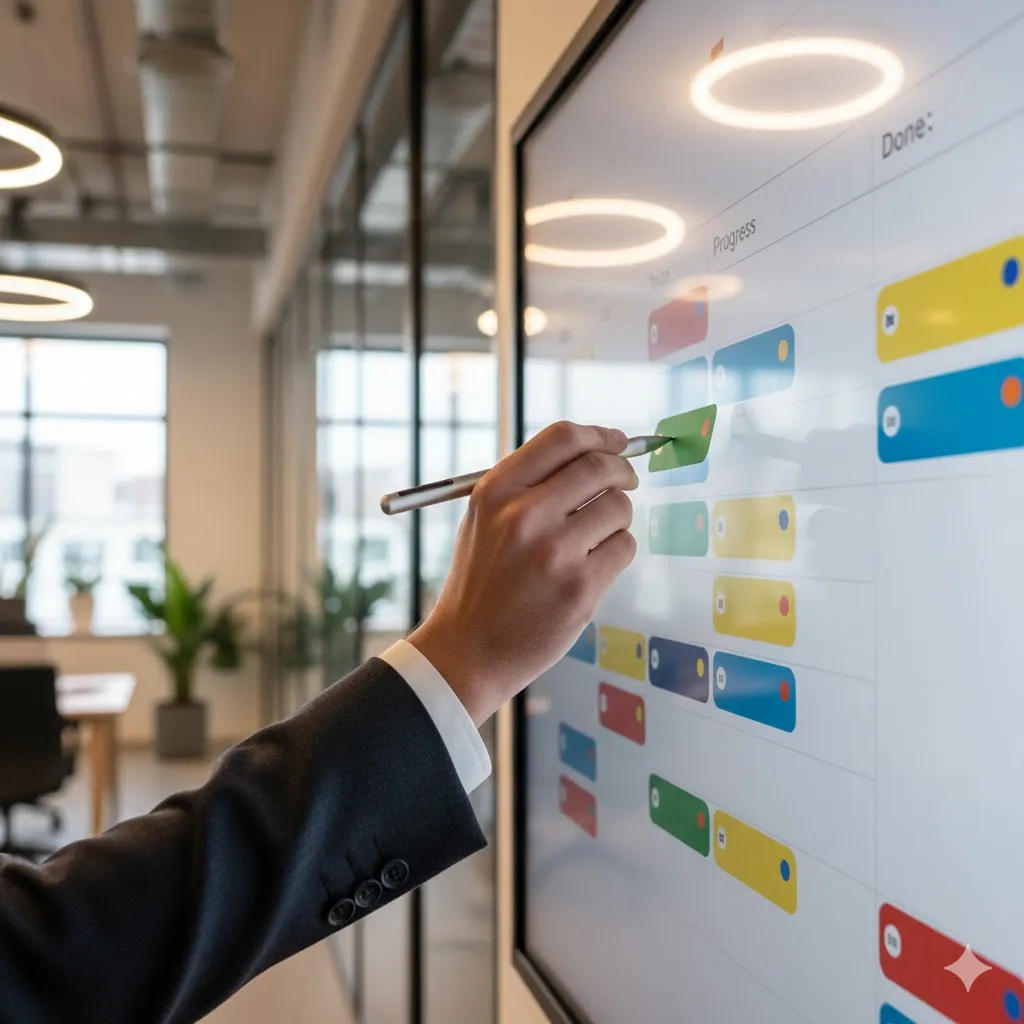
- Solution: Digital-first brainstorming. By learning how to use a smart board for every session, you ensure that every sketch, sticky note, and decision is instantly saved to the cloud and accessible to everyone.
3. Technical "Setup Tax"
Wasting the first ten minutes of every meeting trying to find a dongle, a working cable, or a Zoom link is a massive productivity killer. For a hybrid team, this friction is magnified.
- Solution: One-touch meeting entry and wireless huddles. Utilizing nearhub technology, teams can walk into a room and launch a global session with a single tap, syncing the office's physical space with the digital room instantly.
4. Acoustic and Visual Isolation
Remote workers often feel like they are "looking through a keyhole" when they join an office-based meeting. They can't see the nuances of the whiteboard or hear the subtle side-chatter that often contains vital context.
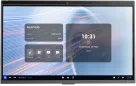
- Solution: High-fidelity audio and 4K visual tracking. The hardware—specifically the NearHub S Pro Smart Whiteboard—must be powerful enough to make the remote worker feel like they are sitting at the table, with clear sightlines and crisp audio.
5. Asynchronous Hand-off Delay
When the hybrid team is split across time zones, the "wait time" for feedback can stall projects for days.
- Solution: Transparent, persistent project management. Using integrated boards where the project status is always "live" and visual allows for seamless handoffs between day-shift and night-shift members without information loss.
Hybrid Workplace Best Practices: Building a Culture of "Intentional Collaboration"
Strategic success for a hybrid team isn't about increasing the frequency of meetings; it's about the quality of the interaction. In 2026, hybrid workplace best practices are centered around creating a "Magnet, not a Mandate" office.
Creating a Communication Charter
Every successful hybrid team needs a written agreement on how they communicate. This charter should cover:
- Response Time Expectations: When is an immediate response required, and when is a 4-hour window acceptable?
- Tool Choice: Use Slack/Teams for quick pings, the nearhub board for deep-dive brainstorming, and email for formal records.
- The "Meeting Sandwich": Every synchronous meeting should be preceded by a digital agenda and followed by a digital summary accessible via the shared hub.
The Role of Social Capital
You cannot build trust solely through task-based interaction. To keep a hybrid team cohesive, you must intentionally build social capital.
- Virtual Coffee Roulettes: Randomly pair office and remote workers for non-work chats.
- The "Double-Down" Quarterly: Bring the entire hybrid team together physically once a quarter for a high-intensity "Collaboration Sprint" that focuses on long-term strategy and bonding.
Comparison Table: Traditional vs. 2026 Hybrid Management
| Feature | Traditional Management | 2026 Hybrid Management |
|---|---|---|
| Visibility | Present = Productive | Output = Productive |
| Brainstorming | Physical Whiteboards/Paper | Integrated [smart white board] |
| Communication | Top-down / Siloed | Transparent / Asynchronous |
| Office Role | Default Work Location | Strategic "Collaboration Theater" |
| Documentation | Manual Photos / Scanning | Persistent Cloud-Synced Canvas |
Why Technology is the Backbone of a High-Performance Hybrid Team
If your strategy is the "brain" of your team, technology is the "nervous system." Without the right hardware, your hybrid team will eventually succumb to the friction of distance. This is where hybrid workplace solutions move from "nice-to-have" to "mission-critical."
The Rise of the "Collaboration Hub"
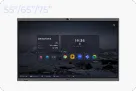
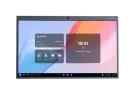
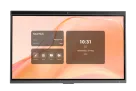
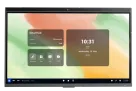
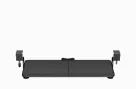
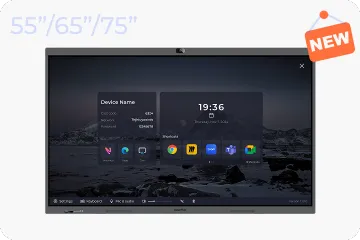
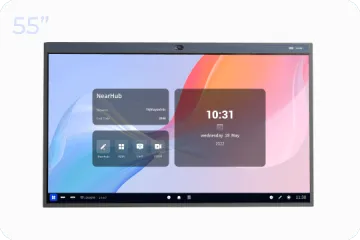
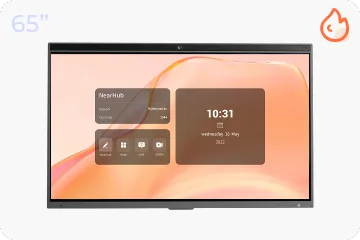
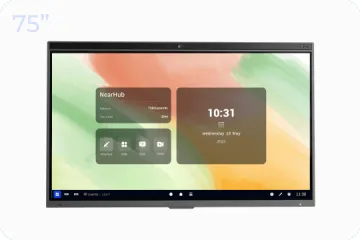
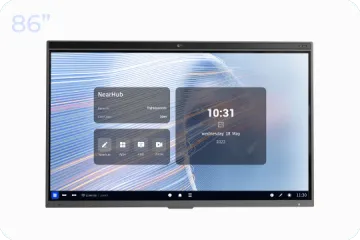
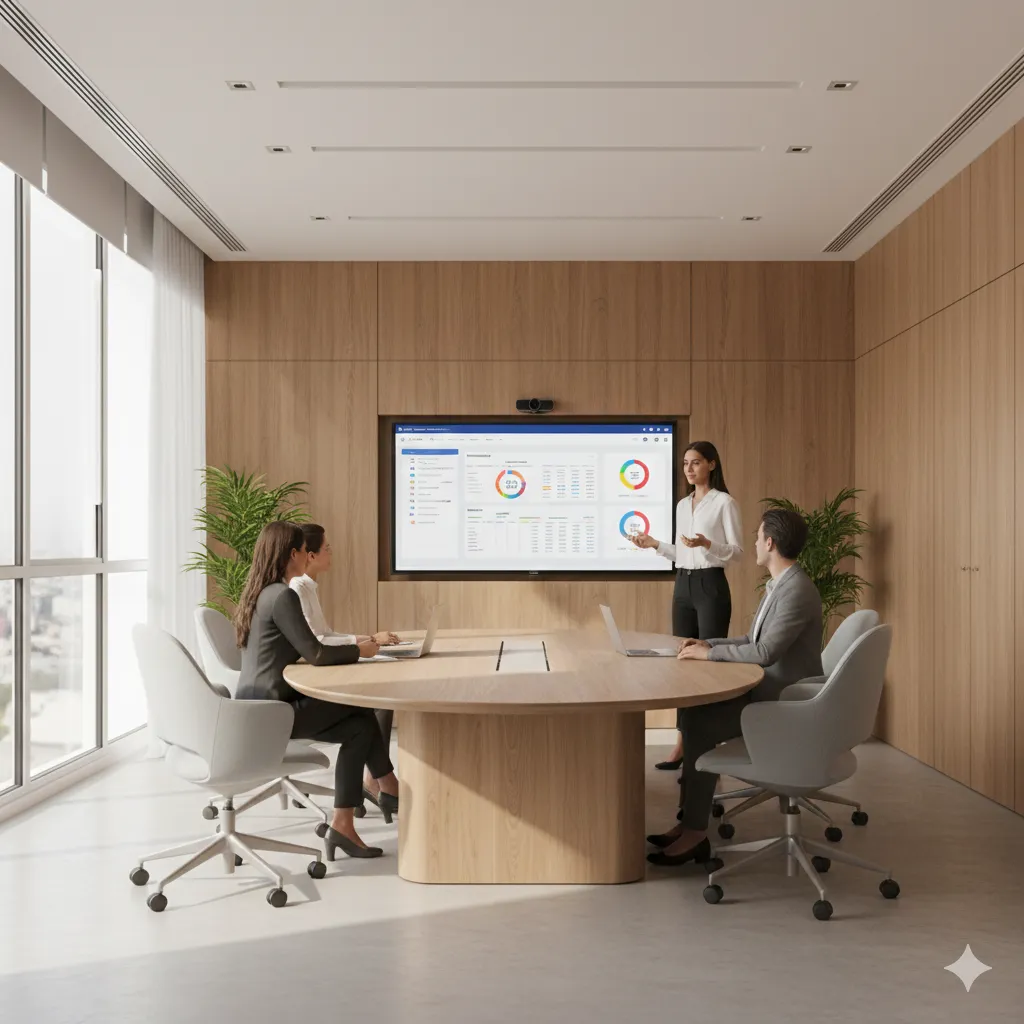
A standard conference room with a TV and a camera is no longer sufficient. To support a hybrid team, the room must become an interactive hub. The NearHub S Pro Smart Whiteboard is designed specifically for this purpose. It isn't just a screen; it's a bridge.
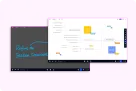
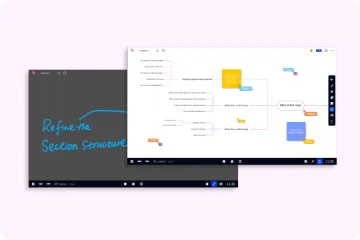
- 4K Touch Precision: Allows the office team to sketch ideas as naturally as using paper, ensuring that the "flow of thought" isn't interrupted by tech lag.
- Cloud Persistence: Remote members can annotate the same board from their laptops, seeing the office team's marks in real-time.
- Platform Agnosticism: Whether your hybrid team uses Zoom, Microsoft Teams, or Google Workspace, the hub handles the transition effortlessly.
Eliminating "Setup Tax" with Integrated Workflows
One of the most ignored hybrid workplace best practices is the optimization of the first 60 seconds of a meeting. When a manager knows how to use a smart board that is synced with their company calendar, the meeting starts on time, every time. The technology handles the distribution of information automatically, so you can spend your energy on solving problems rather than troubleshooting cables.
Fostering Presence Equity: Ensuring Every Member of the Hybrid Team Has a Voice
Presence equity is the gold standard of managing hybrid teams. It is the feeling that a remote worker’s contribution is just as visible and valuable as the person sitting next to the manager in the room.
The Visual Voice
In a typical meeting, the remote worker is a small square on a large screen. In a high-performance hybrid team, the remote worker’s "visual voice" is amplified.
- Strategy: Position the [smart white board] at eye level for those in the room, making the remote participants' faces appear life-sized.
- The Interactive Canvas: When the remote worker draws on the board from their home office, their mark appears instantly in the room. This physical-digital interaction creates a sense of "spatial presence" that video alone cannot achieve.
The "Acoustic Shield"
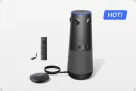
Nothing frustrates a hybrid team more than poor audio. 2026 hybrid workplace solutions utilize beamforming microphones that can isolate the speaker’s voice while suppressing background noise. This ensures that the remote worker never misses a subtle nuance, a joke, or a quick side-comment that might contain a vital piece of information.
Strategic ROI: Evaluating Hybrid Workplace Solutions for Long-Term Growth
As a leader, you aren't just looking for tools; you are looking for ROI. Implementing the right hybrid workplace solutions pays for itself in reduced turnover and increased speed-to-market.
The "Commute for Collaboration" Model
If an employee commutes for an hour just to sit in a cubicle on a laptop, they will eventually leave for a more flexible role. However, if they commute to use a NearHub S Pro Smart Whiteboard for a high-octane strategy session they couldn't do at home, they see the value of the office.
- The Math of Engagement: High-quality tech increases the "Office Magnetism" factor.
- Space Optimization: Companies are reducing total square footage but investing more per square foot in technology to support the hybrid team.
Future-Proofing: Sustainability and Modular Design for the Hybrid Team
As we look toward the 2030s, the evolution of the office won't just be about software—it will be about how we configure the physical world to serve the digital one.
Sustainable Infrastructure and Green Design
The 2026 hybrid team values sustainability. High-performance hubs must be energy-efficient. Using devices like the NearHub S Pro, which consolidates multiple devices into one energy-conscious unit, reduces the carbon footprint of the office.
Modular Room Configurations for Scalable Growth
The needs of a hybrid team change from week to week. Some days require a "War Room" setup for a sprint; other days require a "Town Hall" setup for a company-wide update.
- The Solution: Using mobile interactive stands and modular furniture that allows the hybrid workplace solutions to move with the people. A hub that can be rolled from a huddle space to a large conference room ensures that your investment is always where the work is happening.
FAQ Section: Optimized for Voice Search
What is the most important part of managing a hybrid team?
The most important part of managing hybrid teams is ensuring "Presence Equity." This means using technology and communication protocols that make remote workers feel just as included and visible as those in the office.
How do you maintain culture in a hybrid team?
Maintaining culture in a hybrid team requires "Intentional Socialization." Since you don't have spontaneous watercooler talk, you must schedule virtual coffee chats, quarterly in-person sprints, and maintain a digital-first documentation style so everyone is always in the loop.
What are the best hybrid workplace solutions for 2026?
The best hybrid workplace solutions include all-in-one interactive hubs like the NearHub S Pro, cloud-persistent whiteboarding software, and high-fidelity video conferencing that integrates directly with a shared digital canvas.
How do you avoid proximity bias in a hybrid workplace?
To avoid proximity bias, leaders should adopt a "Remote-First" rule for all major meetings and decisions. If one person is remote, the entire interaction should happen on a platform accessible to everyone, ensuring the hybrid team remains unified.
Is a smart white board worth it for a small hybrid team?
Yes. For a small hybrid team, the "Setup Tax" of poor technology is even more damaging than for a large company. A smart white board serves as the central "source of truth," saving hours of re-work and documentation time every week.
Conclusion & CTA
The transition to a hybrid-first world is the most significant shift in office culture since the industrial revolution. Succeeding with a hybrid team in 2026 requires more than just a policy update; it requires a commitment to hybrid workplace best practices and the courage to invest in the right hybrid workplace solutions.
By focusing on presence equity, eliminating tech friction, and moving toward activity-based presence, you can build a team that is more agile, more innovative, and more loyal than a traditional office-bound one. The "Collaboration Hub" is no longer just a room—it is the heart of your company's collective intelligence. Whether you are managing hybrid teams of five or five thousand, the goal is the same: making the location of the person irrelevant to the quality of the work.
Looking for a reliable hybrid team? Check out our here: Best Interactive Smart Whiteboard for Teaching & Business | NearHub Board S Pro | NearHub Official.




 sales@nearhub.us
