Why Nearity 360 Alien Delivers Better Video Than Other 360 Cameras?
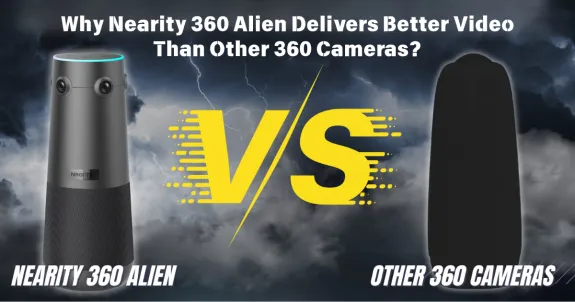
This article provides a head-to-head video performance comparison between the Nearity 360 Alien and Meeting Owl 3, highlighting why the Alien is the best zoom camera for professional spaces.
Nearity 360 Alien
Meeting Owl 3
best zoom camera
Updated: Aug 19, 2026 · 6 minutes read
Global Business, Brought Near.
No Installer, No Hassle, Just Works.
Key Takeaways
True 4K vs. 1080p: Nearity 360 Alien delivers uncompromised 4K resolution, while Meeting Owl 3 is limited by 1080p fisheye cropping.
Quad-Lens Advantage: The Alien’s four-camera array eliminates the distortion and blur common in single-lens 360 meeting cameras.
Superior AI Range: Nearity’s AI tracking remains effective up to 5 meters, significantly outperforming the Owl 3 in larger rooms.
Instant Responsiveness: Test results show the Alien offers faster speaker-switching and higher sensitivity for seamless transitions.
In the era of hybrid work, selecting the right video conference devices is key to unlocking team productivity. We put the two most talked-about 360° cameras—Meeting Owl 3 and Nearity 360 Alien—through a series of rigorous real-world tests to see which one truly delivers a clearer, smarter meeting experience.
First, let's take a look at a basic introduction of these two products.
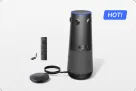
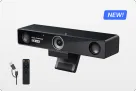
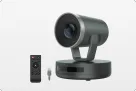
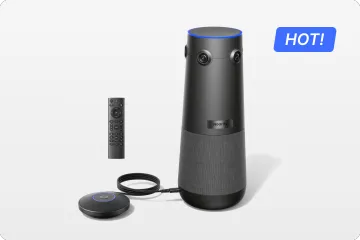
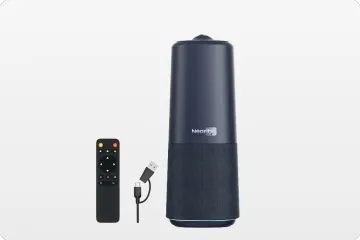
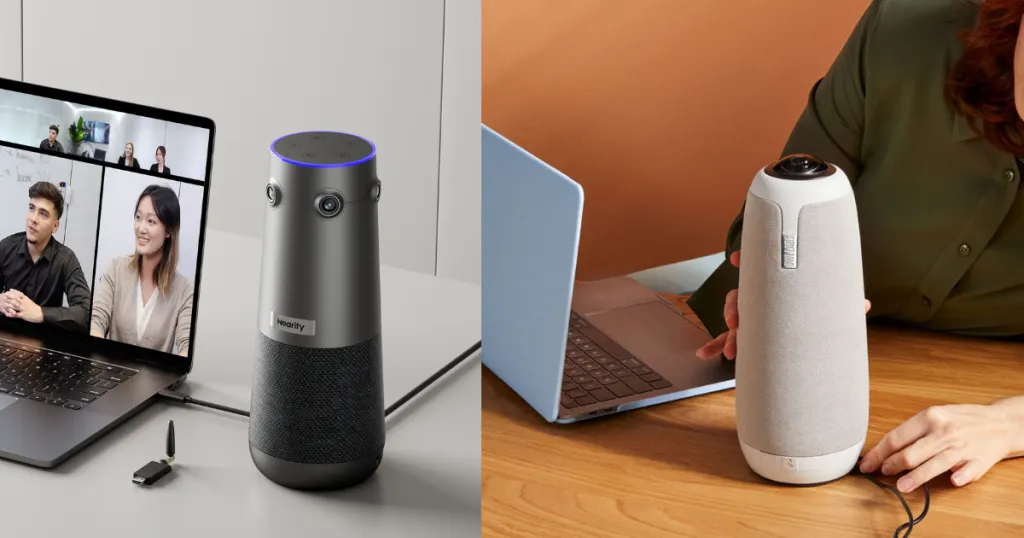
The Nearity 360 Alien: The Nearity 360 Alien is a premium, high-performance 360 meeting camera designed by NearHub to solve the common pain points of traditional 360° devices. Unlike standard models, the Alien utilizes a sophisticated quad-camera array to deliver true 4K resolution. It is engineered for professional spaces where video clarity, AI tracking precision, and high-end aesthetics are non-negotiable.
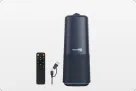
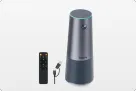
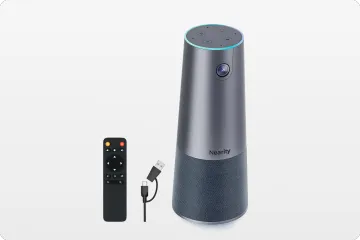
The Meeting Owl 3: Known for its quirky "owl" design, it is an all-in-one device that combines a 360° lens, mic, and speaker. It has long been a popular choice for small to medium-sized rooms, relying on a single fisheye camera to provide a 1080p panoramic view and auto-focusing on speakers via software cropping.
Today, we conducted a series of tests focusing on close-range image quality, long-distance clarity, and lens sensitivity for both devices.
1. Test One: Close-Range Clarity
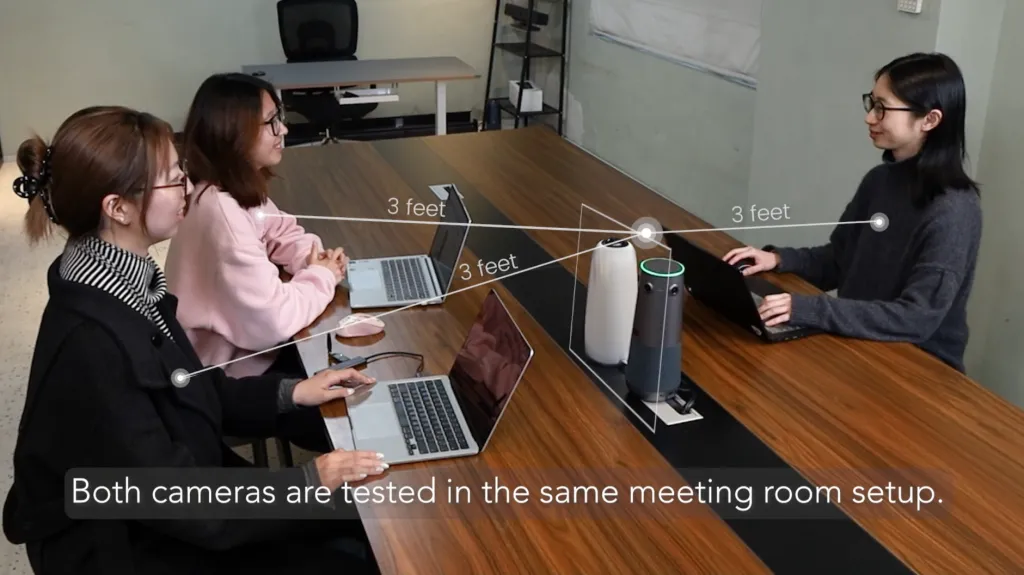
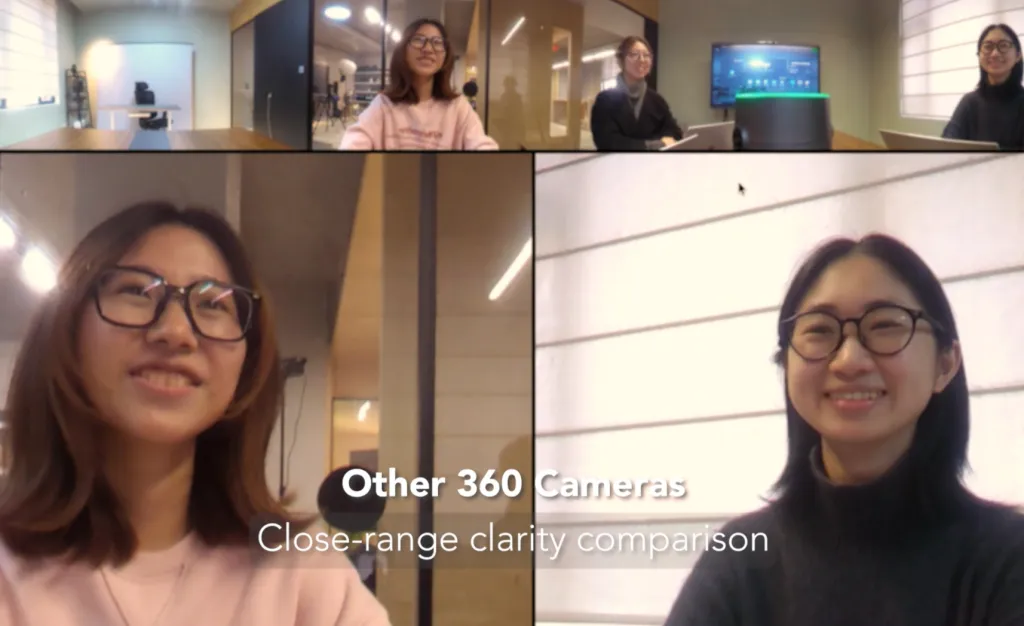
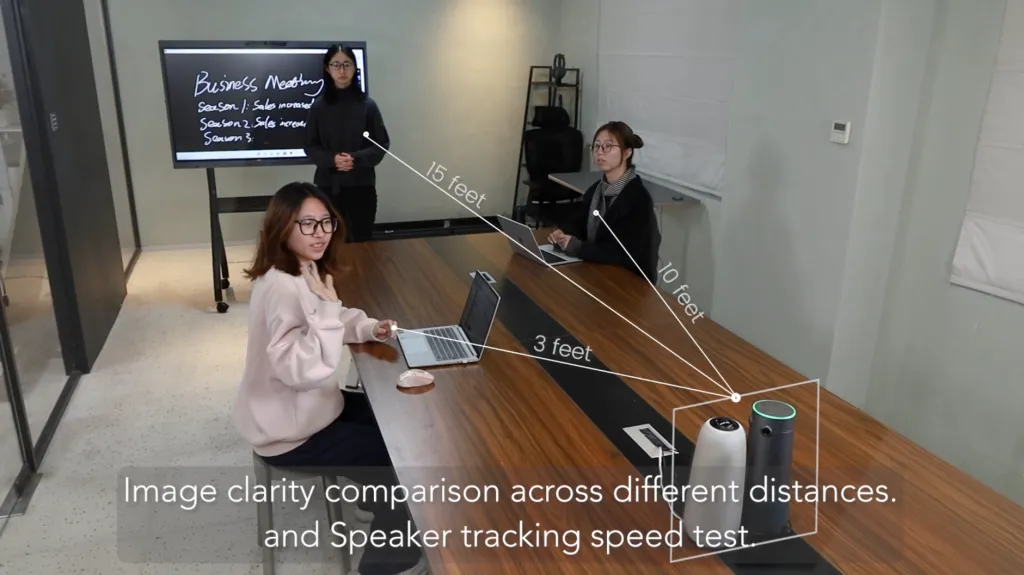
First, we tested static image clarity at a close range. Participants sat approximately 3 feet from both devices.
Meeting Owl 3: The meeting owl camera produced a significantly softer image. Due to its lower resolution, the footage appeared grainier, and facial features lost their definition even at this short distance.
Nearity 360 Alien: As a top-tier best zoom camera, the Alien captured exceptional facial details. Skin textures, hair, and even small text on name tags remained sharp and legible.
2. Test Two: Long-Distance Clarity
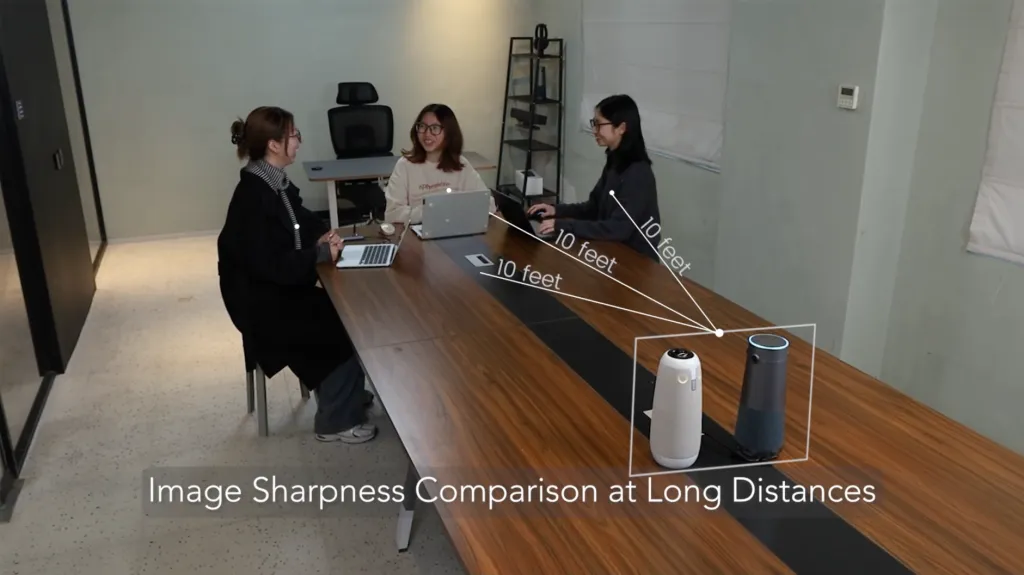
Next, we evaluated how each camera preserves detail across the entire room. Participants moved to the far corners of the conference space.
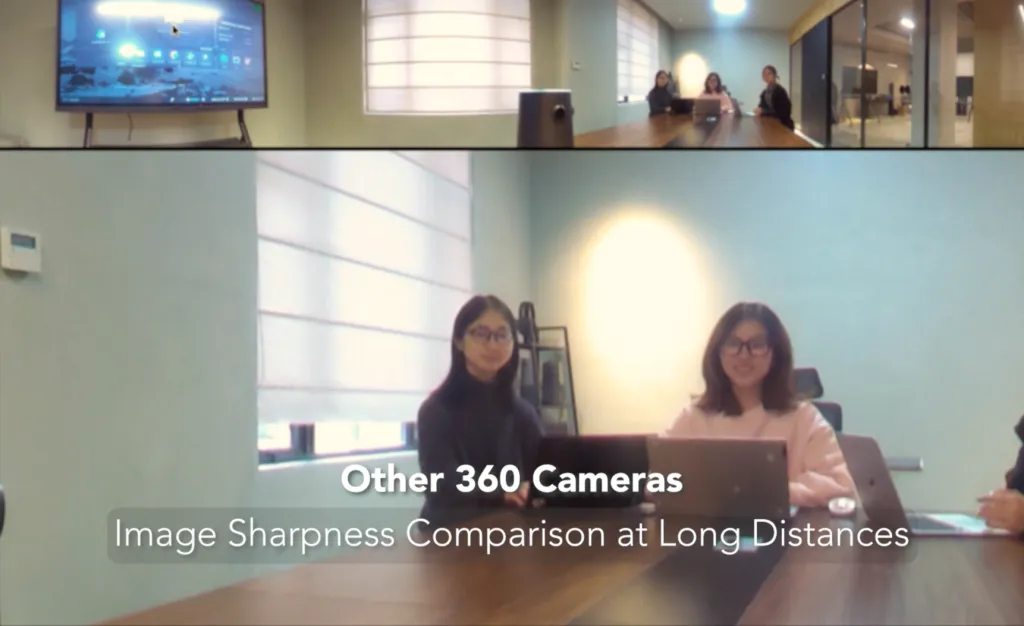
Meeting Owl 3: The owl video conference image quality degraded quickly. At long distances, the faces became pixelated and "muddy," making it difficult for remote viewers to see who was speaking clearly.
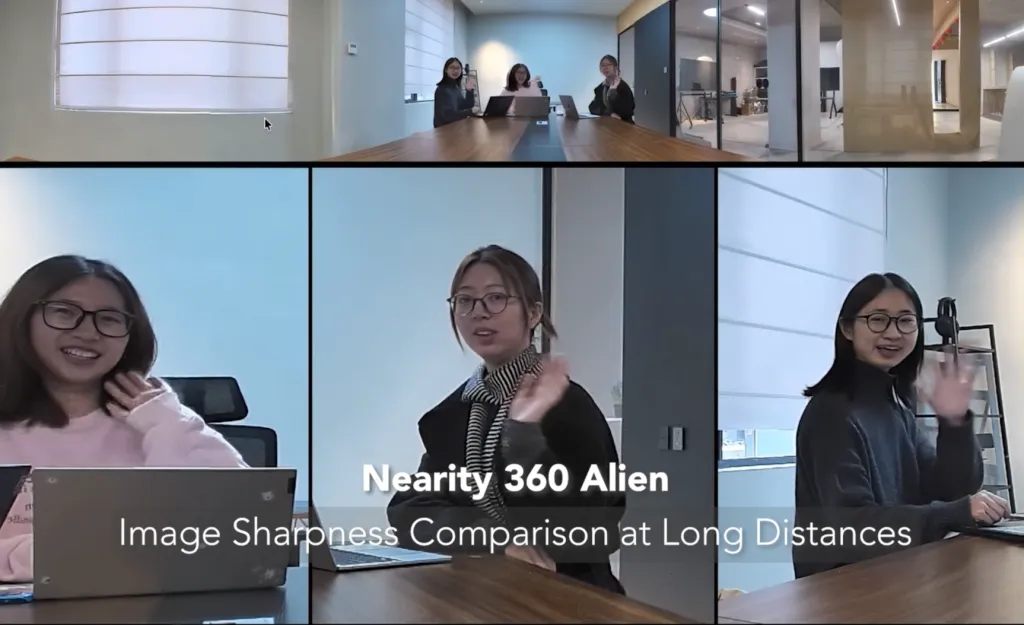
Nearity 360 Alien: The Alien maintained its 4K-level sharpness. Even from across a large table, participants' expressions were clear, ensuring everyone felt equally present in the meeting.
3. Test Three: Image Clarity Across Different Distances
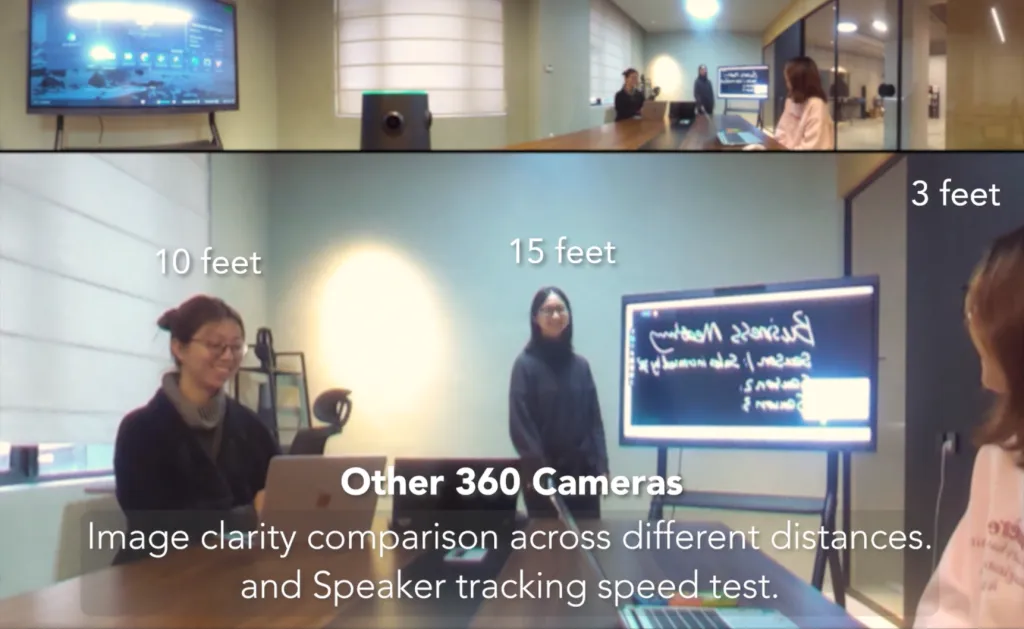
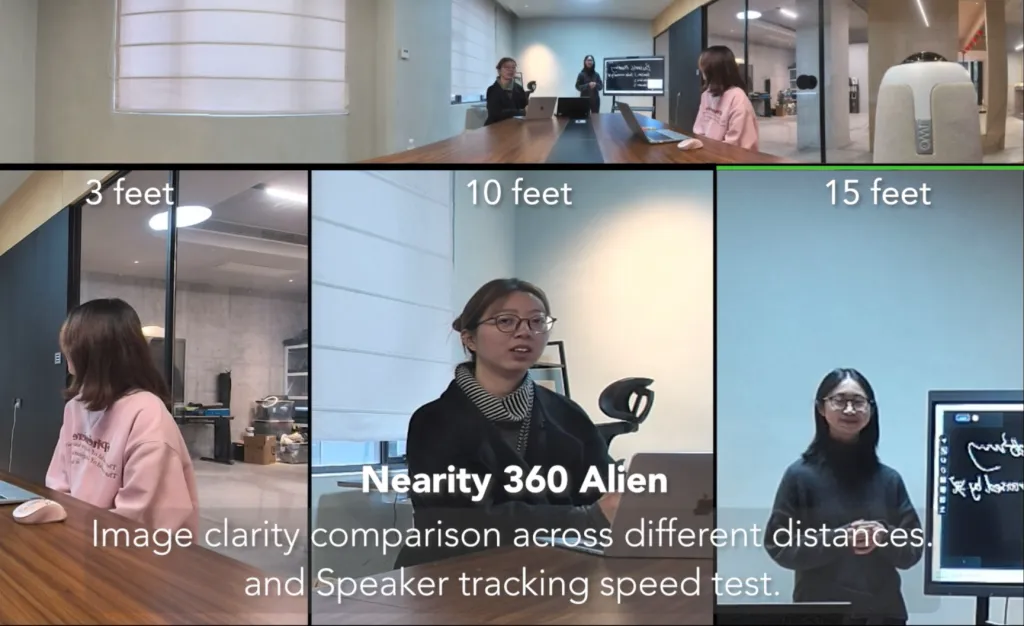
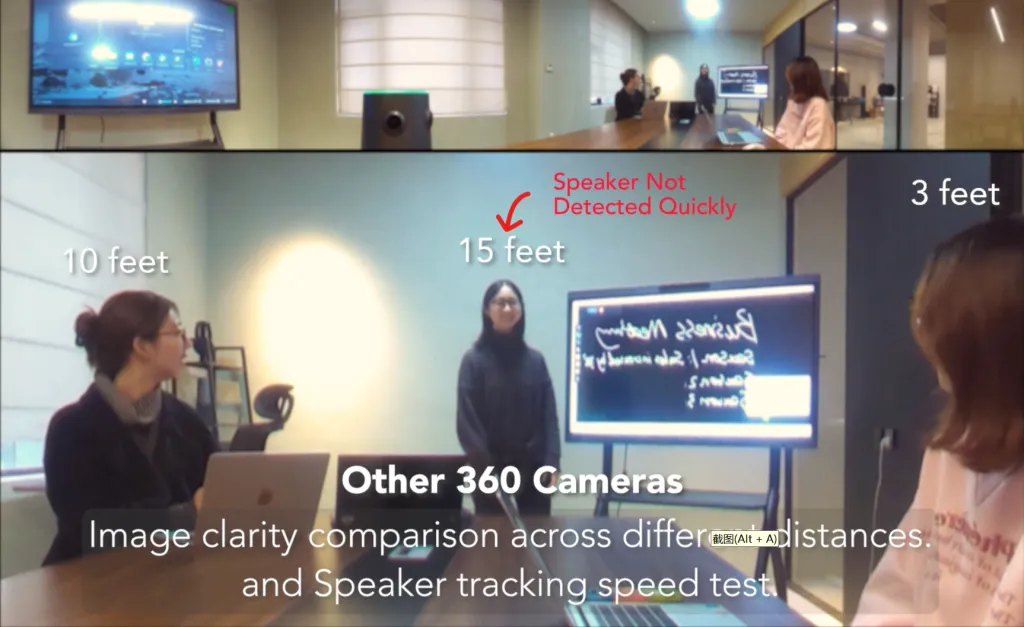
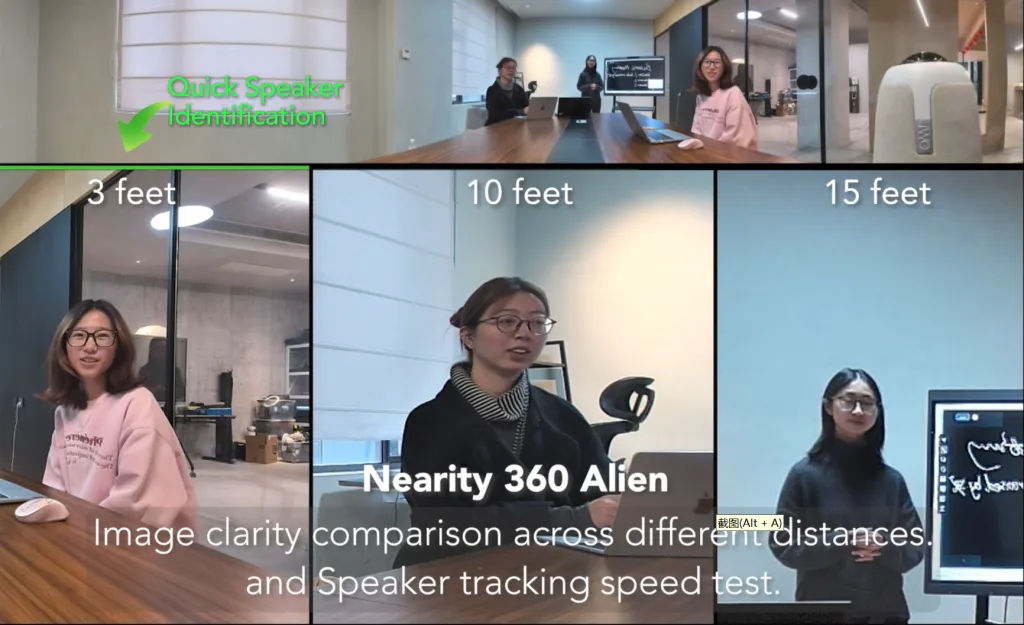
Then, we compared image clarity across different distances. With 3 participants seated at 3, 10, and 15 feet away from cameras, you can clearly see how each camera performs at each range.
Meeting Owl 3: The Owl 3 performs well at closer distances, but image clarity noticeably drops as distance increases. At 10 feet, the image appears softer, with reduced detail and visible quality degradation.
Nearity 360 Alien: The Alien delivers consistently sharp and detailed images across all distances. Even at 15 feet, facial details remain clear, with minimal loss in resolution.
4. Test Four: AI Tracking Sensitivity (Speed & Latency)
Finally, we measured the response time. We timed how long it took for each camera to recognize a new speaker from across the room and switch the focus.
Meeting Owl 3: The Owl 3 showed a noticeable delay. It often took a few seconds of continuous speaking before the camera "woke up" and panned to the new speaker, which can disrupt the natural rhythm of a fast-paced discussion.
Nearity 360 Alien: The Alien was ultra-responsive. It switched focus almost instantly when a new person started talking, providing a seamless, TV-production-like flow to the meeting.
The "Why": Understanding the Technology Gap
Why did the Nearity 360 Alien win every test? It comes down to the underlying hardware architecture.
The Limitations of Meeting Owl 3 (Single Fisheye)
The Owl 3 uses a single 360° fisheye lens. While this captures the whole room in one "bubble," the software must digitally crop that image to create individual speaker views. Because you are only looking at a tiny fraction of the original 1080p sensor, the effective resolution for each person drops to a blurry 720p or lower.
The Innovation of Nearity 360 Alien (Quad-Camera System)
NearHub took a completely different approach. Instead of one lens, the 360 Alien features four independent 120° ultra-wide cameras.
No Cropping Loss: Each camera captures its own section of the room in true 4K.
Natural Perspective: By using multiple lenses, it avoids the "fish-eye" distortion and provides a more natural, flat perspective for every seat at the table.
Summary: Which 360° Camera Reigns Supreme?
Feature
Meeting Owl 3
Nearity 360 Alien
Camera Architecture
Single Fisheye (Digital Crop)
Four 120° Lenses (No Crop)
Output Resolution
1080p
True 4K
AI Detection Limit
~3 Meters
5+ Meters
Tracking Speed
Average
Ultra-Fast
Distortion
Heavy Edge Distortion
Zero Distortion
Final Verdict
While the Meeting Owl 3 is a well-known name, the Nearity 360 Alien is clearly the superior 360 meeting camera for professional use. With its quad-camera 4K array and superior AI intelligence, it is the best of the meeting room solutions for those who refuse to compromise on video quality.
Looking to upgrade your space? Learn how to choose the best video conference devices for your team, or visit NearHub for more details.