





















In today’s remote-first world, poor call quality is more than an inconvenience—it can affect your professional image. Have you ever been in a meeting where your voice sounds muffled, a colleague asks you to repeat yourself, or background noise makes your words unintelligible? These issues can create frustration, slow down collaboration, and even impact your credibility.
This comprehensive listicle showcases the best wireless earbuds for phone calls in 2026. Whether you’re hosting Zoom meetings, joining client calls, or working in a busy office, this guide will help you choose earbuds that deliver crystal-clear voice transmission, comfort, and long-lasting battery life. We evaluated dozens of models based on microphone clarity, noise reduction, ergonomics, and connectivity so that you can make a fully informed decision.
Key Takeaways
- Prioritize Call Quality: Choose wireless earbuds with advanced ENC and wideband speech to ensure your voice is clear to others.
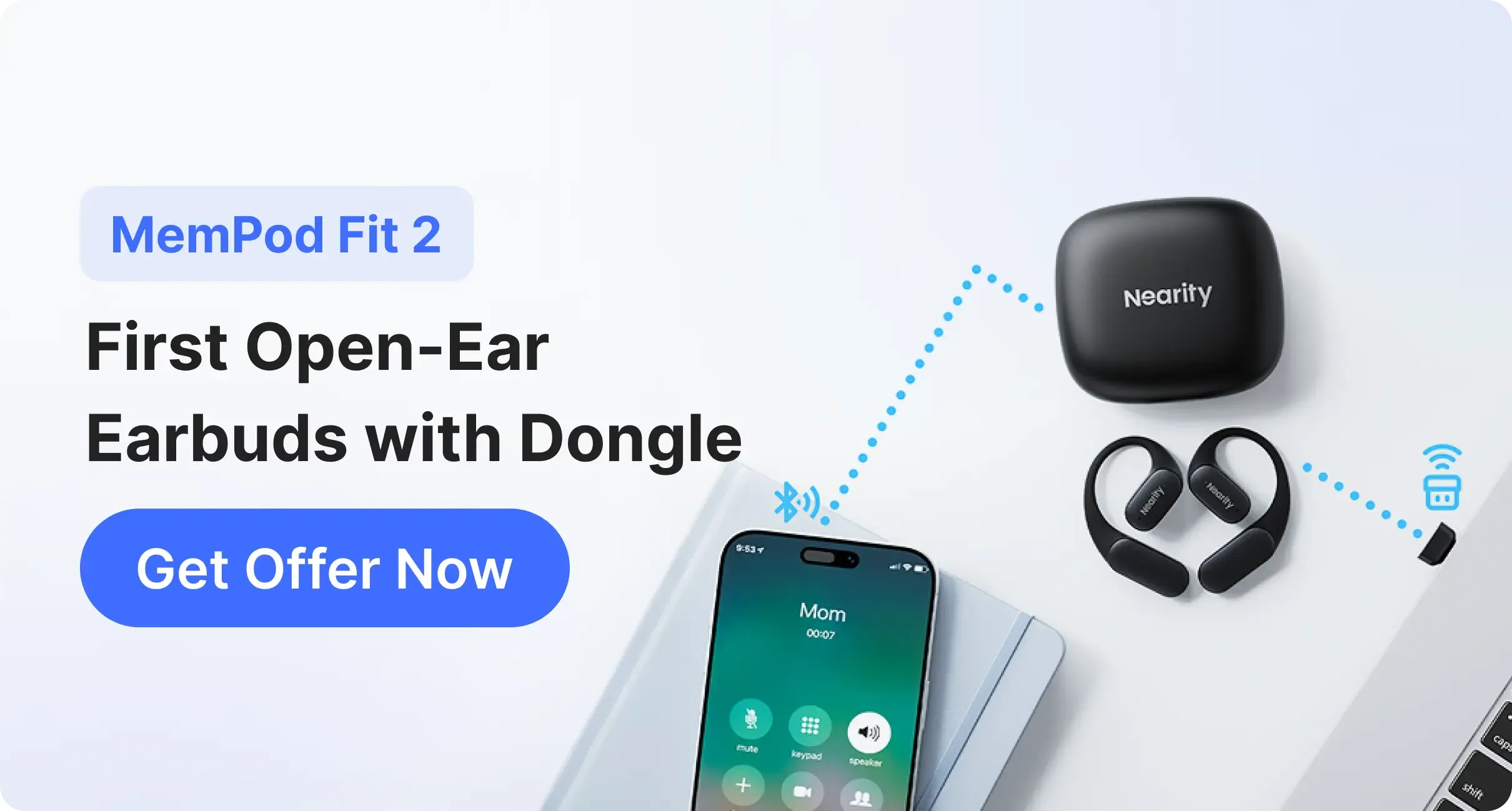
- Open-Ear Comfort Matters: Open-ear designs like MemPod Fit 2 reduce vocal strain and fatigue during long calls.
- Check Continuous Talk Time: Focus on talk-time specs, not just music playback, to avoid mid-meeting battery issues.
- Match Earbuds to Environment: In-ear, open-ear, and headset styles suit different work scenarios—hybrid work, offices, or call centers.
- Optimize Settings & Positioning: Proper mic placement, software settings, and awareness of surroundings maximize call clarity.
Why Call Quality is Everything: Key Selection Points

When choosing bluetooth earbuds for phone calls, the requirements differ fundamentally from music-centric models. You must focus on how clearly your voice reaches the other party and how well you can focus in noisy environments.
A. Advanced Microphone Tech (ENC & Beamforming)
- Environmental Noise Cancellation (ENC): Unlike ANC (which helps you), ENC is for the person listening to you. High-end models use "Beamforming Technology" where multiple microphones coordinate to identify the direction of your voice, effectively suppressed sounds from other directions (like keyboard clicks or cafe chatter), a technique supported by research at the University of Washington.
- Active Noise Cancellation (ANC) & Transparency Mode: For the wearer, ANC is vital for concentration. However, a high-quality "Transparency Mode" is equally important for safety during outdoor calls, allowing you to hear traffic or station announcements without removing the buds.
B. Battery Life & Continuous Talk Time
Music playback time is often misleading. Always check the "Continuous Talk Time" specification.
- Standard: At least 4 hours of talk time per charge to cover typical back-to-back meetings.
- Professional Grade: 6+ hours per charge, with a total of 20+ hours via the charging case, including fast-charging capabilities (e.g., 10 mins of charging for 1 hour of talk).
C. Ergonomics: Comfort vs. Breathability
- Canal Type (In-Ear): Offers high physical isolation but can lead to "ear pressure" and a "muffled" sensation of your own voice during long sessions.
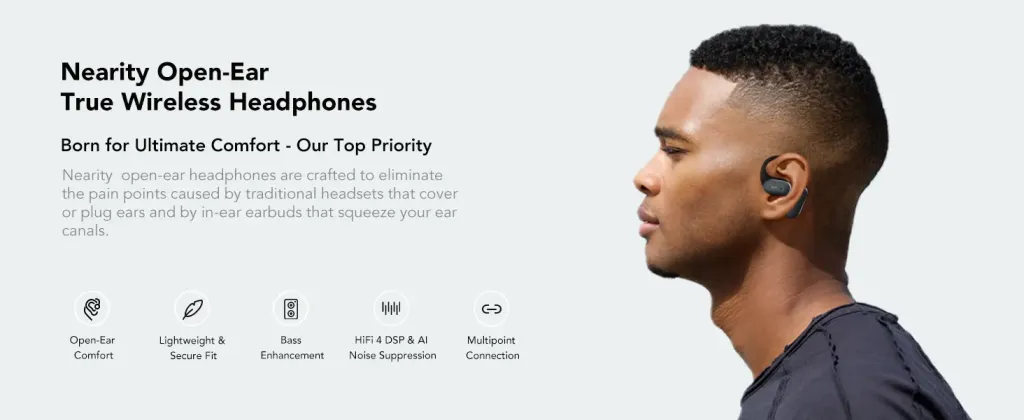
- Open-Ear Type: The rising star in business. It leaves the ear canal open, preventing moisture buildup and allowing you to hear your own voice naturally, which reduces vocal strain.
The 2026 Rankings: Top 4 Models for Call Quality

Based on the key criteria discussed above, we’ve carefully selected the best earbuds for calls and compiled this Wireless Earbuds Call Quality Ranking. Each model stands out with its ability to separate your voice from background sounds, along with differences in wearing comfort and connectivity for professional use.
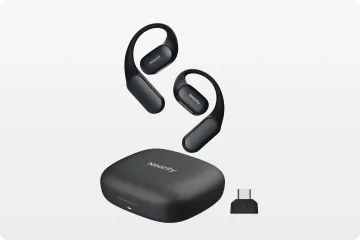
Nearity MemPod Fit 2: Overall No.1 — An Open-Ear Revolution That Eliminates Listening Fatigue
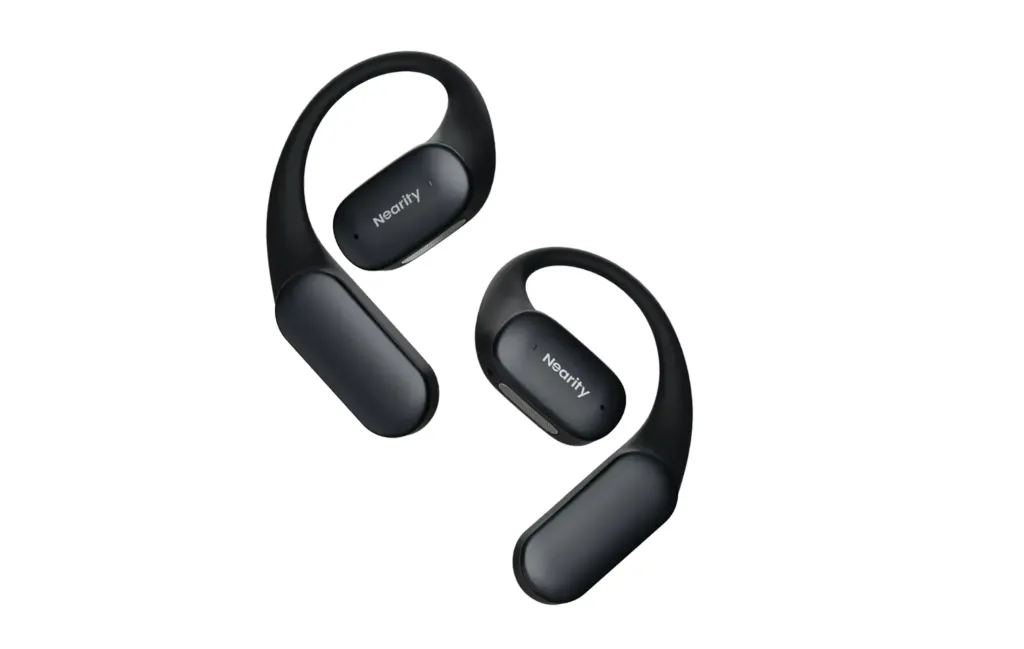
When choosing earphones for calls, one of the biggest challenges for long online meetings or back-to-back customer calls is listening fatigue. A new standard is emerging with open-ear solutions that don’t block the ear canal yet still deliver excellent call clarity—making them ideal for professionals who rely on clear communication throughout the day.
Key Evaluation Points:
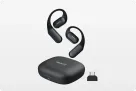
- Innovative Open-Ear, Ear-Hook Design
This lightweight ear-hook design rests securely outside the ear without sealing the ear canal, eliminating pressure and discomfort during extended use. Because you can hear your own voice naturally, it’s easier to control speaking volume—greatly reducing the stress of long phone calls and virtual meetings. - Dual-Microphone ENC System That Separates Your Voice from Background Sounds
Despite its open-ear structure, a dedicated dual-microphone ENC chip effectively filters out wind noise and environmental sounds. The earbuds precisely separate your voice from surrounding noise, delivering impressively clear voice transmission and setting a high standard among wireless earbuds for calls. - Reliable All-Day Battery Life
With up to 8 hours of continuous talk time, these earbuds are well suited for long meetings, webinars, and full workdays without constant recharging. - Wireless Earbuds with Dongle & Multipoint Connectivity
The included USB dongle ensures a stable, low-latency PC connection—an important advantage for professional conferencing platforms. Combined with multipoint support, you can stay connected to both a PC (via dongle) and a smartphone (via Bluetooth) and switch seamlessly between devices.
Thanks to its innovative open-ear design, stable PC connectivity, and excellent call clarity, this model is especially recommended for remote and hybrid professionals who spend hours on calls.
Nearity MemPod Fit 2 earns the Overall No.1 position by offering one of the most balanced experiences among the best earbuds for phone calls—combining comfort, voice clarity, and business-ready connectivity.
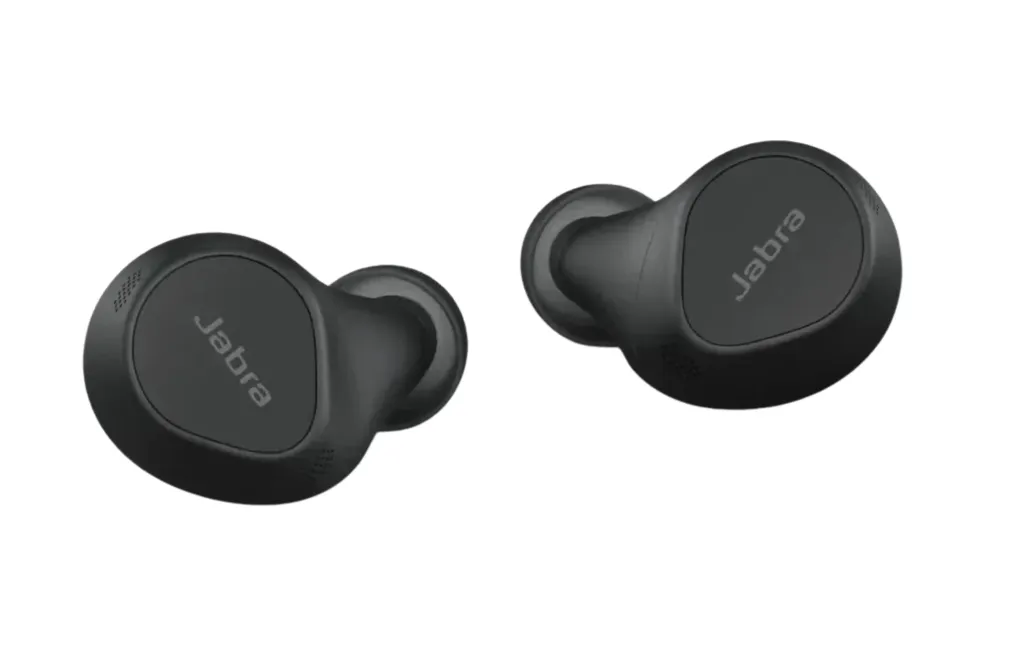
Jabra Elite 7 Pro: AI-Powered Voice Separation with Multi-Sensor Technology
Key Evaluation Points:
- Jabra MultiSensor Voice Technology
Combines bone-conduction sensors with four high-performance microphones to accurately separate your voice from background sounds, even in windy or crowded environments. - AI-Driven Noise Processing
AI trained on millions of real-world noise samples detects and removes keyboard noise and ambient sounds in real time, maintaining consistent call quality. - Multipoint Connectivity
Supports simultaneous connections to two devices, allowing smooth switching between smartphone calls and PC meetings.
Sony WF-1000XM5: Industry-Leading ANC with High-Precision Microphone Technology
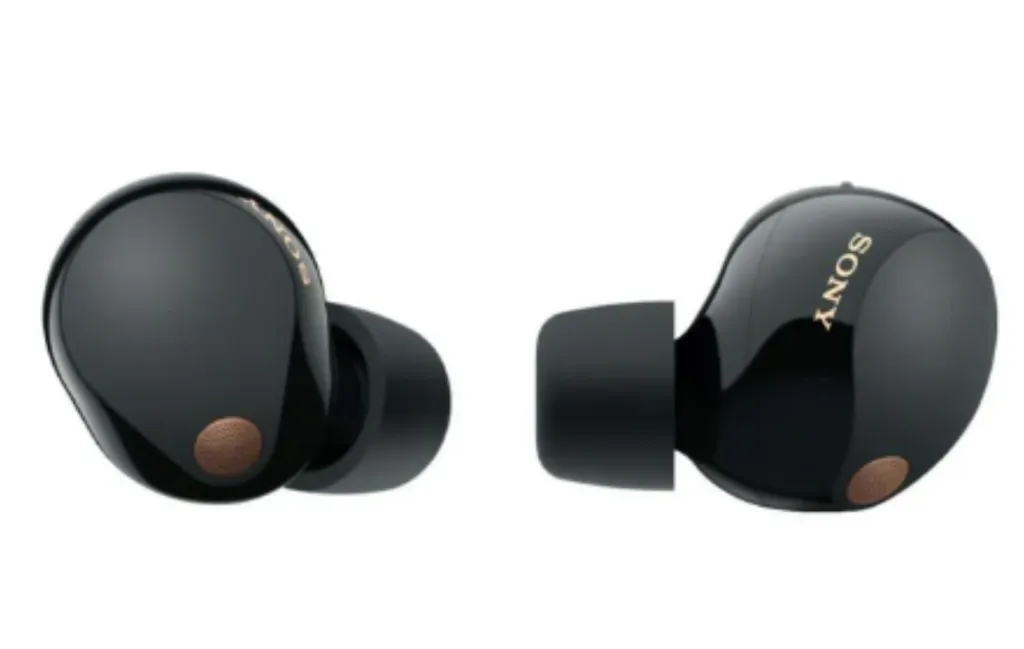
Key Evaluation Points:
- Best-in-Class Active Noise Cancelling
Exceptional noise isolation in airplanes, trains, and other high-noise environments, enabled by an advanced noise-cancelling processor and dual noise sensors. - High-Precision Voice Pickup Technology
Bone-conduction sensors combined with AI-based noise reduction help separate your voice from background sounds, improving call clarity even in challenging conditions. - Balanced Comfort and Isolation
Multiple Noise Isolation Ear Tips provide strong passive noise blocking while maintaining comfort for extended listening sessions.
Jabra Elite 8 Active: Rugged Durability with Secure Fit Design

Key Evaluation Points:
- IP68 Water and Dust Resistance
Designed for demanding environments, making it suitable for outdoor professionals and active users who frequently take calls on the move. - Jabra ShakeGrip Secure Fit
A specialized liquid silicone rubber material ensures the earbuds stay firmly in place during movement, supporting stable call quality while running or walking. - Clear Voice Technology for Windy Conditions
Optimized microphone design and algorithms reduce wind noise, making these earbuds reliable for outdoor phone calls.
Earbud Types: Call Performance Comparison and How to Choose
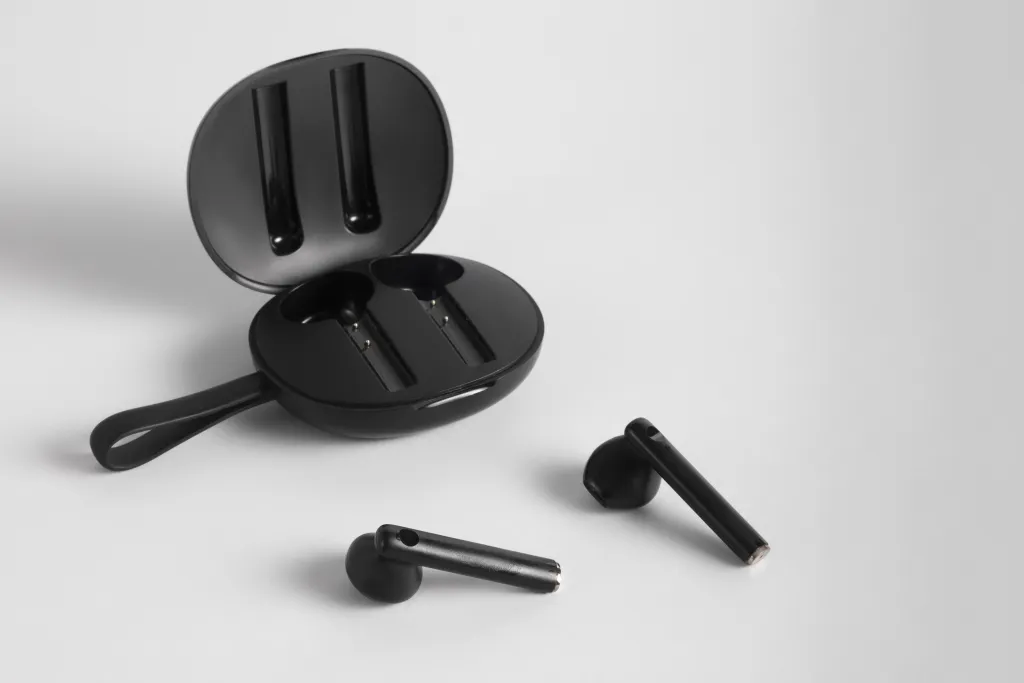
When choosing wireless earbuds for phone calls, the shape of the earphones significantly affects both comfort and call quality. Especially for long periods of use, it’s important to understand the characteristics of each type and select the one that best fits your ears and lifestyle.
1. In-Ear (Canal) Earbuds: Pros and Cons for Calls
Canal-type earbuds insert into the ear canal, physically blocking the ear for high noise isolation.
Pros:
- Focused listening: External noise is greatly reduced, making the other party’s voice very clear. Combined with ANC, you can concentrate fully on calls in a quiet environment.
- Minimal sound leakage: Conversations are less likely to be overheard, providing strong privacy protection.
Cons:
- Pressure and listening fatigue: Long-term wear can cause ear pain or a feeling of pressure, which is a major challenge for wireless earbuds used for calls.
- Bone-conducted voice effect: Your own voice may sound louder in your head, leading to unconscious overcompensation in volume.
Tips for Choosing:
Select the ear tip size that fits best, and if possible, choose models with a “vent” feature to reduce pressure.
2. Open-Ear Earbuds: Comfort and Safety Combined
Open-ear earbuds transmit sound through the ear cartilage or in front of the ear without blocking the ear canal. They are becoming a promising option for call-focused earbuds.
Pros:
- Exceptional comfort: Almost zero pressure on the ear canal, minimizing listening fatigue even during long meetings.
- Natural self-voice: Your own voice is heard naturally, helping you maintain an appropriate speaking volume during calls.
- Safety: Ambient sounds, like car horns or people calling, remain audible, making them safer for use while moving or in an office.
Cons:
- Noise control is challenging: The microphone can pick up external sounds easily, requiring very high-performance ENC technology.
Tips for Choosing:
When selecting open-ear earbuds, make sure the product has AI-powered noise reduction to ensure call clarity. Choosing models with call-focused technology, like the Nearity MemPod Fit 2, is recommended.
3. Ear-Hook Earbuds: Stability First
Ear-hook earbuds secure over the ear, offering excellent stability during calls.
Pros:
- Outstanding stability: Similar to a headset, they stay in place even during vigorous movement or exercise.
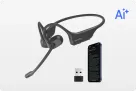
- Adjustable microphone positioning: Models with a boom mic allow the microphone to be positioned closer to the mouth, improving call quality physically.
Cons:
- Reduced portability: Charging cases are often larger, making them bulkier compared to TWS (true wireless) earbuds.
Tips for Choosing:
Ideal for professionals who need stable fit, headset-like mic performance, and use wireless earbuds while moving for extended periods.
Pro Tips for Wireless Earbud Calls: Settings and Techniques

Even the highest-performance wireless earbuds for phone calls won’t reach their full potential if they’re set up or used incorrectly. Here are practical techniques to make your calls as clear as possible.
Ensure Stable Connection: Bluetooth Settings and Multipoint
a. Check Your Codec
Bluetooth audio codecs include SBC, AAC, aptX, and LDAC. For calls, stability and low latency are more important than raw data speed. Many wireless earbuds automatically switch to the most stable codec during calls, but you should also confirm that your PC is correctly using the earbuds as both microphone and speaker device.
b. Smart Use of Multipoint Connectivity
Multipoint is an essential feature for call earbuds. Keeping them connected to both a PC and smartphone allows you to switch seamlessly if a call comes in on your phone during a PC meeting. This smooth switching significantly reduces stress in professional settings.
Proper Microphone Position and Distance from Your Mouth
In most TWS earbuds, the microphone is located near the bottom edge of the earbud.
- Canal/TWS Earbuds: Adjust the angle so the mic points toward your mouth.
- Wind Noise Mitigation: Outdoors, direct wind on the microphone creates noise. Slightly rotating the earbud outward or tucking it under the ear can reduce wind interference.
- Voice Projection: Noise-cancelling AI needs to detect your voice as a clear signal. Speaking too softly may cause the AI to mistake your voice for background noise. Speak a little more clearly than usual to ensure your voice comes through reliably.
Techniques to Control Environmental Noise
No noise-cancelling system is perfect. Sudden loud noises—like sirens or children screaming—can still be picked up before the mic reacts.
- Sit With a Wall Behind You: Positioning yourself with a wall behind reduces reflections and blocks some background noise physically.
- Prioritize Quiet Spaces: Even high-end call earbuds perform best in quieter environments. Simply signaling to others that you’re on an important call can reduce interruptions.
- Use Mute Proactively: When not speaking, always mute your microphone. This is the simplest and most effective way to prevent your environment from disturbing the person on the other end.
Conclusion
Your voice is your digital signature. Choosing the best wireless earbuds for phone calls is now a strategic decision, not a luxury. Bluetooth earbuds for phone calls like Nearity MemPod Fit 2 combine natural voice feedback, comfort, and professional-grade ENC, making them ideal for long meetings and hybrid work environments.
Whether you prefer open-ear designs, in-ear buds, or headsets with boom microphones, understanding each model’s strengths helps you invest wisely. The right earbuds will protect your vocal health, enhance call clarity, and ensure you sound professional every time you speak.
FAQs
1. Can ANC block the noise the other person hears?
No. ANC blocks noise for you. To block noise for the other person, you need ENC (Environmental Noise Cancellation).
2. Why does my voice sometimes sound robotic on wireless calls?
This is usually caused by Bluetooth bandwidth compression or aggressive noise-canceling processing. Choosing earbuds with high-fidelity voice processing and advanced ENC technology, like the MemPod Fit 2, can help your voice sound clearer and more natural to the listener.
3. Is "Transparency Mode" useful for calls?
Absolutely. It prevents the "occlusion effect" (where your voice sounds like it's inside a tunnel), making conversations feel much more like a face-to-face meeting.
4. How can I make long calls more comfortable with wireless earbuds?
Even with high-quality earbuds, long calls can cause fatigue. Open-ear designs like the Nearity MemPod Fit 2 reduce ear pressure, while a proper fit and occasional short breaks help maintain comfort and vocal clarity.