Why Your Hybrid Schedule is Failing: The Missing Link Between Remote Strategy and Office Reality
This comprehensive guide analyzes why traditional hybrid models fail and how to bridge the gap between remote strategy and office reality in 2026 by leveraging advanced technology and activity-based presence.
Hybrid Work Solutions
Remote Work Strategy
Smart Whiteboard
Updated: Aug 19, 2026 · 10 minutes read
Global Business, Brought Near.
No Installer, No Hassle, Just Works.
As the global workforce enters 2026, the initial "forced hybrid" era has transitioned into a sophisticated model where "Intentional Presence" is the new standard. However, many organizations still face a significant disconnect between their high-level remote policies and the actual office experience. This guide identifies five critical friction points: Presence Disparity, the "Deep Work" commute, documentation black holes, legacy tech debt, and cultural decay. By reframing the office as a "Product" and a "Collaboration Theater," and integrating high-performance hybrid work solutions like the NearHub interactive ecosystem, leaders can foster true Meeting Equity and drive innovation in a post-mandate world.
Key Takeaways
Activity-Based Presence: Shift from arbitrary "day counts" (e.g., 3-2 models) to a schedule based on the value of interaction—prioritizing the office for collaborative sprints and home for deep work.
Achieving Meeting Equity: Use AI-driven spatial tracking and interactive canvases to dissolve the "digital wall," ensuring remote participants have an equal voice and visual presence.
Digital-First Documentation: Eliminate information silos by ensuring every physical annotation is instantly digitized and synced to a centralized AI knowledge base.
The Office as a "Product": Attract talent back to the office by providing a "High-Performance Hub" equipped with 4K interactive tools and AI-augmented brainstorming environments that exceed home office capabilities.
From Optics to Outcomes: Redefine leadership by eliminating "Proximity Bias" and focusing on managing team energy and deliverables rather than physical attendance.
Seamless Tech Integration: Reduce the "setup tax" by adopting proximity-based, wireless connection protocols that make collaborative hardware invisible and intuitive.
We have all experienced the "Ghost Town" office. You wake up early, navigate the morning 2026 commute, find a desk in a half-empty building, and then proceed to spend eight hours on high-bandwidth Zoom calls with colleagues who are sitting in their own kitchens. It is frustrating, inefficient, and frankly, a waste of energy and resources. This "Office/Remote Disconnect" is the primary reason why so many companies are still struggling with their hybrid work solutions even after years of adaptation.
If your team feels disconnected, burnt out, or resistant to the office in 2026, it is not because "hybrid doesn't work." It is because your remote work strategy is likely a relic of the early 2020s, while the global office reality has moved into an era of AI-integrated, hyper-collaborative spaces. In this comprehensive guide, we examine the "5 Common Hybrid Work Problems and How Hybrid Work Solutions Solve Them" in the modern context. We will bridge the gap between policy and productivity to ensure your team actually thrives in this hyper-connected era of work.
5 Common Hybrid Work Problems and How Hybrid Work Solutions Solve Them in 2026
The transition to a sophisticated mixed model is rarely smooth. To fix a broken system, we must first identify the advanced friction points that have emerged in the post-AI workplace.
Problem 1: Presence Disparity and The "Digital Wall"
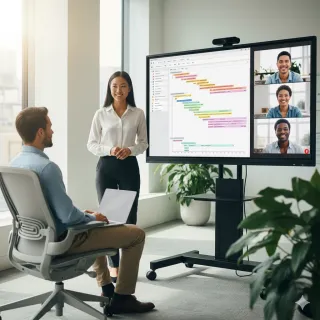
Even in 2026, when half the team is in a "smart" conference room and the other half is remote, remote workers often feel like spectators. They miss out on the spatial energy and the non-verbal cues happening in the physical room. This leads to a breakdown in "Meeting Equity."
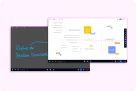
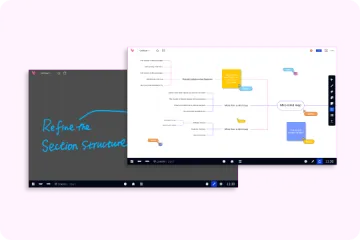
The Solution: Modern hybrid work solutions like the NearHub interactive ecosystem utilize AI-powered spatial tracking. By using a smart white board, everyone—whether in the room or joining via an AR headset—can see and interact with the same digital workspace in real-time. The board becomes the "window" that dissolves the digital wall.
Problem 2: The Commute for "Deep Work"
Nothing kills morale faster than asking an employee to commute to a high-cost office just to sit in a cubicle and perform focused coding or analysis they could have done at home. The 2026 workforce values "Time Autonomy" above all else.
The Solution: Implementing a remote work strategy that designates the office as a "Collaboration Theater." Deep work stays at home; the office is reserved for high-intensity collaborative sprints and social bonding.
Problem 3: The Documentation Black Hole
In 2026, if a decision isn't captured in the cloud instantly, it didn't happen. When information is shared in a physical hallway but not documented in the team's AI knowledge base, remote employees lose context and fall behind.
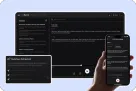
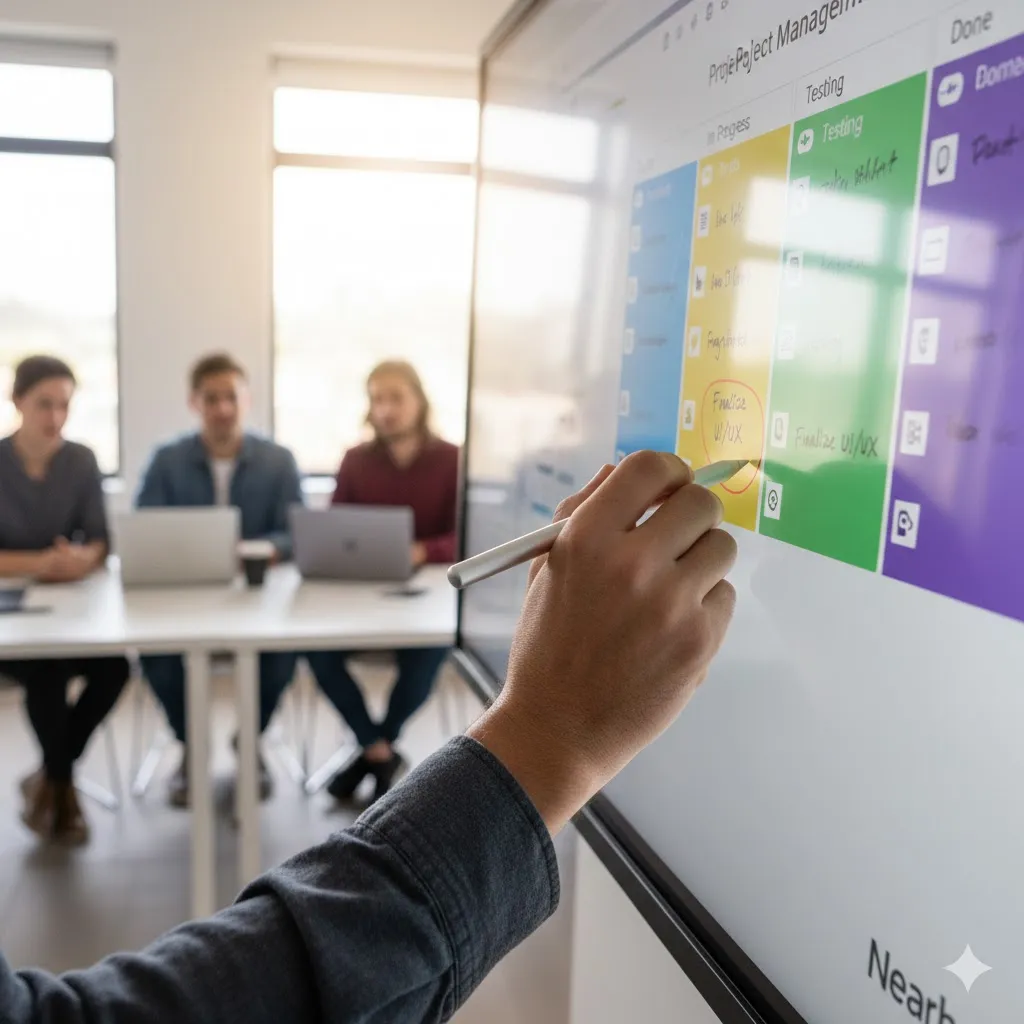
The Solution: Adopting "Digital-First" documentation. Every stroke on a physical surface must be digitized. Learning how to use a smart board to instantly sync meeting visuals to the company’s AI brain ensures that your hybrid work solutions are backed by a single source of truth.
Problem 4: Legacy Tech Debt
Fumbling with old cables and broken projectors in a 2026 office is more than a nuisance—it’s a signal to employees that the company is falling behind the technological curve.
The Solution: Seamless hardware integration. Knowing how to connect a smart board to a computer via wireless high-speed protocols or a single universal hub can save hundreds of hours of collective frustration per year and reinforce a forward-thinking culture.
Problem 5: Asynchronous Decay
Company culture often begins to feel transactional when teams only meet for tasks. The "human element" of work is the first thing to suffer in a poorly managed hybrid environment.
The Solution: Intentional social touchpoints powered by high-quality video conferencing. This allows for natural, face-to-face interaction that maintains empathy and trust across geographic distances.
Hybrid Schedule Meaning: Redefining Intentionality in 2026
When people ask about the Hybrid schedule meaning today, they are no longer looking for a simple "3-2" or "4-1" day count. They are looking for a strategy based on "Productivity-Based Presence."
According to a 2026 report by McKinsey & Company, organizations that allow teams to set their own "Collaboration Tempos" see a 35% higher innovation rate compared to those with rigid mandates. This suggests that the "meaning" of a hybrid schedule is now centered on the value of the interaction, not the location of the laptop.
The Four Pillars of the 2026 Hybrid Schedule
Strategic Sprints: In-person sessions for high-stakes problem solving.
Flow State Buffers: Days reserved for individual deep work with zero meetings.
Cloud Syncs: Short, daily asynchronous check-ins.
Cultural Anchors: Monthly or quarterly in-person events focused solely on team bonding.
Navigating Return to Office: From Mandates to Magnetism
Many leaders are currently navigating return to office challenges after realizing that mandates are ineffective in a talent-driven market. To make the return successful, you must shift your mindset: the office is no longer a "requirement," it is a "product" that must be sold to your employees.
Designing the "High-Performance Hub"
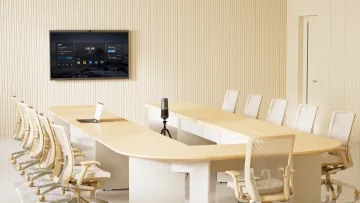
Employees want to return for the tools and the community they can't get at home. If the technology in the office is worse than their high-end home setup, the office will always lose. Integrating advanced hybrid work solutions like 4K interactive surfaces and AI-driven acoustics shows employees that the office is where the "real work" happens.
Why Professionals Return to the Office in 2026:
Immersive Collaboration: Interactive displays that allow for 3D modeling and real-time visual logic.
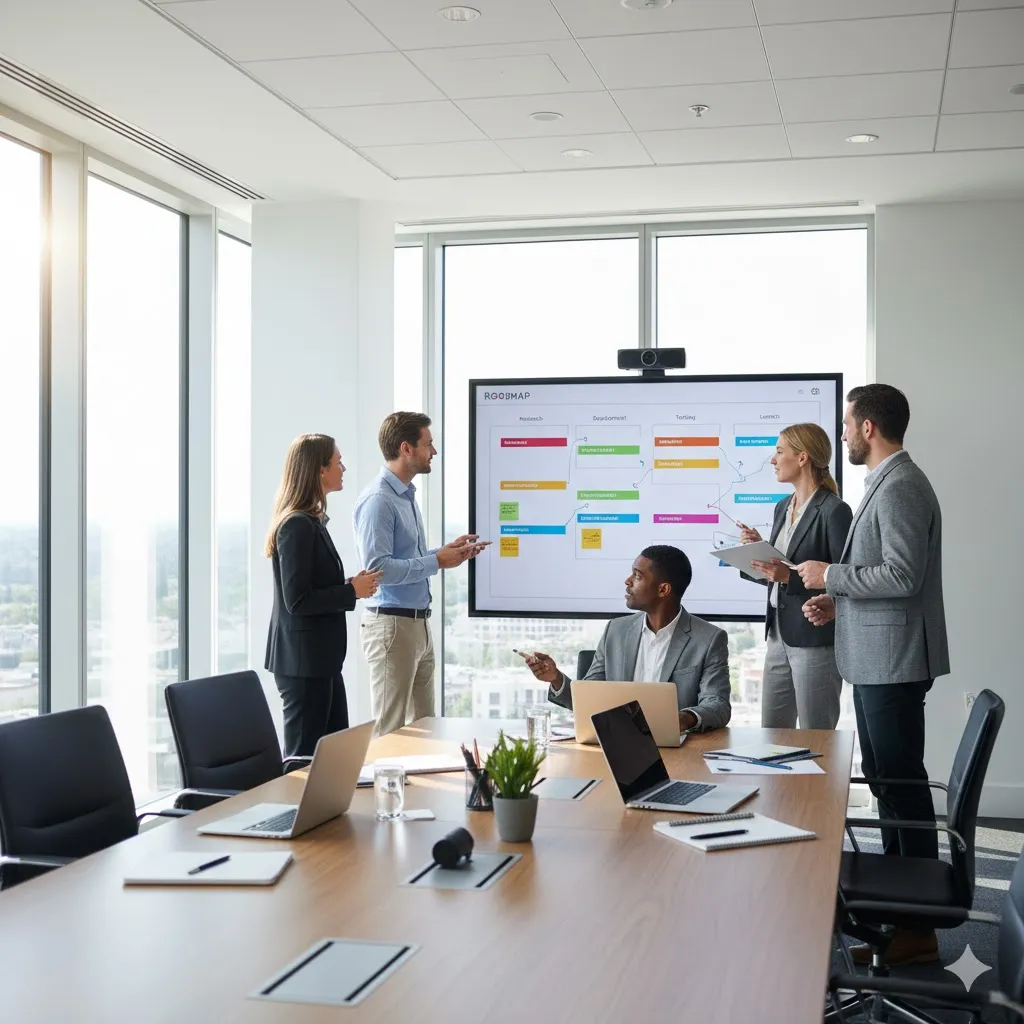
AI-Augmented Brainstorming: Drawing on a smart white board while an AI assistant categorizes and expands your ideas in real-time.
Human Energy: The unspoken rapport and creative friction that only happens in a shared physical space.
Designing a Productive Remote Work Strategy for the AI Era
A successful remote work strategy in 2026 must account for the rise of AI agents and distributed teams. You must ensure that "digital twins" of your physical meetings are available to everyone at all times.
Strategy Component
Legacy Hybrid (2020-2024)
Advanced Hybrid (2026+)
Collaboration Tool
Basic Video Chat
Spatial AI & Interactive Canvases
Documentation
Manual Meeting Minutes
AI-Generated Live Mapping
Tech Integration
HDMI/Dongle Fumbling
Universal Wireless Hubs & 4K
Office Role
Monitoring & Routine
Creative Sprints & Social Magnetism
Schedule Basis
Day Counts (e.g., Tues/Thurs)
Activity-Based Presence
Why Technology is the Real Hybrid Work Solution
If you have a strategy but your hardware feels like it belongs in the previous decade, your hybrid work solutions will fail at the point of execution. The hardware is the physical interface of your company's culture.
The NearHub Advantage: Beyond the Screen
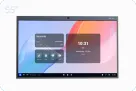
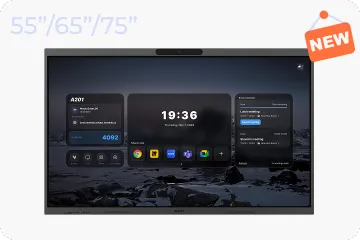
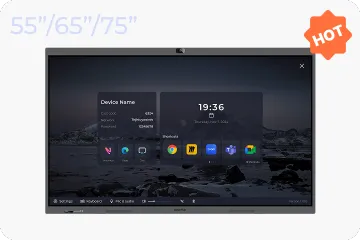
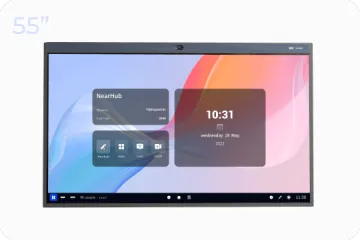
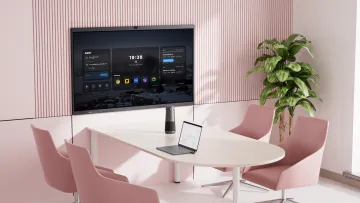
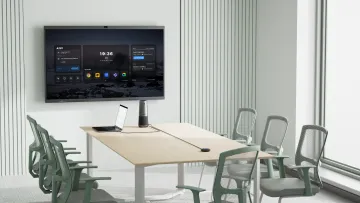
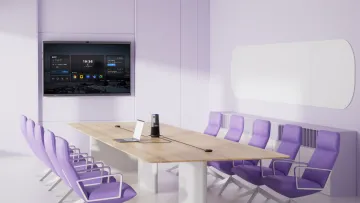
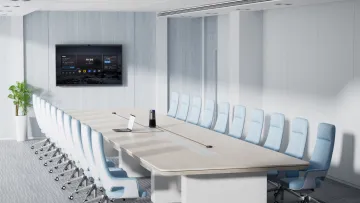
In the 2026 workplace, the NearHub board is not just a monitor; it is a collaborative computer. It serves as the "Anchor" for the team’s collective intelligence. When remote workers see the sketches and annotations in real-time, they feel the "spatial presence" of their team.
Eliminating the "Setup Tax"
One of the primary reasons employees resist the office is the wasted time spent setting up tech. By mastering how to connect a smart board to a computer via automated proximity-based protocols, you remove the friction that kills creativity.
Building a Future-Proof Office in a Post-Mandate World
As we look toward the 2030s, the companies that will dominate their markets are those that stop viewing remote work as a "perk" and start mastering it as a competitive advantage through hybrid work solutions.
Actionable Steps for 2026 Leadership:
Audit Your "Meeting Equity": Use AI tools to measure if remote participants are contributing as often as those in the room.
Invest in "Phygital" Spaces: Ensure your physical rooms are designed for digital-first interaction. Every leader should know how to use a smart board as a primary communication tool.
Lean Into Flexibility: If a team is outperforming their targets, stop counting their office days.
Mastering Hybrid Work Solutions: The Shift Toward Human-Centricity
The final piece of the 2026 puzzle is the cultural shift from "Managing Attendance" to "Managing Energy." You can have the best NearHub boards, but if your culture is toxic, your talent will leave.
Outcome Over Optics: Stop rewarding the "first to arrive and last to leave."
Eliminate Proximity Bias: In 2026, leadership training must include "Remote Leadership" as a core competency.
Prioritize Mental Bandwidth: Context switching between home and office is exhausting. Design your remote work strategy to minimize travel and maximize "Deep Work" blocks.
FAQ Section
How has the hybrid schedule meaning changed in 2026?
It has shifted from a fixed schedule to "Activity-Based Presence." Teams come to the office when they need specific high-bandwidth tools and human energy, rather than just on set days.
What is the best tech stack for hybrid work solutions?
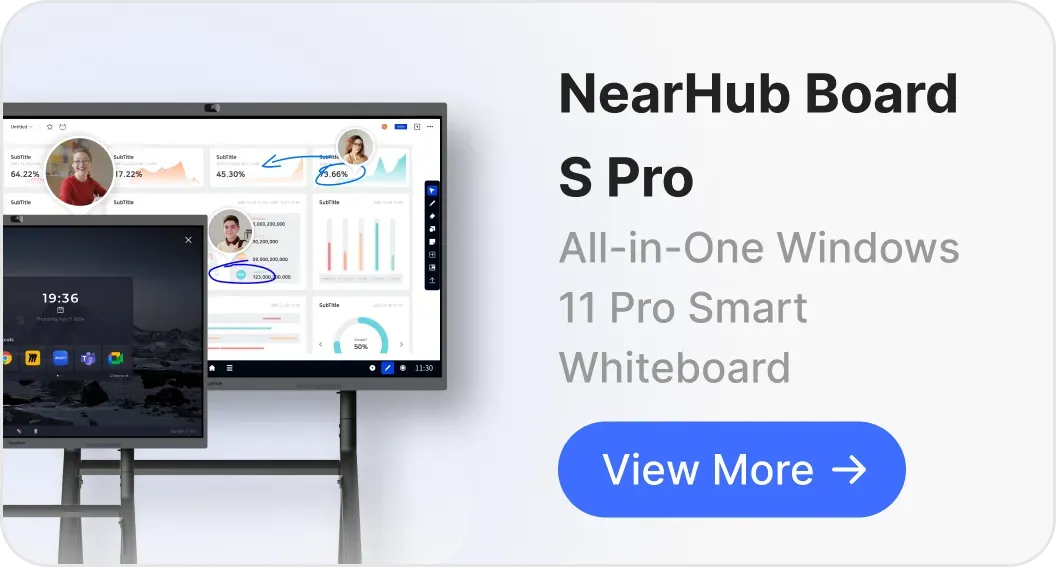
A 2026 tech stack should include a central interactive canvas (like the NearHub S-Pro), an AI-driven project management tool, and spatial audio conferencing that makes remote voices feel like they are coming from a specific place in the room.
How can I solve the "Ghost Town" office problem?
Stop mandating individuals and start mandating "Collaborative Sprints." When the whole team is in the office for a specific purpose using a smart white board, the space feels alive and the commute feels justified.
Is navigating return to office still a problem for tech companies?
Yes, but the focus has shifted. It’s no longer about "getting people back"; it’s about "making the office worth the trip." This requires a radical upgrade in office technology and cultural flexibility.
What are the must-have remote work strategy components?
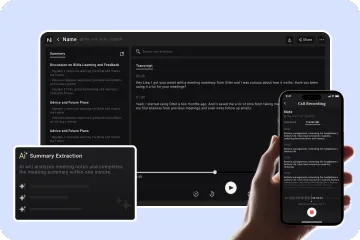
You need "Digital-First" documentation, AI meeting summaries, asynchronous work protocols, and high-fidelity video conferencing to maintain human connection.
Conclusion & CTA
Successfully navigating return to office transitions and establishing a robust hybrid work strategy in 2026 requires more than just a change in policy—it requires a total overhaul of the physical and digital workspace. By identifying the five common problems—from presence disparity to legacy tech debt—and implementing hardware-backed hybrid work solutions, you can build a culture that attracts the best talent in the world.
The "Missing Link" is the technology that bridges the physical-digital divide. When the office reality exceeds the remote experience, the office becomes a destination, not a chore. It is time to stop struggling with outdated tools. Invest in a workspace that understands that the Hybrid schedule meaning is about the quality of the collaborative spark, not the quantity of hours in a chair.