Beyond the Tiny Screen: Why a Hybrid Worker Health and Wellness Program Starts with Better Hardware
This ultimate guide demonstrates how a high-performance hybrid worker wellness program must be built on a foundation of professional-grade hardware to eliminate digital fatigue and technical friction.
hybrid worker health and wellness program
smart whiteboard
hybrid work tools
Updated: Aug 19, 2026 · 10 minutes read
Global Business, Brought Near.
No Installer, No Hassle, Just Works.
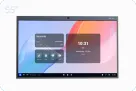
In the professional landscape of 2026, the success of a hybrid worker wellness program is no longer defined by soft perks alone, but by "Cognitive Ergonomics." This guide addresses the systemic crisis of "digital drain" caused by the minimalist laptop-only model. It explores the biological and psychological necessity of technological symmetry, where the office provides tools—such as the NearHub S Pro Smart Whiteboard—that are significantly superior to home setups. By focusing on three pillars (physical ergonomics, cognitive load management, and psychological inclusion), the article provides a blueprint for Chief People Officers to maximize real estate ROI and reduce talent turnover. The guide details how eliminating the "Setup Tax" and fostering "Presence Equity" through AI-driven hardware can transform the office from a people warehouse into a high-octane innovation theater that prioritizes human health.
Key Takeaways
Prioritize Cognitive Ergonomics: Shift focus from simple furniture to visual and acoustic clarity; 4K interactive surfaces are essential to reduce the eye strain and fatigue inherent in the "tiny screen" model.
Eliminate the "Setup Tax": Technical friction is a primary driver of burnout. Use Windows-powered smart boards to allow one-touch meeting starts, preserving the team's mental energy for creative work.
Foster Presence Equity: A successful wellness program ensures remote workers have a "visual voice" equal to those in the room, preventing the isolation and social decay that leads to disengagement.
Promote Active Collaboration: Moving from sedentary laptop work to standing interaction at a smart board reduces the physical risks of long-term distributed work while increasing brain engagement.
The Office as a "Magnet": To encourage a return to the office, the workspace must offer a "collaborative surplus"—environments and tools that provide a level of creative energy home setups cannot replicate.
Secure Psychological Safety: Seamlessly integrate enterprise-grade security into collaborative tools to reduce the micro-stressors associated with data loss and IT hurdles.
ROI Through Retention: Investing in wellness infrastructure pays for itself by reducing high turnover costs and increasing "Innovation Velocity" through more aligned, focused teams.
We have all been there: it is 3:00 PM on a Tuesday, and you are currently in your sixth back-to-back video call of the day. Your eyes are burning from staring at a 13-inch laptop screen, your neck is stiff from hovering over a makeshift desk, and your mental bandwidth is hovering at zero. This "digital drain" is not just a personal annoyance; it is a systemic crisis. As organizations transition into 2026, the traditional boundaries of the office have dissolved, but our biological needs for space, clarity, and human connection remain unchanged. If your team is struggling with burnout despite having "flexible" hours, the problem isn't your policy—it’s your infrastructure.
Welcome to this comprehensive Ultimate Guide, the definitive resource for modern employee care. This is a deep dive into why a successful hybrid worker wellness program must move beyond gym stipends and meditation apps to address the physical and cognitive toll of distributed work. In this guide, we will explore how high-performance hardware acts as the foundation for health, why top hybrid worker health and wellness companies are reinvesting in the "physical-digital bridge," and how to design a strategy that actually protects your most valuable asset: your people. Whether you are a Chief People Officer or a team lead, this roadmap provides the blueprint for a healthier, more productive hybrid future.
What is a Hybrid Worker Wellness Program? Defining Health in 2026
Before we can optimize for health, we must redefine what a hybrid worker wellness program actually looks like in a post-mandate world. In the early 2020s, wellness was often an afterthought—a subscription to a headspace app or an occasional "no-meeting Friday." Today, the concept has evolved into a holistic architectural strategy that prioritizes "Cognitive Ergonomics" and "Presence Equity."
The Three Pillars of Hybrid Wellness
To be effective, a modern program must address three distinct areas of the employee experience:
Physical Ergonomics: Moving beyond the chair to include visual clarity, acoustic comfort, and movement-based collaboration.
Cognitive Load Management: Reducing the "Setup Tax" and technical friction that causes micro-frustrations and mental fatigue.
Psychological Inclusion: Using technology to ensure remote workers feel physically "present" and valued, preventing the isolation that leads to burnout.
According to a recent report by Gallup, employees who feel their organizations care about their well-being are 69% less likely to actively search for a new job. In the context of a hybrid worker wellness program, this "care" is most visible in the tools you provide to make their daily work life frictionless and inclusive.
The Hidden Health Risks of the "Small Screen" Hybrid Model
The primary failure of many early-stage policies was the assumption that a laptop and a pair of headphones were enough. We are now seeing the long-term health consequences of this "minimalist" approach. A hybrid worker health and wellness program that ignores hardware is essentially ignoring the biological reality of the human body.
Digital Eye Strain and Visual Fatigue
Staring at a small, flickering screen for eight hours a day causes the ciliary muscles in the eye to remain in a constant state of tension. This leads to "Computer Vision Syndrome," characterized by headaches, blurred vision, and dry eyes. A high-resolution smart white board in the office allows for a shift in focal distance, giving the eyes a much-needed break from the "near-point" focus of a laptop.
The Sedentary Trap of Video Calls
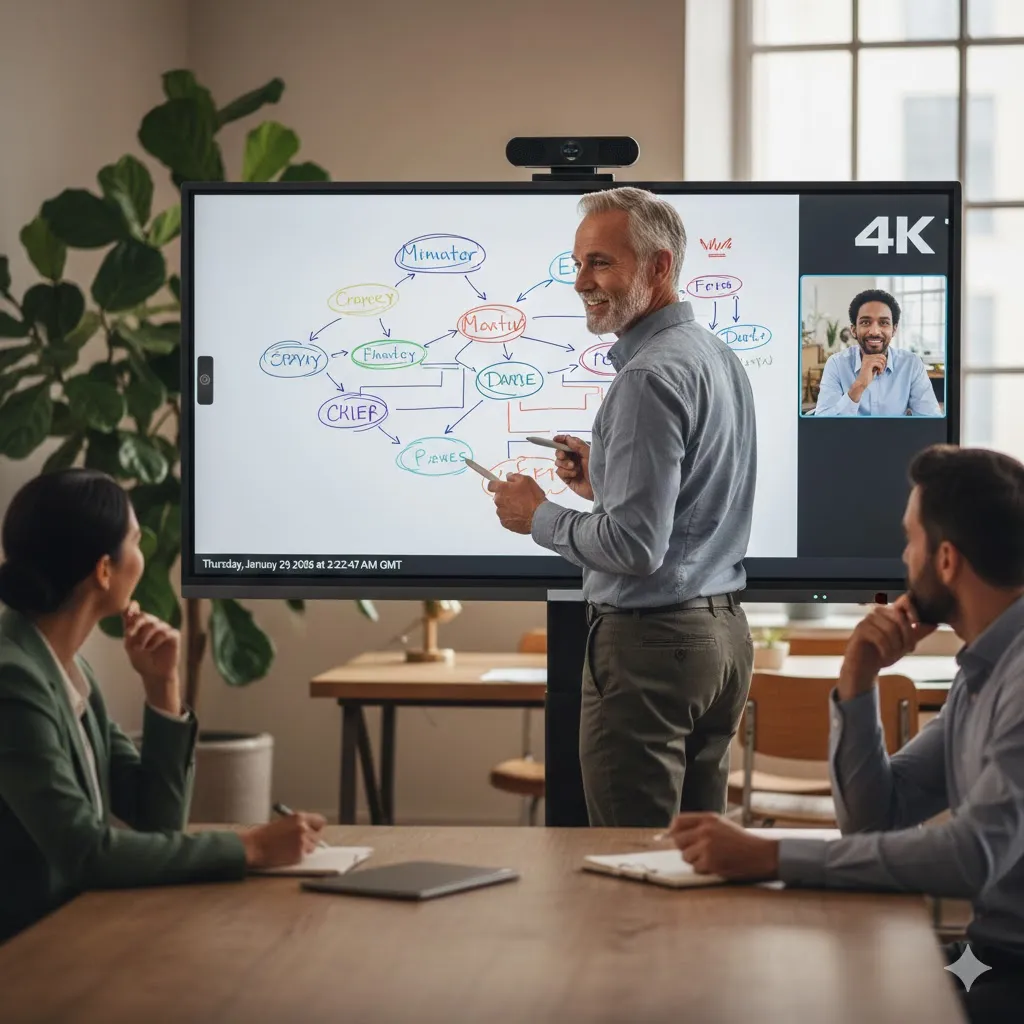
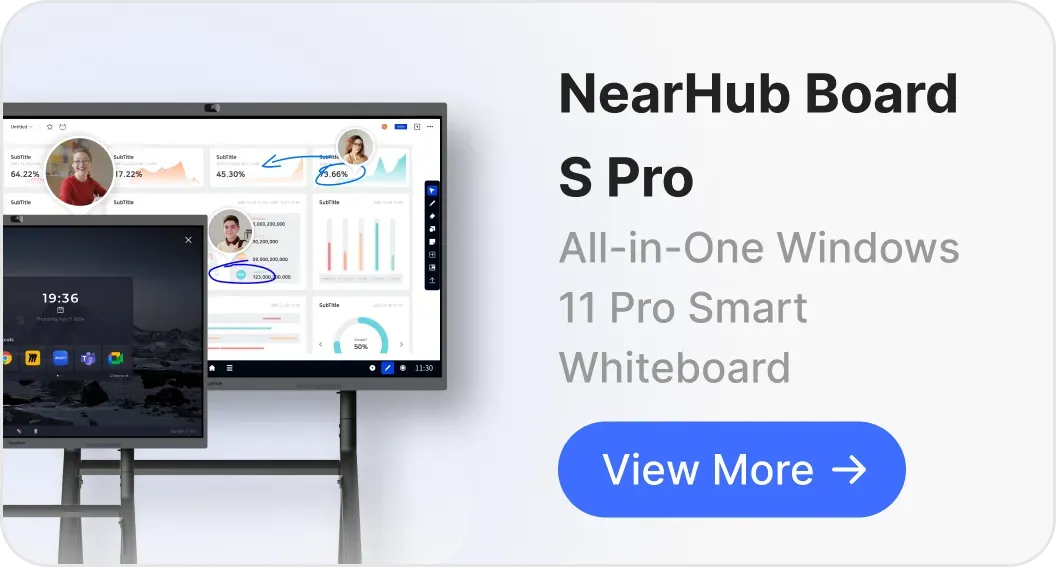
Traditional video calls keep employees "tethered" to their seats. When you transition to a model that utilizes the NearHub S Pro Smart Whiteboard, you encourage movement. Presenters can stand up, move around, and engage in "Active Brainstorming." This physical movement is a critical component of any wellness strategy aimed at reducing the risks of heart disease and musculoskeletal disorders.
Why Top Hybrid Worker Health and Wellness Companies Prioritize Infrastructure
When you look at the leaders in the space—top hybrid worker health and wellness companies like Google, Atlassian, and Shopify—you notice a common trend: they treat the office as a specialized tool. They understand that a program is only as good as the environment in which it operates.
Creating a "Magnet" Office through Hardware
If the office technology is worse than what an employee has at home, the commute feels like a "tax" on their well-being.
Superior Tools: Providing 4K interactive surfaces that make collaboration feel natural and expansive.
Seamless Sync: Ensuring that every note taken in the office is instantly available to the remote worker, reducing the stress of information loss.
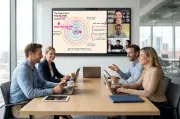
Presence Equity: Using AI-powered cameras to make remote colleagues appear life-sized, fostering real human connection.
Case Study: Infrastructure as an Insurance Policy
Leading firms have found that investing in a nearhub enabled workspace reduces the "Cognitive Drag" of hybrid meetings. When technical friction is reduced, stress hormones like cortisol drop, and creative output rises. This is the ultimate goal of any hybrid worker health and wellness program: creating an environment where humans can thrive, not just survive.
Designing a Hybrid Worker Wellness Program That Reduces Burnout
Burnout in a distributed environment is rarely caused by the work itself; it is caused by the way we work. To design a successful hybrid worker wellness program, you must focus on eliminating the "Micro-Stressors" that accumulate throughout the day.
Eliminating the "Setup Tax"
One of the biggest contributors to mental fatigue is fumbling with cables and dongles. Every time a meeting is delayed by 10 minutes because the "tech isn't working," the team's collective stress levels rise.
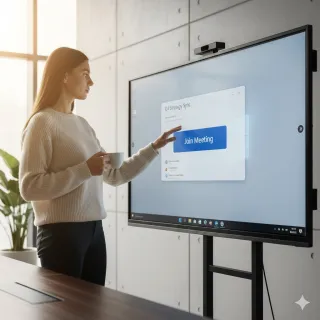
Pro Tip: Learn how to use a smart board that functions as a standalone Windows PC. This allows you to walk into a room, tap "Join," and start your meeting instantly.
Automation: Sync your room calendar with the hardware to eliminate the anxiety of "room poaching" or missing meeting links.
The Power of Visual Symmetry
In many designs, remote workers feel like "second-class citizens." They can't see what's being drawn on the board, so they tune out.
Visual Inclusion: By using a smart white board, you provide a single source of truth that is equally clear to the person in the room and the person in the home office.
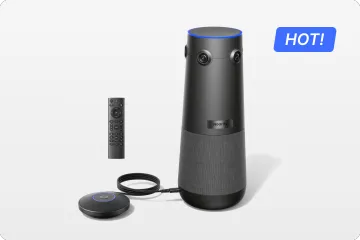
Acoustic Inclusion: High-fidelity microphones ensure that even the subtle side-chatter is audible, preventing the feeling of isolation that plagues distributed teams.
Wellness Category
Traditional Hybrid Approach
Hardware-Enabled Wellness
Physical Health
Slumping over a 13-inch laptop
Standing and Interacting with 4K Boards
Mental Energy
15-minute technical "Setup Tax"
One-Touch Join / Zero Friction
Social Cohesion
Grainy faces / Small squares
Life-sized video / Presence Equity
Documentation
Taking photos of old boards
Instant Cloud Sync / Auto-PDF
Security Stress
Unsecured personal devices
Enterprise-grade [hybrid work security]
Essential Hardware for a Hybrid Worker Wellness Program: The Smart Whiteboard
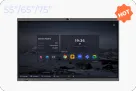
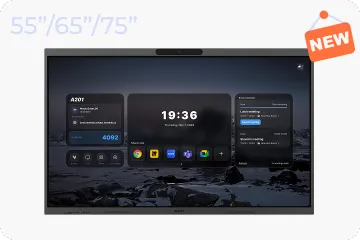
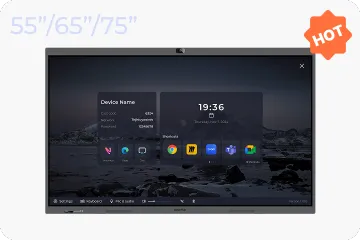
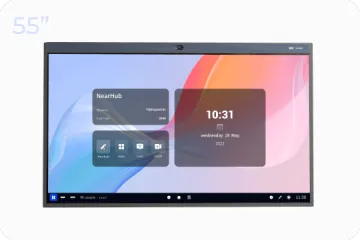
A strategy without tools is just a wish list. To support a high-functioning hybrid worker wellness program, you must invest in the "connective tissue" of the workspace. This is where the NearHub S Pro Smart Whiteboard becomes a non-negotiable asset.
Why the NearHub S Pro is a Wellness Tool
The NearHub S Pro isn't just a piece of office equipment; it is a wellness intervention.
4K Clarity: Reduces eye strain by providing crisp, large-scale visuals.
AI Auto-Framing: Ensures the remote participant always has the best "seat" in the house, reducing the cognitive load of trying to track who is speaking.
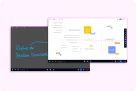
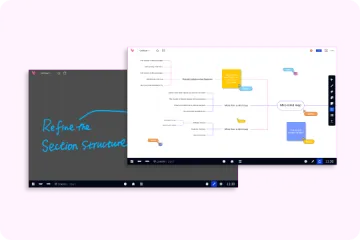
Natural Writing: The PenTouch technology provides a zero-latency experience, which mimics the tactile satisfaction of physical pen-on-paper, a proven method for better memory retention.
Bridging the Digital-Physical Divide
When you implement a hybrid worker wellness program, your goal is to make the "distance" between team members irrelevant. By using nearhub interactive hubs, you ensure that a brainstorm started in New York can be picked up in London without a single detail being lost in translation. This continuity provides a sense of security and alignment that is essential for a healthy culture.
Balancing Productivity and Hybrid Work Security in Your Wellness Plan
A frequently overlooked aspect of employee well-being is the stress caused by security protocols. In a world of increasing cyber threats, hybrid work security can often feel like a hurdle that slows down work. A professional program must streamline security so that it protects the company without frustrating the user.
The Stress of Data Loss
Nothing ruins an employee's day faster than losing an hour of work because a physical whiteboard was accidentally erased. This is a major wellness issue.
Digital Persistence: Using a smart white board ensures that all visual logic is saved to the cloud. The employee no longer has the "anxiety of the eraser."
Enterprise Integration: Since the NearHub S Pro runs on a Windows-based system, it integrates with your existing Active Directory and IT security protocols.
Secure Collaboration as a Benefit
When employees know that their brainstorms and strategic plans are protected by enterprise-grade hybrid work security, they feel more comfortable taking risks and sharing innovative ideas. Security, when done right, provides the "psychological safety" that is the hallmark of a top-tier hybrid worker health and wellness program.
ROI and Long-Term Impact: Why Wellness Infrastructure Pays for Itself
As a leader, you might be wondering about the cost of a hybrid worker wellness program that includes high-end hardware. The reality is that the cost of not investing is far higher.
Reducing Turnover Costs
The cost to replace a high-level professional is often 1.5x to 2x their annual salary. If your lack of infrastructure is causing burnout, you are losing millions in talent.
Talent Magnetism: Providing a frictionless, high-tech office environment makes your company a magnet for top-tier talent who are tired of the "tiny screen" struggle.
Engagement Multiplier: When employees feel physically and mentally supported, their Innovation Velocity increases. They solve problems faster because they aren't fighting their tools.
Real Estate Efficiency
A robust hybrid worker wellness program allows you to reduce your total square footage while increasing the quality of the remaining space. You can move from rows of desks to "theaters of collaboration." This rightsizing often pays for the technological upgrades within the first 12 to 18 months.
FAQ Section: Optimizing Your Hybrid Worker Wellness Program
How does a smart board improve a hybrid worker wellness program?
A smart white board reduces digital eye strain, encourages physical movement during meetings, and ensures Presence Equity for remote workers. By eliminating the technical friction of joining and documenting meetings, it significantly reduces the daily cognitive load on employees.
What are the best hybrid worker health and wellness companies doing differently?
Top hybrid worker health and wellness companies treat technology as an extension of the human body. They don't just provide chairs; they provide 4K interactive canvases and AI-driven acoustics to ensure that collaboration feels as natural and stress-free as an in-person conversation.
Is hybrid work security a part of wellness?
Yes. Managing hybrid work security effectively reduces the anxiety associated with data loss and complex IT hurdles. By utilizing hardware that integrates natively with enterprise security systems, you protect the company while providing a seamless, stress-free experience for the employee.
How can I implement a hybrid worker health and wellness program on a budget?
Start by auditing your "High-Friction" zones. If your conference rooms are causing 15-minute delays, that is your first target. Investing in a single smart white board for your most-used collaboration hub will yield a higher wellness ROI than a dozen minor software subscriptions.
Conclusion & CTA
The transition to a hybrid-first world is the most significant shift in corporate culture since the industrial revolution. Succeeding with a distributed team requires more than just a policy update; it requires a radical commitment to Intentional Presence. By redefining the office as a tool for collaboration rather than a warehouse for people, you unlock the true potential of your workforce.
A successful hybrid worker wellness program is built on a foundation of trust, equity, and the right infrastructure. When you eliminate the "tiny screen" struggle and replace it with high-performance tools like the NearHub S Pro Smart Whiteboard, you aren't just buying hardware; you are investing in the long-term health and innovation of your team. The goal is simple: to make the work as rewarding as the result.