


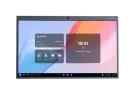
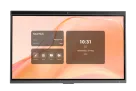
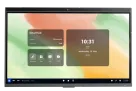
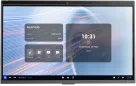
































In the landscape of 2026, the success of a hybrid work policy is no longer defined by simple attendance counts but by "Intentional Presence." This comprehensive guide addresses the systemic failure of traditional office models and the rise of "commute regret" among decentralized workforces. By focusing on three core pillars—presence equity, activity-based presence, and technological symmetry—organizations can transform the office from a "people warehouse" into a high-octane "Innovation Theater." The article details how high-performance tools, such as the NearHub S Pro, eliminate the "setup tax" and "documentation black holes" through native Windows integration and visual logic persistence. Ultimately, the guide provides a strategic blueprint for leaders to drive innovation velocity, secure sensitive data, and achieve significant real estate ROI by investing in the "connective tissue" of the modern workspace.
Key Takeaways
- Move from Mandate to Magnet: To thrive, the office must offer a "collaborative surplus"—providing tools and environments (like 4K interactive boards) that are vastly superior to home setups.
- Eliminate the "Setup Tax": Prioritize native Windows-based hardware to allow one-touch meeting starts and seamless app integration, reclaiming lost hours of productivity.
- Ensure Presence Equity: High-functioning hybrid policies must use technology to ensure remote workers have an equal "visual voice" and interactive weight as those in the room.
- Adopt Activity-Based Presence: Align work location with task requirements—prioritize deep focus at home and reserve the office for high-bandwidth synchronous innovation.
- Secure Visual Logic Persistence: Use digital canvases to capture every strategic stroke in the cloud, preventing information silos and allowing for persistent, cross-time-zone reviews.
- Optimize ROI Through Rightsizing: Reduce total square footage by up to 50% while reinvesting those savings into premium interactive infrastructure to improve the quality of remaining collaborative spaces.
- Implement Standardized IT Governance: Ensure hybrid tools integrate with existing Active Directory and security protocols to maintain enterprise-grade data protection.
We have all experienced it: the forty-five-minute commute through heavy traffic, the desperate search for a parking spot, and the lukewarm office coffee—all to arrive at a desk, put on noise-canceling headphones, and spend eight hours on the exact same video calls you could have taken from your living room. It feels inefficient, outdated, and frankly, a waste of human energy. This "ghost town office" phenomenon is the primary reason why so many organizations are struggling to maintain morale in 2026. When employees feel that the commute is a "tax" rather than a tool for progress, the traditional office model has reached its breaking point.
Welcome to this Ultimate Guide, the definitive resource for 2026 workforce dynamics. In this deep dive, we are going to explore how to build a high-performance hybrid work policy that bridges the gap between remote freedom and office-based collaboration. This is not just a passing trend; it is an architectural strategy for the future of business. If you have ever wondered why your team resists the office, or how to justify real estate costs in a decentralized world, this guide is your roadmap. We will examine the shift from presence to purpose and reveal why interactive infrastructure is the "missing link" in making your organizational strategy actually work.
What is a Hybrid Work Policy? The 2026 Definition of Intentionality
Before we look at the logistics of scheduling, we must define what a hybrid work policy actually represents in the current market. In the early 2020s, a policy was often a simple "3-2" mandate—three days in, two days out. Today, a successful policy is a result-oriented framework that treats the office as a tool for high-bandwidth collaboration rather than a default storage facility for employees.

The Core Dimensions of Modern Presence
To move beyond a stagnant "badge-swipe" culture, a modern policy must address three core dimensions to be effective:
- Presence Equity: Ensuring that remote workers have the same visual and vocal influence as those in the room. This is often the most overlooked part of hybrid work policies.
- Activity-Based Presence: Choosing the location based on the task. For example, deep focus work like coding or writing is done at home, while brainstorming and strategic planning are done at the office.
- Technological Symmetry: Providing tools in the office that are significantly superior to what an employee has at home. If the office technology is worse than a home setup, the policy will fail.
According to a recent report by Gartner, organizations that focus on "intentional collaboration" rather than mandatory attendance see a 15% increase in employee engagement and a 20% boost in innovation speed. This data proves that the "where" matters less than the "why" in a successful hybrid work policy.
Hybrid Work Policy Examples: Insights from Innovation Leaders
When crafting your own guidelines, looking at hybrid work policy examples from industry leaders can provide a valuable baseline. However, there is no one-size-fits-all solution. Different corporate cultures require different levels of structure to maintain their specific innovation velocity.
The Office-First Hybrid Model
Many financial and law firms utilize this model. It typically mandates four days in the office, with one day of flexibility.
- Pros: High social capital, immediate mentorship for junior staff, and rapid conflict resolution.
- Cons: Higher turnover risk for top-tier talent that prioritizes absolute flexibility.
- Infrastructure Needs: Every small meeting space needs high-speed nearhub terminals to ensure the one remote day doesn't slow down the four office days.
The Synchronized Hybrid Model
This is common in tech and creative agencies. The entire team is in the office on specific "anchor days" (e.g., Tuesday and Thursday) for all-hands meetings and collaborative sprints.
- Pros: Maximizes the density of interaction and creates a "peak energy" environment.
- Cons: Can lead to a "noisy" office environment where deep work is nearly impossible on anchor days.
- Infrastructure Needs: Large-scale smart white board setups for group brainstorming and visual logic mapping.
The Choice-Based Hybrid Model
Used by companies like Shopify and Atlassian, this model allows employees to work remotely by default but provides regional hubs for those who want or need them.
- Pros: Unrestricted access to a global talent pool and significantly lower real estate overhead.
- Cons: Harder to maintain a cohesive company culture and prevent information silos.
- Infrastructure Needs: Advanced mobile collaboration software and cloud-integrated hardware to keep the "digital twins" of all meetings live.
Why Traditional Hybrid Work Policies Fail at the Implementation Stage
If you have a clear hybrid work policy but employees are still unhappy, the problem likely isn't the policy—it's the friction. Policy without infrastructure is just a wish list. When employees return to the office only to realize the technology is clunky and the environment is distracting, they experience "commute regret."
The Setup Tax and Technical Friction
One of the most ignored friction points is the time wasted connecting devices. If a meeting takes ten minutes to start because of a faulty HDMI cable or a camera that won't sync, you've just wasted a significant percentage of your collaborative ROI.
- The Reality: 15 minutes of friction per meeting x 4 meetings a day = 1 hour of lost productivity per employee.
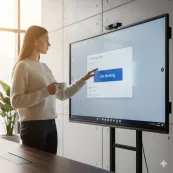
- The Solution: Learning how to use a smart board that is native to your software ecosystem can eliminate this "setup tax" entirely.
The Documentation Black Hole
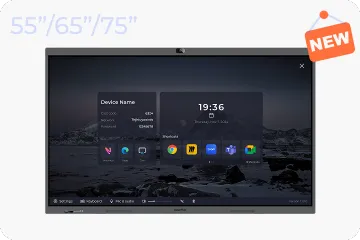
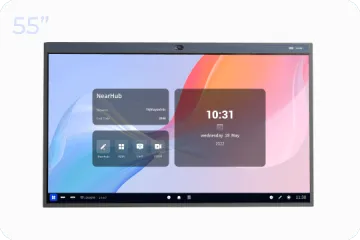
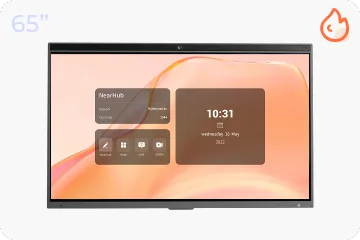
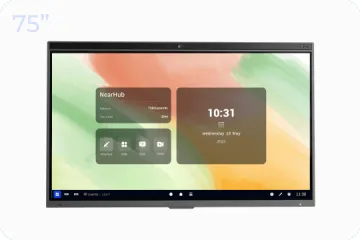
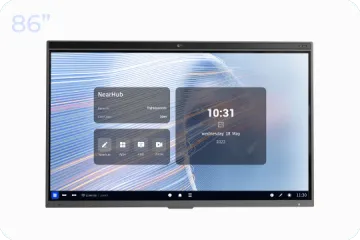
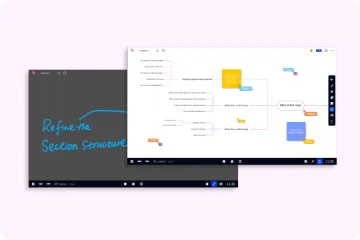
In many legacy hybrid work policies, decisions are made on a physical whiteboard, someone takes a blurry photo, and that photo dies in a Slack channel. Remote workers lose context, and the "Information Silo" grows. By utilizing the NearHub S Pro Smart Whiteboard, you ensure that every stroke is captured in 4K and synced to the cloud instantly. This turns a brainstorming session into a permanent, searchable asset.
Best Solutions for Evaluating Hybrid Work Productivity: Outcome vs. Presence
A common fear among executives is the "productivity gap." However, the best solutions for evaluating hybrid work productivity move away from "eyes-on-screens" metrics toward "impact-on-milestones" metrics.
Shifting to Outcome-Based Metrics
To truly evaluate productivity, you must look at how teams interact with their work and each other. Modern hybrid work policies prioritize deliverables over presence.
| Metric Category | Legacy Metric (Ineffective) | Modern Metric (Effective) |
|---|---|---|
| Attendance | Badge swipes / Login times | Outcome-based sprint completion |
| Collaboration | Hours in meetings | Contribution to shared digital canvases |
| Culture | Forced social hours | Pulse survey sentiment / Voluntary office use |
| Efficiency | Email response speed | Decision velocity / Resolution time |
Visual Logic Persistence and Strategic Review
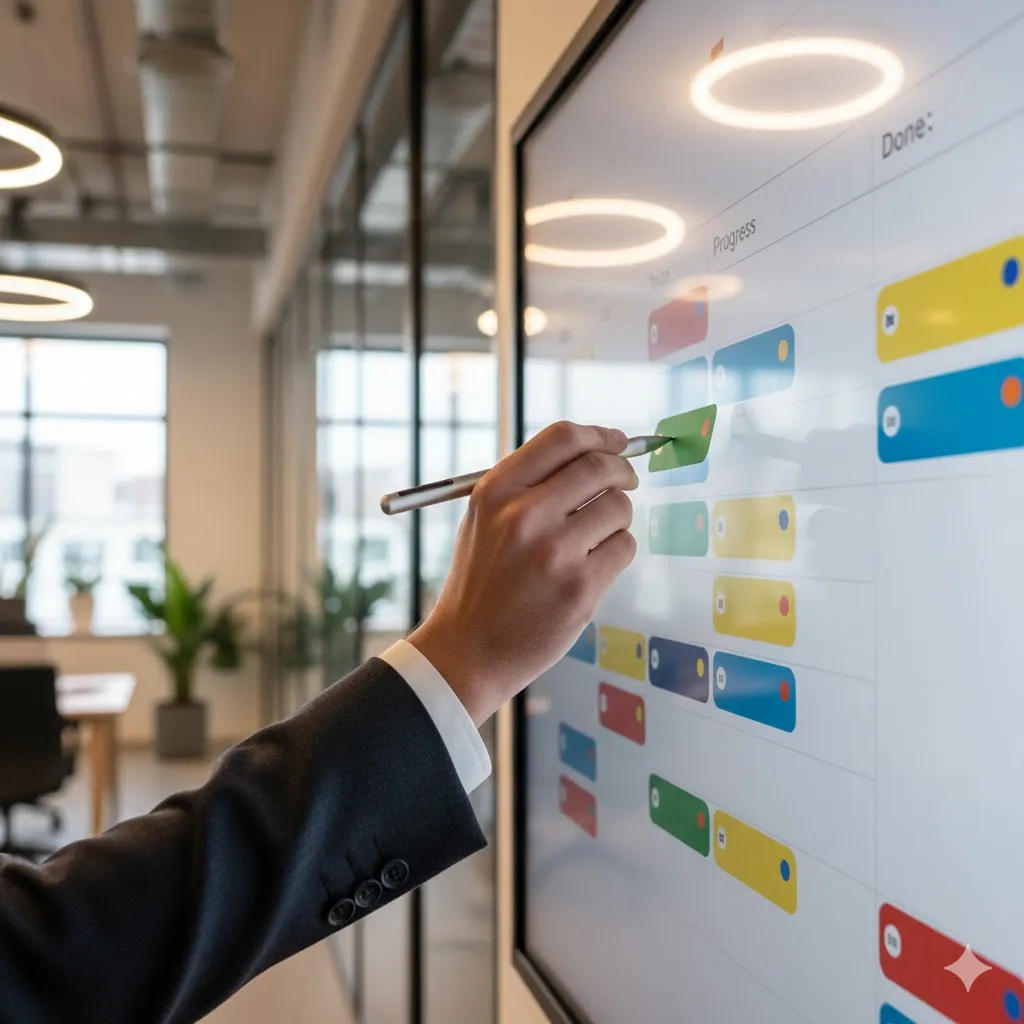
Using a smart white board allows managers to review the "evolution of an idea" after a meeting concludes. While traditional management focused on who was typing, an effective hybrid work policy focuses on how a solution was formed. By preserving the visual logic flow on a digital canvas, teams can trace the derivation of a decision, ensuring that even members who weren't present can understand complex strategic logic.
Turning the Office into a Magnet through Interactive Infrastructure
If you want your hybrid work policy to stick, the office must offer something the home office cannot. We call this "Office Magnetism." The goal is to make the office a destination for high-intensity work that requires high-bandwidth communication.
Designing the "Collaboration Theater"
The modern office should be zoned like a high-performance laboratory rather than a warehouse for desks.
- The Focus Zone: Soundproof pods or quiet libraries for the deep work typically done at home.
- The Innovation Hub: Wide-open spaces centered around a nearhub interactive hub for visual mapping and collective sketching.
- The Social Anchor: Areas designed specifically for unplanned interactions—the "water cooler" moments that drive serendipitous innovation.
The Role of the NearHub S Pro Smart Whiteboard
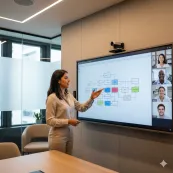
The NearHub S Pro Smart Whiteboard serves as the central nervous system of these zones. By allowing for "Persistent Canvases," it ensures that a brainstorm started on Monday is still there on Wednesday, accessible to both the people in the room and the people at home. This bridge between the stylus and the screen is what makes a synchronized hybrid work policy feel effortless and productive.
Strategic ROI: How the Right Hybrid Work Policy Saves Money
Many CFOs see a flexible hybrid work policy as a loss of control. In reality, it is an opportunity for significant real estate optimization and financial restructuring.
Rightsizing the Physical Footprint
By adopting hybrid work policies that utilize desk-sharing and activity-based zoning, companies can often reduce their total square footage by 30% to 50% while actually improving the quality of the remaining space.
- The Math: Rent savings from 10,000 sq ft can fund the technological upgrade of 20 high-end "Collaboration Theaters."
- The Result: A smaller office that works 10x harder than the warehouse of the past.
Mitigating Talent Replacement Costs
The cost of replacing a high-level employee is often 1.5x to 2x their annual salary. In a global talent market, flexibility is a top-three priority for job seekers. A rigid return-to-office mandate without a supportive hybrid work policy is essentially an invitation for your competitors to poach your top performers. Providing high-performance tools like a smart white board shows employees you value their time and their impact.
Security and Governance: Standardized IT Integration for Hybrid Work Policies
As hybrid work policies mature, protecting core business secrets becomes a top priority for IT departments. Professional hybrid infrastructure must seamlessly integrate into the enterprise’s digital defense system.
Enterprise-Grade IT System Compatibility
A professional hybrid work policy requires hardware with high management transparency and system compatibility:
- Native Windows Security Architecture: NearHub S Pro utilizes a Windows-based system, meaning it can directly leverage existing enterprise domain management (Active Directory) and IT security protocols. IT teams can manage it just like a standard office computer.
- Standardized Terminal Operations Integration: Administrators can use existing IT remote support tools or internal operations software to perform necessary system configurations on the whiteboard. This standardized environment eliminates the management risks associated with closed systems.
- Regulated Data Sharing Processes: By moving away from fragmented personal storage and using built-in enterprise storage interfaces (like OneDrive for Business), organizations ensure that all collaborative outputs remain within the company's controlled digital perimeter.
Implementation Checklist: 7 Steps to a Better Hybrid Work Policy
Ready to build your own? Follow this checklist to ensure your hybrid work policies are both human-centric and performance-driven.
- Survey the Friction: Ask your team exactly what they hate about coming to the office. Is it the noise? The tech? The commute?
- Define the "Why": Don't mandate days; mandate activities. (e.g., "All creative kickoffs happen in the office.")
- Audit Your Tech Stack: Ensure every meeting room is equipped for "One-Touch Join" to eliminate the setup tax.
- Master Your Tools: Provide training on how to use a smart board so no one feels intimidated by the technology.
- Pilot and Pivot: Run your new policy for 90 days, gather data, and be willing to change what isn't working.
- Prioritize Asynchronous Communication: Ensure all office meetings are recorded or captured on a digital canvas.
- Empower Mid-Level Managers: They are the ones who actually implement the policy. Give them the autonomy to set their team’s cadence.
FAQ: Solving the Hardest Hybrid Work Policy Questions
What are the best hybrid work policy examples for startups?
Startups often thrive on the "Synchronized" model. Choose two anchor days (like Tuesday and Wednesday) where the entire team is together for high-intensity planning, and leave the rest of the week for remote execution.
How do I use a smart board to bridge the remote gap?
A smart white board allows remote workers to see annotations in real-time and even draw on the board from their own laptops. This creates a "single source of truth" for the meeting, ensuring no one is left out of the creative process.
What are the best solutions for evaluating hybrid work productivity without micromanaging?
Focus on "output-based" tracking. Use collaborative software that tracks project milestones and contributions rather than just tracking time spent active on a computer or badge-swipe data.
Why are hybrid work policies controversial?
They are controversial because they represent a loss of traditional control for management and a potential loss of social connection for employees. Success requires a balance of trust and high-quality infrastructure.
Does a hybrid work policy improve employee retention?
Yes. Studies consistently show that flexibility is a major factor in job satisfaction. A well-implemented policy reduces burnout and increases loyalty by respecting the employee's time autonomy.
What is the ROI of investing in smart whiteboards for the office?
The ROI comes from three areas: reduced "Setup Tax" (saved time), eliminated "Documentation Black Holes" (saved data), and significantly increased real estate efficiency through activity-based design.
Conclusion: The Future of the Hybrid Workplace Strategy
The transition to a hybrid-first world is the most significant shift in corporate culture since the industrial revolution. Successfully navigating this change requires more than just a memo; it requires a radical commitment to hybrid work policy innovation and a willingness to invest in the "connective tissue" that keeps teams aligned.
As you look to maximize your office ROI, remember that the office is no longer a warehouse for people—it is a destination for collaboration. By prioritizing high-bandwidth infrastructure like the NearHub S Pro Smart Whiteboard, you aren't just buying hardware; you are investing in the speed and quality of your team's collective intelligence. The winners of the 2020s will be the organizations that can dissolve the digital divide and make collaboration feel natural, whether your team is sitting in a huddle room in New York or a home office in London.
Looking for a reliable hybrid work policy? Check out our here: Best Interactive Smart Whiteboard for Teaching & Business | NearHub Board S Pro | NearHub Official.




 sales@nearhub.us
