















In 2026, the global workforce is shifting toward long-term nomadic lifestyles. This guide explores twelve premier remote work programs and destinations designed for high-level professionals. From infrastructure essentials to the psychological benefits of travel, we detail how to stay productive abroad. Crucially, we discuss how NearHub’s professional video conferencing tools at headquarters ensure remote travelers remain fully integrated and valued within their hybrid teams.
Key Takeaways
- Professional Infrastructure: Remote work programs are essential for vetted housing, community, and guaranteed fiber-optic connectivity in 2026.
- Top 2026 Hubs: Lisbon, Medellín, and Taipei lead the rankings for productivity, digital nomad visas, and community density.
- The Inclusion Gap: Remote professionals often face "exclusion effects" during meetings, which can be solved by upgrading headquarters with pro-tech.
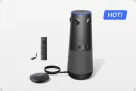
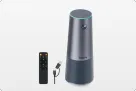
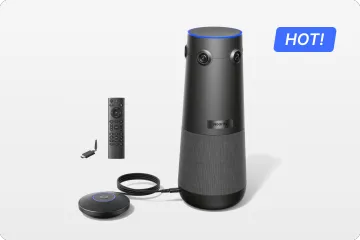
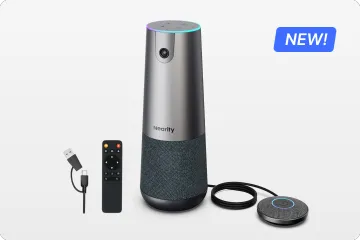
- Office Integration: Tools like the Nearity 360 Alien at HQ ensure remote travelers maintain a "seat at the table" through AI tracking and 360° views.
- Strategic Arbitrage: Successful nomadic careers leverage economic arbitrage and psychological renewal to increase both savings and creative output.
Stuck in the same four walls, watching the same screensaver of a tropical beach while your actual view is a grey parking lot? You aren’t alone. As we move into 2026, the traditional office is no longer a physical location; it’s a mindset. However, transitioning from a home office to a global lifestyle isn't as simple as buying a plane ticket. This is where remote work programs come in—comprehensive services that handle your housing, community, and reliable Wi-Fi so you can focus on your career while exploring the world.
Whether you are looking for a month-long escape or a full 12-month nomadic journey, these destinations and programs are the gold standard for 2026.
The Rise of Remote Work Travel
The shift toward remote work travel is no longer a temporary reaction to global events; it is a fundamental restructuring of how we define "the workplace." In 2026, professionals are no longer choosing between a career and a life of exploration. They are choosing both. Engaging in remote work destinations that inspire you can lead to a significant boost in both mental health and creative output.
Psychological Renewal: Breaking the monotony of a home office prevents burnout and sparks new neural pathways. When you work from a balcony overlooking the Amalfi Coast or a high-rise in Taipei, your brain is forced to adapt, leading to higher creative problem-solving skills.
Cultural Intelligence (CQ): In a globalized economy, the ability to work across cultures is a top-tier leadership skill. Spending a remote year in diverse locations builds a level of empathy and adaptability that cannot be taught in a classroom.
Economic Arbitrage: By choosing home-based work trips in lower-cost regions, you can significantly increase your savings while maintaining a high quality of life. Imagine earning a Silicon Valley salary while paying Lisbon or Medellín rent.
Radical Autonomy: Regaining control over your environment, from the climate to the coffee you drink while answering emails, leads to a sense of empowerment that boosts overall job satisfaction.
To sustain this lifestyle long-term, many professionals are ensuring their headquarters are equipped with [NearHub] tools. This ensures that even as you travel, the bridge between your exotic location and the corporate home office remains unbreakable.

Remote Work Programs: Navigating Global Infrastructure in 2026
If the rise of travel is the "why," then remote work programs are the "how." In 2026, the complexity of digital nomad visas, local tax laws, and internet reliability has made managed programs more essential than ever. These programs act as your global HR and logistics department, allowing you to focus on your OKRs rather than your Wi-Fi signal.
The "digital nomad" trend has matured. It’s no longer just about freelancers working in hammocks; it’s about high-level professionals, engineers, and executives taking their roles on the road. Remote work programs provide the essential infrastructure that individual travel often lacks:
Vetted Accommodations: No more "catfish" Airbnbs. Programs ensure your room has a desk, ergonomic support, and silence.
Guaranteed Connectivity: High-speed, fiber-optic internet is the non-negotiable foundation. Most programs even offer backup satellite links like Starlink for zero-downtime reliability.
Professional Community: You aren't just traveling with tourists; you are traveling with an instant network of entrepreneurs, developers, and Fortune 500 managers.
Legal Compliance: Detailed assistance with the latest 2026 digital nomad visas and local registration requirements to avoid legal headaches.
According to a report by MBO Partners, the number of digital nomads has seen a consistent double-digit growth year-over-year. For those planning a full remote year, the support of a managed program is the difference between a productive year and a logistical nightmare.
Choosing the Right Remote Work Programs for Your Career Goals
Not all remote work programs are created equal. Some focus on social adventures and younger crowds, while others prioritize a quiet, executive-style environment. Before committing to a remote year, evaluate your options based on these professional criteria:
Time Zone Alignment: If you work US hours, South America or Europe might be better than Asia to avoid 3:00 AM meetings. However, if your role is asynchronous, Asia offers incredible value.
Housing Privacy: Do you need a private studio to conduct sensitive business calls, or are you comfortable in a premium coliving space? For those in leadership, private quarters are usually a must.
Workspace Standards: Does the program provide ergonomic chairs, monitor rentals, and noise-cancelled private call booths? A standard kitchen chair is the fastest way to end a remote career due to back pain.
If you are a high-level professional, you need to ensure the team you left behind has the right tech to keep you included. Following expert video conference tips is essential, but it’s a two-way street. Your office back home must be equipped to bridge the physical gap, ensuring your presence is felt even when you are thousands of miles away.
12 Best Travel Destinations for Your Productive Remote Year
Here is our curated list of the top remote work destinations for 2026. These locations have been selected based on internet reliability, safety, community density, and the quality of local remote work programs.
I. Lisbon, Portugal
Lisbon remains the crown jewel of Europe for nomads. With its evolved Digital Nomad Visa and a booming tech scene, it’s the perfect hub for those who want European culture without the sky-high prices of London.
Why it’s productive: The "Web Summit" influence has created a culture where every cafe is a workspace.
Local Programs: Remote Year and Selina have significant footprints here.
Professional Tip: Use Lisbon as your base to network with the burgeoning European startup scene.

II. Medellín, Colombia
The "City of Eternal Spring" has transformed into a tech powerhouse. It offers incredible coffee, a vibrant nightlife, and a time zone that is perfectly aligned with US EST/CST.
Why it’s productive: The Laureles and El Poblado districts are designed for deep work.
Local Programs: WiFi Tribe often hosts chapters here, focusing on high-level community building.
Networking: The local "Paisa" culture is incredibly entrepreneurial.

III. Chiang Mai, Thailand
The original nomad capital. In 2026, Chiang Mai has upgraded its infrastructure significantly, offering blazing-fast 5G and specialized "deep work" cafes that cater to developers.
Why it’s productive: Extremely low cost of living allows you to outsource your chores (laundry, cleaning, cooking) and focus 100% on work.
Community: The "Punspace" coworking network is world-class.

IV. Mexico City, Mexico (CDMX)
For North Americans, CDMX is the ultimate "near-shore" destination. The culinary scene is world-class, and neighborhoods like Roma and Condesa are built for remote workers.
Why it’s productive: Same time zone as the US and a massive pool of local talent for collaboration.
Logistics: Many high-end coliving spaces now include specialized meeting rooms.

V. Canggu, Bali (Indonesia)
Bali isn't just for yoga retreats anymore. It’s a serious business hub. The new "Golden Visa" makes long-term stays seamless for high-net-worth professionals.
Why it’s productive: Massive investment in dedicated coworking campuses like BWork.
Social: The best place to meet influencers, founders, and creative directors.

VI. Buenos Aires, Argentina
The "Paris of the South." With a favorable exchange rate and a deep European influence, Buenos Aires is fantastic for those who love culture and late-night networking.
Why it’s productive: High English proficiency and a time zone that matches the US East Coast.
Culture: A high emphasis on art and intellect.

VII. Bansko, Bulgaria
The hidden gem of Europe. Bansko is a mountain town known for having one of the strongest and most focused nomad communities in the world.
Why it’s productive: Minimal distractions and a focus on "Coworking Bansko" as the town's social heart.
Tax Advantage: Bulgaria’s 10% flat tax is a massive draw.

VIII. Cape Town, South Africa
If you want breathtaking scenery, Cape Town is unbeatable.
Why it’s productive: Stunning work-from-anywhere spots and a growing tech hub in "Silicon Cape."
Stability: Managed remote work programs here now provide backup generators and Starlink.

IX. Tbilisi, Georgia
Georgia’s liberal visa policy makes it one of the easiest places to settle.
Why it’s productive: Fast and very cheap internet; pro-business government.
Ease of Entry: Many nationalities can stay for a year visa-free.

X. Da Nang, Vietnam
A coastal city that offers the perfect balance of beach life and city convenience.
Why it’s productive: Cleaner and quieter than Ho Chi Minh City, making it better for deep work and focus.
Growth: The tech infrastructure has seen massive investment in 2026.

XI. Las Palmas, Spain (Gran Canaria)
The best climate in the world. Being an island, it has a contained, friendly community feel.
Why it’s productive: The "Repeople" community is one of the most professional in the world.
Community: Very active slack groups and weekly events.

XII. Taipei, Taiwan
For the serious tech professional, Taipei offers a level of safety, efficiency, and high-speed infrastructure that is unmatched globally.
Why it’s productive: Fast public transit and hyper-efficient infrastructure.
Gold Card: The specialized visa for high-skilled workers is a game-changer.

Technology for the Hybrid Bridge: Fixing the "Remote-Traveler Inclusion" Gap
As you embark on your remote work travel journey, a major pain point often arises: The Remote Participant Exclusion Effect. Have you ever joined a meeting from a beautiful coworking space in Lisbon, only to realize you can't hear half the people in the office back home? Or you see a tiny, wide-angle view of a boardroom where everyone looks like ants, and you can't read their non-verbal cues? This "second-class citizen" feeling is a major reason why remote work fails for high-level executives.
While you are traveling light with just your laptop and headphones, your office headquarters needs to pack heavy on tech. To truly support remote work programs, companies must invest in hardware that brings the remote traveler into the room.
The Solution: Nearity 360 Alien for the Office
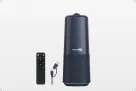
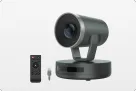
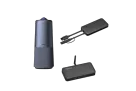
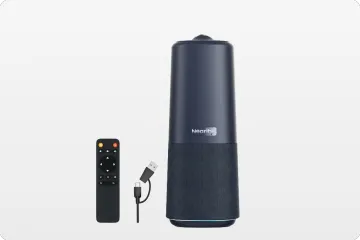
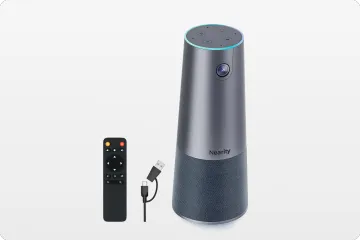
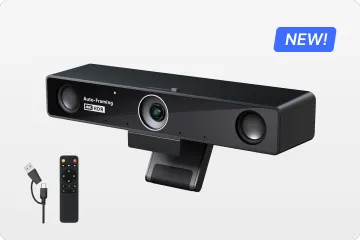
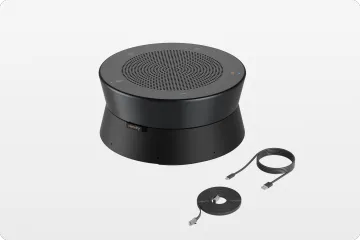
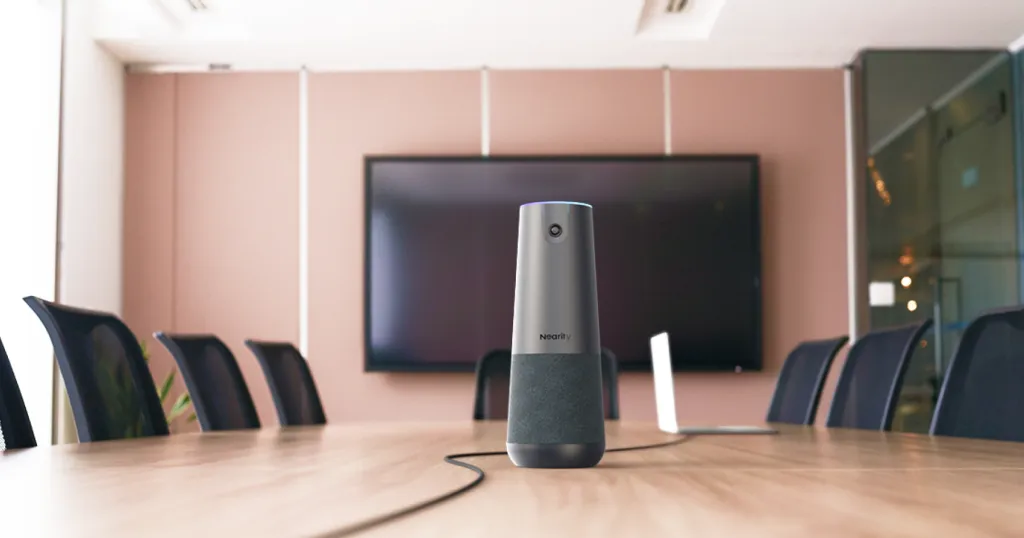
The Nearity 360 Alien is not a travel gadget; it is the anchor for your hybrid team. By installing a [video conference device] like the 360 Alien in your main office meeting rooms, the "inclusion gap" disappears.
Pain Point: "Who is talking?" -> Solution: The 360 Alien features AI-driven speaker tracking. When your CEO in New York starts talking, the camera automatically zooms in on them, allowing you (in Bali) to see their expressions clearly.
Pain Point: "I can't hear the people at the end of the table." -> Solution: With high-fidelity microphone arrays, it captures sound from every corner of the room, ensuring you don't miss any side-conversations or critical details.
Pain Point: "I feel like a floating head." -> Solution: The 360° panoramic view gives you a "seat at the table." You can see the whole room, making the meeting feel like a shared physical experience rather than a flat video call.
When you recommend technology to your HR or IT department, focus on how NearHub products protect the company's most valuable asset: its culture. A remote year is only productive if you are still an integral part of the team.
6. How to Evaluate Remote Work Programs: A Comparison Guide
Use this comparison table to decide if you should join a managed program or go solo for your next home-based work trips.
Feature | Managed Remote Work Programs | Solo Remote Work Travel |
Setup Time | Minimal (Plug-and-play) | High (Requires weeks of research) |
Cost | Premium (Service fees included) | Lower (Direct to landlord) |
Community | Instant (Vetted professional peers) | Organic (Requires high effort) |
Wi-Fi Reliability | Guaranteed by program contract | Hit-or-miss (Check reviews) |
Office Connection | Often includes meeting room access | Requires finding coworking spaces |
Best For | Busy professionals & executives | Budget-conscious freelancers |
FAQ: Frequently Asked Questions About Remote Work Programs
Q1: Do I need to buy a 360 camera for my travels?
No. A video conference device like the 360 Alien is designed for the meeting room back at your office or headquarters. As a traveler, you just need a laptop with a decent webcam and high-quality noise-canceling headphones. The "heavy lifting" of the meeting experience should be handled by the hardware in the physical office.
Q2: How do I convince my boss to let me join a remote work program?
Focus on productivity and retention. Explain that remote work programs handle all the logistics, so your work quality won't suffer. Suggest upgrading the office meeting room with NearHub gear to prove that distance won't affect collaboration.
Q3: Are these programs tax-deductible?
For many 1099 contractors or S-Corp owners in the US, the fees for these programs are legitimate business expenses as they provide your "temporary office" and professional development.
Q4: What if I have a client meeting while I'm in a noisy location?
This is where office-side tech helps. If your office has a high-quality system, their audio will be clear, and you can focus on using noise-canceling software (like Krisp) on your end.
Q5: Which destination is best for a first-time remote year?
Lisbon or Mexico City. They have the most mature infrastructure and the largest communities, making the transition from a traditional home office very smooth.
Conclusion
Embarking on a remote year in 2026 is no longer a radical experiment; it is a viable, professional career path. By choosing the right remote work programs and ensuring your team back home is equipped with the right technology, you can bridge the physical gap between "here" and "there."
From the tech-heavy streets of Taipei to the sun-drenched coasts of Portugal, the world is waiting. But remember: your productivity depends on your connection. Not just your internet connection, but your connection to your team. Invest in the right infrastructure, like the Nearity 360 Alien for your office, to ensure that no matter where you are in the world, you always have a seat at the table.
Looking for a reliable remote work programs? Check out our Nearity 360 Alien here: https://www.nearhub.us/product/true-4k-conference-camera-360-alien.




 sales@nearhub.us
