











In today’s fast-evolving developer landscape, vibe coding has become more than a trend—it has become a workflow philosophy. Instead of focusing solely on syntax or low-level implementation, vibe coding emphasizes a smooth, intuitive, and immersive creative experience. Developers combine natural-language problem solving, AI-assisted ideation, and uninterrupted deep-work sessions to produce better code, faster.
However, there’s one fundamental requirement for vibe coding that many people overlook: a quiet, stable, distraction-free environment. And this is precisely where noise cancelling headphones become indispensable.
In this article, we explore why a quiet environment is essential for achieving true vibe coding flow, and why high-performance noise cancelling headphones—such as the EP320—have become a key part of the modern developer’s toolkit.
Key Takeaways
- Vibe coding relies on mental clarity, flow, and uninterrupted deep work.
- Environmental noise disrupts concentration, increases cognitive load, and breaks creative momentum.
- Noise cancelling headphones reduce distractions and help developers enter flow faster.
- The EP320 offers hybrid ANC, ergonomic comfort, long battery life, and multi-device connectivity.
- Using EP320 ensures smoother AI-assisted workflows and longer, more productive coding sessions.
- Transparency mode allows awareness of surroundings without breaking focus.
What is Vibe Coding and Why Does It Matter?
The Meaning of Vibe Coding
Vibe coding is a modern development approach that blends traditional programming with intuitive, high-level problem solving, often supported by AI tools. Instead of focusing exclusively on syntax, commands, or line-by-line implementation, vibe coding emphasizes flow, creativity, and clarity of intent. Developers articulate ideas, describe desired behaviors, iterate quickly with AI assistance, and shape solutions in a more natural, fluid way.
At its core, vibe coding is about crafting an environment—both mental and physical—that allows developers to think clearly, explore ideas freely, and make progress without friction. This shift represents a larger trend in software development: moving from mechanical coding toward conceptual design and fast experimentation.
Why Vibe Coding Matters
Vibe coding is becoming increasingly important for teams and individual developers for several reasons:
- Higher-Level Thinking, Less Cognitive Overload By shifting focus from rote implementation to conceptual reasoning, developers conserve mental energy for architecture, logic, and innovation. AI handles repetitive or low-impact tasks, allowing humans to stay aligned with the bigger picture.
- Faster Iteration and Problem Solving When developers can stay in “flow,” they ideate faster, write better prompts, refine solutions more quickly, and maintain momentum throughout a task. Vibe coding maximizes velocity without sacrificing quality.
- Enhanced Creativity A smoother, more intuitive workflow encourages experimentation. Developers can test alternative approaches rapidly, explore creative prompts, and revise solutions without breaking rhythm.
- Reduced Context Switching Traditional coding often forces frequent shifts between thinking, researching, writing, debugging, and re-checking syntax. Vibe coding minimizes these transitions, keeping developers immersed in a single, continuous mental space.
- Better Use of AI Co-Creation In vibe coding, AI becomes a collaborative partner. Maintaining a stable cognitive state enhances the quality of prompts and the clarity of high-level instructions—directly improving the output developers receive from AI models.
In short: vibe coding is a productivity system—one that relies on mental flow, uninterrupted concentration, and a carefully optimized work environment.
And this is precisely why controlling noise and maintaining a quiet workspace are so essential. Without silence, even the best AI tools cannot help developers achieve the deep focus required for true vibe coding flow.
How Noise Becomes the Silent Killer of Vibe Coding Flow
Even though vibe coding relies heavily on smooth workflows, creative reasoning, and AI-assisted iteration, its greatest enemy is surprisingly simple: noise. Environmental noise disrupts concentration, breaks cognitive rhythm, and forces developers out of the mental “flow state” that vibe coding depends on. Whether the sound is loud or subtle, consistent or intermittent, noise has a direct and measurable impact on productivity, deep work, and mental clarity.
When developers lose focus even for a few seconds, the cost is not just a brief pause—it's the loss of context, momentum, and cognitive trajectory. This makes noise one of the most damaging but underestimated obstacles to the vibe coding experience.
Why Noise Disrupts Cognitive Flow
Vibe coding requires long periods of sustained mental engagement where ideas, AI prompts, and logic flow continuously. But noise breaks this chain by increasing cognitive load and triggering involuntary attention shifts.
Here’s why:
- The Brain Automatically Reacts to Sound Even if you think you are “used” to background noise, your brain is still processing it. Every unexpected sound—conversation, notifications, footsteps—forces your attention to momentarily shift, interrupting your reasoning process.
- Interruptions Destroy Working Memory Coding requires retaining temporary mental structures: variable logic, prompt phrasing, architectural strategies. Noise disrupts these structures, forcing the brain to rebuild them from scratch.
- Context Switching Is Costly Research shows it can take 5 to 15 minutes to fully return to deep concentration after a small interruption. For vibe coding—where flow matters more than speed—this is devastating.
- Noise Raises Stress and Cognitive Fatigue Continuous noise triggers low-level stress responses. Even mild stress reduces creative flexibility, logical clarity, and the ability to produce quality prompts.
Noise doesn’t have to be loud to be harmful. It only needs to be unpredictable—exactly the kind of sound found in cafés, shared offices, and home environments.
How Noise Interrupts AI-Assisted Coding Rhythm
A major part of vibe coding is the iterative loop between developer and AI:
- framing ideas
- writing prompts
- refining outputs
- adjusting logic
- testing variations
This rhythm depends entirely on uninterrupted mental flow.
Noise causes:
- weaker prompts due to reduced clarity
- slower interpretation of AI-generated results
- repeated re-reading of outputs
- more errors
- increased mental fatigue during long sessions
In simple terms, noise slows down both sides of the collaboration: you and the AI.
Why Developers Often Don’t Realize the Damage Noise Causes
Many developers think they can work through noise because they are “used” to their environment. But the cognitive cost is silent and accumulative.
- The brain works harder to filter sounds
- Concentration becomes fragmented
- Creative reasoning becomes shallow
- Fatigue arrives earlier in the day
- Productivity appears fine but is secretly lowered
Vibe coding’s reliance on mental clarity makes this even more pronounced.
This is why controlling noise is not a preference—it is a prerequisite.
The Bottom Line: Noise Is the Hidden Barrier to True Vibe Coding
Noise is more than an annoyance; it is the silent killer of flow, concentration, and deep coding work. It prevents developers from reaching the smooth, creative momentum that defines vibe coding. And because cognitive interruptions compound over time, even small noises have outsized long-term effects.
Why Noise Cancelling Headphones Restore Vibe Coding Flow
Noise is the silent killer of vibe coding, and active noise cancelling (ANC) headphones are the tool that restores focus, creativity, and flow. By reducing distractions and creating a controlled cognitive environment, ANC enables developers to maintain uninterrupted high-level reasoning. Here’s how they make a difference.
Reducing Cognitive Load
ANC technology works by lowering the “noise floor,” preventing the brain from constantly processing background sounds. Even subtle noises like distant conversation or the hum of an air conditioner require mental energy to filter, which can gradually drain focus. By minimizing these distractions, noise cancelling headphones free up cognitive resources, allowing developers to concentrate fully on coding, problem-solving, and crafting precise AI prompts. This reduction in cognitive load is critical for sustaining the smooth mental flow that vibe coding requires.
Faster Entry Into Flow
Flow is a delicate state that requires uninterrupted thought, mental clarity, and minimal external stimuli. Noise can disrupt this rhythm, causing developers to lose focus and momentum. Noise cancelling headphones help the brain settle into concentration more quickly, allowing developers to enter a flow state almost immediately. This is especially important in vibe coding, where maintaining a continuous cycle of ideation, AI-assisted generation, and refinement is essential for high-quality results.
Extending Deep Work Sessions
Continuous background noise can trigger subtle stress responses that increase mental fatigue. Over time, this reduces endurance and creativity. ANC headphones mitigate these effects by creating a calmer, quieter environment. Developers can sustain longer coding sessions with less cognitive strain, preserving focus, maintaining energy levels, and improving the quality of their work throughout the day.
Creating a Predictable Workspace Anywhere
Modern coding often happens outside traditional offices—in cafés, co-working spaces, or at home. Noise cancelling headphones allow developers to transform any environment into a distraction-free workspace, and choosing the best office headset makes this even more effective. This portability ensures that vibe coding can thrive regardless of location. Additionally, features like transparency mode let users switch seamlessly between focused work and necessary interaction, maintaining a balance between concentration and awareness.
Maintaining Rhythm in AI-Assisted Workflows
Vibe coding frequently involves iterative AI collaboration: writing prompts, reviewing outputs, and refining solutions. Noise interrupts this rhythm, slowing the feedback loop and reducing effectiveness. ANC headphones stabilize this cycle, ensuring that developers can think clearly, interpret AI responses efficiently, and iterate continuously without breaking focus. The result is smoother creative momentum, fewer errors, and higher-quality outcomes.
EP320: A Noise Cancelling Headset Built for Vibe Coding
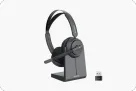
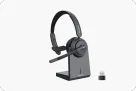
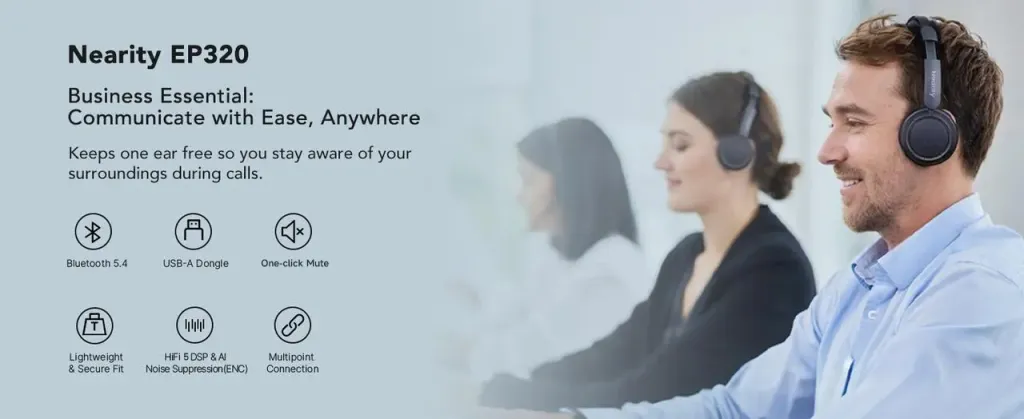
When it comes to supporting focused, uninterrupted work, not all noise cancelling headphones are created equal. For vibe coding—where extended concentration, clear communication, and comfort matter just as much as noise suppression—the Nearity EP320 stands out as a strong choice. Designed from the ground up for professional use, the EP320 combines advanced noise cancellation, versatile connectivity, and ergonomic comfort to help developers stay immersed in their work environment.
The EP320 implements AI-powered Environmental Noise Cancellation (AI ENC) driven by a dedicated DSP processor that analyzes and minimizes background noise in real time. This means everyday distractions—from keyboard pounding to café chatter—are dynamically reduced so that you remain in your cognitive flow instead of reacting to your surroundings. The result is a calmer auditory space that supports uninterrupted ideation and coding sessions.
Clarity, Connectivity, and Productivity Features
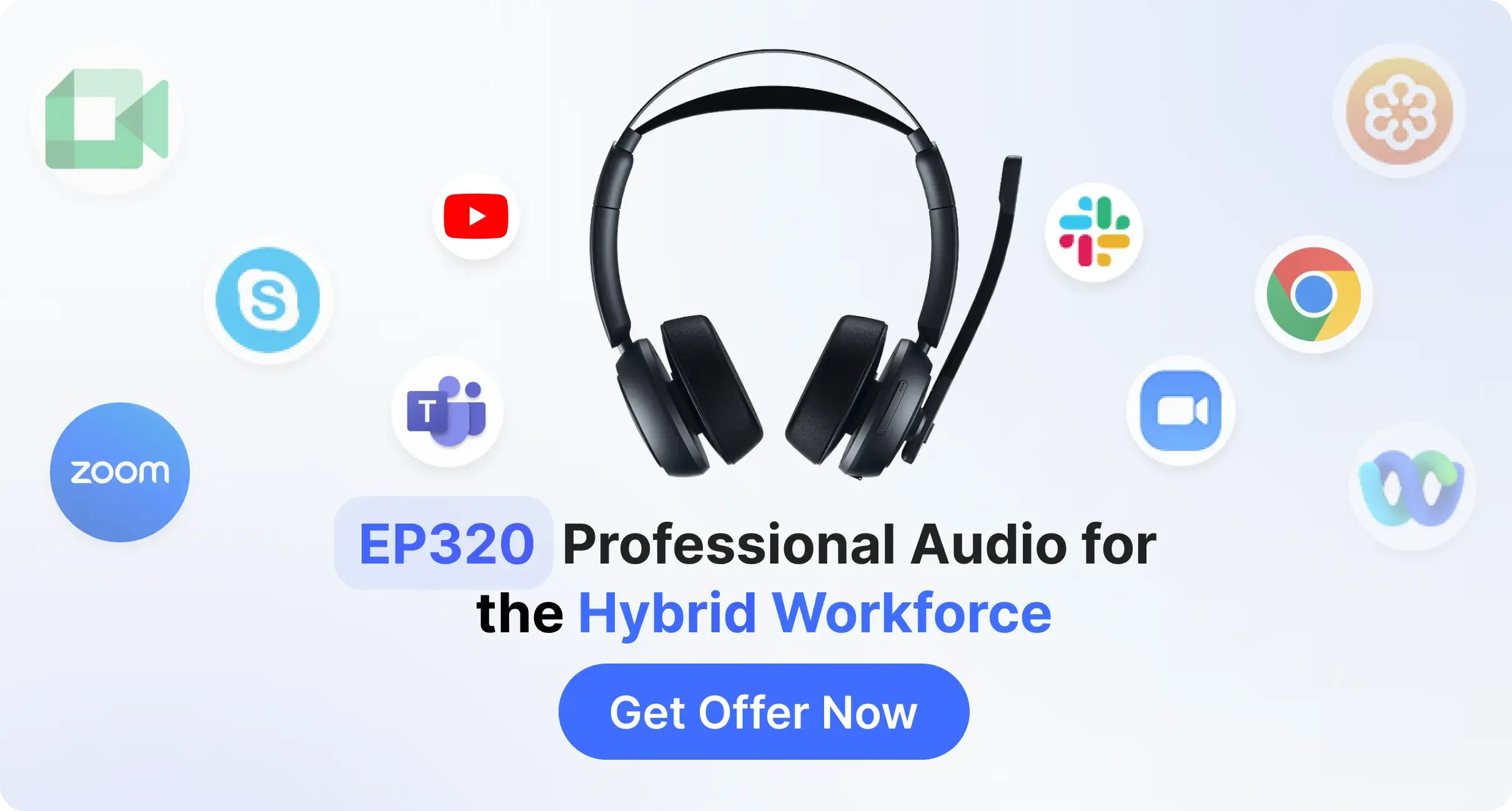
Beyond noise suppression, the EP320 offers a set of features that align with the demands of vibe coding workflows. Its Bluetooth 5.4 and multi-point connection let you pair simultaneously with multiple devices such as a laptop and smartphone, enabling seamless transitions between work calls and music or coding sessions without constant re-pairing. The included USB dongle ensures a stable connection on devices lacking reliable Bluetooth support, such as many desktop setups, further expanding its usefulness in hybrid work environments.
Intuitive controls, including a dedicated mute button and easy volume adjustment, make it simple to manage calls and media playback without interrupting your focus. With up to 45 hours of music playback and 35 hours of talk time on a single charge, the EP320 supports marathon coding sessions without forcing you to stop for frequent recharging. This extended battery life is especially valuable for developers who maintain long blocks of deep focus throughout the day.
Designed for Comfort During Long Focus Sessions
Comfort plays a surprisingly large role in sustaining flow. Even the best noise cancelling technology can fall short if the headset becomes uncomfortable after an hour or two. The EP320 addresses this with an ergonomic design that prioritizes all-day wearability. Plush ear cushions and a padded headband distribute pressure evenly, allowing you to wear the headset without discomfort during multi‑hour coding and review sessions.
This thoughtful design means the headset doesn’t just serve as a tool for clarity—it becomes part of your workflow environment, encouraging longer, uninterrupted stretches of focused work. Whether you’re refining prompts for AI‑assisted coding or debugging complex logic, the comfort of the EP320 helps keep physical distractions to a minimum.
A Productivity Companion for Modern Coding Environment
What ultimately makes the EP320 a fitting choice for vibe coding isn’t just one feature—it’s the combination of reliable noise cancellation, robust connectivity, long battery life, and comfort. Together, these elements help create the quiet, stable cognitive environment that vibe coding depends on. Whether you’re working from home, in a shared workspace, or in a coffee shop filled with ambient noise, the EP320 helps you maintain flow and get the most out of your deep work sessions.
If you’re serious about maintaining continuity in your creative and coding workflows, choosing a noise cancelling headset like the EP320 can make the difference between fragmented sessions and a continuous, productive vibe coding experience.
Conclusion: Achieve True Vibe Coding Flow with the Right Tools
Vibe coding is more than a methodology—it’s a mindset that thrives on uninterrupted focus, cognitive clarity, and creative momentum. As we’ve explored, environmental noise is one of the biggest obstacles to maintaining this flow, silently disrupting concentration and reducing productivity. Noise cancelling headset, particularly the EP320, provide a practical solution by creating a calm, distraction-free workspace anywhere you go. With hybrid ANC, long battery life, ergonomic comfort, and reliable connectivity, the EP320 restores mental rhythm, supports AI-assisted workflows, and allows developers to fully immerse themselves in deep work sessions.
Investing in the right headset is not just about comfort—it’s about empowering your coding practice. By pairing the principles of vibe coding with a high-quality noise cancelling solution, you can maintain focus longer, iterate faster, and achieve the level of flow that turns good code into great outcomes. If you’re ready to elevate your workflow and protect your concentration, the EP320 is designed to help you get there.
FAQs
- How do noise cancelling headphones help with vibe coding?
Noise cancelling headphones reduce environmental distractions, lower cognitive load, and allow developers to enter and maintain a flow state. They also support longer work sessions with less mental fatigue and provide stable sound for AI-assisted workflows.
- Can I use EP320 in shared offices or cafés?
Yes. The EP320 is designed to provide a predictable, quiet workspace in any environment, while transparency mode allows you to stay aware of surroundings when needed.
- When I use the EP320 for vibe coding, will I still hear people talking around me?
The EP320’s hybrid ANC blocks most ambient noise, including distant conversations, so you can stay focused. Very close speech may be slightly audible, but it won’t break your flow.
- Does the EP320 have a microphone, and can others hear me clearly during calls?
Yes, the EP320 has a built-in microphone with Environmental Noise Cancellation (ENC). It filters out background noise so your voice comes through clearly, making calls and online collaboration smooth even in noisy environments.



 sales@nearhub.us
